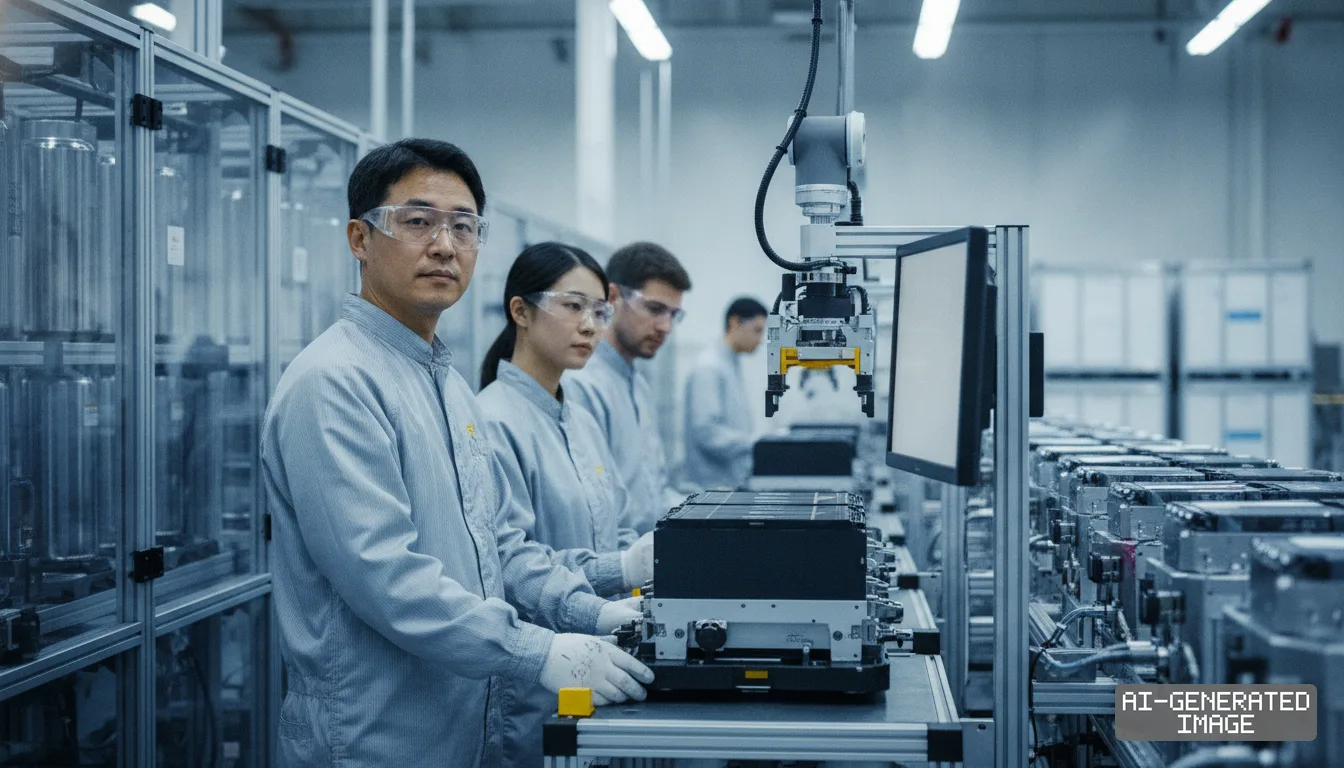
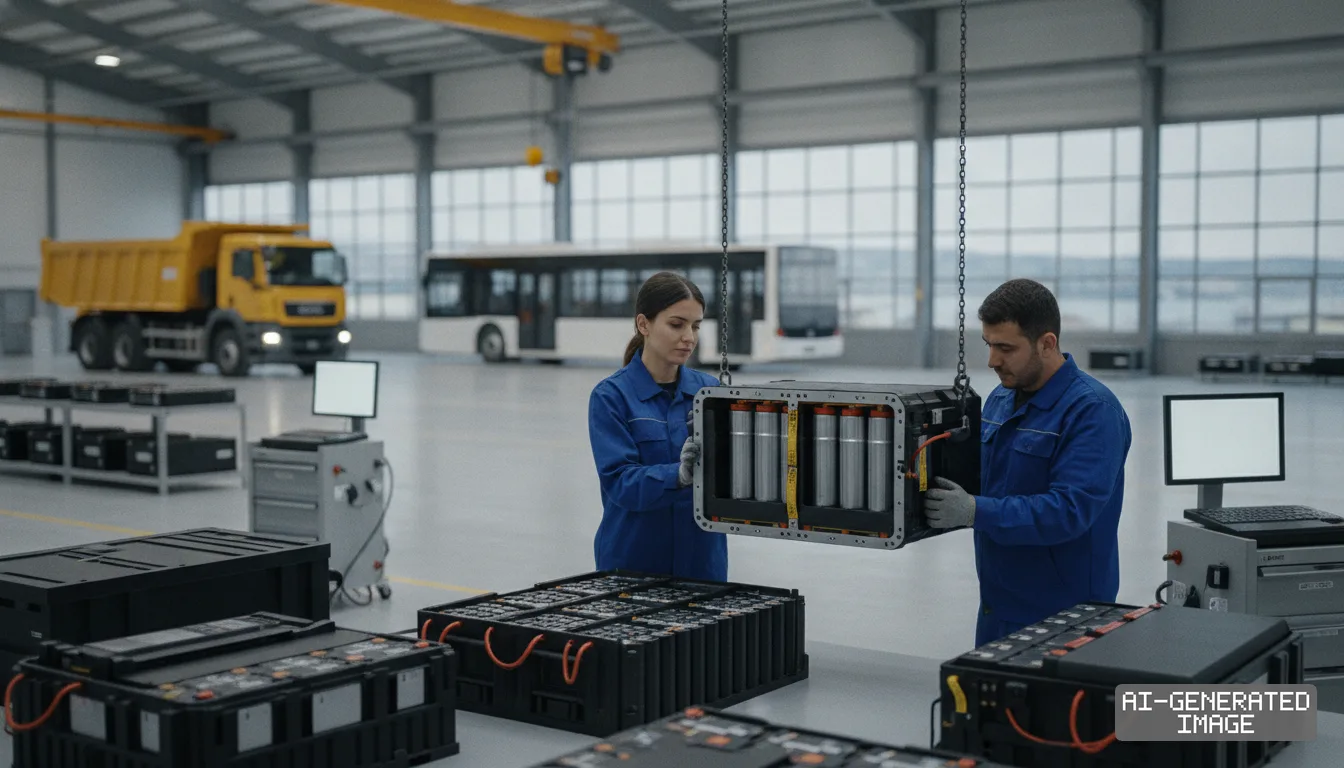
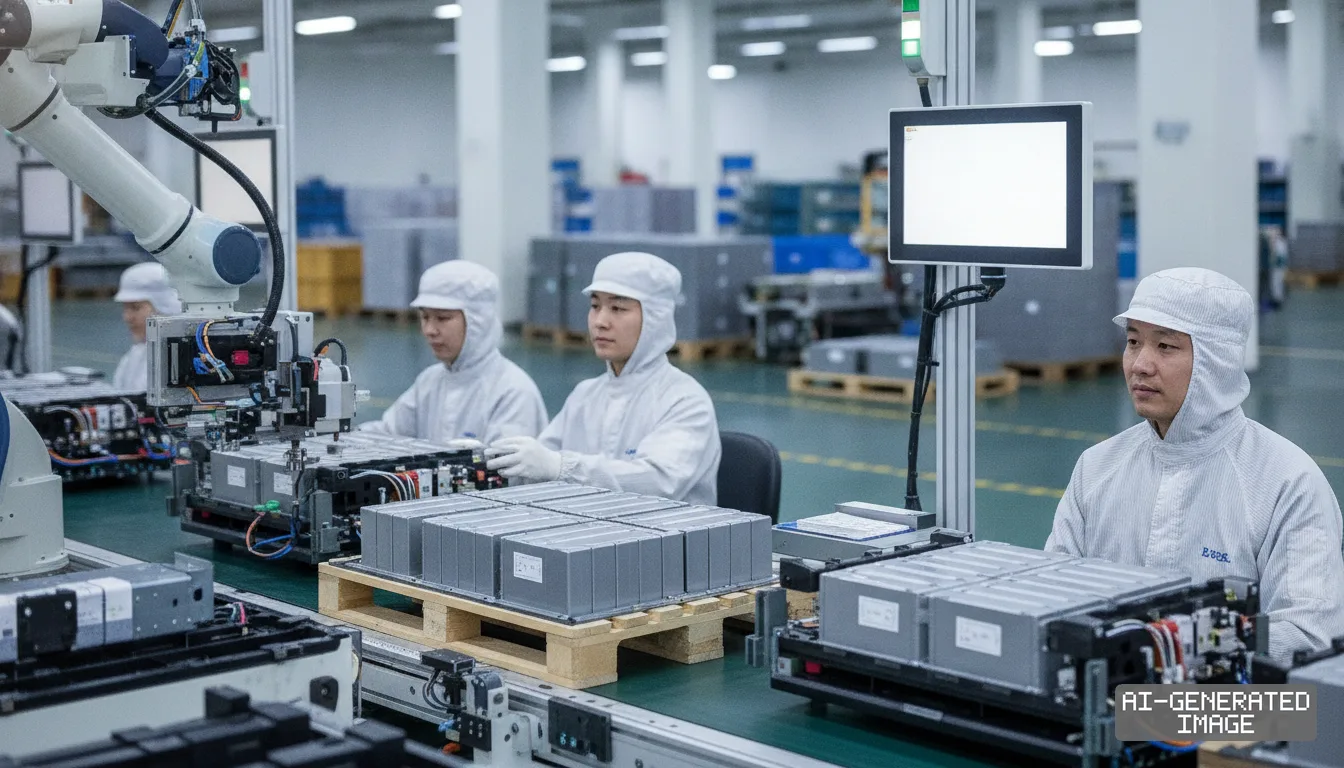
Sodium batteries cut grid storage costs 21% over LFP despite higher capex
Wood Mackenzie reports sodium systems save lifetime operating costs across two-to-four-hour utility sites by eliminating mid-life cell augmentation.
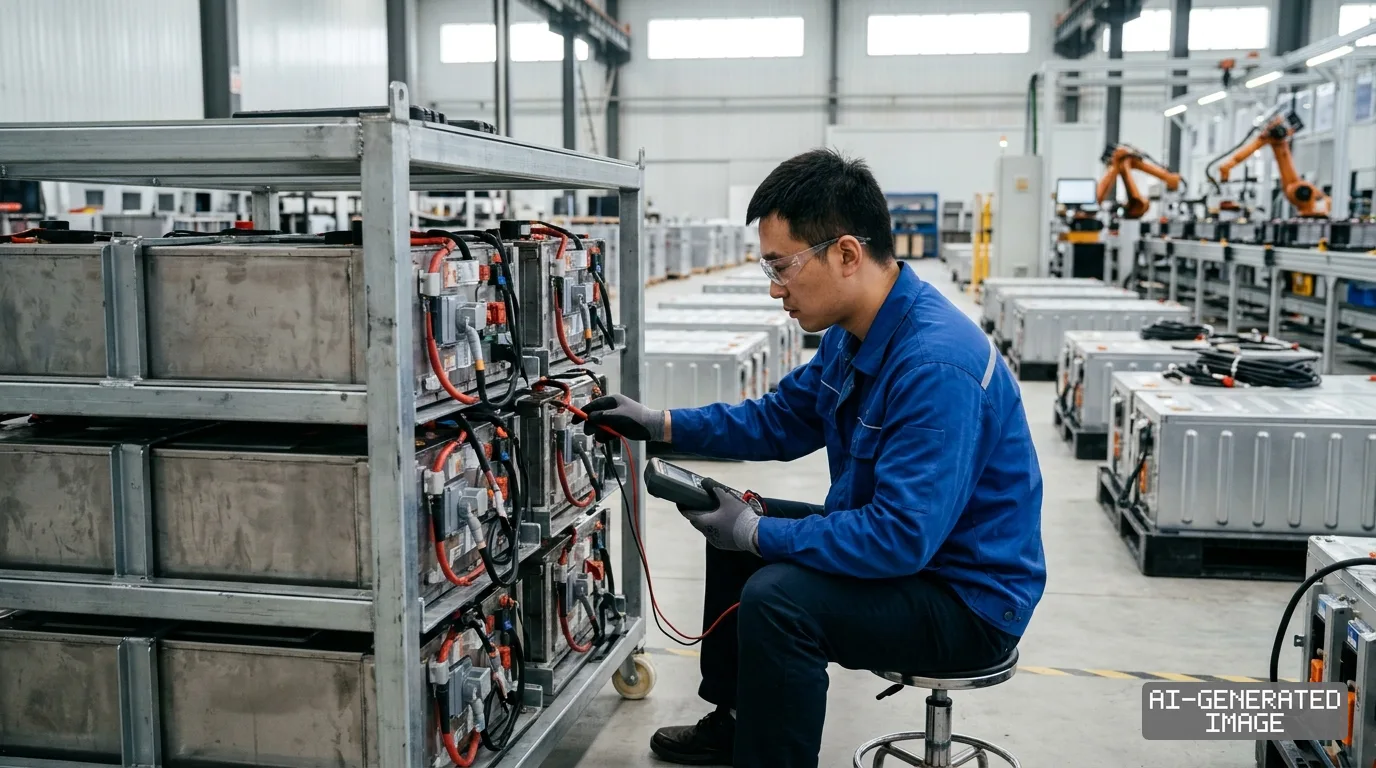
Sodium-ion batteries reduce total cost of ownership for 20-year grid energy storage by 21% compared with lithium iron phosphate, research consultancy Wood Mackenzie said Nov. 19.
Upfront capital expenditure remains higher for the sodium chemistry, averaging $229 per kilowatt-hour globally for utility systems compared with $200 per kilowatt-hour for lithium iron phosphate installations.
The lifetime savings emerge across standard two-hour to four-hour utility projects, where sodium cells eliminate expensive midway equipment replacements.
Grid operators running lithium iron phosphate plants routinely budget for augmentation — the periodic installation of fresh cells to counteract storage loss — over two decades of operation.
Sodium-ion cells demonstrate superior cycle durability that removes the requirement for mid-life augmentation entirely, according to the research consultancy.
Routine operating expenses fall alongside the hardware savings because sodium cells maintain stability across wider thermal thresholds without active cooling demands.
Sodium units operate reliably down to sub-zero winter temperatures, avoiding the heating loads that reduce net power output in cold-climate lithium facilities.
Commercial adoption is already expanding beyond pilot installations, with global supply agreements exceeding 70 gigawatt-hours across energy storage and automotive sectors.
Contemporary Amperex Technology Co. Ltd., the world's largest battery manufacturer, is targeting at least 1 gigawatt-hour of sodium-ion cell shipments by the end of 2026.
Contemporary Amperex Technology, known as CATL, plans to deliver those cells to domestic utility storage developers and small passenger electric vehicle platforms.
Automaker and battery manufacturer BYD is preparing 30 gigawatt-hours of dedicated sodium-ion manufacturing capacity across its domestic industrial sites.
That planned volume represents roughly 10% of BYD's domestic stationary storage manufacturing capacity, providing dedicated supply for utility projects across inland China.
Leading battery manufacturers expect to reach direct cell-level manufacturing cost parity with lithium iron phosphate by the end of 2026.
Module-level and fully integrated container system parity will take longer to materialize, with balance-of-plant equivalence expected only after 2030.
China's industrial learning rate for sodium-ion manufacturing is projected at 18% to 20% through 2035, reflecting expanding factory automation and standardized assembly lines.
The chemistry relies on sodium carbonate, an industrial chemical that is roughly 1,000 times more abundant in the Earth's crust than refined lithium compounds.
Sodium carbonate maintains a wide and structural price discount against lithium carbonate, insulating cell manufacturers from raw material volatility.
Fiscal policy in China is compounding that raw material advantage for regional grid operators weighing upcoming procurement tenders.
Beijing imposed a 2% consumption tax on lithium iron phosphate cells in September 2026, with the rate scheduled to rise to 4% in September 2027.
Sodium-ion cells remain completely exempt from that consumption tax through Dec. 31, 2028, creating an immediate margin advantage for domestic project developers.
Safety characteristics during logistics also favor sodium systems, as cells can be discharged to zero volts for completely inert transit by road or rail.
Lithium cells must travel under partial electrical charge, requiring fire suppression protocols and costlier transport insurance that raise project delivery budgets.
Outside China, Western utilities are testing the chemistry on local distribution feeders to verify equipment uptime under severe seasonal weather swings.
In the United States, hardware integrator Emerald Battery Labs delivered a 60 kilowatt-hour sodium-ion storage system to Issaquah, Washington, for cold-weather benchmarking.
European grid developers in Germany have also signed early off-take agreements to hedge against lithium supply concentration and future import tariffs.
India is moving through early commercial validation as its Central Electricity Authority forecasts grid battery requirements will jump from 34.72 gigawatt-hours in 2026 to 236.22 gigawatt-hours by 2032.
New Delhi is preparing mandatory storage purchase obligations for distribution utilities, creating a large tender pipeline for low-cost stationary storage alternatives.
Despite rising commercial traction, near-term deployment remains constrained by limited field operating records and concentrated upstream component supply.
The research notice does not state the cathode material breakdown across the 70 gigawatt-hours of signed contracts, and utilities have not published audited multi-year degradation datasets.
Procurement teams will review cell warranty structures and cycle yields in the first quarter of 2027 as initial commercial batches enter service.
Impact map
How this development propagates across the region and out to global buyers.
| Event | Korea | China | Japan | Global impact |
|---|---|---|---|---|
| Grid ESS sodium battery parity | LG Energy Solution and SK On face long-term LFP price pressure without domestic sodium lines | BYD and CATL scale 31 GWh of sodium capacity under zero consumption tax through 2028 | Panasonic and domestic utilities retain nickel and LFP chemistry focus with zero sodium supply | Utility operators model 21% lower 20-year TCO across 2-to-4-hour duration BESS |
In this story
- Companies
- Contemporary Amperex TechnologyBYD
- Tickers
- 300750.SZ002594.SZ
- Exposed
- Emerald Battery Labs
- Policy
- Tax Credits
- Impact
- Cost StructureSupply ChainCapex
Track every Tax Credits development →
Related briefings
- Suzuki prices e SKY minicar at $13,500 to blunt BYD in Japan Also on Tax Credits, BYD, Cost Structure
- Chinese EVs capture 35% Korea market share under 8% tariff Also on Tax Credits, BYD, Cost Structure
- Hungary official leaks CATL accord offering land and tax breaks Also on Tax Credits, Contemporary Amperex Technology
- CATL lists 587Ah storage cells online to reset grid pricing at $65/kWh Also on Tax Credits, Contemporary Amperex Technology
Sources
Reporting
Confidence: medium — how we grade this
The documents behind this briefing are linked above. East Asia Brief produces its English text with AI assistance under human editorial review, and does not translate or republish other outlets' articles. See our methodology and AI policy. Spotted an error? Tell us.
The Morning Brief
What changed in Korean, Chinese and Japanese industry overnight — and what it means for your supply chain. One email, weekday mornings, US time. Free.
The Morning Brief is in preparation. Leave your address and we will write to you once — when the first issue is ready. Nothing before that.