SK On teams with GE Vernova and SEETEL on data center batteries
The trilateral pact combines Korean lithium-iron cells and American power conversion hardware to deliver grid-scale storage units in Asia and the US.
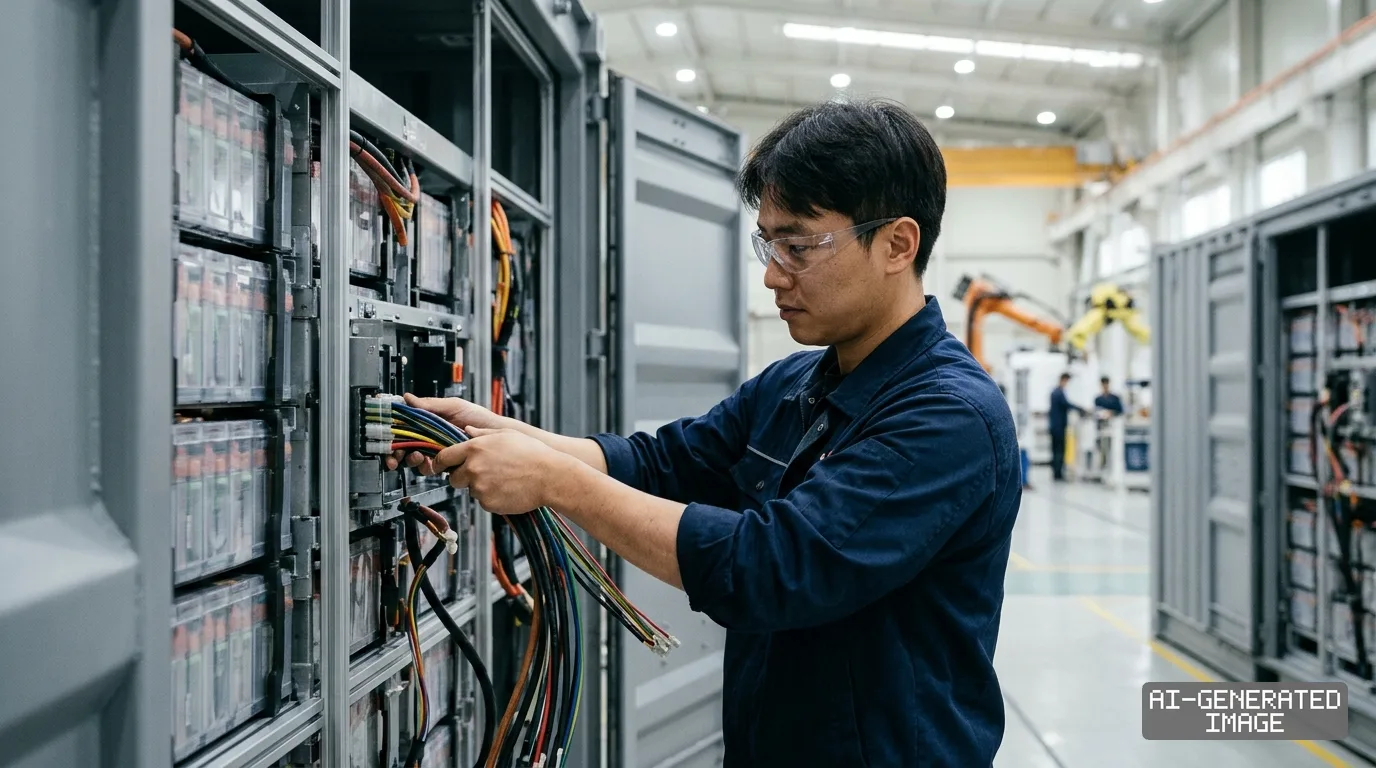
SEETEL New Energy, GE Vernova and SK On signed an agreement on Nov. 16, 2026, to jointly supply containerized battery energy storage systems for artificial intelligence data centers across North America and Asia.
The partners did not release a target capacity in gigawatt-hours or an initial contract value for the supply agreement. SEETEL held 225 megawatts of contracted installation projects and had shipped 596 megawatt-hours of batteries as of early 2025.
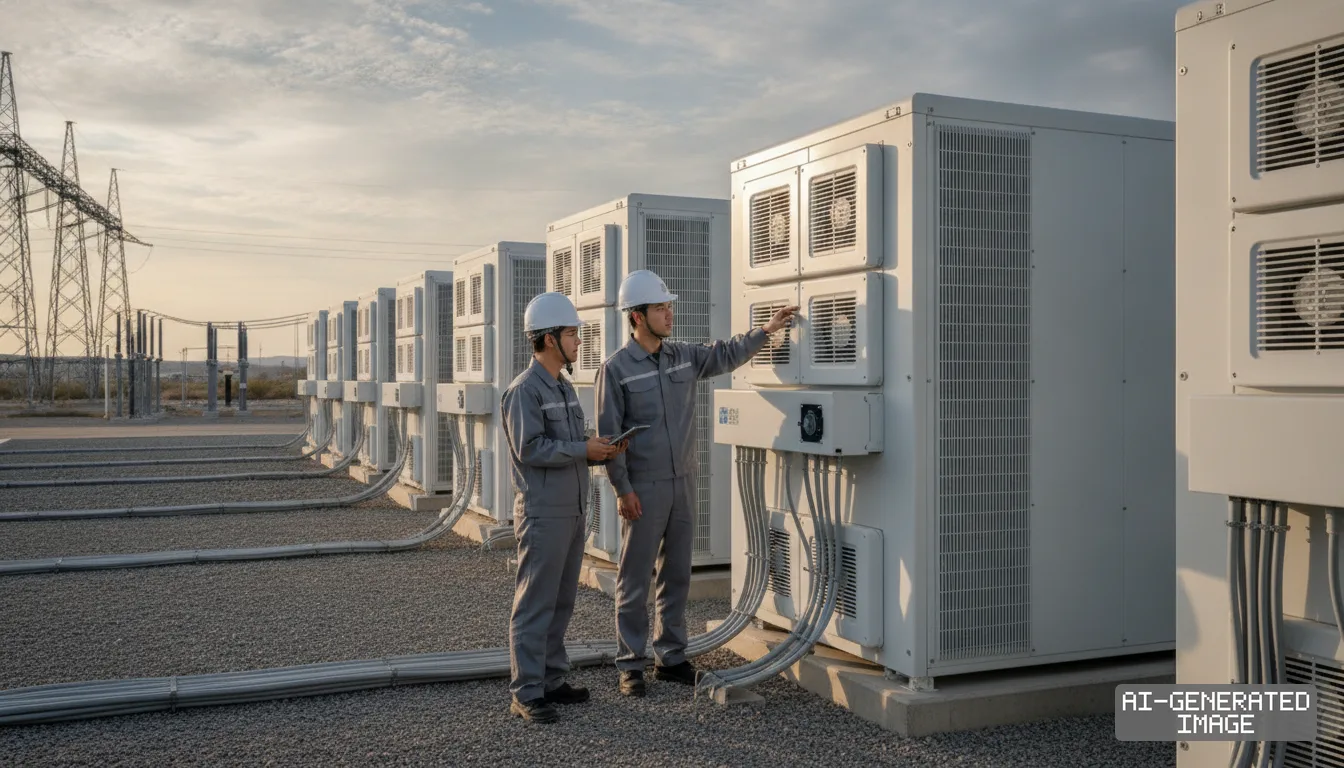
Under the arrangement, SK On will supply lithium iron phosphate battery cells and pre-assembled modules. GE Vernova will provide high-power power conversion equipment designed to manage electrical currents between stationary battery packs and high-voltage transmission lines.
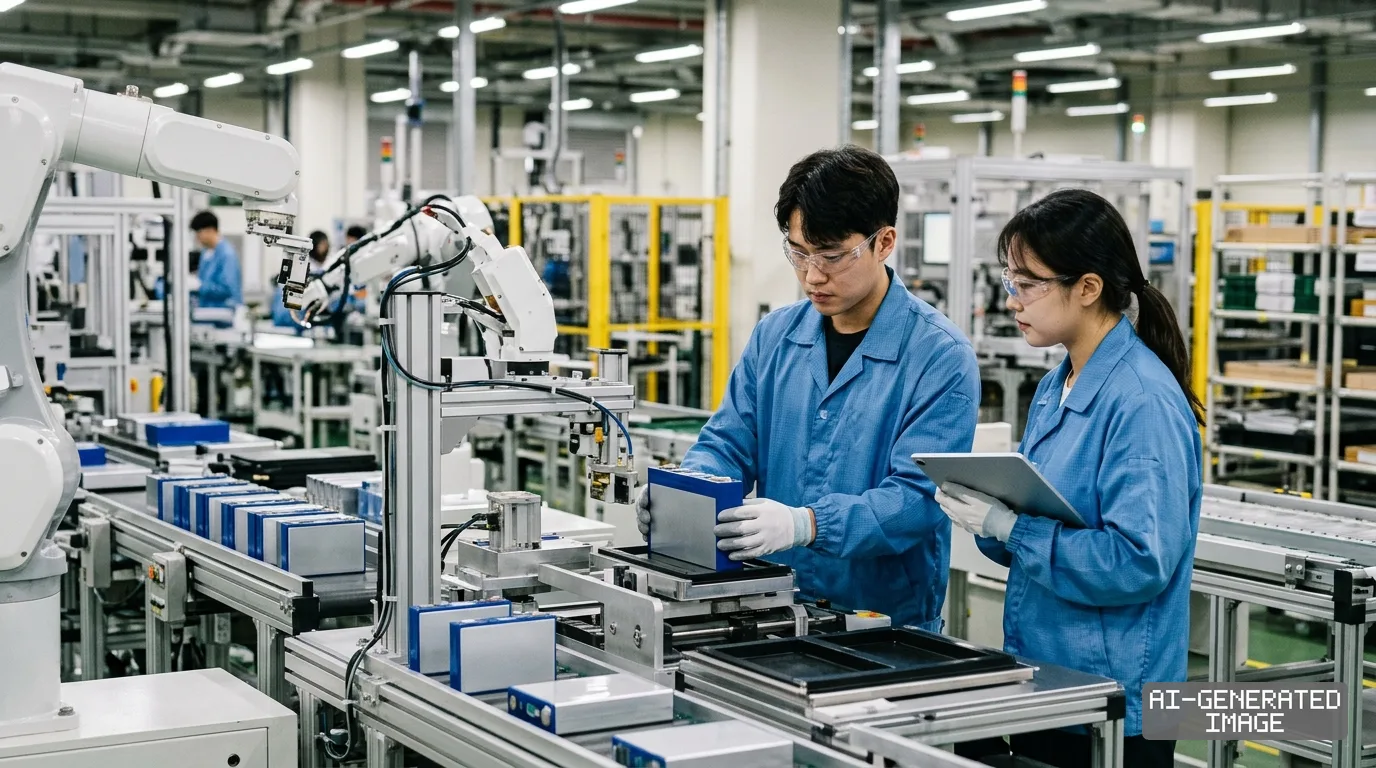
SEETEL New Energy will oversee full-system integration and final assembly through its manufacturing subsidiary, AUROSI, in Taichung, Taiwan. The Taichung plant will assemble finished containerized storage enclosures for delivery to utility customers, the companies said.
Executive representatives from all three manufacturers conducted an on-site operational review in central Taiwan before signing the pact. Minsuk Kwak, vice president for energy storage operations at SK On, inspected the Taichung module line alongside Shaopeng Ji, regional power conversion director at GE Vernova.
The tie-up establishes a dedicated non-China manufacturing corridor for large-scale utility batteries. Energy storage developers in the United States and Japan face stricter cybersecurity vetting and supply chain origin audits on critical grid hardware, the companies said.
Chinese manufacturers currently produce more than 70% of the world's stationary lithium-based storage cells. Utility developers and commercial computing operators have sought alternate procurement channels that comply with federal supply security mandates in North America.
SK On has redirected production resources toward utility installations to offset softening consumer demand for electric vehicles. Slower vehicle adoption in Western markets throughout 2025 led battery producers across East Asia to expand stationary storage operations.
The South Korean battery maker secured an agreement in 2025 to supply up to 7.2 gigawatt-hours of stationary storage units to Flatiron Energy Development through 2030. The arrangement with SEETEL and GE Vernova broadens its storage footprint into East Asian utility grids.
GE Vernova produces heavy electrical gear, turbines and transmission hardware following its corporate separation from General Electric in 2024. The company deploys containerized storage units that deliver 5 megawatt-hours of output across two to eight discharge hours.
Power conversion systems serve as the electrical bridge in utility battery installations. The hardware synchronizes direct current discharging from lithium cells into alternating current suitable for high-voltage transmission networks without disrupting substation frequency.
SEETEL New Energy listed on the Taiwan Stock Exchange in 2025 under ticker 7740.TW. The company ranks as Taiwan's second-largest battery storage engineering contractor, maintaining proprietary energy management software alongside project design operations.
The company was the first domestic developer to obtain voluntary product certification from Taiwan's Bureau of Standards, Metrology and Inspection. The certification confirms that site equipment complies with local fire safety and grid anti-islanding regulations.
High-density computing facilities require dedicated on-site battery installations to handle sudden power surges from artificial intelligence processors. Server clusters draw concentrated electrical loads that can destabilize local distribution substations without dedicated peak-shaving systems, engineers said.
Storage systems absorb low-cost power during off-peak hours and discharge during computational spikes. The buffering protects sensitive data center power transformers from voltage sag while lowering overall electricity procurement charges for data facility operators.
The three companies plan to deploy initial energy storage hardware within Taiwan before expanding deliveries to data center developers in Japan, the United States and Canada. Taiwan has prioritized decentralized grid storage to safeguard uninterrupted power for advanced semiconductor fabs.
AUROSI will integrate the power conversion systems with modular battery racks to lower energy loss during charging cycles. Combining the components within standardized enclosures reduces on-site construction overhead for international utility contractors, SEETEL Chairman Sheng-Tse Lin said.
The memorandum does not state the pricing structure, delivery milestones or minimum purchase volumes for the battery hardware. The companies have not published a timetable detailing when the first joint storage containers will achieve commercial grid interconnection.
The three manufacturers plan to complete technical integration testing in Taichung before opening commercial pricing reviews in early 2027. Corporate filings in Taipei did not specify an expiration date for the non-binding framework.
Impact map
How this development propagates across the region and out to global buyers.
| Event | Korea | China | Japan | Global impact |
|---|---|---|---|---|
| BESS supply alliance | SK On diversifies pouch and LFP cell manufacturing toward utility data centers | Non-red consortium directly targets market share held by Chinese BESS integrators | Japanese AI facilities gain alternative non-China energy storage procurement path | Hyperscale operators face clearer separation of Western and Chinese grid hardware |
In this story
- Companies
- SEETEL New EnergyGE VernovaSK On
- Tickers
- 7740.TWGEV
- Impact
- Supply ChainOrder Book
Related briefings
- Chinese SMR ventures top 20 as power demand from data centers jumps Also on GE Vernova, Order Book
- China leads global energy capex with $940 billion grid outlay Also on GE Vernova, Order Book
- USTR extends Section 301 tariff relief on 178 Chinese product lines Also on GE Vernova
- POSCO Future M sets 105,000-ton LFP cathode roadmap in Pohang Also on SK On, Order Book
Sources
Reporting
Confidence: medium — how we grade this
The documents behind this briefing are linked above. East Asia Brief produces its English text with AI assistance under human editorial review, and does not translate or republish other outlets' articles. See our methodology and AI policy. Spotted an error? Tell us.
The Morning Brief
What changed in Korean, Chinese and Japanese industry overnight — and what it means for your supply chain. One email, weekday mornings, US time. Free.
The Morning Brief is in preparation. Leave your address and we will write to you once — when the first issue is ready. Nothing before that.