POSCO Future M and L&F target 330,000 tons of domestic LFP
The South Korean cathode makers are converting nickel lines and expanding local plants to meet non-Chinese battery sourcing rules for US and European energy storage markets.
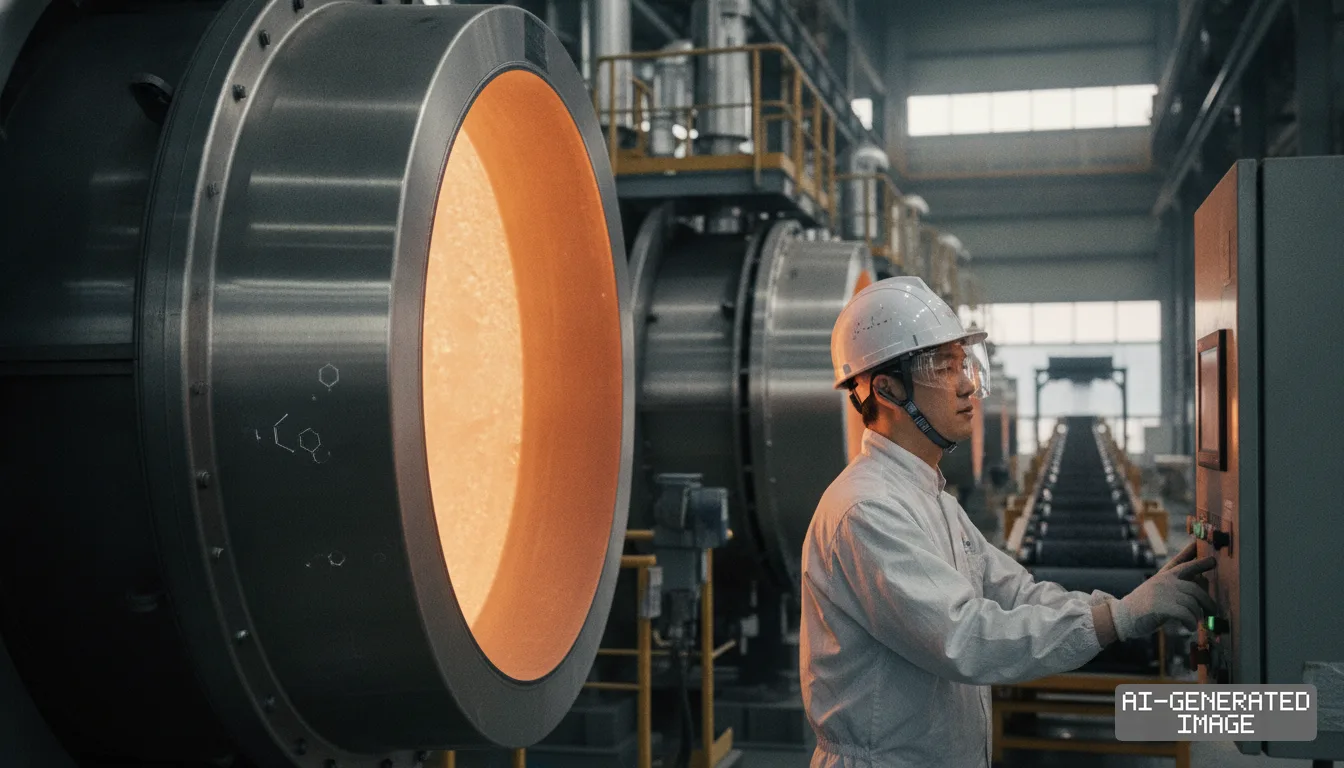
South Korean cathode producers POSCO Future M and L&F outlined domestic expansion roadmaps on Oct. 23, 2026, targeting up to 330,000 metric tons of lithium iron phosphate capacity to replace Chinese battery imports.
The combined volume represents roughly a third of South Korea's projected domestic cathode output by the late 2020s. Both suppliers previously focused their domestic manufacturing footprints on nickel-rich chemistries.
The industrial pivot responds directly to tightening local content requirements under the US Inflation Reduction Act. Those regulations disqualify battery cells containing materials sourced from designated foreign entities of concern from consumer and manufacturing tax credits.
Rising procurement from utility grid operators and data centers also accelerates the transition. Power storage installations require lithium iron phosphate cells — which use iron and phosphorus instead of nickel and cobalt — for thermal stability and lower capital costs.
POSCO Future M accounts for up to 210,000 metric tons of the projected national capacity. The supplier raised its production efficiency assumptions during an operational review of its Pohang manufacturing site on Oct. 20, 2026.
Plant engineers confirmed that existing nickel-cobalt-manganese calcination equipment yields two metric tons of iron-based cathode for every ton of ternary capacity replaced. Internal models previously estimated that ratio at 1.5 metric tons.
Converting 45,000 metric tons of ternary line capacity at the Pohang complex generates up to 100,000 metric tons of iron phosphate active material. A subsequent conversion of 55,000 metric tons in Gwangyang would add 110,000 metric tons.
Commercial contracts back the capital reallocation across POSCO Future M's industrial base. The company formalized an amended supply agreement worth 6 trillion won ($4.42 billion) with cell manufacturer Samsung SDI on Oct. 6, 2026.
The binding agreement covers more than 380,000 metric tons of lithium iron phosphate cathode from 2027 through 2032. That volume doubled the preliminary 190,000-ton baseline negotiated between the two companies in August.
The transaction amends an overarching 2023 supply pact, swapping out a portion of contracted nickel volume. Iron-based cathode now represents 28.5% of the revised 21.25 trillion won agreement with Samsung SDI.
POSCO Future M also finalized an off-take agreement with cell producer SK On on Sept. 22, 2026. That contract carries a value of 1.07 trillion won ($791 million) and runs from 2027 through 2029.
The supplier aims to deliver the initial production batches to SK On from modified lines late this year. The contract includes mutual provisions to extend procurement for an additional two years upon term expiration.
L&F accounts for the remaining 120,000 metric tons of potential volume through its subsidiary L&F Plus. The unit operates an LFP manufacturing facility on a 103,800-square-meter plot in the Daegu National Industrial Complex.
L&F Plus completed plant construction in May following a 338 billion won investment. The subsidiary initiated commercial mass production at an initial annual run-rate of 30,000 metric tons in late September.
The subsidiary plans to expand its Daegu production capacity to 60,000 metric tons in the first half of 2027. The expansion doubles line count within the company's existing operating complex.
The operational factory currently utilizes roughly 60,000 pyeong (198,000 square meters) of its industrial zone. Additional capital investments across adjacent plots could expand throughput to 120,000 metric tons, the company said.
L&F outlined a corporate target on Sept. 18, 2026, to shift its global shipment mix to 37% iron phosphate cathode by 2030. The remaining 63% will remain dedicated to nickel-cobalt-manganese chemistries.
L&F secured its initial commercial domestic customer on Sept. 18, 2026, signing a 160 billion won ($118 million) supply contract with SK On. Deliveries of third-generation cathode material run through Dec. 31, 2028.
The product features a pressed density exceeding 2.50 grams per cubic centimeter. That specification improves volumetric energy density to narrow the performance gap against entry-level nickel cells.
Upstream refining remains a critical vulnerability for the domestic transition. Chinese processors control more than 90% of global iron phosphate precursor output — the chemical intermediate that determines roughly 70% of cathode manufacturing costs.
To satisfy Western subsidy requirements, POSCO Future M plans to localize precursor synthesis by 2029. The company is developing an iron chloride process that extracts raw inputs from POSCO Group's domestic steel operations.
Rival producers LG Chem and EcoPro BM are testing precursor-free synthesis methods. However, neither company has committed capital to dedicated domestic mass-production facilities.
POSCO Future M and L&F have not disclosed the capital expenditure required for full line conversions, and neither company has published formal board approvals or construction schedules for their maximum capacity targets.
L&F Plus plans to commission its second Daegu phase to reach 60,000 metric tons by June 2027. POSCO Future M begins commercial volume shipments under its Samsung SDI and SK On contracts in early 2027.
Impact map
How this development propagates across the region and out to global buyers.
| Event | Korea | China | Japan | Global impact |
|---|---|---|---|---|
| Korea LFP cathode capacity expansion | POSCO Future M and L&F build 330,000 tons of local LFP lines for Samsung SDI and SK On | Dynanonic and CNGR face reduced export volume into US-linked battery supply chains | Panasonic Energy secures alternative non-FEOC cathode sourcing options for North American cells | Grid storage developers gain compliant supply streams ahead of 2027 US sourcing mandates |
In this story
- Companies
- POSCO Future M
- Tickers
- 003670.KS066970.KS
- Exposed
- Samsung SDISK On
- Policy
- Local Content RulesTax Credits
- Impact
- CapexSupply ChainPricing
Track every Local Content Rules development → Track every Tax Credits development →
Related briefings
- Korea and Canada advance critical mineral and battery pacts Also on Local Content Rules, POSCO Future M, SK On
- Korean battery makers localize LFP cathodes under US rules Also on POSCO Future M, Tax Credits, SK On
- South Korea Expands Advanced Battery Tax Credits to Rebalance Domestic Fabs Also on POSCO Future M, Tax Credits, SK On
- France and Germany back subsidy curbs on Chinese hybrid cars in 2026 Also on Local Content Rules, SK On, Samsung SDI
Sources
Primary documents
Reporting
Confidence: high — how we grade this
The documents behind this briefing are linked above. East Asia Brief produces its English text with AI assistance under human editorial review, and does not translate or republish other outlets' articles. See our methodology and AI policy. Spotted an error? Tell us.
The Morning Brief
What changed in Korean, Chinese and Japanese industry overnight — and what it means for your supply chain. One email, weekday mornings, US time. Free.
The Morning Brief is in preparation. Leave your address and we will write to you once — when the first issue is ready. Nothing before that.