POSCO Future M signs material deal with LG Energy Solution
Under a preliminary pact running from 2027 to 2033, the supplier will provide 720,000 tons of cathode and anode active materials to support Western trade compliance.
POSCO Future M signed a preliminary pact on Oct. 30, 2026, to supply LG Energy Solution with 720,000 metric tons of battery cathode and anode materials through 2033.
The seven-year framework agreement runs from 2027 to 2033. It represents one of the largest combined active material supply commitments concluded between South Korean battery component manufacturers.
The agreement expands the commercial relationship beyond high-nickel ternary cathodes into lithium iron phosphate formulations and synthetic graphite anodes. Both companies agreed to sign a definitive supply contract before the end of 2026.
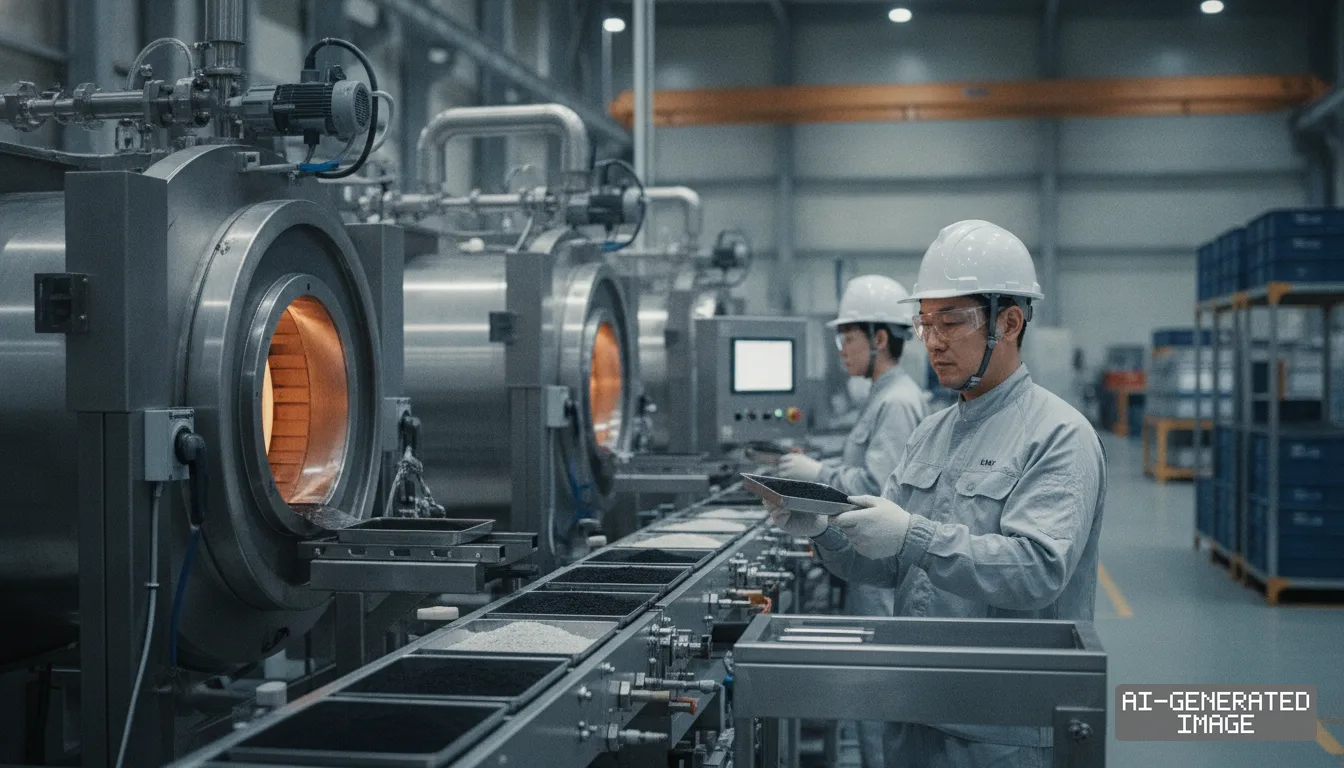
POSCO Future M will begin delivering lithium iron phosphate cathode materials in early 2027. The supplier is converting existing high-nickel nickel-cobalt-manganese lines at its Pohang manufacturing facility to accommodate the initial shipments.
Demand for lower-cost lithium iron phosphate chemistries has accelerated among utility-scale energy storage operators and entry-level electric vehicle manufacturers. Grid battery demand in North America has expanded rapidly alongside the power requirements of artificial intelligence data centers.
POSCO Future M plans to refine brine lithium extracted from the Hombre Muerto salt lake in Argentina for future lithium iron phosphate cathode processing. Upstream raw material control will lower production overhead, the company said.
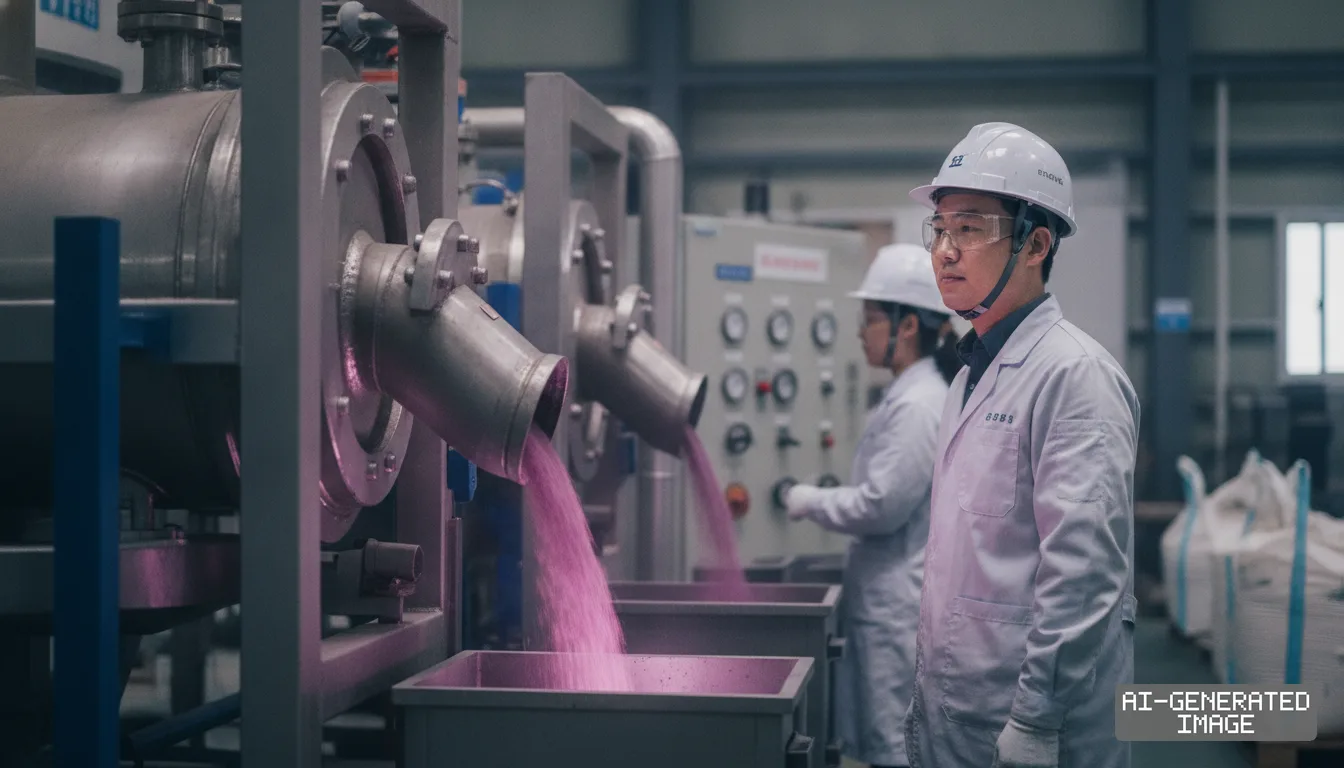
The materials producer is also engineering an internal manufacturing method for iron phosphate precursors to eliminate reliance on external Chinese refiners. Precursors represent roughly 70% of total cathode manufacturing costs, according to industry estimates.
For established nickel-cobalt-manganese chemistry lines, POSCO Future M will increase the proportion of secondary metals retrieved from recycled battery cells. Blending recovered minerals will reduce cathode unit costs over the multi-year delivery window, the company said.
The agreement also introduces synthetic graphite anode active materials manufactured in South Korea and Vietnam. Synthetic graphite increases cell charging speed and extends operational lifespans compared to natural flake graphite options.
Procuring synthetic graphite from facilities in South Korea and Vietnam provides LG Energy Solution with a compliant anode pathway. Chinese chemical processors currently control more than 90% of global battery-grade synthetic graphite output.
South Korean cell manufacturers face mounting regulatory pressure from the United States Foreign Entity of Concern guidelines under the Inflation Reduction Act. Battery packs containing Chinese active materials face exclusion from federal consumer tax credits worth up to $7,500.
The European Union has introduced parallel supply chain mandates under its Critical Raw Materials Act and Industrial Acceleration Act. The frameworks penalize battery manufacturers that exceed defined thresholds for single-source foreign component dependencies.
LG Energy Solution operates manufacturing plants across North America, Europe and South Korea. Sourcing compliant active materials shields its multi-gigawatt-hour cell manufacturing pipelines from regulatory disqualification in key Western automotive jurisdictions.
The pact reinforces POSCO Future M as a core active material vendor across South Korea's battery sector. The supplier concluded a 1.07 trillion won ($775 million) lithium iron phosphate cathode supply agreement with SK On in September.
POSCO Future M also holds multi-trillion won supply agreements with Samsung SDI for high-nickel ternary active materials. The latest agreement broadens its customer base across all three domestic battery manufacturing champions.
The two companies also agreed to conduct joint technical development on ultra-high-nickel cathode chemistries, silicon anode formulations and sodium-ion battery materials. Sodium-ion batteries eliminate lithium entirely, targeting stationary utility installations and short-range commercial mobility.
Silicon anodes permit cells to store higher concentrations of lithium ions, which significantly shortens electric vehicle charging durations. Developing proprietary silicon additives shields both companies from third-party intellectual property constraints.
The primary manufacturing site for the initial output run is the Yeongilman Industrial Complex in Pohang. Engineering teams are retrofitting high-nickel lines to initiate commercial shipments on schedule in early 2027.
The announcement does not state the total financial value of the contract or the volume breakdown between cathode and anode materials. Financial analysts in Seoul have estimated the cumulative value at approximately 10 trillion won ($7.2 billion).
Because the memorandum of understanding remains preliminary and non-binding, neither company has submitted a formal single-sales filing to the Financial Supervisory Service. Binding regulatory disclosures will accompany the execution of the final contract, the companies said.
The definitive agreement outlining specific volume quotas and price index formulas is scheduled for completion before Dec. 31, 2026. Commercial material shipments under the primary contract schedule will begin in the first quarter of 2027.
Impact map
How this development propagates across the region and out to global buyers.
| Event | Korea | China | Japan | Global impact |
|---|---|---|---|---|
| 720,000-ton battery material pact | LG Energy Solution locks in 720,000 tons of non-Chinese cathode and anode materials | Chinese graphite and LFP cathode exporters lose North American and EU compliance share | Japanese cell manufacturers face sharper pricing competition in utility-scale ESS battery tenders | EV and ESS cell supply chains accelerate qualification of ex-China active materials |
In this story
- Companies
- POSCO Future MLG Energy Solution
- Tickers
- 003670.KS373220.KS
- Exposed
- Samsung SDISK On
- Policy
- Local Content RulesSubsidies
- Impact
- Supply ChainOrder BookCompliance
Track every Local Content Rules development → Track every Subsidies development →
Related briefings
- Korea and Canada advance critical mineral and battery pacts Also on Local Content Rules, POSCO Future M, SK On
- POSCO Future M and L&F target 330,000 tons of domestic LFP Also on Local Content Rules, POSCO Future M, SK On
- China Customs tightens origin documentation for graphite transit shipments Also on Posco Future M, SK On, Samsung SDI
- France and Germany back subsidy curbs on Chinese hybrid cars in 2026 Also on Local Content Rules, SK On, Samsung SDI
Sources
Primary documents
Reporting
Confidence: high — how we grade this
The documents behind this briefing are linked above. East Asia Brief produces its English text with AI assistance under human editorial review, and does not translate or republish other outlets' articles. See our methodology and AI policy. Spotted an error? Tell us.
The Morning Brief
What changed in Korean, Chinese and Japanese industry overnight — and what it means for your supply chain. One email, weekday mornings, US time. Free.
The Morning Brief is in preparation. Leave your address and we will write to you once — when the first issue is ready. Nothing before that.