Li Auto cuts CATL on i6 SUV, logs 811 km with in-house pack
The Chinese EV maker replaces its top supplier with Sunwoda and CALB cells as automakers insource battery production to lower bill-of-materials costs.
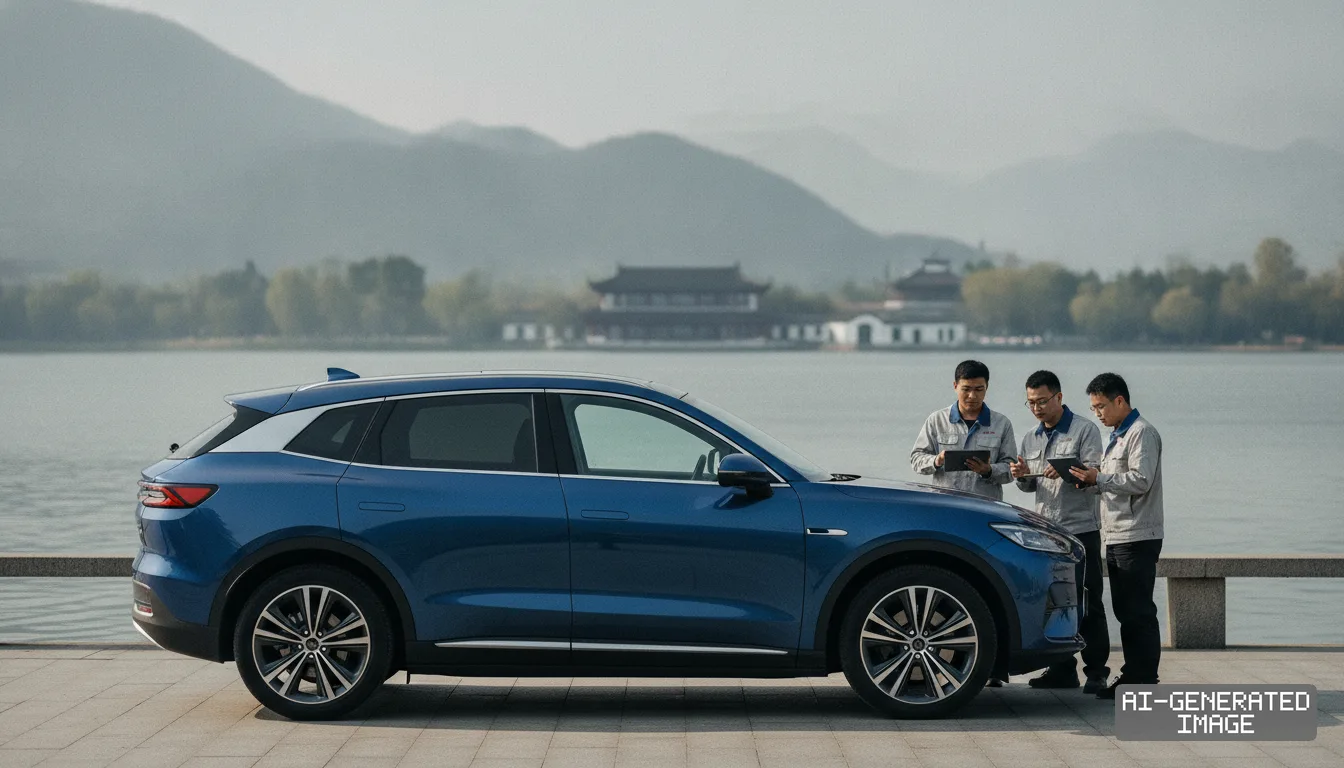
Li Auto Chief Executive Li Xiang said Oct. 23 that the automaker's updated 2026 Li i6 electric SUV achieved an 811.4-kilometer single-charge range using proprietary pack architecture rather than CATL batteries.
The endurance test, completed over 18 hours around Taihu Lake on Oct. 22, reached 104% of the vehicle's official 780-kilometer CLTC rating. Energy consumption averaged 11.8 kilowatt-hours per 100 kilometers.
The test vehicle operated with four adult occupants and 50 kilograms of test equipment on board. Driving speeds ranged between 40 and 60 kilometers per hour across flat highway sections, reaching a peak speed of 80 kilometers per hour.
The range figure establishes an operational milestone for Li Auto's core revenue driver. The i6 SUV delivered over 120,000 units during the first six months of 2026, generating more than 50% of the carmaker's total vehicle deliveries.
The model achieves that performance while removing Contemporary Amperex Technology from its supply chain. Filings published by China's Ministry of Industry and Information Technology confirm CATL is absent from the 2026 i6 specification register.
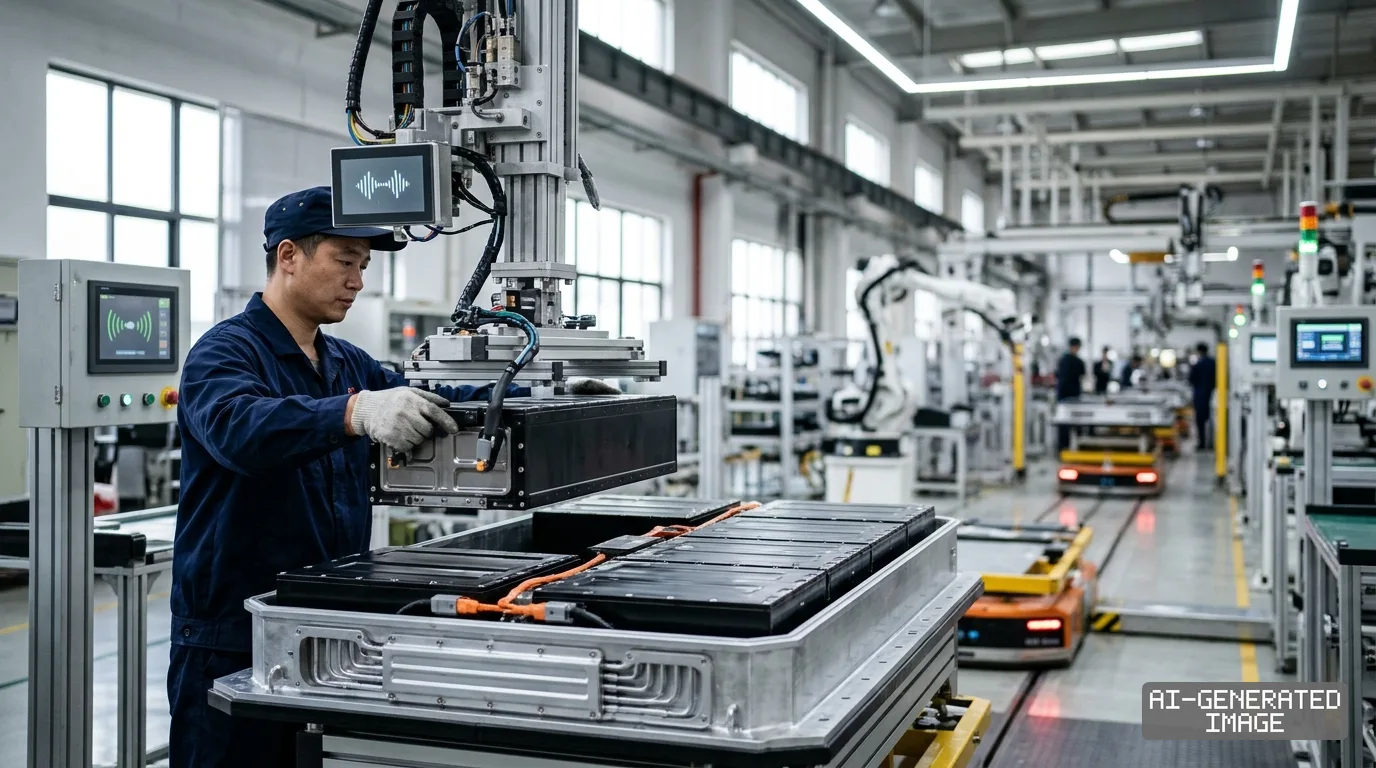
Shandong Li Auto Battery, an assembly venture owned 50-50 by Li Auto and Sunwoda, manufactures the pack configurations for the vehicle. Battery cells are sourced from Sunwoda Electronic and China Aviation Lithium Battery.
The configuration change completes a procurement shift on Li Auto's highest-volume vehicle. The preceding 2025 version of the Li i6 split battery procurement between CATL and Sunwoda, with CATL taking the dominant delivery volume.
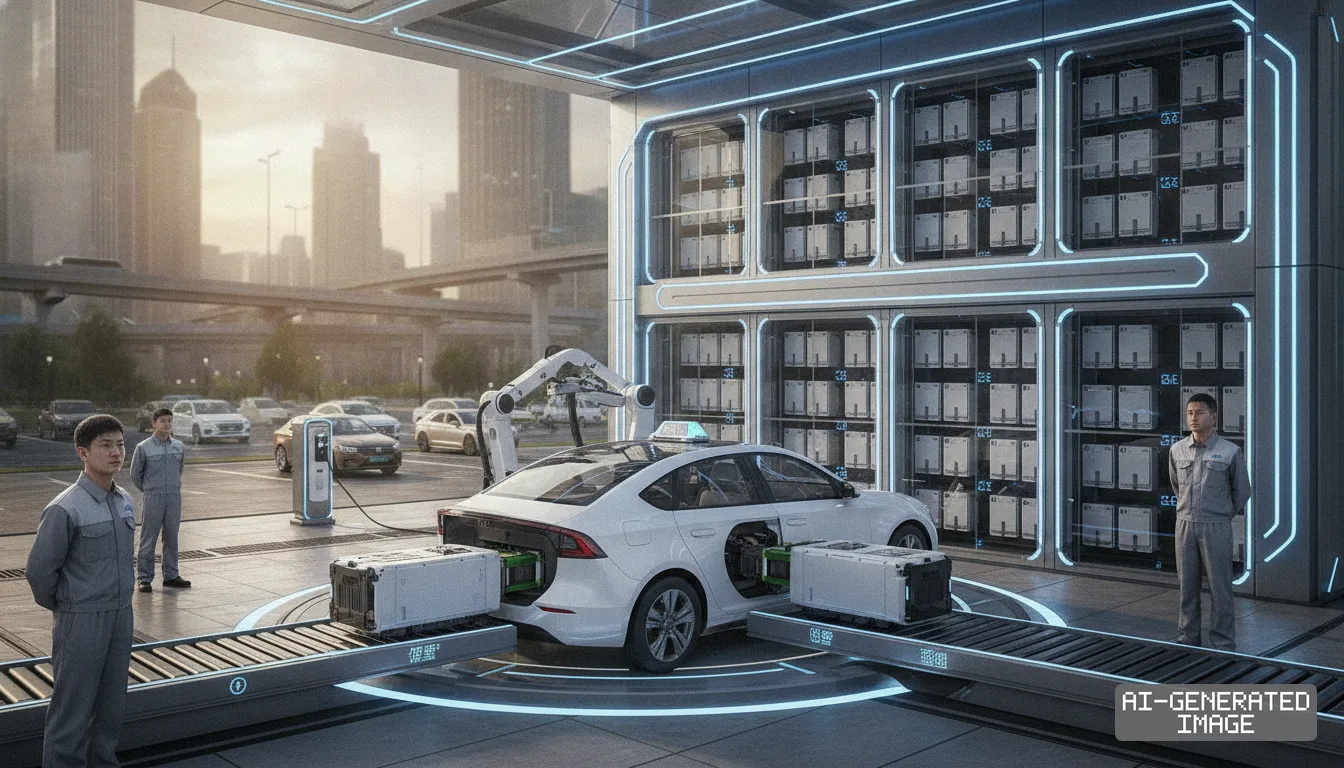
Li Auto introduced the underlying technology architecture, named Lianshan, during an engineering presentation in Beijing on Oct. 20. The platform integrates proprietary battery packaging, silicon-carbide power electronics and supercharging hardware.
The 2026 i6 features a 96-kilowatt-hour Lianshan battery pack engineered for 5C charging speeds. The 5C specification allows the vehicle to add 500 kilometers of driving range in 10 minutes when plugged into high-voltage charging stalls.
Chinese premium automakers are accelerating efforts to insource pack integration to regain pricing power. Traction battery packs represent between 40% and 50% of the total bill of materials for pure-electric sport utility vehicles.
Second-tier battery cells trade at prices roughly 5% below equivalent products from CATL, according to supply chain procurement records. On a 96-kilowatt-hour pack, that differential reduces component procurement expense by approximately 4,000 yuan ($560) per vehicle.
Multiplying those cost savings across the i6's annual production volume of roughly 240,000 vehicles yields nearly 960 million yuan ($135 million) in bill-of-materials reductions. Those savings flow directly into manufacturing gross margins.
Li Auto secured industrial capacity for its proprietary designs through strategic capital deployment on Sept. 4. The automaker invested 2.65 billion yuan ($395 million) in cash into Sunwoda's electric vehicle battery operating unit.
The investment gave Li Auto an 8.79% direct equity stake in Sunwoda EVB. Affiliated investment entities hold additional shares, giving Li Auto an aggregate 11.17% ownership position as the battery manufacturer's second-largest shareholder.
CALB joined Li Auto's supplier network in September to provide secondary cell sourcing for the i6. The battery maker also supplies ternary lithium cells to volume EV platforms run by Xiaomi, Leapmotor and XPeng.
The transition marks a rapid departure from historic supply practices across China's auto sector. Li Auto relied almost exclusively on CATL cells since shipping its debut model, the Li One extended-range SUV, in late 2019.
The loss of volume orders landed immediately on CATL's third-quarter financial results. CATL reported Oct. 20 that third-quarter net profit rose 14.54% year-on-year to 21.25 billion yuan ($3.18 billion).
That net income pace marked a sharp deceleration from the 36.5% growth recorded during the second quarter. The earnings figure also missed analyst consensus projections of 41% profit expansion compiled by LSEG.
Third-quarter revenue at CATL reached 165.22 billion yuan, rising 58.58% year-on-year but missing analyst expectations of 175.05 billion yuan. Shares of CATL tumbled 12.03% on the Shenzhen Stock Exchange on Oct. 21.
The battery manufacturer's share price has retreated more than 50% from its May peak of 460 yuan. Institutional investors have trimmed equity valuations as domestic EV brands redirect procurement to second-tier cell makers.
To overcome buyer brand loyalty to CATL, Li Auto introduced lifetime product guarantees on Oct. 20. The company committed to replace any vehicle with a new car of identical specification if its proprietary battery self-ignites.
A secondary warranty covers fires triggered by collisions or chassis scrapes. Under that provision, Li Auto pays the shortfall between insurance assessments and cash disbursements if a vehicle suffers total loss.
The company has not disclosed the actuarial liability reserve set aside to fund replacement guarantees. Regulatory filings also do not state the delivery allocation split agreed between Sunwoda and CALB.
Commercial sales of the 2026 Li i6 open across China on Oct. 28. First retail deliveries for the reconfigured electric sport utility vehicle begin on Nov. 5 across Li Auto's domestic dealership network.
Impact map
How this development propagates across the region and out to global buyers.
| Event | Korea | China | Japan | Global impact |
|---|---|---|---|---|
| Li Auto battery supply shift | LG Energy Solution faces stiffer pricing competition as Chinese OEMs internalize pack integration | CATL loses sole-source status at Li Auto while Sunwoda and CALB absorb 120,000-unit annual run rate | Panasonic sees tier-two Chinese cell makers capture pack share across domestic EV flagships | EV automakers lower pack BOM by ~5% using dual-sourcing contracts instead of single-vendor monopolies |
In this story
- Companies
- Li AutoContemporary Amperex Technology
- Tickers
- 2015.HK300750.SZ
- Exposed
- Sunwoda ElectronicCALBXiaomi
- Impact
- Supply ChainCost StructureCapex
Related briefings
- Li Auto drops CATL from 2026 i6, tapping Sunwoda and CALB Also on Xiaomi, Sunwoda Electronic, Li Auto
- Li Auto and EV rivals drop CATL to build in-house batteries Also on Xiaomi, CALB, Li Auto
- Li Auto adopts in-house batteries across all models to cut costs Also on Sunwoda Electronic, Li Auto, Contemporary Amperex Technology
- Li Auto Unveils Lianshan EV System and Lifetime Battery Warranties Also on CALB, Li Auto, Cost Structure
Sources
Reporting
Confidence: medium — how we grade this
The documents behind this briefing are linked above. East Asia Brief produces its English text with AI assistance under human editorial review, and does not translate or republish other outlets' articles. See our methodology and AI policy. Spotted an error? Tell us.
The Morning Brief
What changed in Korean, Chinese and Japanese industry overnight — and what it means for your supply chain. One email, weekday mornings, US time. Free.
The Morning Brief is in preparation. Leave your address and we will write to you once — when the first issue is ready. Nothing before that.