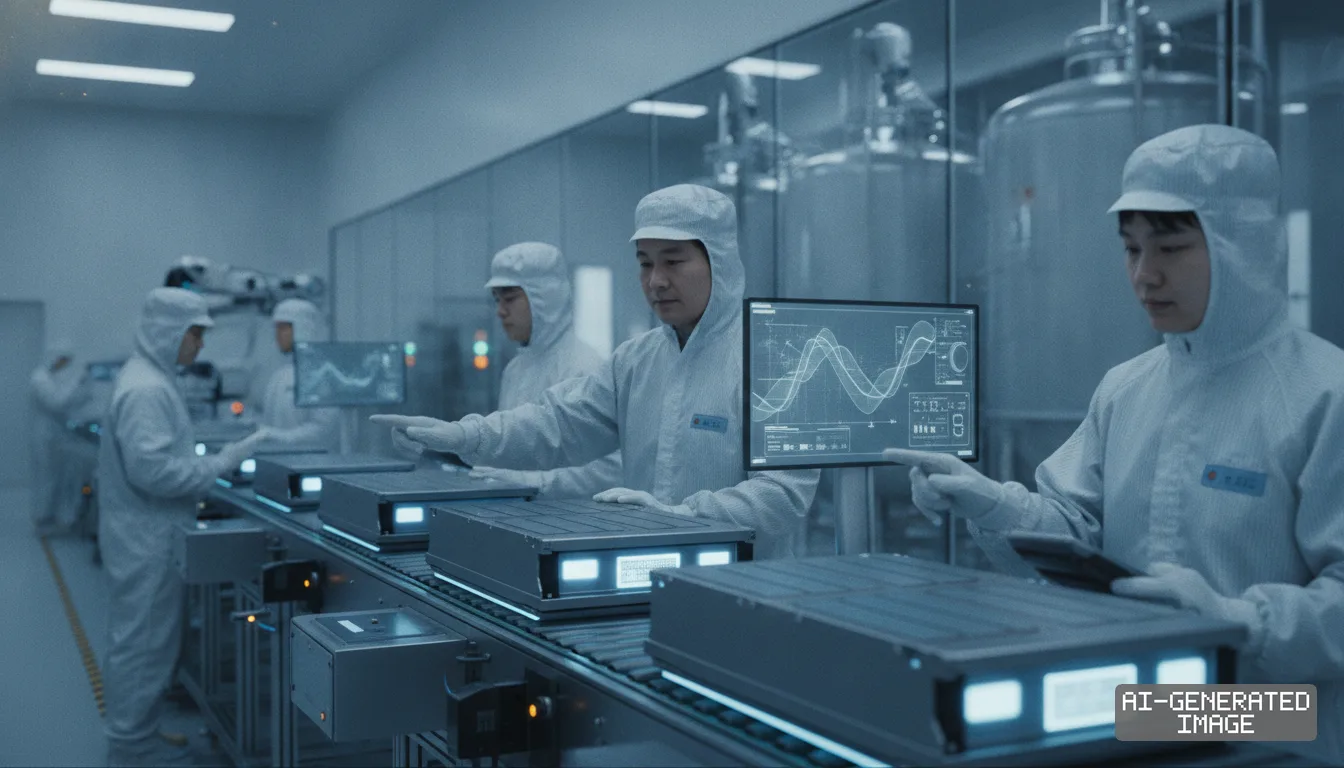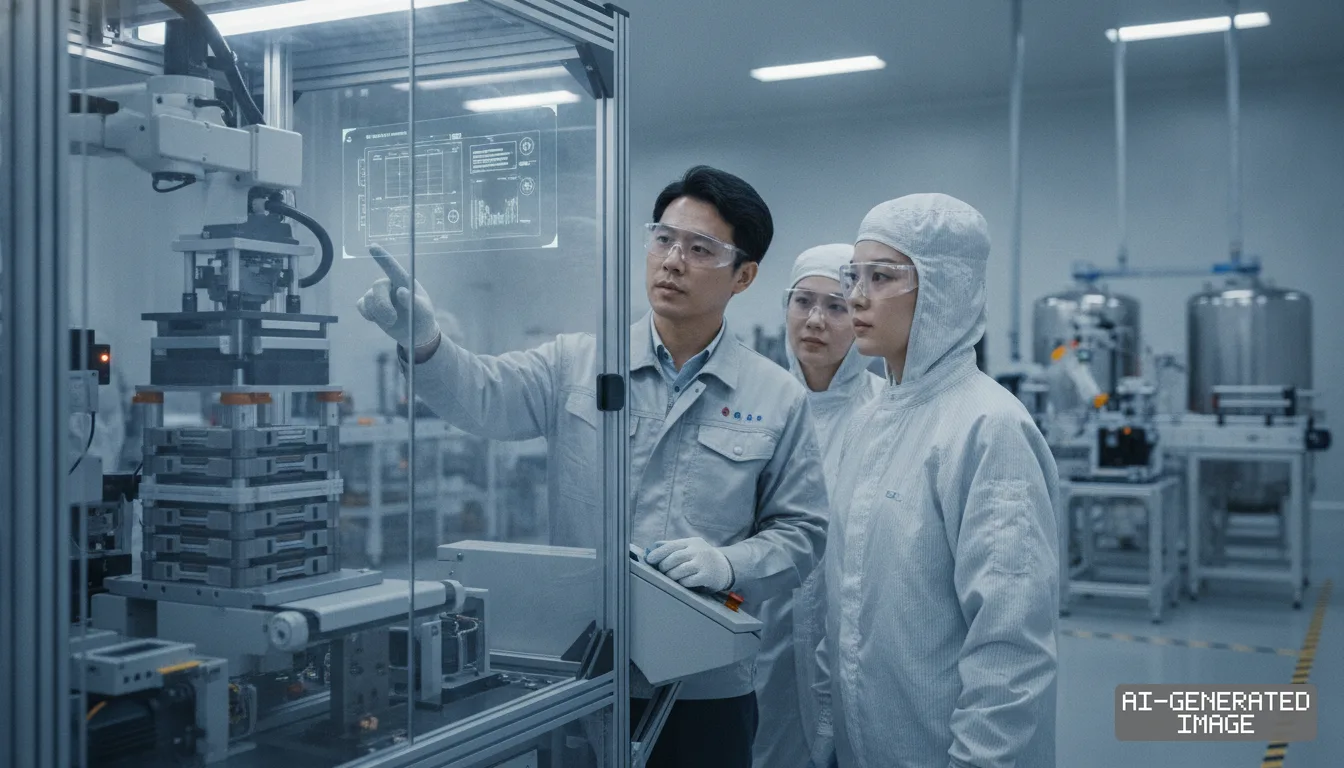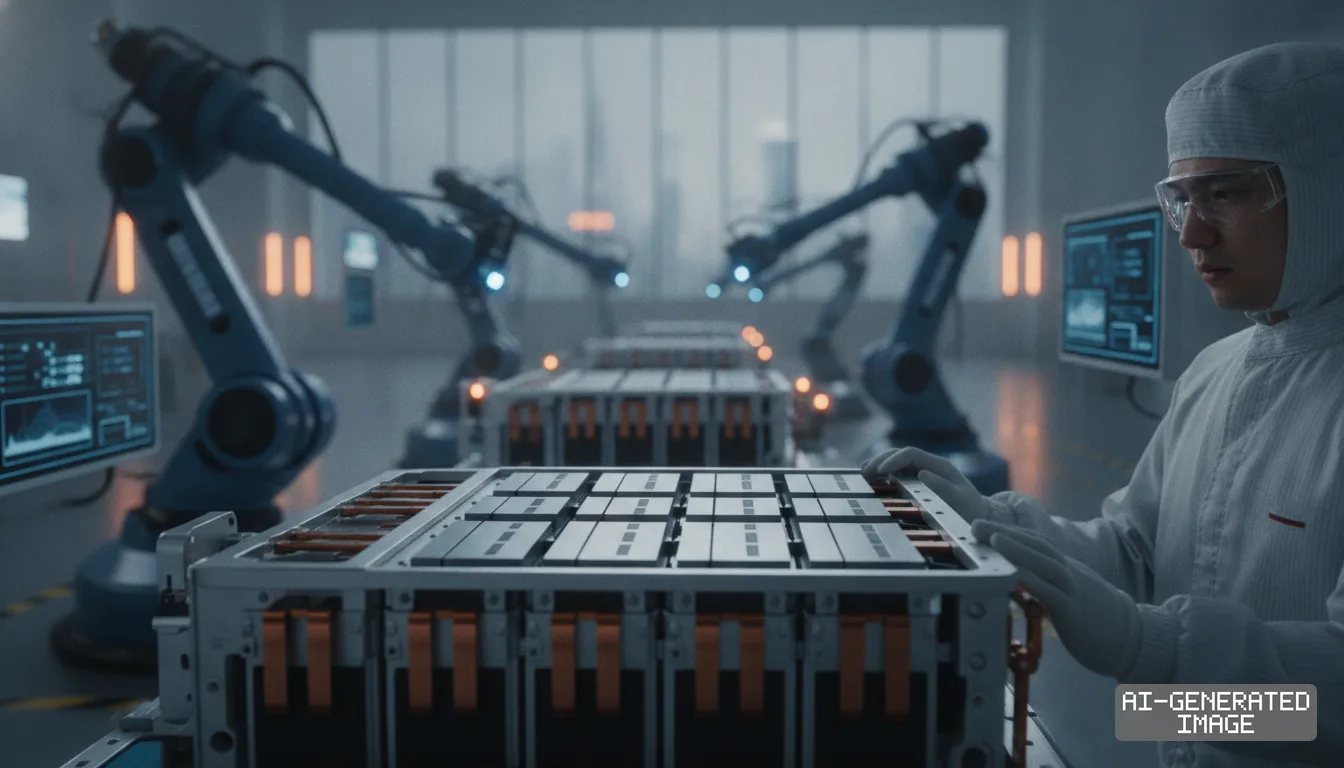
Korean cathode makers pivot to LMR to halt Chinese LFP gains in EVs
South Korean materials firms accelerate cobalt-free chemistries after non-China market share for domestic cell producers slid 10.4 percentage points to 27.2% through July.
South Korean cathode producers accelerated commercialization lines for lithium-manganese-rich and iron-phosphate chemistries on Oct. 5, 2026, countering a sharp erosion in global battery market share to Chinese manufacturers.
Data published by SNE Research showed non-China electric vehicle battery usage rose 25.8% to 316.2 gigawatt-hours during the first seven months of the year. Chinese manufacturers captured almost all new volume.
Contemporary Amperex Technology and BYD expanded their combined non-China share by 7.0 percentage points to 44.6%. Their lower-cost lithium iron phosphate — known as LFP — displaced traditional nickel chemistries across Europe and North America.
South Korea's three battery cell producers — LG Energy Solution, SK On and Samsung SDI — delivered 86.1 gigawatt-hours outside China, down 8.9%. Their combined market share dropped 10.4 percentage points to 27.2%.
LG Energy Solution recorded 51.6 gigawatt-hours outside China, a 1.7% contraction that pulled its market share down to 16.3%. Deliveries fell 9.9% at SK On and 29.4% at Samsung SDI.
The market shift pushed upstream materials groups away from pure high-nickel nickel-cobalt-manganese recipes. Suppliers are preparing lithium-manganese-rich cathode lines — known as LMR — as a primary mid-priced alternative.
LMR chemistries eliminate expensive cobalt and lower nickel content while raising manganese levels. The composition delivers roughly 33% higher energy density than LFP at a comparable production cost.
Ultium Cells, a joint venture between LG Energy Solution and General Motors, committed to the technology on Sept. 29. The venture will upgrade its Spring Hill, Tennessee facility to build prismatic LMR cells.
The Tennessee project will draw part of a $1 billion investment package run through 2030, the companies said. The installation will create 500 manufacturing jobs alongside the site's existing 1,200 employees.
General Motors plans to use the Tennessee-made prismatic LMR batteries to lower pack costs across future North American truck lines. The factory already produces LFP cells for stationary energy storage systems.
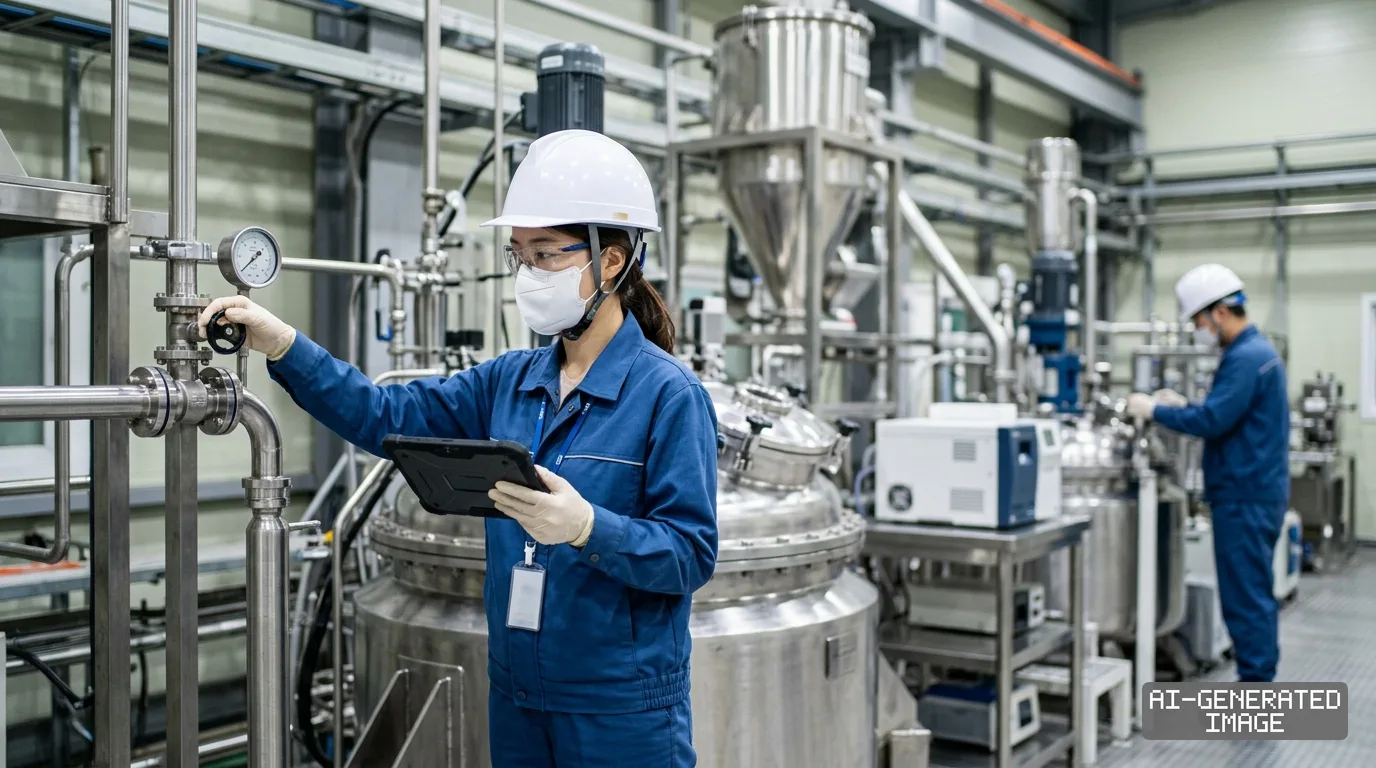
Cathode suppliers in South Korea are realigning domestic production footprints to support this shift. Companies that built businesses entirely on nickel are adding manganese-rich and iron-based product lines.
POSCO Future M is constructing a dedicated LFP cathode plant through CNP New Material Technology, a joint venture with CNGR and Pino. The venture broke ground in May in Pohang.
The Pohang facility will reach an annual capacity of 50,000 metric tons in phased expansions. POSCO Future M also secured a long-term contract in August to supply 190,000 tons of LFP material over six years.
To fulfill orders before the dedicated site opens, POSCO Future M converted high-nickel lines at its existing Pohang plant. Pilot certification is underway to begin customer shipments by late 2026.
EcoPro BM has completed pilot validation for its proprietary LMR cathode materials. The supplier engineered the chemical process to run on existing ternary production equipment without major mechanical rebuilding.
EcoPro BM also operates an LFP cathode manufacturing line with an annual capacity of 4,000 metric tons in Ochang. The unit uses a direct synthesis method that skips separate iron phosphate precursor synthesis.
LG Chem presented both LFP and LMR cathode formulations during industry exhibitions earlier this year. The company is operating pilot production lines while testing sample cells with international automotive customers.
The commercial pivot responds directly to regulatory incentives in the United States. Sourcing LFP from China disqualifies electric vehicles from consumer tax credits under strict foreign entity rules.
By pairing local North American battery assembly with non-Chinese cathode supply, Korean groups seek to provide tax-compliant, budget-friendly cells. Chinese cell makers remain heavily restricted in the American market.
Production schedules now determine whether Korean manufacturers can recover lost market share. Facility modifications at the Ultium Cells Spring Hill plant begin later this year and reach completion in 2028.
POSCO Future M aims to commission its 50,000-ton Pohang LFP cathode facility in late 2027. EcoPro BM plans to transition designated ternary lines to active LMR production as soon as vehicle purchase contracts close.
The companies have not published binding customer volume commitments for automotive LMR cathodes, and regulatory filings do not confirm commercial mass-production schedules for semi-solid precursor lines.
Modifications across Korean precursor and cathode plants continue under active qualification programs through the final quarter of 2026.
Impact map
How this development propagates across the region and out to global buyers.
| Event | Korea | China | Japan | Global impact |
|---|---|---|---|---|
| LMR and LFP commercialization drive | POSCO Future M and EcoPro BM retrofit lines as cell makers lose 10.4% non-China share | CATL and BYD capture 44.6% non-China market with low-cost LFP chemistries | Panasonic share slips to 7.8% outside China amid slowing North American high-nickel EV demand | Automaker cell procurement costs fall while LMR targets 33% higher energy density than LFP |
| LMR and LFP commercialization drive | POSCO Future M and EcoPro BM retrofit lines as cell makers lose 10.4% non-China share | CATL and BYD capture 44.6% non-China market with low-cost LFP chemistries | Panasonic share slips to 7.8% outside China amid slowing North American high-nickel EV demand | Automaker cell procurement costs fall while LMR targets 33% higher energy density than LFP |
In this story
- Companies
- POSCO Future MEcoPro BMLG ChemLG Energy Solution
- Tickers
- 003670.KS247540.KS051910.KS373220.KS
- Exposed
- BYDGeneral MotorsCNGR Advanced Material
- Policy
- SubsidiesEconomic Security
- Impact
- Supply ChainCapexOrder Book
Track every Subsidies development → Track every Economic Security development →
Related briefings
- Korean cathode makers automate single-crystal calcination lines to secure yields Also on LG Chem, EcoPro BM, POSCO Future M
- Korean cathode makers retool production lines for LMFP chemistry as price war spreads Also on LG Chem, EcoPro BM, POSCO Future M
- Battery makers widen aerogel sheet adoption as EV thermal propagation rules tighten Also on LG Chem, General Motors, BYD
- South Korea Expands Advanced Battery Tax Credits to Rebalance Domestic Fabs Also on EcoPro BM, POSCO Future M, LG Energy Solution
Sources
Reporting
Confidence: medium — how we grade this
The documents behind this briefing are linked above. East Asia Brief produces its English text with AI assistance under human editorial review, and does not translate or republish other outlets' articles. See our methodology and AI policy. Spotted an error? Tell us.
The Morning Brief
What changed in Korean, Chinese and Japanese industry overnight — and what it means for your supply chain. One email, weekday mornings, US time. Free.
The Morning Brief is in preparation. Leave your address and we will write to you once — when the first issue is ready. Nothing before that.