Panasonic opens ¥2.6B Osaka plant in first site expansion in 53 years
The Kashiwara facility raises in-house electric bicycle frame capacity by 38% and houses assembly lines for the GXM powertrain aimed at European buyers.
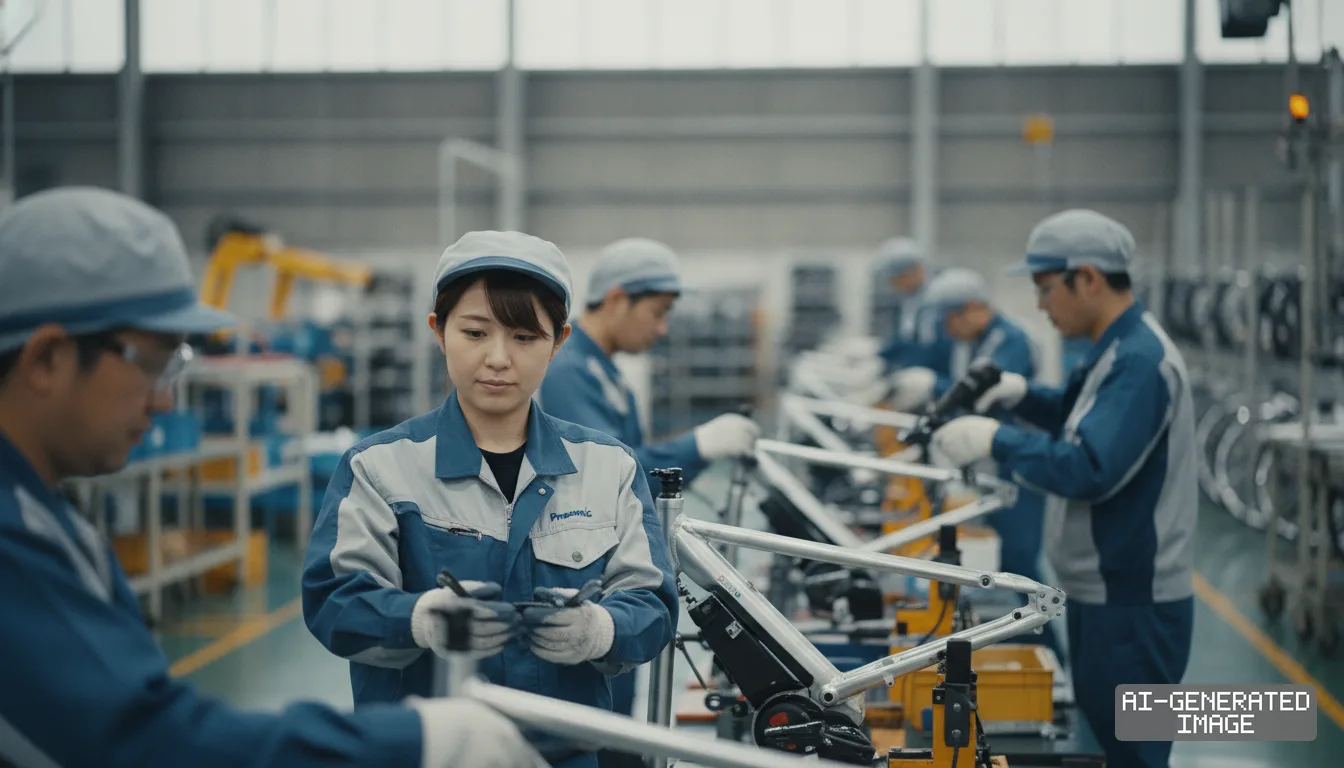
Panasonic Cycle Technology began operations Nov. 24 at a ¥2.6 billion ($16.3 million) manufacturing building in Kashiwara, Osaka Prefecture, marking its first plant expansion at the site in 53 years.
The five-story structure adds 4,600 square meters of floor area to boost electric bicycle production. It raises the company's internal frame manufacturing capacity to 138% of previous operating levels, representing a 38% net volume increase.
The capital expenditure supports an operational pivot toward internal component fabrication. The expansion positions the unit of Panasonic Holdings to serve rising micromobility demand across Japan and Western Europe.
The completed building features a floor load resistance of 750 kilograms per square meter, double the rating of existing plant structures. That specification accommodates heavy industrial automation and modernized tooling lines across each 920-square-meter floor.
Panasonic Cycle Technology replaced traditional gas combustion heating on the frame line with automated metal active gas welding. The shift integrates optical sensors and robotic arms to stabilize joint quality while reducing operational carbon emissions.
Management also transferred complete assembly lines for its proprietary GXM electric bicycle drive unit into the new building. Panasonic designed the mid-drive motor system specifically to challenge European component suppliers in premium commuter segments.
The facility layout incorporates business continuity protections against seasonal river flooding. Engineers placed high-precision drive unit assembly lines and specialized tooling on upper stories where water damage risks remain minimal.
The unit consolidated previously dispersed testing, evaluation and mechanical analysis equipment into the Kashiwara building. Bringing structural verification in-house eliminates external laboratory lead times during frame development.
High-quality products require an efficient, resilient and stable supply base, Panasonic Cycle Technology President Toshiaki Inage said at an opening briefing. Strengthening core manufacturing assets is the primary objective of this capital program, Inage said.
The manufacturing upgrade allows the company to adjust sourcing strategies in response to foreign exchange pressure. Prolonged weakness in the Japanese yen has increased procurement costs for aluminum commuter frames imported from contract suppliers in China.
Expanding domestic automated welding lines enables Panasonic to replace select Chinese aluminum imports with domestically fabricated steel frames. This tactical pivot protects operating margins on mass-market commuter fleets sold in Japan.
Panasonic Cycle Technology holds a dominant domestic footprint, controlling nearly 60% of Japan's electric-assist bicycle market. Domestic demand has shifted rapidly from standard utility bicycles toward motorized models for school commuting and urban deliveries.
Growth opportunities remain centered overseas, where Panasonic commands only about 1% of the European electric bicycle segment. European market dominance is currently contested by Germany's Robert Bosch and Japanese drivetrain specialist Shimano.
Panasonic Cycle Technology booked ¥53.6 billion ($336 million) in revenue during fiscal 2025. The subsidiary has set a corporate expansion target to generate ¥100 billion ($628 million) in annual sales by fiscal 2030.
Closing that commercial gap requires broader adoption of the GXM motor platform among European bicycle original equipment manufacturers. The modular drive platform pairs with in-house Panasonic lithium-ion battery packs to offer fully integrated electric powertrains.
The company has not published annual nameplate unit capacity figures for the relocated GXM powertrain line. The announcement leaves unstated the exact share of drive units earmarked for direct export.
Panasonic plans to complete technical evaluations for prospective European customer brands before the start of the 2027 product ordering cycle. Commercial shipments of localized steel frames from the automated Kashiwara line are scheduled to expand through the first quarter of 2027.
Impact map
How this development propagates across the region and out to global buyers.
| Event | Korea | China | Japan | Global impact |
|---|---|---|---|---|
| Kashiwara plant expansion | domestic e-bike assemblers face tighter export competition in European commuter lines | parts suppliers see lower contract volume as Panasonic substitutes imported aluminum frames with domestic steel | Panasonic lifts frame capacity to 138% and consolidates in-house GXM drive unit assembly | micromobility OEMs secure an alternative Japanese Tier-1 supplier to counter Bosch and Shimano dominance |
| Kashiwara plant expansion | domestic e-bike assemblers face tighter export competition in European commuter lines | parts suppliers see lower contract volume as Panasonic substitutes imported aluminum frames with domestic steel | Panasonic lifts frame capacity to 138% and consolidates in-house GXM drive unit assembly | micromobility OEMs secure an alternative Japanese Tier-1 supplier to counter Bosch and Shimano dominance |
In this story
- Companies
- Panasonic HoldingsPanasonic Cycle Technology
- Tickers
- 6752.T
- Exposed
- Shimano
- Impact
- CapexSupply ChainOrder Book
Related briefings
- Panasonic develops humanoid robot batteries at Osaka lab Also on Panasonic Holdings, Order Book
- Japan certifies $2.4 billion in battery subsidies to lock in solid-state cell capacity Also on Panasonic Holdings, Order Book
- Panasonic Energy links with Delta-Q on industrial EV chargers Also on Panasonic Holdings, Order Book
- Japanese automakers standardize prismatic battery cold tests as EV timelines advance Also on Panasonic Holdings, Order Book
Sources
Reporting
Confidence: medium — how we grade this
The documents behind this briefing are linked above. East Asia Brief produces its English text with AI assistance under human editorial review, and does not translate or republish other outlets' articles. See our methodology and AI policy. Spotted an error? Tell us.
The Morning Brief
What changed in Korean, Chinese and Japanese industry overnight — and what it means for your supply chain. One email, weekday mornings, US time. Free.
The Morning Brief is in preparation. Leave your address and we will write to you once — when the first issue is ready. Nothing before that.