LG Energy Solution tests sodium batteries for US power grids
The South Korean cell maker plans a 30-megawatt-hour sample verification by early 2027, converting Ochang lines to counter Chinese dominance in utility-scale storage.
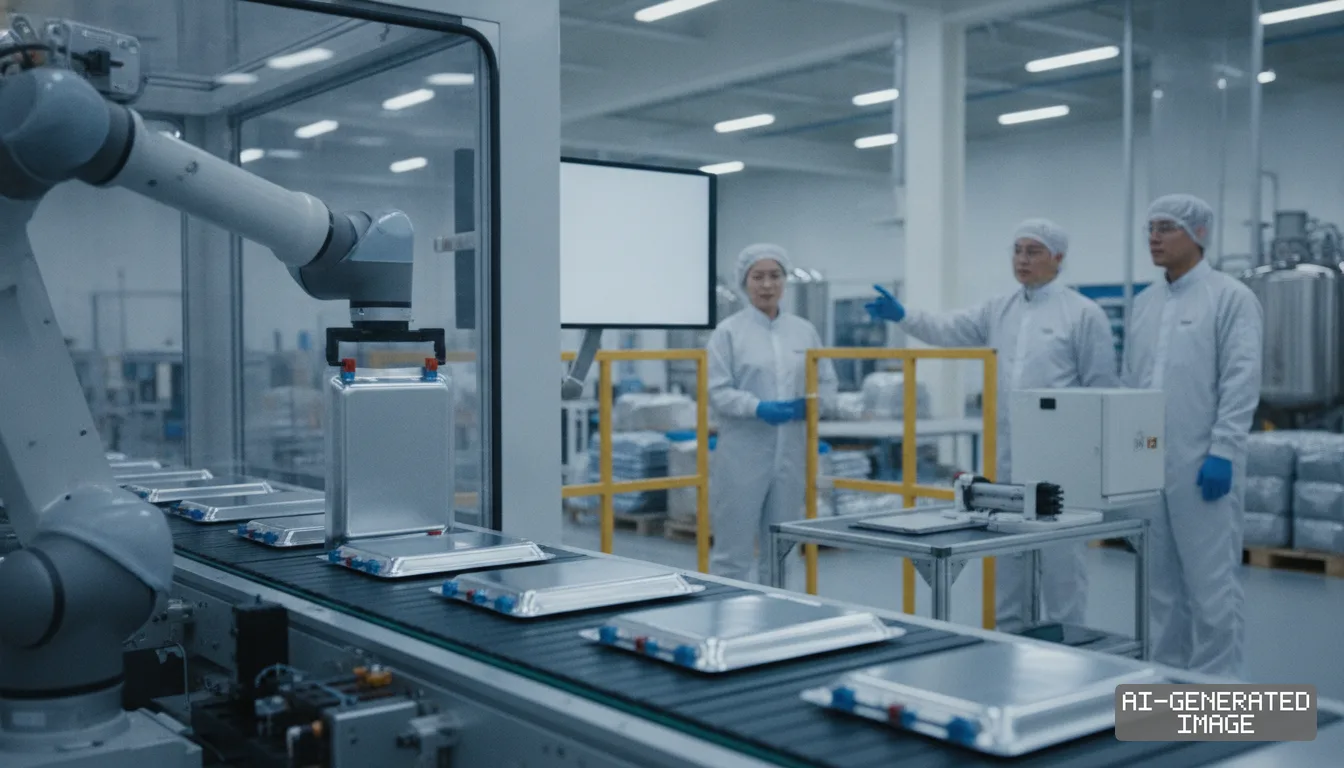
LG Energy Solution accelerated plans on Oct. 13, 2026, to validate 30 megawatt-hours of sodium-ion energy storage cells with North American utility customers by early 2027.
The validation batch represents the company's first overseas grid trial for non-lithium chemistries. It targets field testing during the first half of 2027, according to industry sources.
The 30 megawatt-hours under review account for a small fraction of grid installations but mark a pivotal proof-of-concept milestone. North American utility buyers seek alternatives to Chinese supply lines.
Engineers will assemble the qualification packs at the Ochang Energy Plant in North Chungcheong Province, South Korea. The facility already runs pilot trials for 12-volt and 24-volt automotive starter batteries.
LG Energy Solution decided in July to convert an existing lithium-ion line at Ochang into a sodium-ion mother line by December 2026. Converting lines lowers capital expense and speeds up commissioning.
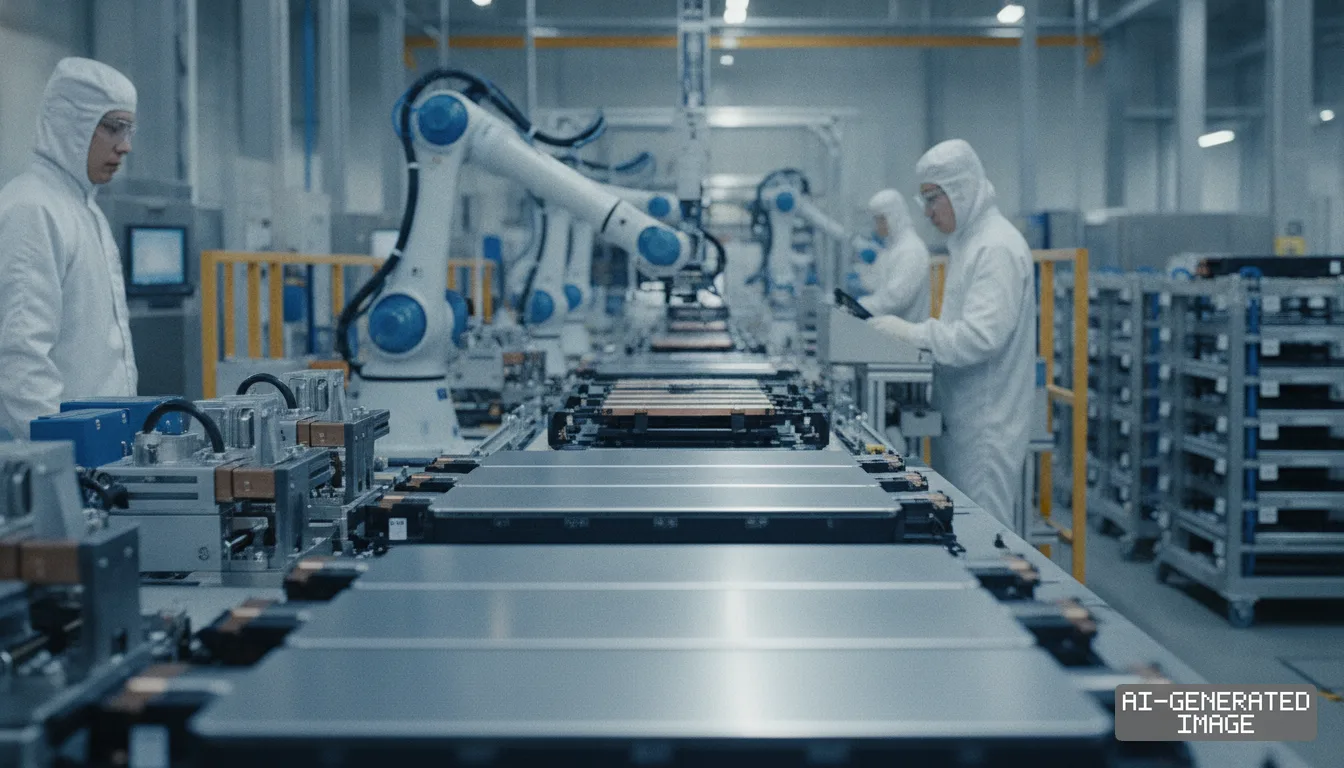
A mother line replicates commercial high-volume manufacturing rather than laboratory assembly. The setup allows engineers to test throughput speeds, coating precision and scrap rates under industrial conditions before building dedicated factories.
The company also operates a 200-megawatt-hour pilot facility in Nanjing, China, dedicated to prismatic sodium-ion cells. That unit focuses on verifying electrode slurry stability and casing seals ahead of domestic scale-up.
LG Energy Solution previously showcased a pouch-type sodium-ion battery cell at the InterBattery exhibition in Seoul in March 2026. The prototype highlighted the manufacturer's dual-track development of prismatic and pouch configurations.
Commercial deliveries will begin in 2027, the company said. Initial shipments will target stationary storage and uninterruptible power systems before the company expands into entry-level passenger electric vehicles.
The manufacturer views long-duration grid storage as the primary initial deployment area. The platform targets utility installations designed to discharge stored electricity across cycles lasting six hours or more.
Grid-connected demonstrations will test frequency regulation and power smoothing alongside commercial solar and wind farms. The trials verify operational stability under fluctuating voltage profiles before utility developers order larger volumes.
South Korea's joint government-industry technical roadmap targets an energy density of 160 watt-hours per kilogram by 2027. State planners aim to reach 220 watt-hours per kilogram by 2030.
That trajectory would bring sodium-ion cells into direct competition with lithium iron phosphate batteries. Chinese manufacturers currently dominate that low-cost format across global utility projects.
Sodium-ion batteries replace lithium salts with abundant sodium carbonate. Sodium is roughly 1,200 times more plentiful than lithium in the earth's crust and can be processed from seawater and table salt.
The chemistry also alters current collectors inside the cell. While lithium-ion cells require heavy copper foil on the negative terminal, sodium cells run on lightweight aluminum foil on both positive and negative electrodes.
The substitution removes copper procurement risk and reduces cell raw material expenses. The configuration also allows cells to discharge completely to zero volts during transport without copper dissolution damaging cell structure.
Sodium cells retain more than 90% of their rated capacity at minus 40 degrees Celsius, according to company technical briefings. That tolerance lowers parasitic heating loads in utility containers during severe winter freezes.
The development targets the market position of Contemporary Amperex Technology Co. Limited, known as CATL. The Chinese battery manufacturer is preparing gigawatt-hour scale production of its own sodium-ion cells this year.
Chinese suppliers currently control roughly 90% of global lithium iron phosphate cell manufacturing. That concentration leaves North American renewable project developers vulnerable to shifting trade duties and domestic procurement mandates.
Domestic rivals Samsung SDI and SK On are developing competing sodium-ion platforms for power grids. Both Korean manufacturers expect North American utilities to seek non-Chinese battery chemistries to satisfy federal supply rules.
South Korean authorities began work with LG Energy Solution, Samsung SDI and SK On to establish national technical standards for sodium cells. The program coordinates testing protocols, module form factors and battery management software.
LG Energy Solution is qualifying domestic chemical partners to supply hard carbon anode material and cathode precursors. Hard carbon — a disordered carbon structure that hosts larger sodium ions — replaces synthetic graphite.
Localizing the chemical supply chain avoids dependence on Chinese mineral processors. China refines the vast majority of commercial spherical graphite and battery-grade lithium compounds used across Western energy markets.
North American grid operators will receive the first 30-megawatt-hour demonstration packs by June 2027. Full commercial manufacturing contracts across utility-scale energy storage projects are scheduled to follow later that year.
The company has not filed regulatory disclosures naming the North American buyers, and LG Energy Solution has not published contract values or commercial delivery volumes for the 30-megawatt-hour testing program.
Impact map
How this development propagates across the region and out to global buyers.
| Event | Korea | China | Japan | Global impact |
|---|---|---|---|---|
| 30MWh sodium ESS trial | LG Energy Solution converts Ochang line to supply 30MWh validation batch | CATL faces non-Chinese alternative to its LFP grid dominance | Panasonic remains tied to automotive ternary cells without sodium ESS entry | US utility developers gain non-lithium hedge against China supply chains |
In this story
- Companies
- LG Energy Solution
- Tickers
- 373220.KS
- Exposed
- CATLSamsung SDISK On
- Policy
- Supply ChainSubsidies
- Impact
- Supply ChainCapexCost Structure
Track every Supply Chain development → Track every Subsidies development →
Related briefings
- Li Auto and EV rivals drop CATL to build in-house batteries Also on CATL, Supply Chain, Cost Structure
- South Korean battery makers prepare sodium-ion lines for energy storage Also on CATL, SK On, Samsung SDI
- Samsung SDI and LG Energy double ESS warranties to 20 years in US Also on CATL, SK On, Samsung SDI
- US warns Ford over Chinese battery ties with CATL and Geely Also on CATL, SK On, LG Energy Solution
Sources
Reporting
Confidence: medium — how we grade this
The documents behind this briefing are linked above. East Asia Brief produces its English text with AI assistance under human editorial review, and does not translate or republish other outlets' articles. See our methodology and AI policy. Spotted an error? Tell us.
The Morning Brief
What changed in Korean, Chinese and Japanese industry overnight — and what it means for your supply chain. One email, weekday mornings, US time. Free.
The Morning Brief is in preparation. Leave your address and we will write to you once — when the first issue is ready. Nothing before that.