LG Energy Solution taps L&F in 1.035T won deal to diversify cathodes
The four-year procurement agreement runs from 2028 through 2031, shifting cell materials away from Chinese suppliers and equaling 22% of L&F's 2025 revenue.
LG Energy Solution widened its lithium iron phosphate cathode supply network to three producers on Nov. 3, contracting domestic materials maker L&F to supply raw feedstocks for power grids and vehicles.
The four-year procurement agreement carries a valuation of 1.035 trillion won ($774 million), covering cathode shipments from 2028 through 2031. The order equals roughly 22% of L&F's 2025 consolidated revenue.
The agreement diversifies procurement beyond Chinese refiners as American trade measures penalize battery components sourced from designated foreign entities. Cathode active materials represent roughly 40% of total cell manufacturing costs.
LG Energy Solution previously sourced its entire lithium iron phosphate, or LFP, cathode inventory from China's Changzhou Liyuan New Energy Technology. That vendor holds a supply pact covering 260,000 metric tons through 2028.
The battery manufacturer deepened ties with Changzhou Liyuan in February 2025 by purchasing a 20% equity stake in its Indonesian processing subsidiary. That overseas venture provides synthetic active material for plants outside China.
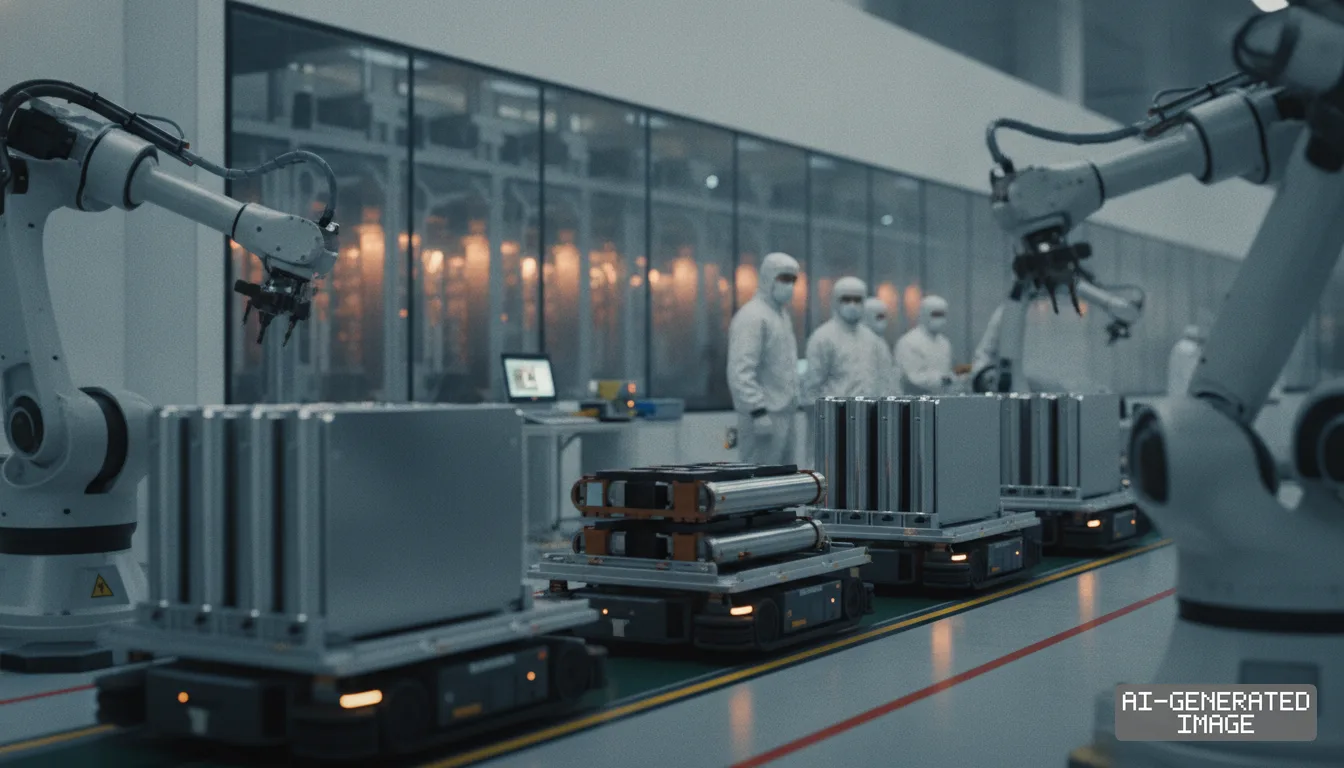
Under the new contract, L&F will manufacture the iron-phosphate cathode material through its specialized subsidiary, L&F Plus. Shipments will supply LG Energy Solution production facilities located in South Korea and abroad.
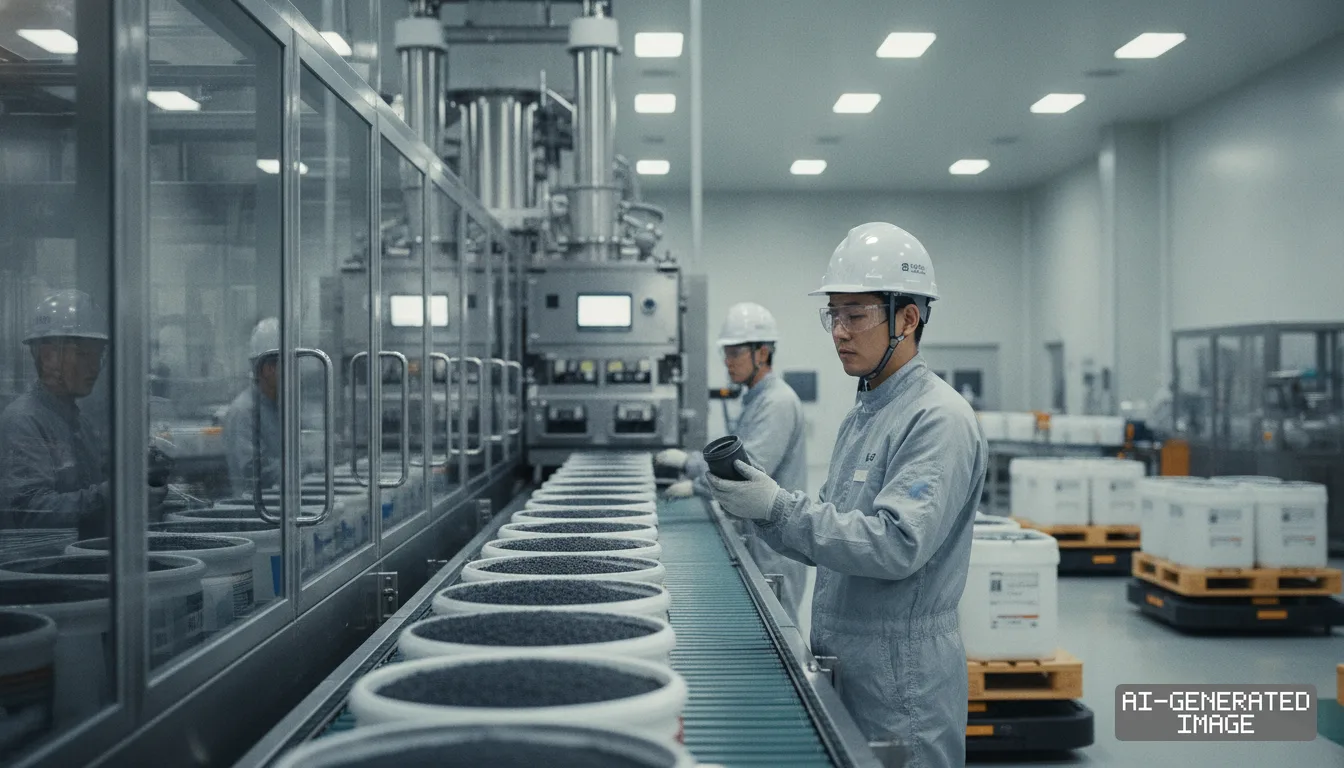
L&F completed construction of a dedicated LFP synthesis plant in Daegu in May. The facility began commercial output at an annual rate of 30,000 metric tons in late September, the company said in a regulatory filing.
The supplier plans to expand its Daegu site to 60,000 metric tons of annual capacity by mid-2027. It is reviewing further capacity additions to fulfill expanding customer commitments across the battery sector.
The deal establishes L&F as a supplier to all three major South Korean cell manufacturers. L&F previously signed LFP cathode contracts with Samsung SDI in March and with SK On in September.
The Samsung SDI agreement covers 1.6067 trillion won ($1.2 billion) in shipments between 2027 and 2029. The SK On contract provides 161.7 billion won ($121 million) in cathode deliveries through 2028.
The L&F contract follows a separate materials agreement signed on Oct. 30 with POSCO Future M. That memorandum of understanding covers 720,000 metric tons of cathode and anode materials over seven years.
The POSCO Future M accord spans from 2027 through 2033, introducing domestic LFP cathodes and synthetic graphite anodes. Synthetic graphite coats the negative battery terminal to improve electrical conductivity and extend operating longevity.
POSCO Future M plans to convert an existing high-nickel cathode production line at its Pohang factory into an LFP line. Initial deliveries to LG Energy Solution are scheduled to start in early 2027.
The supplier plans to extract upstream lithium feedstock from brine reserves in Argentina developed by parent POSCO Group. The integrated mineral processing chain aims to reduce input costs below prevailing spot benchmarks.
POSCO Future M also secured a 1.1 trillion won ($824 million) LFP cathode contract with SK On and a 6 trillion won deal with Samsung SDI, securing supply relationships across the domestic sector.
Securing three parallel LFP cathode vendors supports LG Energy Solution's drive into utility-scale storage systems. Grid operators are installing stationary batteries at record volumes to buffer electricity demands from artificial intelligence data centers.
LFP chemistries use iron and phosphorus rather than costly cobalt and nickel. The olivine mineral structure gives LFP cells superior thermal stability, significantly reducing fire hazards in dense, high-capacity utility container installations.
According to the International Energy Agency, LFP formulations accounted for roughly 80% of global stationary battery storage additions in 2023. Chinese chemical processors historically synthesized more than 90% of global LFP cathodes.
United States clean energy subsidies disqualify stationary storage systems that incorporate battery components made by prohibited foreign entities starting with upcoming tax years. Battery fabricators must source non-Chinese active materials to preserve tax incentives.
By building non-Chinese cathode channels in South Korea, LG Energy Solution positions its overseas cell facilities for trade compliance. The manufacturer is deploying dedicated LFP battery manufacturing lines in Arizona and Michigan.
The multi-vendor sourcing structure also buffers LG Energy Solution against raw material disruptions. Sourcing cathode powder from domestic chemical facilities provides operational continuity if overseas maritime routes or export rules face sudden restrictions.
The regulatory filing does not state the volume allocation between passenger electric vehicles and stationary power systems. LG Energy Solution has not disclosed the pricing mechanisms that link supply contracts to spot lithium carbonate indexes.
LG Energy Solution and POSCO Future M plan to conclude negotiations and sign a definitive, binding contract by Dec. 31. Volume deliveries from L&F will begin in January 2028 and run through December 2031.
Impact map
How this development propagates across the region and out to global buyers.
| Event | Korea | China | Japan | Global impact |
|---|---|---|---|---|
| LFP cathode supplier diversification | L&F and POSCO Future M secure 1.035 trillion won and 720,000-ton multi-year supply volumes | Changzhou Liyuan loses monopoly on LG Energy Solution LFP cathode procurement | Cell makers and material suppliers face stiffer non-Chinese LFP competition in US ESS tenders | North American ESS projects gain compliant LFP cell supplies free of Chinese foreign-entity exposure |
In this story
- Companies
- LG Energy SolutionPOSCO Future M
- Tickers
- 373220.KS066970.KS003670.KS
- Exposed
- Samsung SDISK OnChangzhou Liyuan New Energy Technology
- Policy
- SubsidiesLocal Content Rules
- Impact
- Supply ChainOrder BookCompliance
Track every Subsidies development → Track every Local Content Rules development →
Related briefings
- POSCO Future M signs material deal with LG Energy Solution Also on POSCO Future M, Local Content Rules, SK On
- L&F signs $774 million LFP contract with LG Energy Solution Also on POSCO Future M, Local Content Rules, SK On
- POSCO Future M and L&F build LFP lines on Korean battery contracts Also on POSCO Future M, Local Content Rules, SK On
- Hyundai Motor pursues $75M anode stake with POSCO Future M Also on POSCO Future M, Local Content Rules, SK On
Sources
Reporting
Confidence: medium — how we grade this
The documents behind this briefing are linked above. East Asia Brief produces its English text with AI assistance under human editorial review, and does not translate or republish other outlets' articles. See our methodology and AI policy. Spotted an error? Tell us.
The Morning Brief
What changed in Korean, Chinese and Japanese industry overnight — and what it means for your supply chain. One email, weekday mornings, US time. Free.
The Morning Brief is in preparation. Leave your address and we will write to you once — when the first issue is ready. Nothing before that.