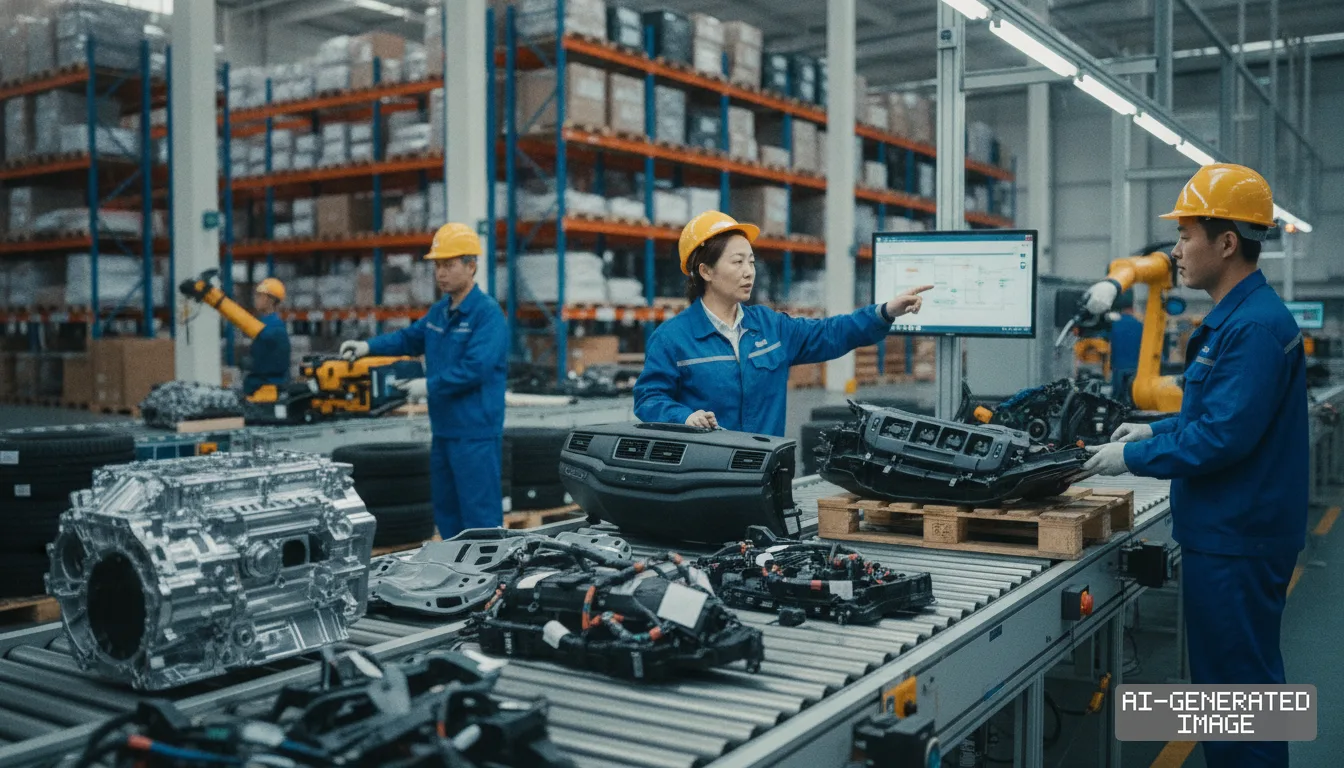
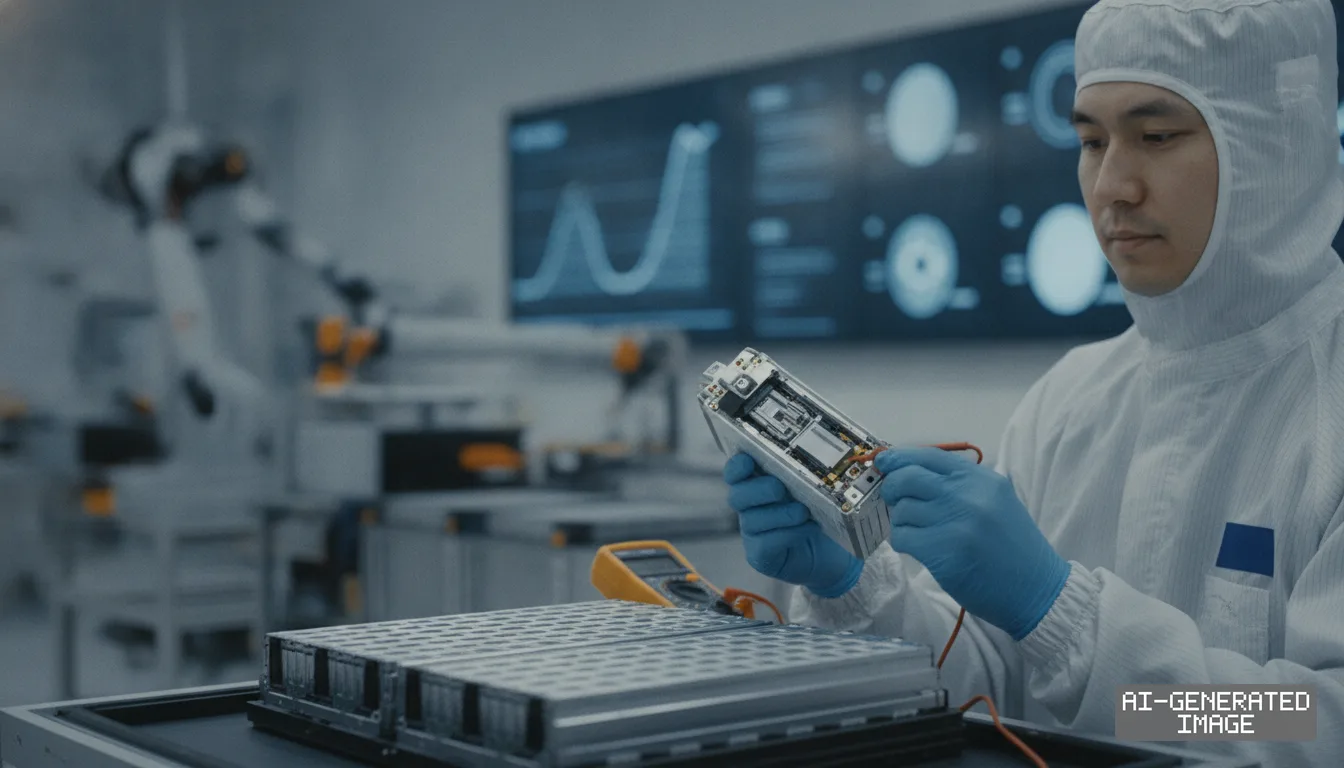
Hyundai Motor adopts CATL battery swapping for 2027 China EV push
An 8 billion yuan recapitalization of Beijing Hyundai will anchor the rollout across a 2,520-station grid, departing from exclusive reliance on Korean cell suppliers.
Hyundai Motor unveiled its Mercury concept electric vehicle on Nov. 27, 2026, confirming plans to introduce battery-swapping models in China through a direct partnership with Contemporary Amperex Technology.
The move marks the first time a foreign joint-venture automaker has integrated CATL's Choco-Swap architecture, departing from exclusive reliance on South Korean battery manufacturers for dedicated electric models.
The strategic pivot accompanies an 8 billion yuan ($1.1 billion) recapitalization of Beijing Hyundai, funding a rollout of 24 electrified and combustion vehicles across China by 2030.
The production vehicle will carry the name IONIQ M, scheduled to enter the Chinese market during the first half of 2027, the company said in an exhibition briefing.
Hyundai Motor designed the subcompact electric sport utility vehicle specifically for urban commuters, establishing an initial monthly sales target of 2,500 units for the production model.
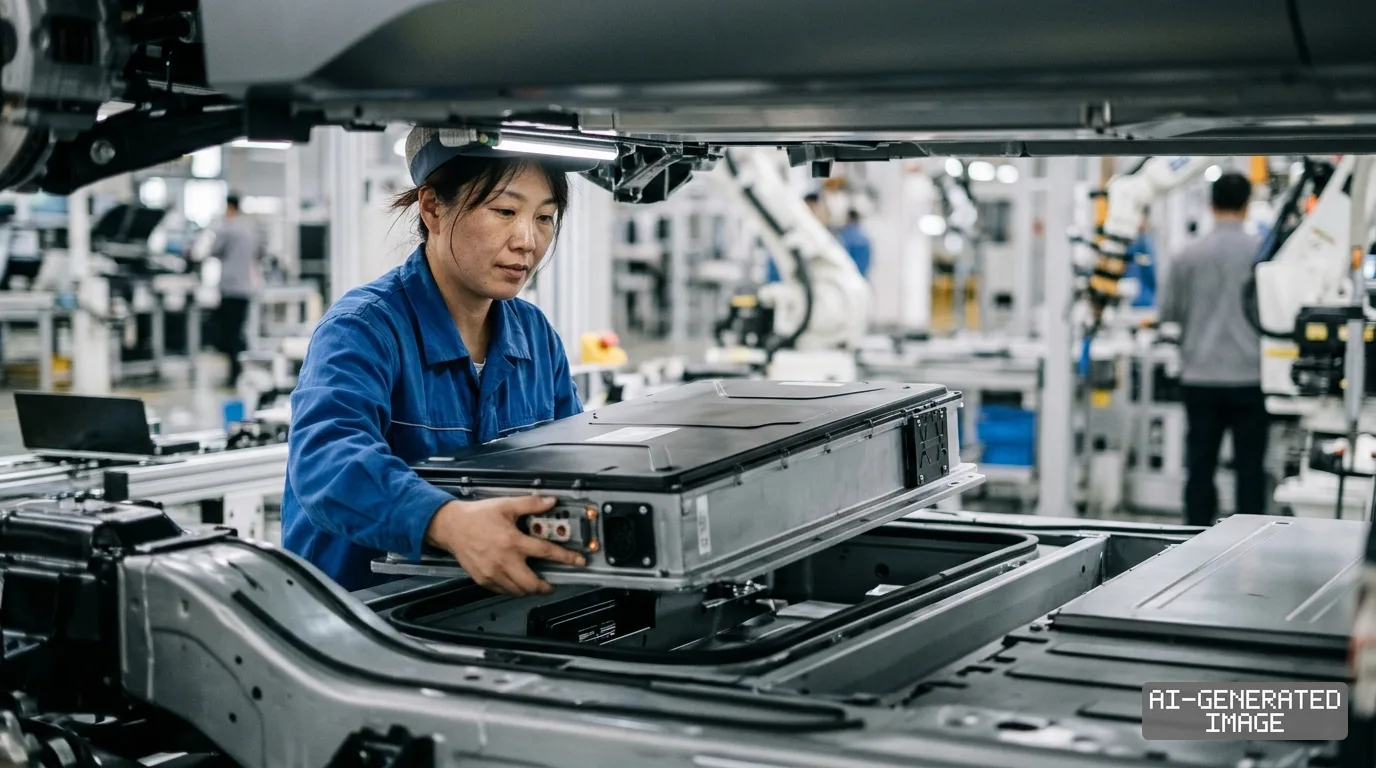
The mechanical interface connects the car directly to CATL's standardized Choco-SEB pack system, which completes an automated battery replacement in roughly 99 seconds.
CATL operated 2,520 passenger vehicle swapping stations across 200 Chinese cities at the end of September 2026, according to company infrastructure disclosures.
The Chinese battery maker aims to operate 3,000 stations by the end of 2026, before expanding the physical footprint to 6,000 locations across 297 municipalities during 2027.
Securing Hyundai Motor gives CATL its first foreign-brand manufacturing partner for passenger swapping, joining domestic collaborators such as BAIC Group and Huawei Technologies automotive subsidiary Yinwang.
CATL accounted for roughly 37% of global electric vehicle battery installations in the first half of 2026, using standardized packs to lock commercial fleets into its hardware network.
The alliance reshapes Hyundai Motor's cell procurement strategy, which previously directed global electric vehicle platforms almost entirely to South Korean battery makers LG Energy Solution, Samsung SDI and SK On.
Those three domestic manufacturers supply the Electric-Global Modular Platform supporting the Ioniq 5 and Ioniq 6 in South Korea, North America and Europe, but face structural hurdles inside China.
South Korean battery producers held less than 2% of China's domestic power battery market in the third quarter of 2026, hampered by local supply-chain clustering and battery pricing pressures.
Hyundai Motor also awarded major software contracts to Chinese suppliers to match consumer demand for digital features in the domestic market, the company said.
Chinese autonomous driving developer Zhuoyu will supply the vehicle's Level 2++ driver assistance package, tailored for navigation on multi-tier urban expressways and congested city avenues.
ByteDance will provide its Doubao generative artificial intelligence foundation model to operate the digital cockpit, powering natural speech interactions and contextual cabin controls.
Beijing Hyundai, the 50-50 manufacturing joint venture between Hyundai Motor and BAIC Group, will produce the IONIQ M at its assembly facilities in Beijing.
The automaker's official release does not disclose battery pack kilowatt-hour capacities, estimated single-charge driving ranges or recurring subscription fees for the battery-as-a-service program.
Commercial deliveries of the IONIQ M will begin in Chinese dealerships in the first half of 2027, establishing the first operational test of Hyundai Motor's swappable model.
Impact map
How this development propagates across the region and out to global buyers.
| Event | Korea | China | Japan | Global impact |
|---|---|---|---|---|
| Hyundai Motor adopts CATL Choco-Swap standard | Hyundai Motor diversifies cell sourcing away from Korean trio in China | CATL validates Choco-Swap standard with first foreign joint-venture OEM | Toyota and Honda face faster charging alternatives from foreign rival in China | Battery-as-a-Service model expands from fleet niches into mainstream subcompact EVs |
In this story
- Companies
- Hyundai MotorContemporary Amperex Technology
- Tickers
- 005380.KS300750.SZ
- Exposed
- BAIC GroupByteDanceLG Energy SolutionSK On
- Policy
- StandardsSubsidies
- Impact
- Supply ChainCapexOrder Book
Track every Standards development → Track every Subsidies development →
Related briefings
- CATL and BAIC Sign Battery-Swap Pact to Target 1 Million EVs Also on BAIC Group, Contemporary Amperex Technology, Standards
- Arcfox launches 52,000-yuan EV with 99-second CATL battery swap Also on BAIC Group, Contemporary Amperex Technology
- CXMT beats SK hynix and Micron in DRAM margin at 87.59% gross rate Also on ByteDance, Subsidies
- Seres and CATL file 420 kW Aiva ME7 electric SUV in China Also on ByteDance, Order Book
Sources
Reporting
Confidence: high — how we grade this
The documents behind this briefing are linked above. East Asia Brief produces its English text with AI assistance under human editorial review, and does not translate or republish other outlets' articles. See our methodology and AI policy. Spotted an error? Tell us.
The Morning Brief
What changed in Korean, Chinese and Japanese industry overnight — and what it means for your supply chain. One email, weekday mornings, US time. Free.
The Morning Brief is in preparation. Leave your address and we will write to you once — when the first issue is ready. Nothing before that.