CATL flags solid-state battery hurdles to delay volume past 2030
The battery maker holds 39.9% of global electric vehicle cell supply as manufacturing bottlenecks challenge China's Five-Year Plan target.
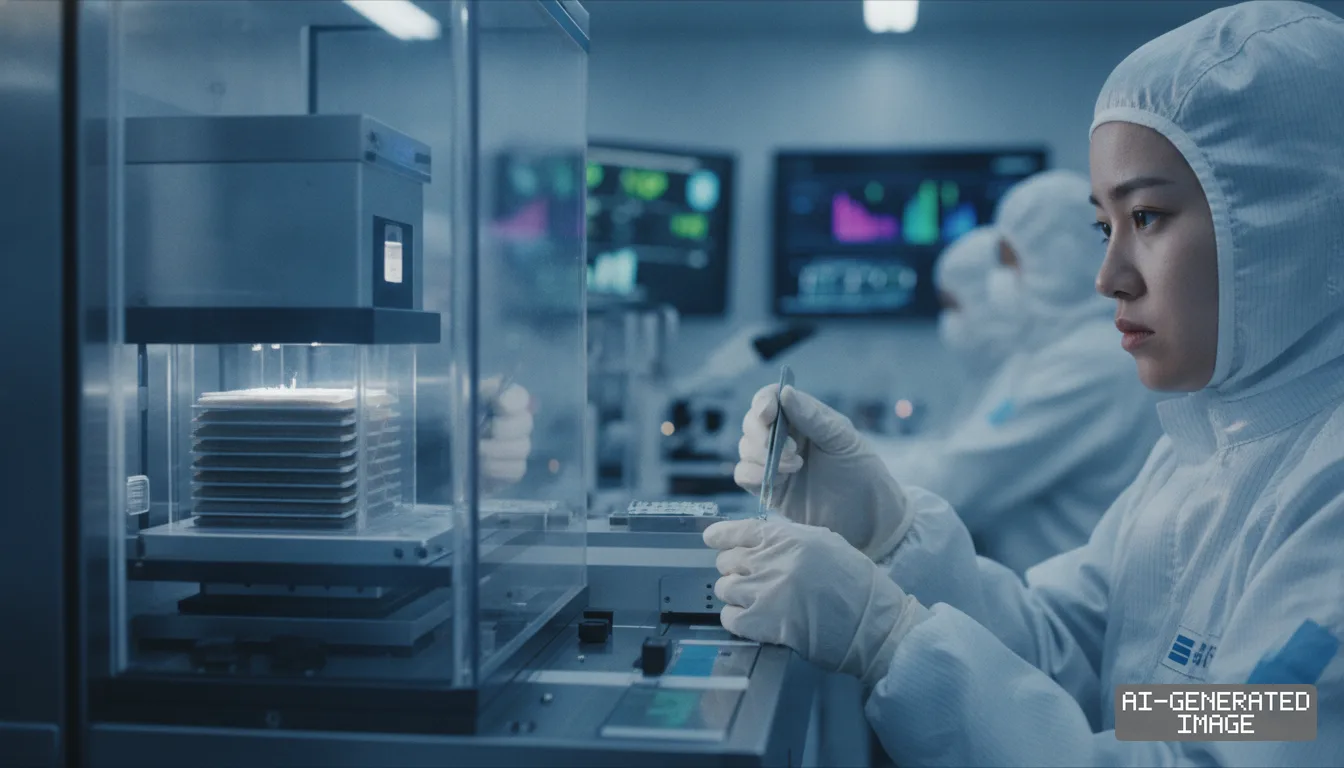
Contemporary Amperex Technology (CATL) signaled technical hurdles on Nov. 24, 2026, in achieving automotive-scale volume for all-solid-state batteries despite Beijing's target of initial commercial deployment by 2030.
The battery maker commands 39.9% of the global electric vehicle battery market, according to data from SNE Research. Its manufacturing pace determines procurement schedules for automakers across Asia, Europe and North America.
China's Ministry of Industry and Information Technology released the 15th Five-Year Plan for the new-type battery sector on Sept. 28, 2026. That policy mandate calls for initial large-scale application of all-solid-state cells by 2030.
CATL Chairman Robin Zeng previously rated all-solid-state chemistry at level four on a nine-level Technology Readiness Level scale. That rating denotes laboratory validation and prototype engineering rather than industrial manufacturing readiness.
Zeng defined true commercial rollout as supplying at least one million electric vehicles annually. Achieving that volume before 2030 is highly improbable due to chemical and manufacturing constraints, Zeng said in corporate interviews.
The primary engineering bottleneck centers on solid-solid interfacial resistance. Unlike liquid electrolytes that naturally wet electrode surfaces, solid electrolytes must maintain uniform physical contact with cathode and anode particles throughout repeated cycling.
Active materials expand and contract during charge and discharge cycles. This volumetric fluctuation separates the solid particles, causing internal resistance to climb sharply and degrading battery capacity after limited cycles, according to company technical disclosures.
To bind the components, production lines require warm isostatic pressing at pressures exceeding 6,000 atmospheres. Applying that pressure uniformly across large automotive cells without fracturing brittle ceramic or sulfide layers remains unproven at scale.
CATL focuses its research on sulfide-based solid electrolytes due to high ionic conductivity. However, sulfides react violently with ambient moisture to release toxic hydrogen sulfide gas, requiring sealed dry-room environments that inflate factory capital expenditure.
Feedstock costs present an equally steep obstacle for commercialization. High-purity lithium sulfide, the key precursor for sulfide electrolytes, currently trades at steep premiums over standard battery chemicals, keeping raw cell production costs multiples above liquid alternatives.
Achieving 500 watt-hours per kilogram also requires transitioning from conventional graphite anodes to lithium metal or anode-free architectures. Lithium metal anodes suffer from dendrite growth that can penetrate solid electrolyte separators and cause internal short circuits.
The company transitioned its solid-state development from a 10-ampere-hour validation platform to 20-ampere-hour trial cells, CATL said in disclosures on the Shenzhen Stock Exchange interactive platform Hudongyi.
The internal engineering program targets an energy density of 500 watt-hours per kilogram. CATL has deployed more than 1,000 dedicated research personnel to solve sulfide synthesis and high-pressure cell encapsulation.
The Ministry of Industry and Information Technology plan urges equipment builders to develop automated continuous isostatic presses. Beijing also established the GB/T 43568-2026 testing standard to evaluate solid-state cell degradation under high pressure and temperature extremes.
The ministerial roadmap tasks tier-one battery makers with slashing cell defect rates to parts-per-billion levels by 2030. In contrast, current pilot yields for multilayer solid-state pouch cells struggle to approach standard commercial benchmarks.
Initial commercial integration will remain restricted to luxury vehicle platforms priced above $37,000, according to executive briefings. High raw material purification expenses and low initial manufacturing yields prevent broader market adoption before 2030.
Mainstream electric vehicles will continue relying on conventional liquid-electrolyte cells through the end of the decade. CATL installed 33.08 gigawatt-hours of batteries in May 2026 alone, with lithium iron phosphate chemistry comprising 23.12 gigawatt-hours.
Toyota Motor and petroleum refiner Idemitsu Kosan target solid-state commercialization between 2027 and 2028. Idemitsu is constructing a commercial pilot facility to supply hundreds of metric tons of sulfide solid electrolyte annually.
Samsung SDI is building a dedicated pilot line to produce solid-state automotive cells by late 2027. The Korean supplier aims to capture premium luxury contracts, though high capital intensity limits near-term output.
Domestic rival BYD, which holds roughly 15% of the worldwide EV battery market, also targets pilot batches by 2027. Both Chinese manufacturers acknowledge that mass-market pricing parity with liquid cells remains years away.
CATL has not published its target manufacturing yields for the 20-ampere-hour sample cells, and company filings do not specify which automotive customers will receive the 2027 pilot batch.
CATL scheduled small-scale pilot production of sulfide cells for 2027, after which engineers will evaluate tooling wear and defect rates ahead of the 2030 five-year review.
Impact map
How this development propagates across the region and out to global buyers.
| Event | Korea | China | Japan | Global impact |
|---|---|---|---|---|
| Solid-state battery commercialization delays | Samsung SDI targets 2027 pilot production for premium niche, shielded from near-term price competition | CATL and BYD extend liquid LFP dominance as 2030 all-solid-state volume targets slip | Toyota and Idemitsu advance 2027-2028 pilot lines, facing high initial sulfide electrolyte capital costs | Automakers delay mass-market solid-state EV programs past 2030, keeping battery pack BOM tied to liquid chemistry |
In this story
- Companies
- Contemporary Amperex Technology
- Tickers
- 300750.SZ
- Exposed
- BYDToyota MotorSamsung SDIIdemitsu Kosan
- Policy
- Standards
- Impact
- Supply ChainCapexPricing
Track every Standards development →
Related briefings
- BYD targets ultra-luxury Altior sedan for solid-state batteries Also on Idemitsu Kosan, Toyota Motor, Contemporary Amperex Technology
- CATL validates 20Ah solid-state battery for 2027 pilot run Also on Idemitsu Kosan, Toyota Motor, Contemporary Amperex Technology
- BYD readies solid-state battery road trial as rivals advance Also on Idemitsu Kosan, Toyota Motor, Contemporary Amperex Technology
- Hyundai, Toyota and BYD advance in-house solid-state battery lines Also on Idemitsu Kosan, Toyota Motor, BYD
Sources
Reporting
Confidence: medium — how we grade this
The documents behind this briefing are linked above. East Asia Brief produces its English text with AI assistance under human editorial review, and does not translate or republish other outlets' articles. See our methodology and AI policy. Spotted an error? Tell us.
The Morning Brief
What changed in Korean, Chinese and Japanese industry overnight — and what it means for your supply chain. One email, weekday mornings, US time. Free.
The Morning Brief is in preparation. Leave your address and we will write to you once — when the first issue is ready. Nothing before that.