Hyundai, Toyota and BYD advance in-house solid-state battery lines
Automakers in South Korea, China and Japan are commissioning pilot battery plants to internalize core cell chemistry before target vehicle rollouts begin in 2027.
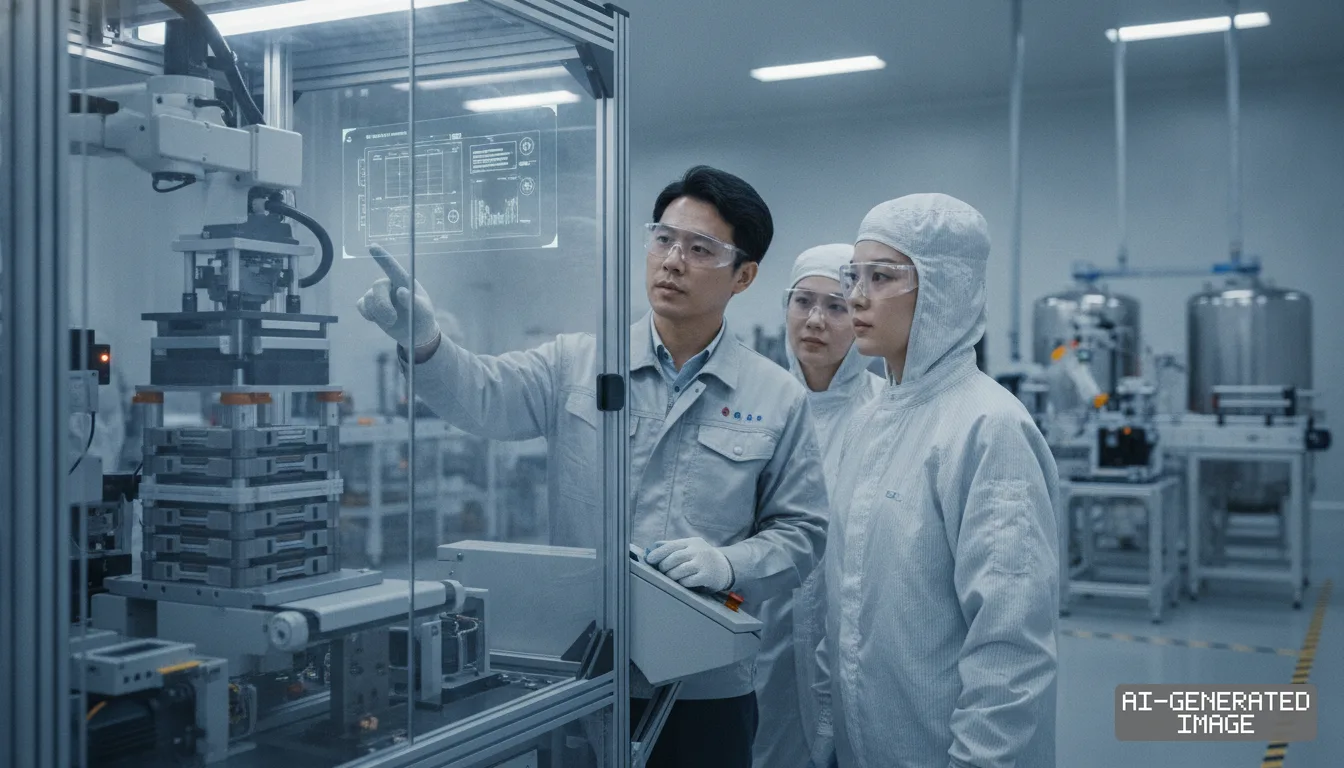
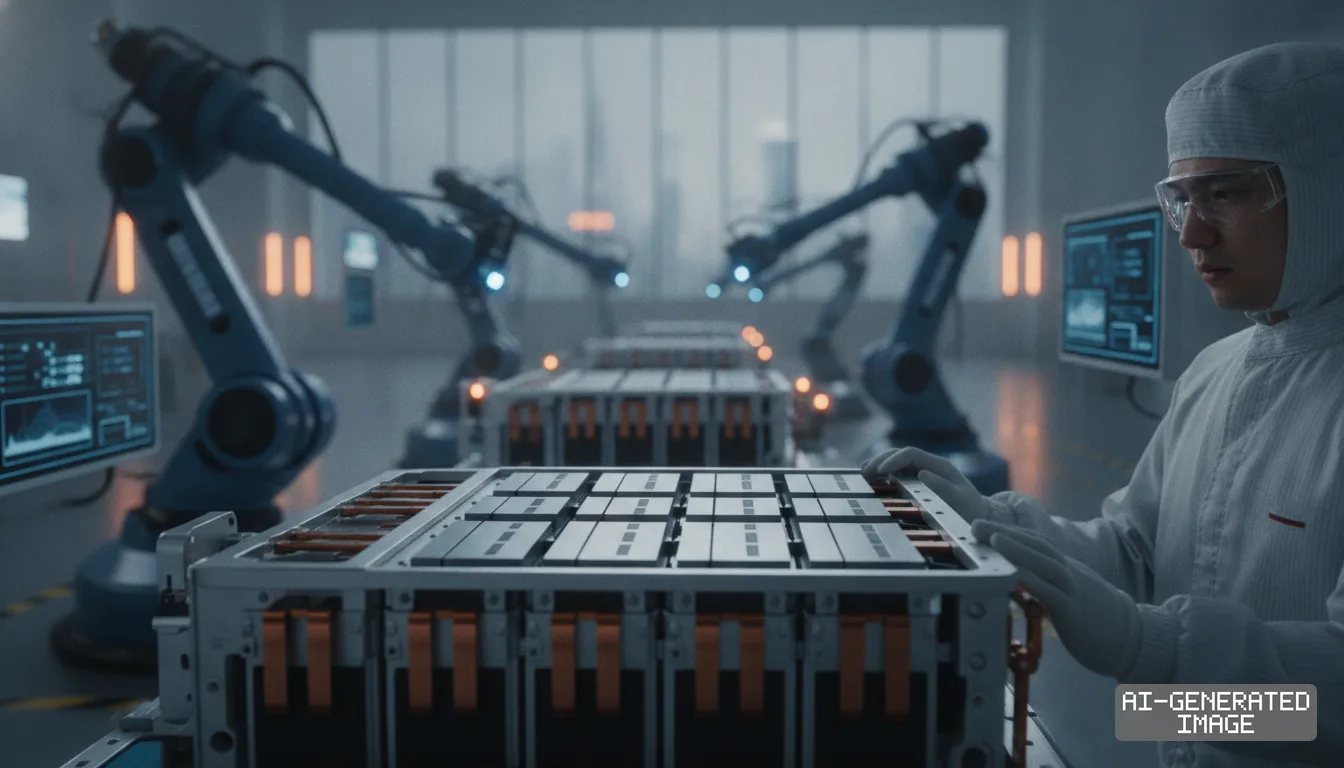
Hyundai Motor Group, Toyota Motor and BYD accelerated pilot-line operations on Oct. 3, 2026, advancing in-house solid-state battery manufacturing to reduce reliance on external suppliers.
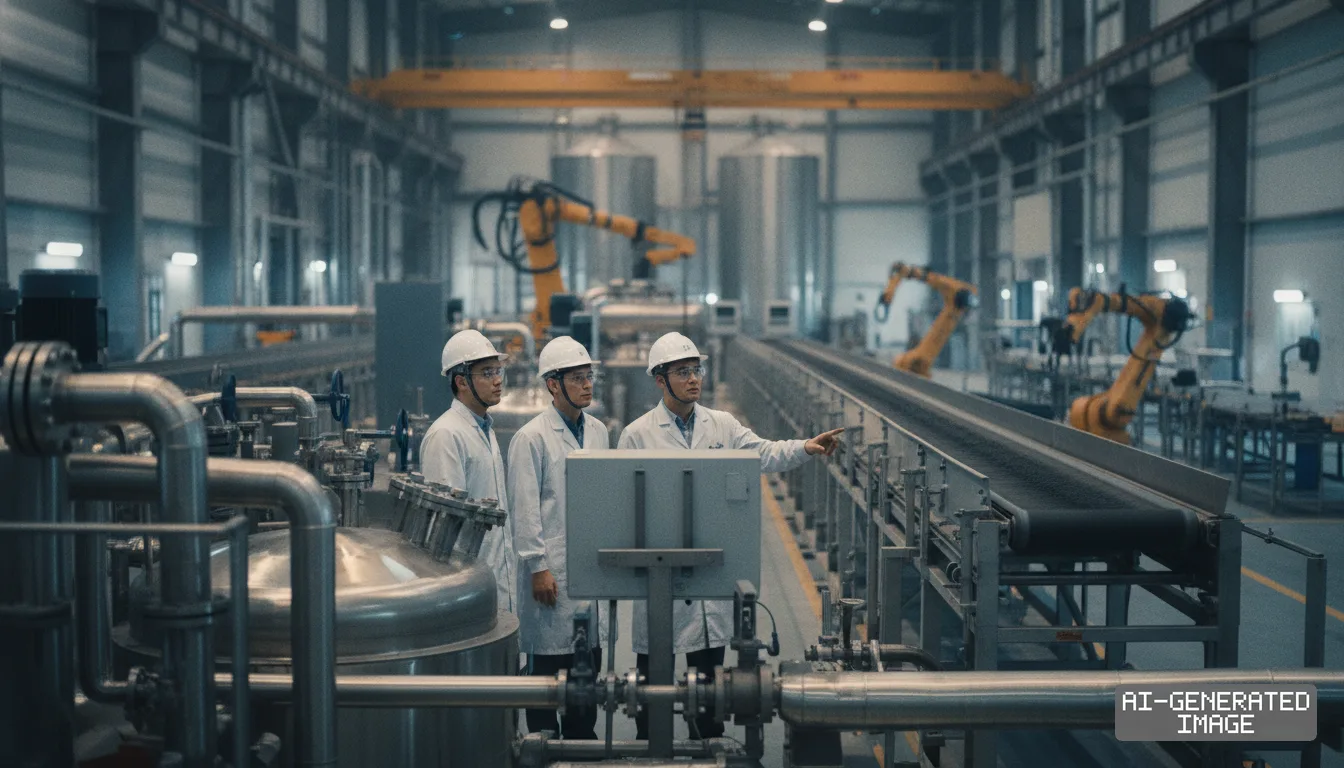
The push marks a structural shift across East Asian automotive hubs as automakers move beyond laboratory research to build proprietary cell assembly lines.
BYD operates a 2-gigawatt-hour pilot facility in the Pingshan district of Shenzhen, which accounts for its initial batch verification of automotive-grade cells.
The company is preparing an additional 20-gigawatt-hour site in Chongqing's Bishan district to supply trial packs for premium demonstration models.
By contrast, third-party battery suppliers have traditionally controlled cell formulation, leaving vehicle manufacturers vulnerable to component margins that represent roughly 40% of electric vehicle assembly costs.
Internalizing solid-state cells allows carmakers to retain intellectual property on pack architectures and optimize thermal interfaces directly for vehicle chassis.
Japan's Ministry of Economy, Trade and Industry certified Toyota's next-generation solid-state battery program under its national supply assurance framework.
Toyota is collaborating with refiner Idemitsu Kosan, which broke ground on a commercial pilot facility in Chiba to produce several hundred tons of sulfide solid electrolyte annually.
Idemitsu supplies the electrolyte feedstock directly to Toyota, which plans to launch its first commercial electric vehicles equipped with solid-state packs between 2027 and 2028.
Sumitomo Metal Mining also co-develops high-durability cathode materials with Toyota to counter interface degradation during rapid charging cycles.
In South Korea, Hyundai Motor Group operates a dedicated next-generation cell pilot line inside its Uiwang research complex in Gyeonggi Province.
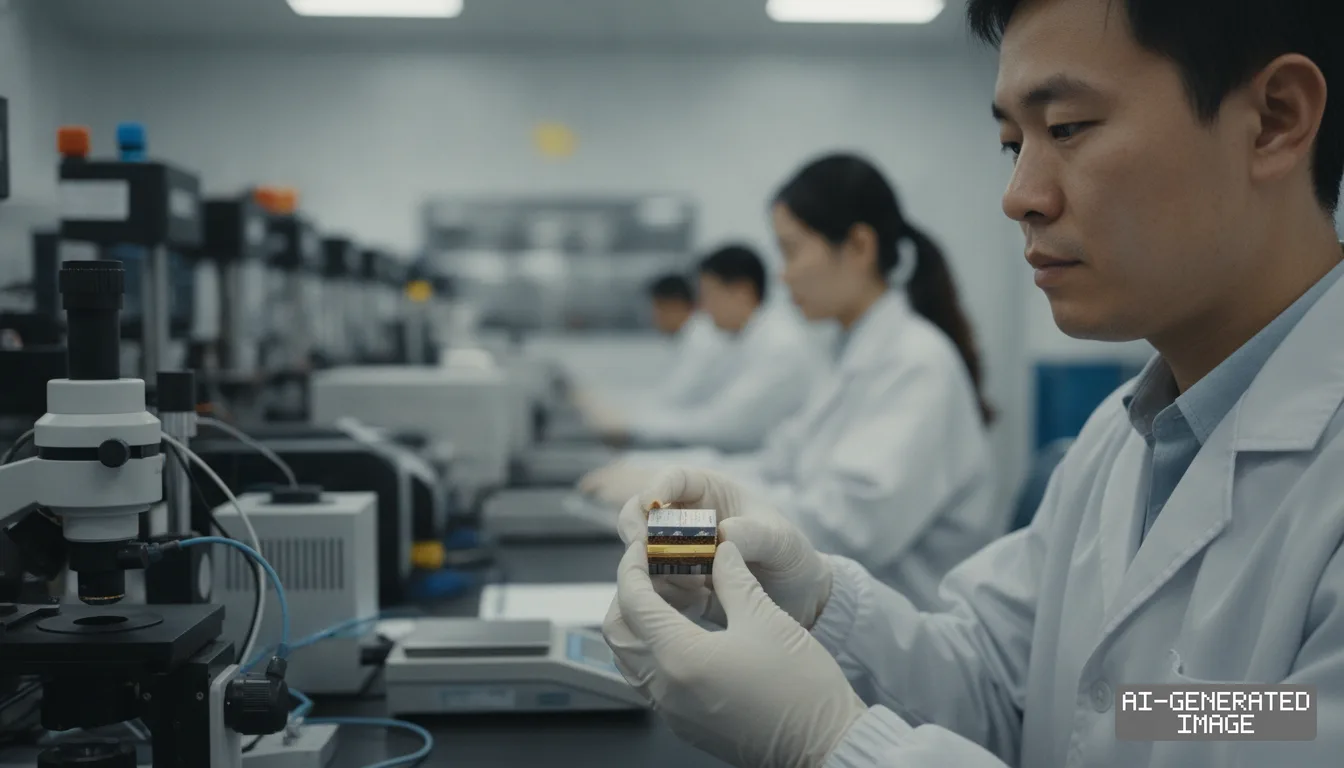
The Uiwang facility fabricates automotive-size solid-state pouch prototypes to validate stack pressure systems and assess long-term reliability under road conditions.
Hyundai is also constructing a 1.2 trillion won ($900 million) battery R&D campus in Anseong, spanning 197,000 square meters, to establish automated prototyping equipment by late 2026.
Hyundai President of Research and Development Manfred Harrer confirmed the automaker will continue direct investments to secure technical leadership over cell chemistry.
Automakers are focusing primarily on sulfide-based solid electrolytes due to high ionic conductivity, which allows charging speeds of under 10 minutes.
However, sulfide chemistries present volatile processing hurdles because contact with atmospheric moisture generates toxic hydrogen sulfide gas.
Manufacturing requires specialized dry rooms maintaining dew points below minus 50 degrees Celsius, substantially increasing facility construction and operating overhead.
The solid-to-solid contact between the electrolyte and electrodes also suffers from micro-cracking as active materials expand and contract during charge cycles.
To prevent delamination, vehicle battery packs must incorporate continuous mechanical pressure mechanisms, adding structural weight to vehicle frames.
Automakers are investing in pilot lines precisely to resolve these mechanical integration challenges before committing billions of dollars to gigawatt-scale factories.
In China, the Ministry of Industry and Information Technology integrated solid-state batteries into its 15th Five-Year industrial roadmap, establishing a 2030 target for widespread commercialization.
BYD battery subsidiary FinDreams completed fabrication of 60-ampere-hour cell prototypes targeting energy densities approaching 400 watt-hours per kilogram.
FinDreams Executive Vice President Stella Li confirmed the automaker plans to demonstrate solid-state battery packs in operating test vehicles during 2027.
South Korean battery majors LG Energy Solution, Samsung SDI and SK On are also operating their own pilot facilities, creating direct competition with client carmakers.
Samsung SDI operates a dedicated pilot line in Suwon, targeting all-solid-state mass production by 2027 with proprietary silver-carbon composite anodes.
The convergence of pilot timelines creates friction between auto original equipment manufacturers and specialized cell producers over future manufacturing ownership.
If automakers successfully scale proprietary solid-state cells, dedicated battery manufacturers risk relegation to contract toll processors or component assemblers.
Conversely, prohibitive initial manufacturing expenses may restrict early solid-state deployments strictly to high-end luxury vehicles and halo performance models.
Automakers have not published the production yield rates of their pilot lines, and Hyundai Motor has not disclosed the planned cell capacity or chemistry specifications for its Uiwang testing facility.
Idemitsu Kosan is scheduled to complete construction of its Chiba solid electrolyte plant by late 2027, while China's industrial ministries convene in early 2027 to review commercial deployment standards.
Impact map
How this development propagates across the region and out to global buyers.
| Event | Korea | China | Japan | Global impact |
|---|---|---|---|---|
| In-house solid-state pilot lines | Hyundai operates Uiwang pilot line and builds 1.2 trillion won Anseong campus for 2030 rollout | BYD runs 2 GWh Pingshan pilot line to support 2027 vehicle demonstration tests | Toyota pairs with Idemitsu Chiba electrolyte plant for 2027-2028 vehicle launch | Auto OEMs internalize cell IP to capture up to 40% of EV bill-of-materials value |
In this story
- Companies
- Hyundai MotorToyota MotorBYD
- Tickers
- 005380.KS7203.T002594.SZ
- Exposed
- Idemitsu KosanSumitomo Metal MiningSamsung SDI
- Policy
- SubsidiesEconomic Security
- Impact
- CapexSupply ChainCost Structure
Track every Subsidies development → Track every Economic Security development →
Related briefings
- BYD readies solid-state battery road trial as rivals advance Also on Idemitsu Kosan, Sumitomo Metal Mining, Toyota Motor
- Japan certifies $2.4 billion in battery subsidies to lock in solid-state cell capacity Also on Idemitsu Kosan, Sumitomo Metal Mining, Toyota Motor
- Japanese trading houses expand cobalt refining ties to counter supply risk Also on Sumitomo Metal Mining, Toyota Motor
- Panasonic Optimizes 4680 Battery Cell Yields at Wakayama Plant in Japan Also on Sumitomo Metal Mining, Cost Structure
Sources
Primary documents
Reporting
Confidence: high — how we grade this
The documents behind this briefing are linked above. East Asia Brief produces its English text with AI assistance under human editorial review, and does not translate or republish other outlets' articles. See our methodology and AI policy. Spotted an error? Tell us.
The Morning Brief
What changed in Korean, Chinese and Japanese industry overnight — and what it means for your supply chain. One email, weekday mornings, US time. Free.
The Morning Brief is in preparation. Leave your address and we will write to you once — when the first issue is ready. Nothing before that.