BYD rolls out 150,000th commercial EV with 800-hp electric truck
The milestone Q3 heavy tractor deploys a 600-kWh Blade battery pack and dual-gun fast charging as the Chinese manufacturer expands into long-haul freight fleets.
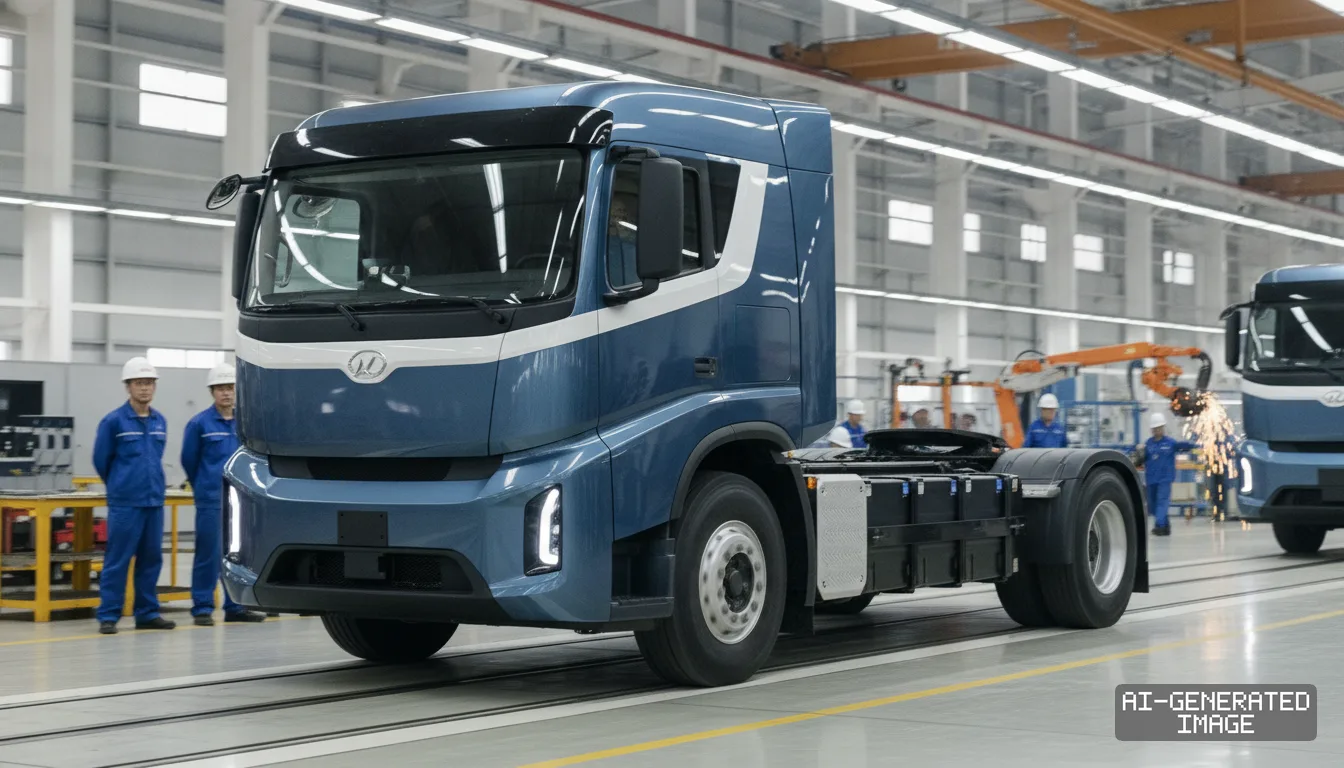
BYD announced Oct. 10, 2026, that its commercial vehicle division completed its 150,000th new energy vehicle, rolling an 800-horsepower electric semi-truck off the assembly line at its factory in Huai'an.
The milestone vehicle rolled off production lines Oct. 9 in Jiangsu province. The unit is a Q3 battery-electric tractor engineered for regional and trunk freight logistics.
The heavy truck segment represents an expanding piece of BYD's total volume. The automaker delivered 53,032 commercial new energy vehicles during the first nine months of 2026, representing 1.7% of its 3,131,576 total vehicle deliveries.
Commercial deliveries expanded 28.5% year-on-year across those nine months, according to regulatory filings submitted to the Hong Kong stock exchange. Deliveries in September alone reached 6,848 units, rising 113.3% from the same month last year.
The Q3 tractor pairs a 600-kilowatt dual-motor powertrain with an in-house lithium iron phosphate Blade battery. The system delivers approximately 805 horsepower to drive freight combinations rated up to 49 metric tons of gross combination vehicle weight.
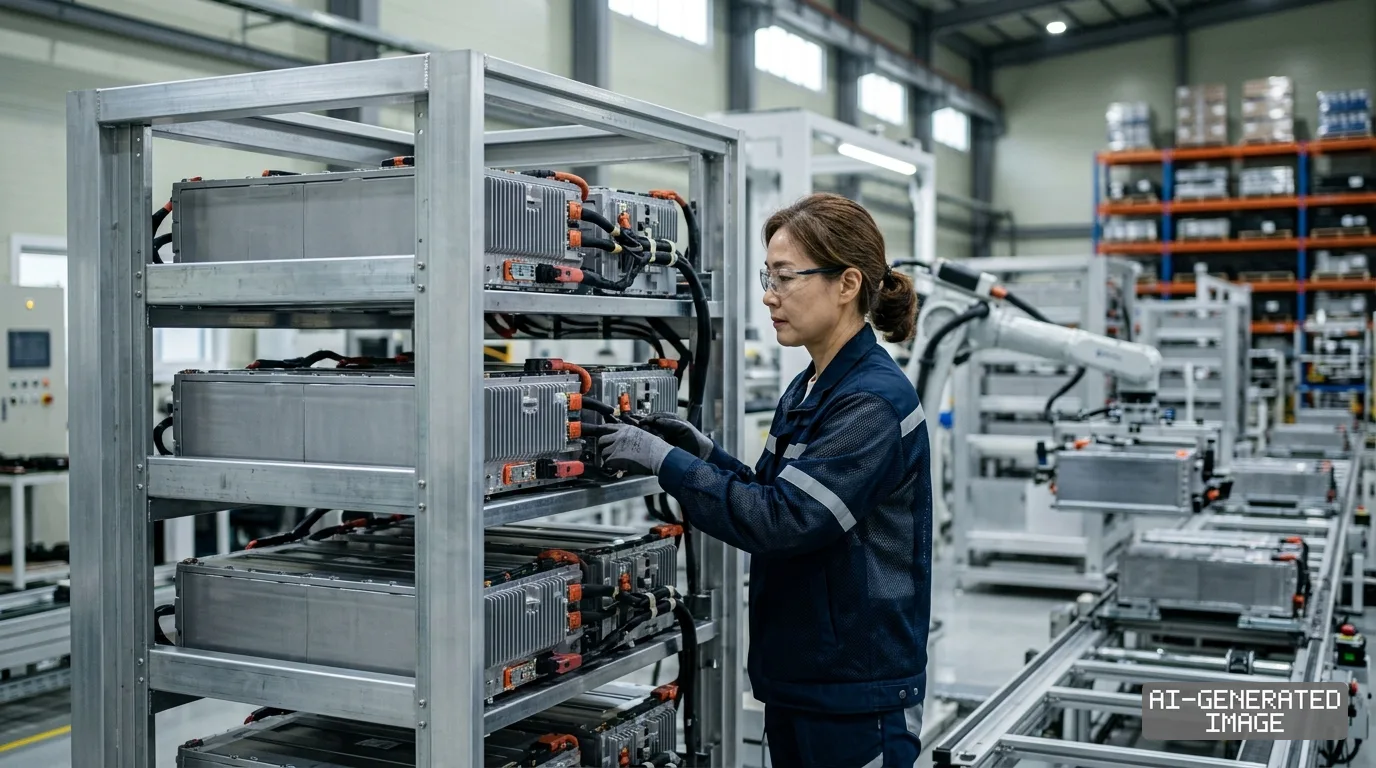
The chassis houses a 600-kilowatt-hour battery pack dedicated to heavy transport. Fully loaded configurations deliver an operating range between 325 and 450 kilometers on a single charge, the company said.
Fleet operations require high turnaround times between regional transit corridors. BYD engineered the truck with dual-gun direct-current terminal charging, allowing operators to plug two cables simultaneously into the high-voltage pack.
The dual-port hardware recharges the 600-kilowatt-hour system from a 20% state of charge to 80% in 30 to 35 minutes. That reduces depot downtime during scheduled driver rest windows.
The manufacturing plant in Huai'an covers stamping, welding, painting, frame construction and vehicle assembly. Industrial robotic arms automate frame joining and axle positioning across the automated chassis line.
BYD entered commercial vehicle manufacturing 18 years ago, beginning with transit buses in 2008. The company launched truck development in 2012, later introducing the T5 light cargo truck and the T4 cab-over vehicle for urban delivery fleets.
Urban buses historically anchored BYD's commercial export operations across overseas markets. The company has delivered transit buses to municipal transit authorities across more than 70 countries and regions over the past decade.
The launch of the heavy Q3 platform shifts capital expenditure toward freight logistics. Heavy tractors consume substantially more diesel per operating hour than standard urban transit buses.
Decarbonizing heavy-duty tractors provides fleet logistics firms with total cost advantages. Lower electricity tariffs per kilometer offset elevated upfront vehicle acquisition costs across high-mileage highway routes.
The shift brings direct competition to legacy commercial vehicle builders in China. State-owned FAW Jiefang and Sinotruk hold dominant shares in domestic diesel heavy truck registrations, but both face tightening zero-emission corporate fleet mandates.
FAW Jiefang booked 191,700 total medium and heavy truck sales across the first eight months of 2026. Electric platforms accounted for less than 12% of those deliveries, leaving highway logistics open to battery specialists.
Tesla also targets long-haul electrification with its Class 8 Semi tractor. Tesla has limited commercial customer deliveries primarily to pilot test fleets in North America, while BYD relies on existing high-volume cell production lines in China.
BYD maintains full in-house vertical integration over cells, electric traction motors and electronic controllers. The company manufactures its own prismatic Blade cells rather than procuring external battery modules from third-party cell makers like Contemporary Amperex Technology.
That vertical structure insulates commercial chassis assembly from supply bottlenecks. It also lowers pack manufacturing costs per kilowatt-hour below independent commercial vehicle competitors who buy external cell packs.
The commercial truck push arrives alongside broad international logistics investments. BYD has ordered 10 dedicated roll-on roll-off pure car and truck carriers to export finished vehicles to European, Southeast Asian and Latin American transport operators.
Operating high-capacity electric semi-trucks requires dedicated megawatt-scale charging infrastructure at distribution terminals. Fleet buyers must install multi-gun chargers capable of sustaining 300 kilowatts to 600 kilowatts per charging bay.
The company has not disclosed the retail base price for the Q3 tractor or the cell-level energy density of the heavy-duty Blade pack. It also omitted delivery targets for international freight carriers outside China.
BYD will report its audited financial results and updated commercial segment earnings for the third quarter of 2026 on Oct. 28, 2026. The board reviews global capital allocations for commercial assembly facilities during that meeting.
Impact map
How this development propagates across the region and out to global buyers.
| Event | Korea | China | Japan | Global impact |
|---|---|---|---|---|
| BYD Q3 commercial truck rollout | Hyundai Motor faces electric heavy truck competition in export logistics markets | BYD commercial deliveries rise 28.5% to 53,032 units, pressuring FAW Jiefang | Isuzu and Hino face accelerating zero-emission truck pressure in Southeast Asian markets | Fleet logistics operators gain 600-kWh LFP platform with 30-minute dual-gun turnaround |
In this story
- Companies
- BYD Company
- Tickers
- 01211.HK002594.SZ
- Exposed
- FAW JiefangTeslaContemporary Amperex Technology
- Policy
- Economic SecuritySubsidies
- Impact
- Supply ChainCapexCost Structure
Track every Economic Security development → Track every Subsidies development →
Related briefings
- Korea Cuts EV Subsidies on Low Energy Density Cells, Squeezing LFP Imports Also on BYD Company, Tesla, Contemporary Amperex Technology
- BYD Widens BEV Lead Over Tesla to Record 275,946 Cars in Q3 Also on BYD Company, Tesla, Contemporary Amperex Technology
- Geely Previews 2.2 MW EV Fast Charger to Rival BYD in China Also on BYD Company, Tesla
- Grid Storage Costs Diverge Across East Asia as Safety Rules and Balance of System Shape Pricing Also on BYD Company, Contemporary Amperex Technology, Cost Structure
Sources
Reporting
Confidence: medium — how we grade this
The documents behind this briefing are linked above. East Asia Brief produces its English text with AI assistance under human editorial review, and does not translate or republish other outlets' articles. See our methodology and AI policy. Spotted an error? Tell us.
The Morning Brief
What changed in Korean, Chinese and Japanese industry overnight — and what it means for your supply chain. One email, weekday mornings, US time. Free.
The Morning Brief is in preparation. Leave your address and we will write to you once — when the first issue is ready. Nothing before that.