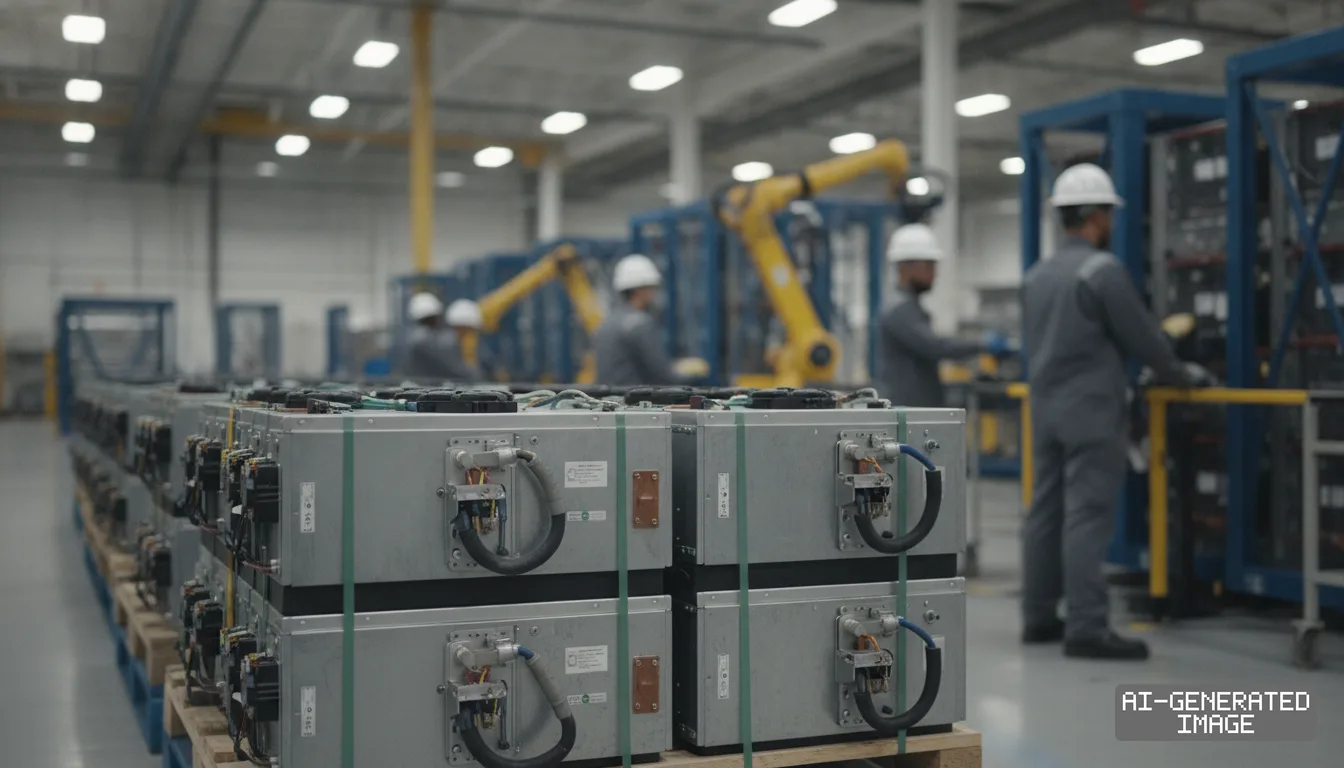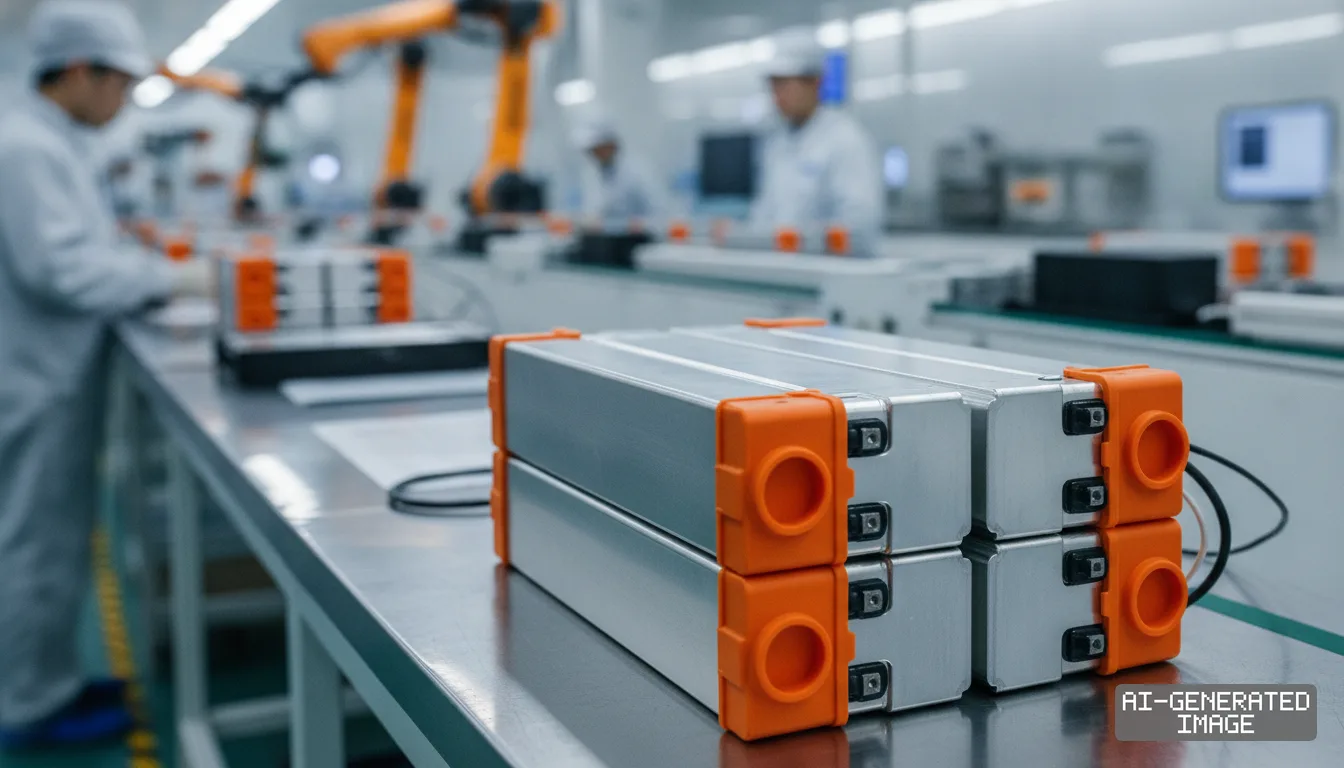
BYD launches 62 MWh GC Block for utility-scale power grids
The modular grid-forming energy storage platform integrates 1,980-ampere-hour blade cells to lower power plant installation footprint and cut levelized lifecycle electricity costs by 5.5%.
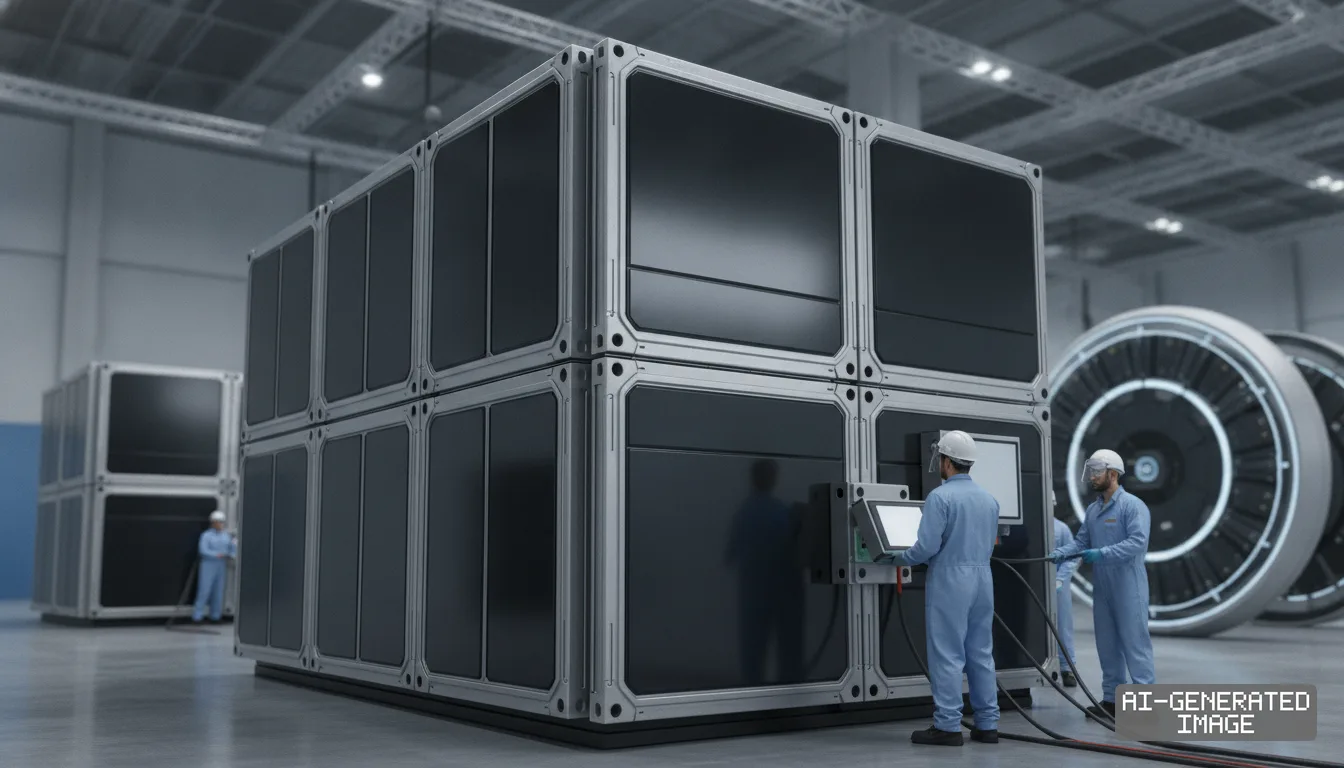
BYD launched a station-level battery energy storage platform with single-block capacities reaching 62 megawatt-hours on Sept. 16, targeting gigawatt-scale power grids and artificial intelligence data centers.
The Shenzhen-based manufacturer unveiled the system, branded GC Block, during the International Digital Energy Expo in Shenzhen. The platform serves as the hardware core for utility installations.
The largest configuration pairs a 10-megawatt power output with 62 megawatt-hours of capacity for six-hour discharge applications. A one-gigawatt-hour power plant requires 17 units of the block, BYD said.
That footprint represents an alternative to standard 20-foot shipping containers. Competing systems typically house between five and 6.25 megawatt-hours within an individual container envelope.
Contemporary Amperex Technology, the world's largest battery maker by volume, supplies roughly 40% of global grid storage cells. CATL markets the Tianheng container system at 6.25 megawatt-hours.
BYD is seeking to counter CATL by shifting from individual container shipping units to pre-engineered station blocks. The design targets high-density substations that backstop intermittent renewable power and computing hubs.
Surging energy consumption from artificial intelligence server clusters has strained regional power networks. Hyperscale data centers increasingly require dedicated battery buffers to manage rapid voltage swings and peak consumption spikes.
Inside each GC Block enclosure, BYD installs its proprietary 1,980-ampere-hour blade battery cells. Technicians manufacture the lithium iron phosphate cells using an electrode stacking process.
The large cell format allows developers to reduce the total cell count across a one-gigawatt facility to under one million units. Older architectures required roughly three million individual cells.
Pruning cell counts lowers system assembly complexity by 69.4%, the company said. The reduction also removes thousands of potential electrical connection points across the high-voltage direct-current bus.
Routine operations and maintenance labor falls by more than 60% under the architecture, according to company presentation materials. On-site installation and testing timelines drop by 18%.
Station civil engineering requirements shrink alongside the component reduction. BYD said the GC Block design reduces site cabling by 68.1% and trims overall land acreage by 17.2%.
The physical space savings are critical for data center operators building near urban transmission nodes. In crowded industrial zones, land acquisition costs can represent a large share of capital budgets.
BYD also offers two smaller standard configurations under the same platform. A two-hour variant provides 7.5 megawatts and 15.5 megawatt-hours, requiring 65 units for a one-gigawatt-hour installation.
A four-hour configuration pairs 7.5 megawatts with 31 megawatt-hours of storage. That intermediate setup requires 33 blocks to complete a one-gigawatt-hour project layout, the company said.
The hardware release updates the initial utility architecture BYD showcased in September 2025. That previous setup, named Haohan, deployed 2,710-ampere-hour blade cells in a 14.5-megawatt-hour container configuration.
To manage power flows, BYD introduced an updated conversion unit called GC Flux PCS 2.0. The inverter equipment spans capacities between 1.25 megawatts and 15.6 megawatts per unit.
The power conversion hardware achieves a peak electrical efficiency of 99.5%, according to company technical sheets. It can sustain a three-times electrical overload for 10 seconds during grid faults.
The conversion system operates in a grid-forming mode. Grid-forming inverters set voltage and frequency references independently rather than merely following signals established by traditional synchronous generators, BYD said.
System operations rely on the GC Master EMS 2.0 software platform. The supervisory controller monitors operating temperatures, cell state of charge and fire suppression sensors across all battery strings.
BYD claims the combined hardware and software architecture lifts overall round-trip storage efficiency by 2.7%. The efficiency gain reduces energy lost during repeated charging and discharging cycles.
The improvements cut the levelized cost of electricity by 5.5% across a project lifecycle, according to company estimates. The levelized metric measures the total cost of building and operating storage per delivered unit of energy.
Lower operating costs remain essential for developers competing in unsubsidized wholesale power markets. In China and Europe, energy storage facilities generate returns by arbitrating hourly power price spreads.
The commercial launch lands as battery manufacturing capacity in China continues to outpace domestic electric vehicle demand. Major cell producers are reallocating production lines toward utility-scale grid storage to maintain factory utilization rates.
Export controls and tariffs have complicated overseas expansion for Chinese battery makers in North America. As a result, domestic manufacturers are focusing deployment efforts on domestic renewable mega-bases and European grid projects.
The official product announcement does not state commercial delivery schedules or per-block procurement prices for the GC Block. BYD has not published customer order volumes or manufacturing yield figures for the 1,980-ampere-hour cells.
Developers in China face mandatory storage quotas on newly connected solar and wind farms through Dec. 31. Provincial grid regulators will review technical compliance standards for grid-forming inverters in November.
Impact map
How this development propagates across the region and out to global buyers.
| Event | Korea | China | Japan | Global impact |
|---|---|---|---|---|
| BYD GC Block launch | LG Energy Solution and Samsung SDI face elevated price pressure in European utility tenders | BYD challenges CATL grid share, cutting land needs by 17.2% and LCOE by 5.5% | Utility developers evaluate imported Chinese BESS blocks to meet data center peak loads | AI data center and renewable plant capital expenditure drops on 17-block-per-GWh density |
In this story
- Companies
- BYD
- Tickers
- 002594.SZ1211.HK
- Exposed
- Contemporary Amperex Technology
- Policy
- SubsidiesEconomic Security
- Impact
- Supply ChainCapexCost Structure
Track every Subsidies development → Track every Economic Security development →
Related briefings
- Korean cathode makers retool production lines for LMFP chemistry as price war spreads Also on BYD, Contemporary Amperex Technology, Cost Structure
- CATL tops 15 Chinese automakers combined in first-half profits Also on BYD, Contemporary Amperex Technology, Cost Structure
- Panasonic Energy unveils 150 C solid-state prismatic battery Also on BYD, Contemporary Amperex Technology, Cost Structure
- LG Energy Solution converts EV lines to accelerate ESS LFP pouch cell output Also on BYD, Contemporary Amperex Technology
Sources
Reporting
Confidence: medium — how we grade this
The documents behind this briefing are linked above. East Asia Brief produces its English text with AI assistance under human editorial review, and does not translate or republish other outlets' articles. See our methodology and AI policy. Spotted an error? Tell us.
The Morning Brief
What changed in Korean, Chinese and Japanese industry overnight — and what it means for your supply chain. One email, weekday mornings, US time. Free.
The first issue goes out shortly. Sign up now and you will not miss it.