USTR excludes $6B China LNG deal from tariff relief schedule
A proposed bilateral energy purchase agreement remains excluded from official tariff suspensions, leaving 24.5 million tonnes of uncontracted Gulf Coast export capacity without Chinese buyers.
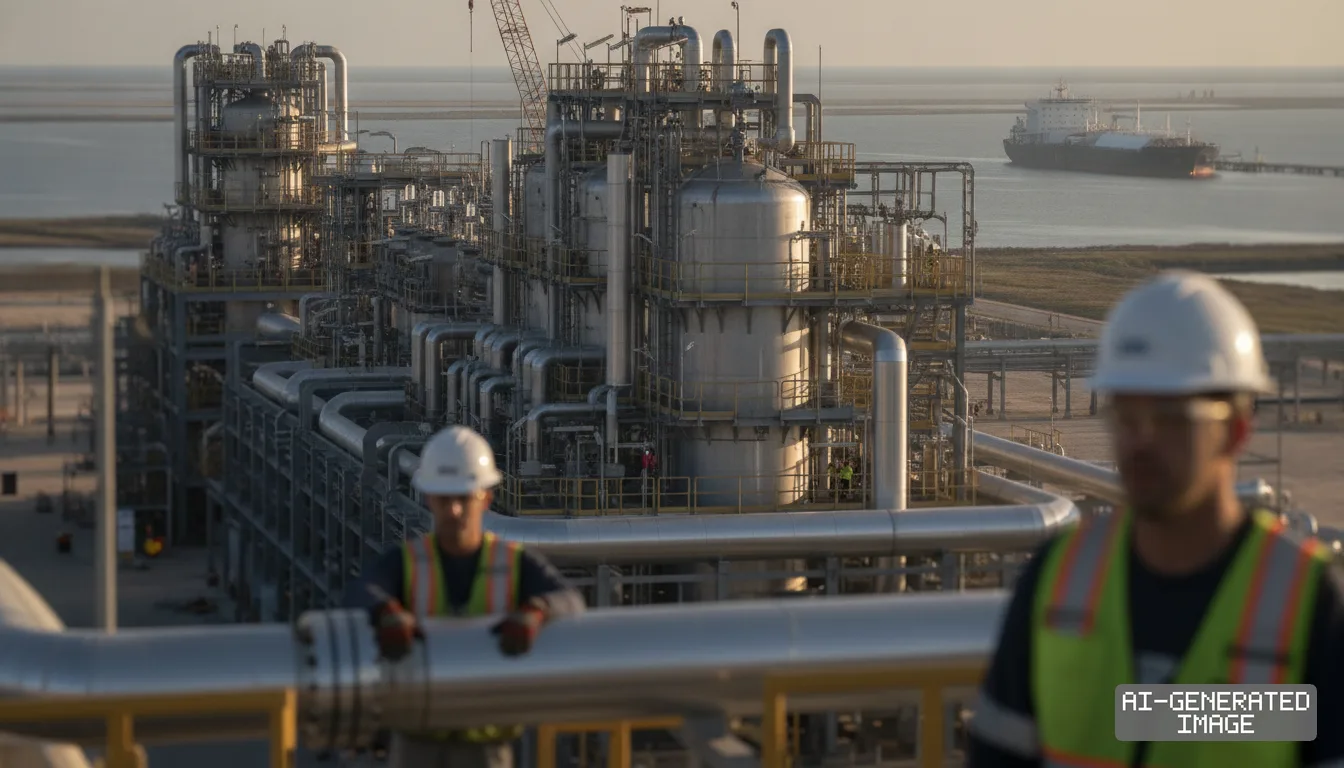
The Office of the United States Trade Representative maintained tariffs on liquefied natural gas on Oct. 30, 2026, leaving a rumored $6 billion Chinese procurement package off the bilateral tariff-reduction schedule.
The omission preserves China's 15% retaliatory duty on American gas shipments. It also leaves 24.5 million tonnes of uncontracted annual liquefaction capacity under construction along the U.S. Gulf Coast without Chinese off-takers.
Annual shipments under existing long-term Chinese purchase contracts would reach roughly $6 billion at current benchmark prices. That amount represents one-tenth of the $60 billion in reciprocal tariff relief negotiated by both governments.
Washington and Beijing agreed to reduce tariffs on $30 billion of non-sensitive imports from each country under the bilateral Board of Trade framework, U.S. Trade Representative Jamieson Greer said.
The official White House tariff reduction list covers nearly 80 product lines. The document focuses on non-sensitive consumer goods, including seasonal decorations, textiles, small household appliances and sporting goods.
China's Ministry of Commerce submitted a list of 1,600 tariff lines for duty reductions. That submission covers select agricultural commodities, timber, livestock and specialized medical diagnostic devices.
The negotiated pact explicitly excluded strategic energy commodities like crude oil and liquefied gas. The sole energy commitment included in the published framework was a Chinese purchase of 10 million tonnes of U.S. coal.
The exclusion of fuel mirrors Beijing's decision to retain a 10% tariff on American soybeans. Nonseed soybeans totaled $16.2 billion in bilateral shipments last year, according to export trade data.
The tariff reduction program forms the core mechanism of a bilateral trade truce extension. That truce agreement protects cross-border commercial flows between the two economies through Jan. 10, 2027.
China imposed a 15% tariff on American gas imports in February 2025 following reciprocal U.S. levies. The retaliatory measure halted direct deliveries, leaving early 2025 as the last period of major terminal discharge.
Venture Global LNG signed a 20-year sales agreement with China Gas Holdings in September 2026 to supply 500,000 tonnes annually starting in 2030. The contract accounts for 2% of the facility's planned phase-one throughput.
China Gas Holdings supplies piped fuel to 53 million urban households across Chinese municipal networks. The company sought direct long-term Gulf Coast supply to diversify procurement away from Middle Eastern shipping lanes.
Cheniere Energy operates 45 million tonnes of liquefaction capacity across Sabine Pass and Corpus Christi. The company redirected contracted Chinese volumes to European terminals to bypass Chinese customs duties.
Developers along the U.S. Gulf Coast are adding 10 billion cubic feet per day of export capacity through 2027. Those projects require signed long-term sales agreements to secure commercial construction debt.
Most American gas export contracts use free-on-board pricing terms that permit destination flexibility. Chinese state energy traders routinely exercise those contractual clauses to swap or sell contracted cargoes into European spot hubs.
Delivering an American cargo directly into a Chinese receiving terminal incurs an import duty penalty of roughly $8 million per standard vessel. That financial barrier forces Chinese state utilities to offload shipments elsewhere.
China meets domestic gas demand through expanding domestic shale basins and pipeline imports from Russia. Pipelined volumes through the Power of Siberia link reached contracted capacity limits earlier this year.
The National Foreign Trade Council filed comments on Oct. 30, 2026, urging trade officials to suspend maritime transport fees. The business council said vessel penalties under Section 301 investigations damage domestic export logistics.
The council warned that maritime restrictions outlined in Annex IV challenge the operating stability of American energy terminals. That friction adds procurement premiums to export cargoes loaded for Asian delivery routes.
Lowering tariffs under the bilateral recommendations requires public notice periods and formal agency determinations, Greer said. The statutory review process prevents trade negotiators from inserting new commodity lines without administrative proceedings.
Japanese energy buyers including JERA and Tokyo Gas hold flexible global contracts that absorb displaced cargoes. Japanese utilities maintain commercial access to Gulf Coast terminals without facing retaliatory import tariffs.
South Korea imported 44 million tonnes of liquefied gas last year through state monopoly Korea Gas Corp. Korean buyers expanded long-term contracts with Qatar, restricting terminal capacity for additional American fuel.
State-owned Chinese oil majors Sinopec and PetroChina hold operational control over regasification infrastructure across eastern coastal ports. Those entities prioritize pipeline gas and Qatari contracts over exposed merchant cargoes.
The Office of the United States Trade Representative has not published an official agreement confirming a $6 billion LNG procurement package. China's Ministry of Commerce has issued no notice lifting tariffs on American fuel.
The bilateral tariff truce expires on Jan. 10, 2027, unless extended by the Board of Trade. Working delegations from the Treasury Department and China's State Council convene in Washington in December.
Impact map
How this development propagates across the region and out to global buyers.
| Event | Korea | China | Japan | Global impact |
|---|---|---|---|---|
| U.S.-China LNG tariff exclusion | Korea Gas Corp shields supply via Qatari term deals, avoiding merchant exposure | China Gas Holdings routes U.S. term fuel to Europe to bypass 15% import levy | JERA and Tokyo Gas retain unencumbered access to Gulf Coast flexible contracts | 24.5M tonnes of Gulf Coast LNG capacity lacks committed buyers, stalling project debt |
In this story
- Companies
- Venture Global LNGCheniere EnergyChina Gas Holdings
- Tickers
- 0384.HK
- Exposed
- JERAKorea Gas Corp
- Policy
- Tariffs
- Impact
- PricingSupply ChainOrder Book
Track every Tariffs development →
Related briefings
- China and US Open Talks to Cut LNG Tariffs Ahead of Summit Also on Cheniere Energy, China Gas Holdings, JERA
- JERA secures long-term North American LNG offtake to hedge spot volatility Also on Venture Global LNG, JERA
- KOGAS Plans LNG Carrier Tender to Test Domestic Tank Design Also on Korea Gas Corp., Order Book
- China Gas buys US LNG from Venture Global under 20-year pact Also on China Gas Holdings, Tariffs, Pricing
Sources
Primary documents
Reporting
Confidence: high — how we grade this
The documents behind this briefing are linked above. East Asia Brief produces its English text with AI assistance under human editorial review, and does not translate or republish other outlets' articles. See our methodology and AI policy. Spotted an error? Tell us.
The Morning Brief
What changed in Korean, Chinese and Japanese industry overnight — and what it means for your supply chain. One email, weekday mornings, US time. Free.
The Morning Brief is in preparation. Leave your address and we will write to you once — when the first issue is ready. Nothing before that.