JERA secures long-term North American LNG offtake to hedge spot volatility
The Japanese utility giant signed binding multi-year contracts featuring destination flexibility to stabilize fuel procurement against seasonal demand spikes and global price swings.
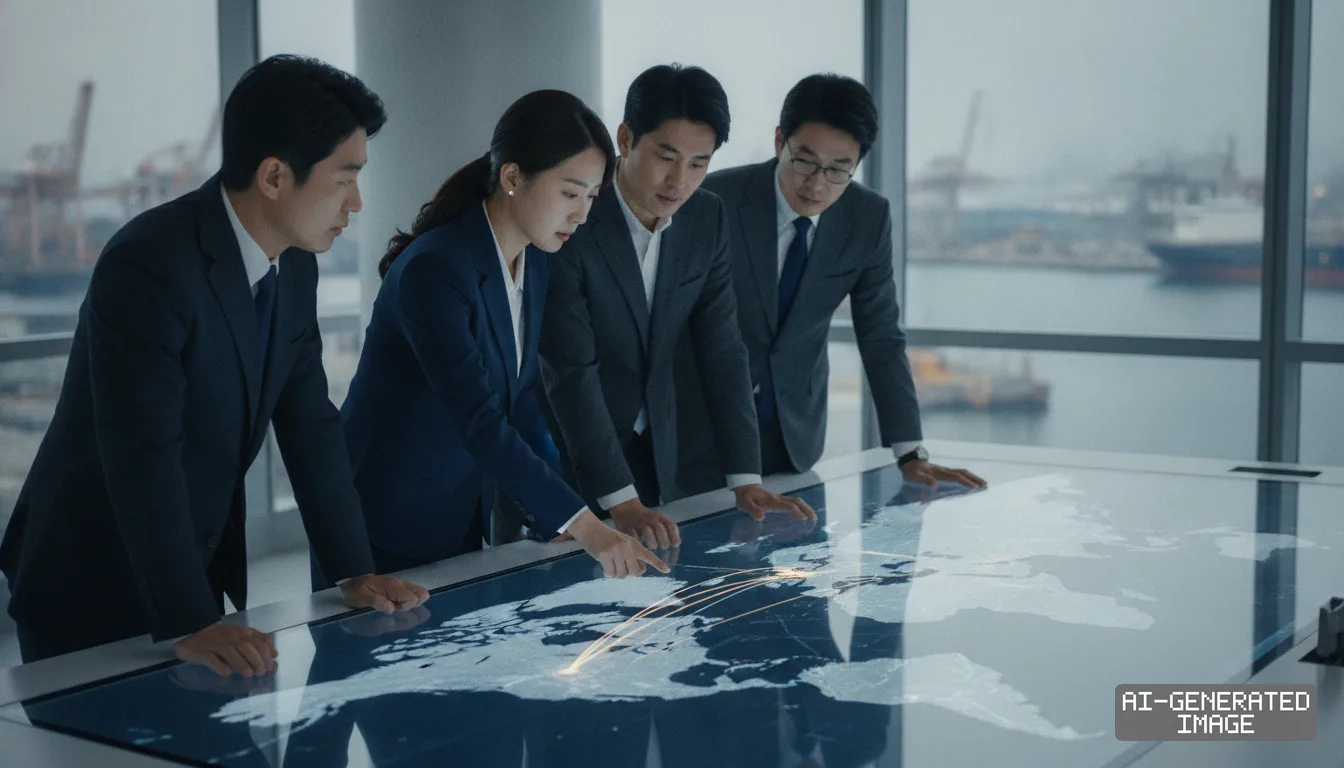
JERA has finalized binding long-term sales and purchase agreements with North American export terminals to secure liquefied natural gas supplies under contracts that allow full destination flexibility. The multi-year offtake commitments provide Japan's largest power generator with indexed volumes designed to protect domestic electricity generation against seasonal spot price shocks while permitting the resale and diversion of surplus cargoes to international markets.
The company, established in 2015 as a joint venture between Tokyo Electric Power Company Holdings and Chubu Electric Power, operates approximately 30 percent of Japan's domestic thermal power capacity and procures roughly 35 million metric tons of fuel annually. As an entity responsible for supplying fuel across Japan's primary industrial and metropolitan centers, its procurement architecture sets the operational baseline for domestic utility inventories and international contracting terms across the broader East Asian gas trade.
Under the commercial framework of the newly executed agreements, cargo volumes are linked to the United States Henry Hub benchmark rather than oil-indexed price formulas such as the Japan Crude Cocktail. The free-on-board delivery terms eliminate destination restrictions that historically prohibited Japanese buyers from re-exporting unneeded gas or diverting shipments mid-voyage, giving utility portfolio managers direct operational discretion over vessel routing.
The shift toward flexible procurement aligns with long-term policy directives issued by Japan's Ministry of Economy, Trade and Industry, which has instructed domestic energy companies to eliminate rigid contractual constraints and expand transshipment capabilities. The Japan Fair Trade Commission previously ruled that restrictive destination clauses in long-term liquefied natural gas contracts breach anti-monopoly statutes by limiting competitive secondary trade across the Asia-Pacific basin.
Japan faces distinct seasonal swings in electricity consumption, driven by elevated cooling loads during summer heat waves and intensified heating requirements during the winter months. Because liquefied natural gas degrades over time through boil-off losses and cannot be held in commercial cryogenic storage tanks for prolonged periods, utility operators must match physical cargo arrivals directly with immediate thermal generation requirements or risk storage tank containment limits.
Destination-free contracts insulate utility balance sheets from the structural volatility of the Platts Japan Korea Marker spot index. When unexpected regional cooling demand or cold snaps surge domestic power consumption, fixed-quantity pipeline gas feedstocks from North America provide baseload supply certainty. Conversely, when nuclear reactor restarts, renewable power generation, or mild weather conditions depress thermal fuel utilization, JERA can redirect surplus cargoes to European terminals indexed to the Title Transfer Facility or spot buyers across Southeast Asia without incurring contractual penalties.
The expansion of long-term United States offtake also shifts the logistics and shipping commitments of Japanese utility fleets. Managing free-on-board volumes requires the chartering of dedicated liquefied natural gas carriers capable of navigating the transit schedules of the Panama Canal and alternative deep-water routes around the Cape of Good Hope. This arrangement transfers maritime freight risk and terminal liquefaction tolling responsibilities to the buyer while removing the pricing premiums traditionally embedded in seller-delivered supply arrangements.
Other Asian utility buyers, including Korea Gas Corporation and major state-owned importers across mainland China, are simultaneously adjusting their contractual durations and volume balances. While Chinese state traders have pursued long-duration contracts of up to 27 years to secure baseline industrial feedstocks, Japanese procurement teams have emphasized cargo agility and resale rights to accommodate the country's declining baseline power demand alongside volatile renewable generation output.
The execution of these binding offtake agreements provides the commercial foundation required for North American liquefaction developers to satisfy final investment decision thresholds on debt financing. Long-term volume commitments from credit-rated Asian utilities remain a foundational prerequisite for project developers seeking commercial construction loans from international banking syndicates.
The contracted volumes are scheduled for phased commercial delivery starting from the completion of the respective North American terminal expansion phases, subject to standard regulatory export approvals from the United States Department of Energy.
Impact map
How this development propagates across the region and out to global buyers.
| Event | Korea | China | Japan | Global impact |
|---|---|---|---|---|
| North American LNG offtake | competitive procurement pressure | contract term comparison | portfolio flexibility widened | US liquefaction commercial backing |
In this story
- Companies
- JERATokyo Electric Power Company HoldingsChubu Electric Power
- Tickers
- 9501.T9502.T
- Exposed
- Venture Global LNGKorea Gas Corporation
- Policy
- Economic SecurityEnergy Transition
- Impact
- Supply ChainCost StructureCompliance
Track every Economic Security development →
Related briefings
- Japan nuclear restarts widen regional power cost gap for manufacturers Also on JERA, Tokyo Electric Power Company Holdings, Cost Structure
- China and US Open Talks to Cut LNG Tariffs Ahead of Summit Also on JERA, Korea Gas Corporation
- HD Hyundai secures ClassNK design approval for 35,000 cbm ammonia carrier Also on JERA, Compliance
- Grid Storage Costs Diverge Across East Asia as Safety Rules and Balance of System Shape Pricing Also on Tokyo Electric Power Company Holdings, Cost Structure
Sources
This briefing carries no sources block. It was written from our desks’ working knowledge of the sector rather than from documents retrieved for this piece. Read it as orientation and check any figure you intend to act on — how we source briefings.
This briefing carries no linked sources: it was written from our desks' working knowledge of the sector rather than from documents retrieved for this piece. East Asia Brief publishes no citation it cannot link. Our English text is produced with AI assistance under human editorial review. See our methodology and AI policy. Spotted an error? Tell us.
The Morning Brief
What changed in Korean, Chinese and Japanese industry overnight — and what it means for your supply chain. One email, weekday mornings, US time. Free.
The Morning Brief is in preparation. Leave your address and we will write to you once — when the first issue is ready. Nothing before that.