USTR drafts tariff plan targeting Chinese and Indian subsidies
The Section 301 blueprint covers 16 trading partners with combined merchandise trade surpluses exceeding $1.1 trillion, weighing rates capped at 15%.

The Office of the United States Trade Representative drafted a tariff schedule Nov. 24, 2026, targeting industrial subsidies and factory overcapacity across 16 trading partners, led by China and India.
The trade blueprint builds on formal investigations opened under Section 301 of the Trade Act of 1974. The agency reviewed foreign industrial policies that sustain factory output beyond domestic and international purchasing demand.
The proceedings cover 16 economies that generated a combined merchandise trade surplus exceeding $1.1 trillion with the United States last year. U.S. trade officials are weighing duty rates capped at 15% for negotiated trading partners.
Unilateral manufacturing hubs face higher duty rates. Trade officials designed the proposed tariff brackets to neutralize foreign subsidies that depress export prices and displace domestic production inside the United States.
The trade agency formally initiated the parent investigation on March 11, 2026. A corresponding notice published in the Federal Register identified structural overcapacity as a persistent distortion across 21 manufacturing sectors.
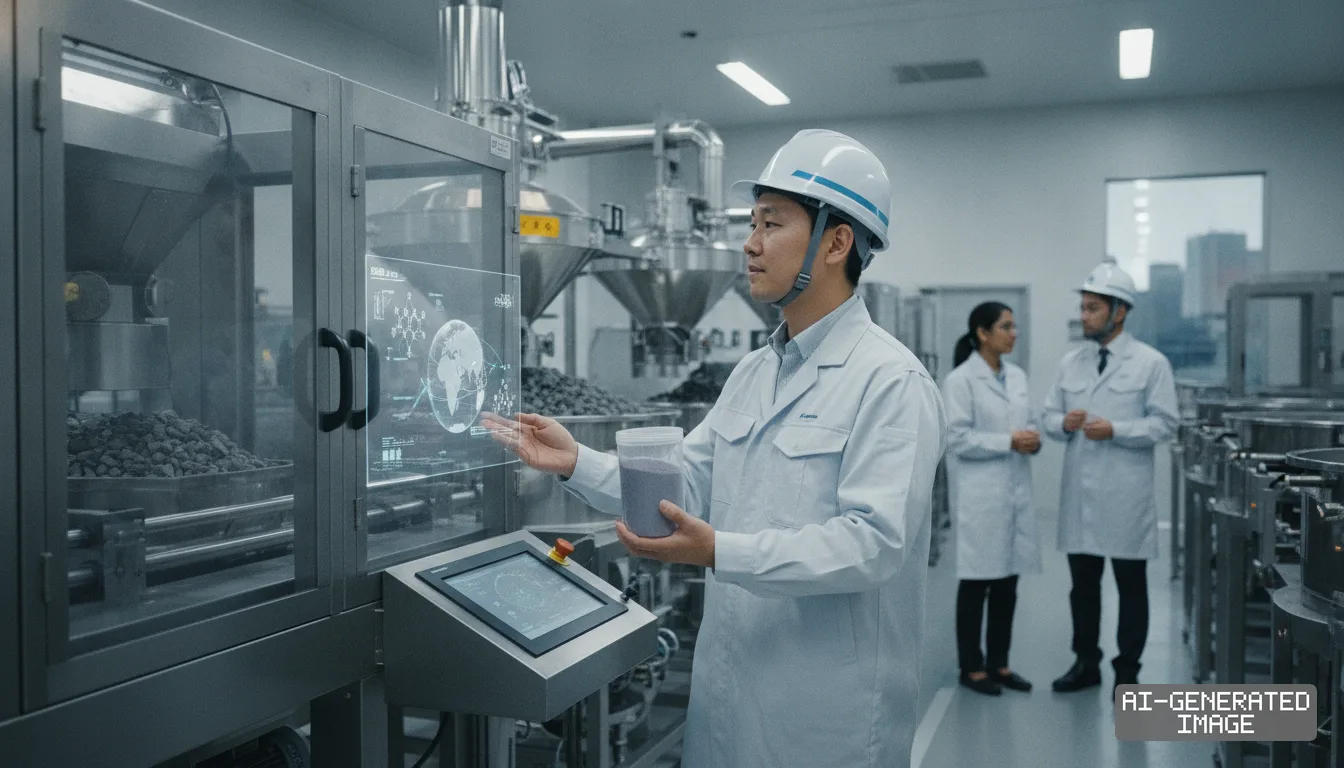
The surveyed sectors include semiconductors, advanced batteries, industrial robotics, basic chemicals, machine tools and consumer electronics. The investigation also examined solar modules, commercial shipbuilding and precision electrical equipment.
Finished steel, aluminum and motor vehicles will not face new duties under the draft package. Those industrial categories already carry import levies under Section 232 national security proclamations, trade officials said.
Federal trade regulators defined overcapacity through three measurable criteria. The agency reviewed persistent trade imbalances, underutilized production assets and the prevalence of unprofitable enterprises supported by state banking credit.
The investigation focused on government programs that decouple factory capacity from market demand. Investigators evaluated cheap land allocations, direct capital grants, discounted electricity and state-backed export financing across Asian manufacturing basins.
The tariff proposal establishes distinct regulatory tiers among the 16 investigated economies. South Korea, Japan and the European Union occupy the negotiated tier, where supplemental import charges remain held within the 15% threshold.
Existing bilateral arrangements shield South Korean and Japanese manufacturers from top-tier punitive duties. Trade officials affirmed that current tariff accords remain the benchmark for managing excess manufacturing supply from key allied partners.
China faces the highest penalty band under the proposed schedule. Trade officials drafted trigger mechanisms that automatically raise tariff rates if Chinese state authorities fail to retire surplus capacity in foundational industrial goods.
The mechanism ties tariff escalation directly to Chinese production volumes. Uncurbed output across legacy microchips, synthetic materials and industrial machinery will activate progressive duty increases under the planned enforcement guidelines.
India and Vietnam occupy an intermediate bracket with elevated tariff exposure. Both countries used direct capital subsidies, tax concessions and export zones to turn domestic hubs into alternative manufacturing bases for Western multinationals.
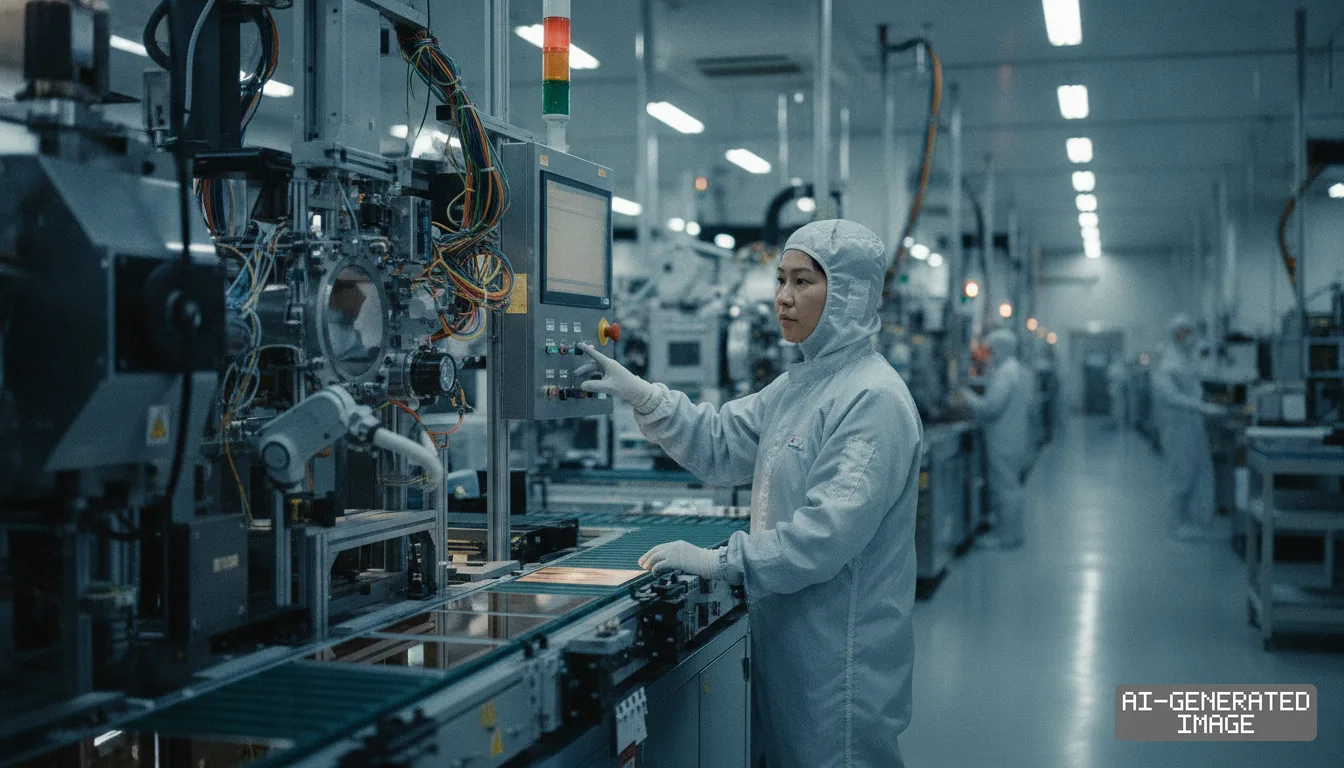
Electronics assembly operations carry the heaviest immediate corporate exposure. Contract manufacturer Hon Hai Precision Industry assembles roughly 14% of global iPhones across facilities in Tamil Nadu and Karnataka, delivering finished units directly to American buyers.
Tata Electronics operates three component and assembly plants in India, absorbing an expanding share of Apple hardware exports. Those operations benefit from India's Production-Linked Incentive scheme, which trade investigators placed under scrutiny.
Taiwan-based contract manufacturer Pegatron routes roughly 10% of its global smartphone assembly capacity through Tamil Nadu. The company expanded those Indian facilities to supply American store shelves outside the direct Chinese tariff perimeter.
South Korean electronics makers face derivative exposure across Southeast Asia. Samsung Electronics and LG Electronics assemble smartphones, flat panels and home appliances in northern Vietnam, relying on tariff-free container shipping lines to North America.
The pending trade package reduces the commercial advantage of factory relocations. Moving final assembly lines from Shenzhen to Chennai or Bac Ninh offers limited protection when U.S. tariffs target foreign subsidy networks collectively.
The Section 301 Committee convened public hearings on the excess-capacity docket between May 5 and May 8, 2026. The inter-agency body took testimony from industrial associations, labor unions and multinational procurement directors in Washington.
The official comment period closed following rebuttal submissions in mid-May. The trade representative scheduled formal determination findings for delivery to the White House before Dec. 15, 2026, establishing the statutory basis for presidential proclamations.
The trade agency has not published the final tariff-line list, harmonized system codes, product-level exclusions or implementation effective dates.
White House officials and trade representative staff declined to comment on draft tariff levels, leaving final duty schedules subject to executive sign-off.
Impact map
How this development propagates across the region and out to global buyers.
| Event | Korea | China | Japan | Global impact |
|---|---|---|---|---|
| Section 301 excess capacity tariff schedule | Electronics lines in Vietnam face higher export friction, domestic fabs shielded | Industrial producers face top-tier punitive duties on non-market manufacturing capacity | Negotiated pact caps duties at 15% for machinery inputs, components face audit | Electronics contract manufacturing costs rise across alternative Asian production hubs |
In this story
- Companies
- Hon Hai Precision IndustryTata Electronics
- Tickers
- 2317.TW
- Exposed
- Samsung ElectronicsPegatronLG Electronics
- Policy
- TariffsSubsidies
- Impact
- Supply ChainPricingCost Structure
Track every Tariffs development → Track every Subsidies development →
Related briefings
- Taiwan direct investment in China sinks to 1.1% as factories move Also on Hon Hai Precision Industry, Pegatron, Subsidies
- US offers India tariff edge over Vietnam under Mission 500 pact Also on Hon Hai Precision Industry, Tata Electronics, Tariffs
- Tata Electronics Hosur unit suspended after three die in toxic gas leak Also on Pegatron, Tata Electronics
- Tata Electronics readies Assam chip plant with non-China network Also on Tata Electronics, Subsidies
Sources
Primary documents
Reporting
Confidence: high — how we grade this
The documents behind this briefing are linked above. East Asia Brief produces its English text with AI assistance under human editorial review, and does not translate or republish other outlets' articles. See our methodology and AI policy. Spotted an error? Tell us.
The Morning Brief
What changed in Korean, Chinese and Japanese industry overnight — and what it means for your supply chain. One email, weekday mornings, US time. Free.
The Morning Brief is in preparation. Leave your address and we will write to you once — when the first issue is ready. Nothing before that.