SCG sets second-quarter 2027 restart for $5.4bn Vietnam plant
The Long Son Petrochemicals site adds 1.4 million tonnes of annual polyolefin capacity, lifting the Thai group's total output by 40%.
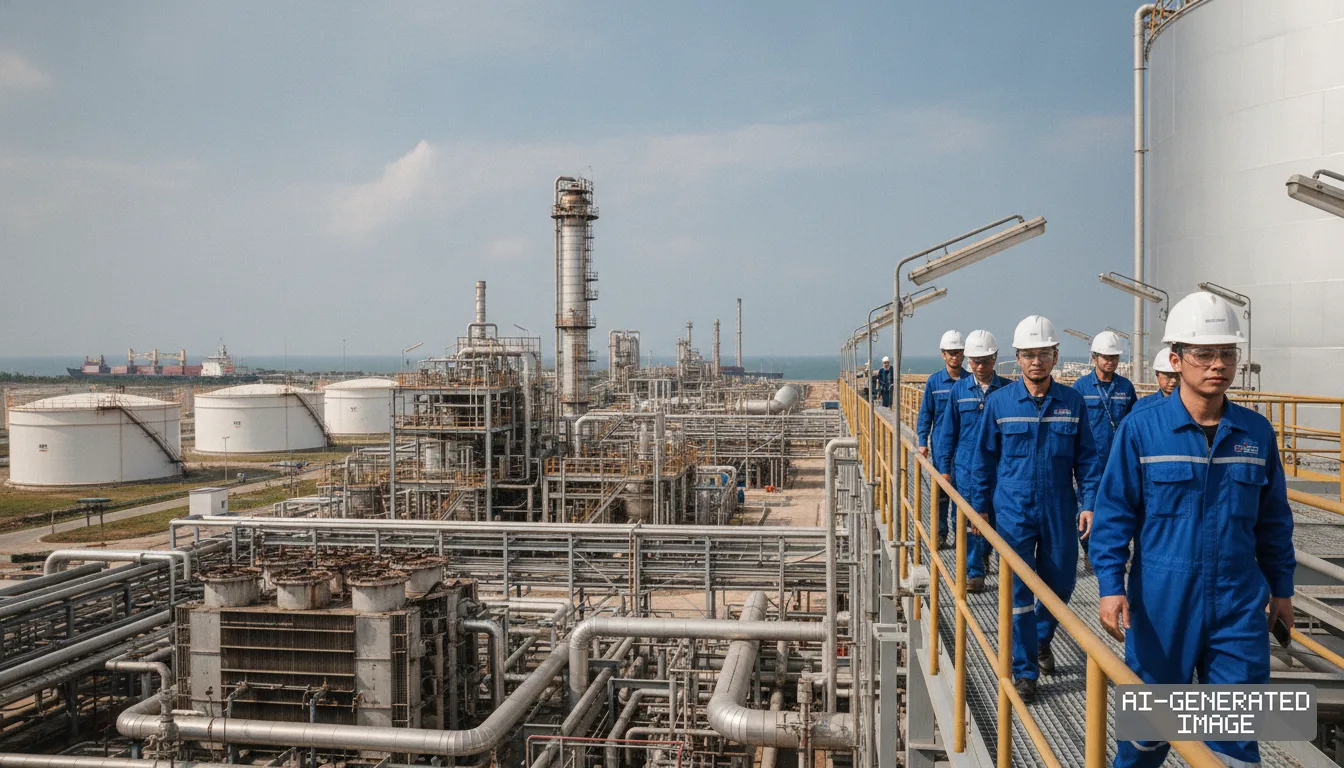
Long Son Petrochemicals said Nov. 11, 2026, it is targeting the restart of its integrated petrochemical complex in southern Vietnam in the second quarter of 2027.
The plant is wholly owned by SCG Chemicals, the plastics subsidiary of Thailand's Siam Cement Group. The $5.4 billion project is the first fully integrated petrochemical complex built in Vietnam.
The site adds 1.4 million tonnes of annual polyolefin capacity to the group. That addition expands the total petrochemical capacity of SCG Chemicals by 40%, from 6.9 million tonnes to 9.8 million tonnes per year.
The complex features an olefins cracker capable of producing 1.35 million tonnes per year. That output consists of 950,000 tonnes of ethylene and 400,000 tonnes of propylene to supply three downstream resin production lines.
Long Son Petrochemicals suspended operations in mid-May 2026 following disruption to Middle East shipping lanes. Blockages near the Strait of Hormuz cut access to maritime cargoes of naphtha and propane feedstocks, the company said.
Siam Cement Group tried procuring replacement feedstocks from suppliers operating outside the Middle East. Higher spot freight rates and premium purchase prices made continued processing unprofitable, the parent company said in an exchange disclosure.
The stoppage was the second idling at the facility within two years. The complex began commercial runs on Sept. 30, 2024, but stopped production within two weeks because global polymer profit margins dropped to multi-year lows.
Operations resumed briefly on Aug. 20, 2025, after a temporary dip in crude oil benchmarks. That recovery ended when geopolitical tension raised input procurement costs across the Gulf shipping corridors, prompting the shutdown in May 2026.
The company started a five-month turnaround program on Nov. 1 to prepare machinery for service. Engineering teams are using the outage to inspect equipment, clean cracking furnaces and accelerate technical overhauls across utility systems.
Engineers are also reconfiguring the olefins plant to handle lighter feedstocks. The Long Son Petrochemical Enhancement project adds infrastructure that will allow ethane to replace up to 70% of the heavier naphtha and propane diet.
Municipal authorities in southern Vietnam approved an expanded investment budget of $6.16 billion for the site in October. The capital revision adds $500 million to fund two cryogenic ethane storage tanks and gas handling pipelines.
Contractors reported the main storage tanks reached 61.5% construction completion by mid-2026. Modifications to the cracking furnaces and gas compressor trains reached 42.9% completion over the same period, according to local administrative filings.
Long-term contracts are already in place to underpin the shift in processing inputs. SCG Chemicals signed a 15-year purchase agreement with Enterprise Products Partners to buy 1 million tonnes of US-produced ethane annually on a free-on-board structure.
Japanese shipping line Mitsui O.S.K. Lines chartered three very large ethane carriers to the Thai chemical producer. The 15-year maritime contract covers the dedicated transit of liquefied ethane from export terminals on the Gulf Coast to Vietnam.
Ethane cracking offers insulation against oil price shocks in the Persian Gulf. Cracking ethane yields primarily ethylene and requires lower thermal energy, which reduces cash production costs per tonne compared with traditional naphtha cracking, the company said.
The Vietnamese operating hiatus has altered regional polymer flows. Domestic plastics converters in Ho Chi Minh City and neighboring industrial zones have relied on imported polyethylene and polypropylene to sustain packaging and components factories.
South Korean and Japanese chemical exporters filled part of the gap by supplying resin into Vietnam. South Korean producers like LG Chem and Lotte Chemical maintain tariff-free maritime routes into the country under regional free trade pacts.
Chinese basic chemical producers also increased resin exports across Southeast Asia. Massive capacity additions from integrated refining complexes in Zhejiang and Guangdong provinces kept Asian polymer spreads depressed throughout 2025 and 2026.
The broader downturn forced Siam Cement Group to reconfigure domestic assets in Thailand. The group temporarily idled its Rayong Olefins cracker in March 2026 before resuming controlled trial production in mid-September after safety reviews.
Siam Cement Group also entered confirmatory due diligence to merge its Thai petrochemical operations with PTT Global Chemical. The proposed joint venture excludes the Long Son asset, leaving the Vietnamese subsidiary as a standalone balance-sheet exposure.
SCG has not published the completion date for the cryogenic storage tanks or the scheduled discharge date for the first carrier from Enterprise Products Partners.
The turnaround timetable schedules mechanical testing through March 2027. Long Son Petrochemicals expects to restart commercial polymer processing lines during the second quarter of 2027 once utility checks and inspection sign-offs conclude.
Impact map
How this development propagates across the region and out to global buyers.
| Event | Korea | China | Japan | Global impact |
|---|---|---|---|---|
| Long Son plant turnaround and restart | LG Chem and Lotte Chemical maintain resin sales into Vietnam until LSP restarts 1.4 million tpy capacity | Integrated refiners sustain high polymer exports across ASEAN, capping regional ethylene margins | Mitsui O.S.K. Lines deploys three chartered VLECs to move 1 million tonnes of US ethane to Vietnam | Asian cracker cash margins remain suppressed under global basic chemical supply overhang |
In this story
- Companies
- Siam Cement GroupSCG ChemicalsLong Son Petrochemicals
- Tickers
- SCC.BK
- Exposed
- Enterprise Products PartnersMitsui O.S.K. LinesPTT Global ChemicalLG ChemLotte Chemical
- Impact
- Supply ChainCost StructureCapex
Related briefings
- South Korean battery makers prepare sodium-ion lines for energy storage Also on LG Chem, Cost Structure
- Korean cathode makers automate single-crystal calcination lines to secure yields Also on LG Chem, Cost Structure
- Japanese shipbuilders standardize electric coastal feeder designs to cut renewal costs Also on Mitsui O.S.K. Lines, Cost Structure
- Korean cathode makers retool production lines for LMFP chemistry as price war spreads Also on LG Chem, Cost Structure
Sources
Reporting
Confidence: medium — how we grade this
The documents behind this briefing are linked above. East Asia Brief produces its English text with AI assistance under human editorial review, and does not translate or republish other outlets' articles. See our methodology and AI policy. Spotted an error? Tell us.
The Morning Brief
What changed in Korean, Chinese and Japanese industry overnight — and what it means for your supply chain. One email, weekday mornings, US time. Free.
The Morning Brief is in preparation. Leave your address and we will write to you once — when the first issue is ready. Nothing before that.