China ties US farm imports to reciprocal $60bn tariff cuts
The commerce ministry insists both capitals execute agreed $30 billion duty rollbacks following Beijing talks between Li Chenggang and visiting farm leaders.
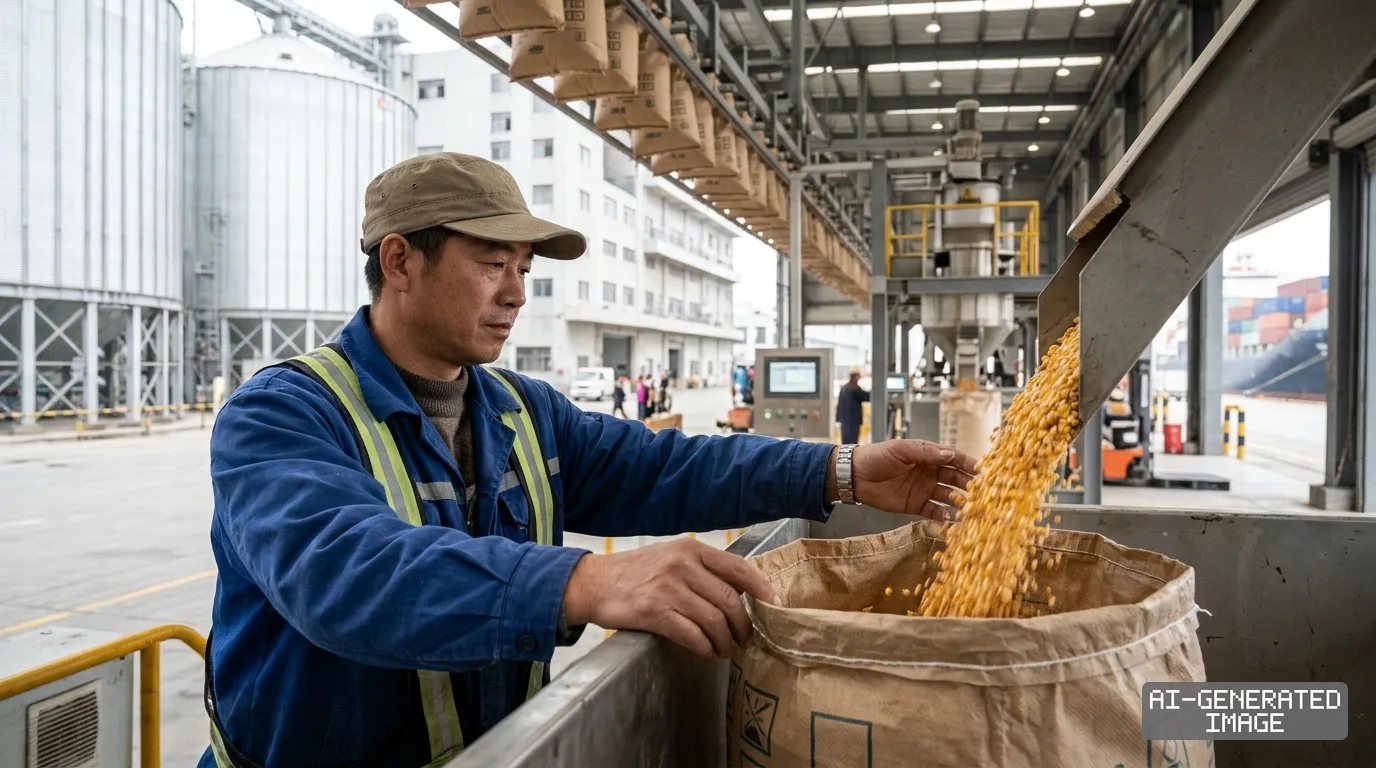
China's Ministry of Commerce said Nov. 5, 2026 it will condition higher imports of American agricultural goods on Washington carrying out reciprocal tariff cuts covering $60 billion in two-way merchandise trade.
Ministry spokesperson Huang Ling confirmed the policy stance during a regular briefing in Beijing. China remains open to expanding purchases only after both governments implement the agreed $30 billion reciprocal tariff rollbacks, Huang said.
Her statement addressed a Nov. 2 meeting in Beijing between Li Chenggang, China's international trade representative and vice minister of commerce, and a visiting delegation of American agricultural executives.
Huang urged the US government to lower tariffs, ease non-tariff barriers and widen access for Chinese commercial exports. Bilateral farm trade provides essential household food supplies and predictable income for farmers in both countries, she said.
The condition ties farm sales to agreements reached during the eighth round of bilateral trade consultations held in New York and Washington on Sept. 20–23, 2026. Those discussions established a ministerial Trade Council.
The commerce ministry published the initial framework and an exemption schedule on Sept. 28, 2026. The document listed 1,619 product categories that would see supplemental tariffs removed, restoring most-favored-nation rates on over 90% of covered goods.
China's duty-waiver list granted relief to American corn, wheat, pork, beef and dairy products. The ministry also removed retaliatory duties on processed oilseed derivatives, including soybean meal and soybean oil.
Raw yellow soybeans were excluded from the Sept. 28 exemption list. Whole soybeans represent the single most valuable American agricultural export to China and continue to carry an additional 10% import duty at Chinese ports.
The exclusion leaves Beijing holding its most effective commodity leverage in trade talks. Chinese crushers import roughly 100 million metric tons of soybeans annually to sustain national poultry and swine herds.
Under the reciprocal deal, the United States agreed to lower duties across $30 billion of Chinese consumer shipments. The American list covers toys, small household appliances, baby care products, kitchen fixtures and seasonal holiday decorations.
China's reciprocal $30 billion basket covers American agricultural commodities, personal care products, medical devices and industrial steam coal. Both lists were calibrated against full-year 2024 bilateral customs valuations.
State grain traders Sinograin and COFCO Group face the most immediate commercial exposure to the border policy. The two state-owned conglomerates control over 40% of China's total soybean crushing and storage capacity.
Sinograin and COFCO have directed recent bulk purchasing toward Brazilian and Argentine terminals while the tariff remains active. The 10% duty prevents Chinese commercial processors from booking American cargoes on open spot markets.
Multinational grain merchandisers Archer-Daniels-Midland and Bunge manage the primary distribution pipeline from US interior terminals. Both trading houses rely on Chinese processing demand for roughly 20% of their ocean-going bulk volumes.
American grain growers completed harvest operations this autumn without receiving tariff-free access to Chinese terminals. American farmers harvested an estimated 4.3 billion bushels of soybeans this season, facing heavy inventory carrying costs.
The tariff impasse coincides with an agreed extension of the broader bilateral trade truce. Originally scheduled to expire on Nov. 10, 2026, the temporary freeze was extended by two months to Jan. 10, 2027.
Negotiators extended the deadline to allow domestic agencies to complete technical and statutory clearance procedures. Both governments agreed that duty reductions would take effect simultaneously once those domestic reviews conclude.
The bilateral Trade Council established a dedicated agricultural working group to review non-tariff barriers. The working group plans to hold its initial session before the end of 2026 to address biotechnology licensing delays.
Chinese trade officials used the Nov. 2 meeting to reiterate that commercial buying cannot expand in isolation from broader tariff relief. Delegations discussed easing phytosanitary clearance backlogs that stall grain vessels at Chinese anchorages.
The ministry notice does not state the specific date when customs bureaus will execute the reciprocal tariff rollbacks. Both governments have confirmed only that duty cuts will take effect concurrently following statutory reviews.
The documents also do not settle whether raw yellow soybeans will be added to the duty-waiver schedule, leaving commercial importers uncertain if volume quotas will apply.
Private feed millers in Guangdong and Shandong provinces continue to rely on domestic stockpiles and South American cargoes. Those processors face higher feed production costs whenever currency movements widen import margins.
Port authorities in Qingdao and Nantong have maintained current duty deposit requirements on incoming US vessels. Grain vessels arriving without state quota exemptions must deposit cash guarantees against the 10% supplemental tariff.
Bilateral trade officials face a firm calendar deadline on Jan. 10, 2027, when the temporary trade truce expires and both governments must formally implement the tariff reductions.
Impact map
How this development propagates across the region and out to global buyers.
| Event | Korea | China | Japan | Global impact |
|---|---|---|---|---|
| US-China $60B reciprocal tariff condition | feed grain millers CJ CheilJedang and Harim face higher shipping volatility on diverted Pacific bulk lanes | COFCO and Sinograin manage 40% of crushing capacity with 10% duty shielding domestic stocks | trading houses Marubeni and Mitsubishi redirect Pacific Northwest grain slots toward Southeast Asia | ADM and Bunge see ocean bulk grain flows constrained by unconfirmed soybean tariff waiver |
In this story
- Companies
- COFCO GroupSinograinArcher-Daniels-MidlandBunge
- Tickers
- ADMBG
- Policy
- Tariffs
- Impact
- PricingSupply ChainOrder Book
Track every Tariffs development →
Related briefings
- China MOFCOM Excludes Soybeans From $30B US Tariff Relief Also on Sinograin, Bunge, Archer-Daniels-Midland
- USTR and MOFCOM set $60B tariff cuts on non-sensitive items Also on Archer-Daniels-Midland, Tariffs, Pricing
- U.S.-China Board of Trade sets tariff cuts on corn and beef as raw soybeans stay excluded Also on Archer-Daniels-Midland, Tariffs, Order Book
- Philippines seeks zero Japan tariffs on farm and tobacco goods Also on Tariffs, Pricing, Order Book
Sources
Primary documents
Reporting
Confidence: high — how we grade this
The documents behind this briefing are linked above. East Asia Brief produces its English text with AI assistance under human editorial review, and does not translate or republish other outlets' articles. See our methodology and AI policy. Spotted an error? Tell us.
The Morning Brief
What changed in Korean, Chinese and Japanese industry overnight — and what it means for your supply chain. One email, weekday mornings, US time. Free.
The Morning Brief is in preparation. Leave your address and we will write to you once — when the first issue is ready. Nothing before that.