JBIC presses US for direct say over $550 billion infrastructure pact
Chairman Tadashi Maeda urged Washington to let Tokyo originate deals under the bilateral framework that commits financing through 2029 to cap tariffs at 15%.
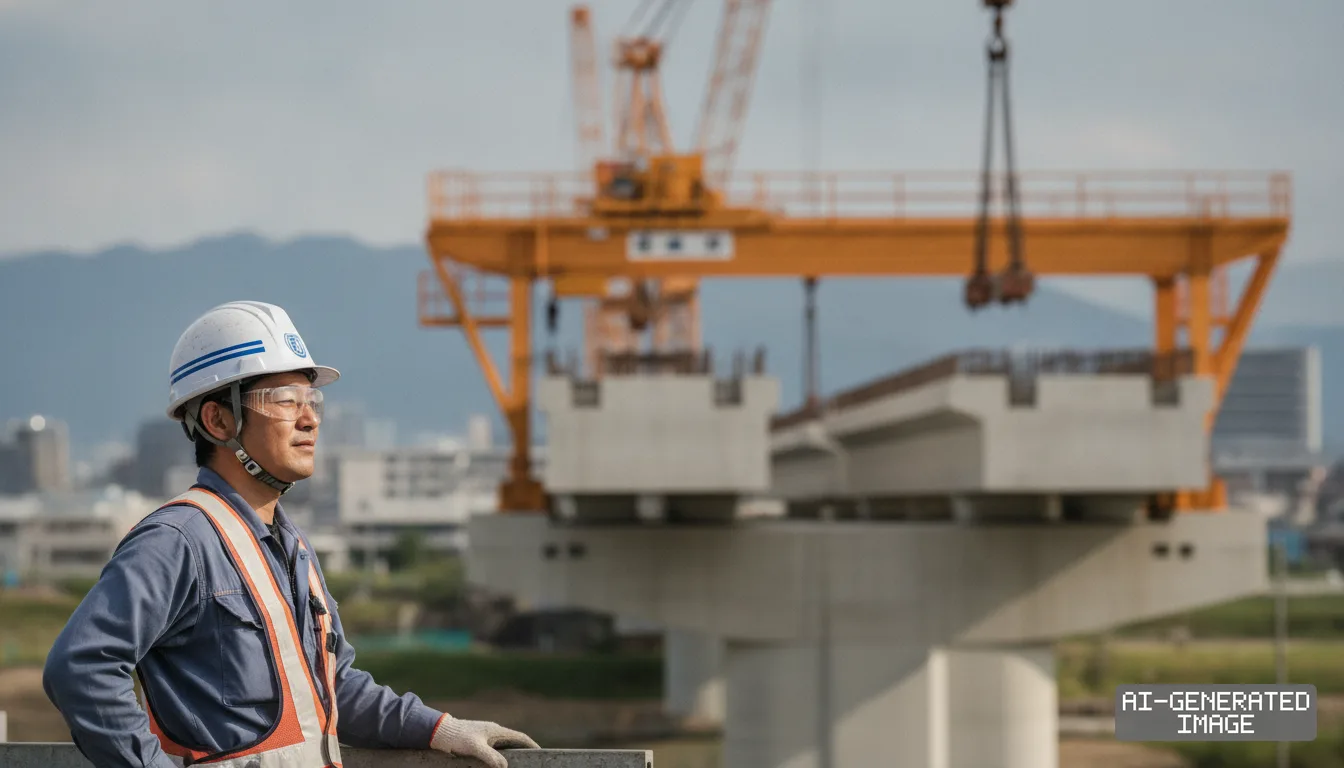
The Japan Bank for International Cooperation asked Washington on Nov. 19 to revise their bilateral investment framework, seeking direct authority to select American infrastructure projects.
JBIC Chairman Tadashi Maeda urged the change during an economic dialogue in Tokyo. Japan must help originate projects rather than merely review proposals chosen by the United States, Maeda said.
The strategic financing vehicle covers up to $550 billion in loans, equity and debt guarantees. Tokyo committed the capital through January 2029 to keep American import tariffs on Japanese goods at 15%.
Washington and Tokyo have announced seven initial projects valued at more than $100 billion under the pact. The transactions represent roughly 18% of the total bilateral funding pledge.
The selected assets include a GlobalFoundries semiconductor plant in New York alongside power generation facilities in Texas and Ohio. Japanese officials want identical capital access for domestic equipment vendors.
Under the initial pact signed Sept. 4, 2025, an investment committee led by the U.S. Commerce Department selects the pipeline. The Japanese government retains only advisory consultation and financing vetting rights.
That structure restricts Tokyo to a defensive screening role. JBIC can withhold funding from unviable assets, but Japanese lenders cannot direct funding toward domestic engineering consortia during initial design stages.
Commercial syndicates provide two-thirds of the debt required for approved facilities. JBIC finances the remaining one-third directly through its policy loan windows, while Nippon Export and Investment Insurance covers private default risk.
Without early project origination authority, Japanese contractors risk exclusion from procurement packages. Maeda told attendees that direct Japanese participation in picking assets is necessary to defend the national economic interest.
JBIC established a dedicated unit in May to run the bilateral financing portfolio. The bank formed the Japan-U.S. Strategic Investment Department to coordinate risk assessments with commercial lenders.
The lender has deployed capital through dedicated investment vehicles. JBIC signed a loan amendment Sept. 25 increasing credit to $1.976 billion for Japan Invest 3 LLC to back American natural gas generation.
Commercial banks contributed additional debt under NEXI export insurance, raising that single power co-financing package to $5.917 billion. Japanese turbine manufacturers rely on such syndicates to win long-term maintenance contracts.
Securing origination rights would allow Tokyo to tie capital disbursements directly to Japanese component suppliers. Domestic manufacturers seek heavy equipment supply contracts across North American power grids and industrial facilities.
The policy bank also targets cross-border clean energy supply chains. JBIC backs Gulf Coast low-carbon ammonia production plants designed to secure tax credits under the U.S. Inflation Reduction Act.
Japanese trading houses and utilities hold off-take contracts across those fuel facilities. Tokyo wants project selection authority to protect feedstock flows destined for domestic coal-fired plant co-firing programs.
The bilateral framework also intersects with heavy industrial manufacturing. JBIC backed Nippon Steel's acquisition financing for United States Steel Corporation, using policy loans to anchor downstream automotive supply chains.
Direct origination powers would also support trilateral economic security goals. JBIC holds a 26% equity stake in India's National Industrial Corridor Development Corporation, connecting American chip initiatives with Indian supply chains.
The policy bank must balance bilateral geopolitical pressure against strict statutory mandates. The JBIC Act requires independent credit analysis to protect state capital, preventing the lender from rubber-stamping American selections, Maeda said.
The Japanese government has not published formal revisions to the memorandum, and Washington has not confirmed whether it will open project selection to Japanese officials.
The investment framework remains in effect through Jan. 20, 2029, when the four-year presidential administration concludes. Bilateral working groups will review project pipelines during their next quarterly policy consultation in Washington.
Impact map
How this development propagates across the region and out to global buyers.
| Event | Korea | China | Japan | Global impact |
|---|---|---|---|---|
| JBIC demands project selection role in $550B U.S. facility | No direct financing exposure, faces heavier bidding competition against Japanese equipment vendors | Excluded from U.S. infrastructure and semiconductor supply networks backed by bilateral funding | JBIC seeks procurement guarantees for domestic engineering firms across $550B pipeline | North American power and semiconductor project lead times hinge on Tokyo-Washington origination review |
| JBIC demands project selection role in $550B U.S. facility | No direct financing exposure, faces heavier bidding competition against Japanese equipment vendors | Excluded from U.S. infrastructure and semiconductor supply networks backed by bilateral funding | JBIC seeks procurement guarantees for domestic engineering firms across $550B pipeline | North American power and semiconductor project lead times hinge on Tokyo-Washington origination review |
In this story
- Companies
- Japan Bank for International CooperationNippon Export and Investment InsuranceGlobalFoundriesNippon Steel
- Tickers
- 5401.TGFS.O
- Exposed
- United States Steel
- Policy
- TariffsProcurement Rules
- Impact
- Supply ChainOrder BookCompliance
Track every Tariffs development → Track every Procurement Rules development →
Related briefings
- Japan and ASEAN launch $10B supply chain pact for critical minerals Also on Nippon Export and Investment Insurance, Japan Bank for International Cooperation, Compliance
- Japan, Uzbekistan agree to refine critical minerals locally for export Also on Japan Bank for International Cooperation, Compliance
- Quad ministers advance mineral refining network to bypass China Also on Japan Bank for International Cooperation
- India and JBIC weigh critical mineral fund for supply chains Also on Japan Bank for International Cooperation
Sources
Primary documents
Reporting
Confidence: high — how we grade this
The documents behind this briefing are linked above. East Asia Brief produces its English text with AI assistance under human editorial review, and does not translate or republish other outlets' articles. See our methodology and AI policy. Spotted an error? Tell us.
The Morning Brief
What changed in Korean, Chinese and Japanese industry overnight — and what it means for your supply chain. One email, weekday mornings, US time. Free.
The Morning Brief is in preparation. Leave your address and we will write to you once — when the first issue is ready. Nothing before that.