Hanwha Ocean US units gain two-month reprieve from Chinese sanctions
Decree No. 4 grants a two-month stay shielding all five American subsidiaries from a total ban on Chinese commerce while bilateral port fee talks remain paused.
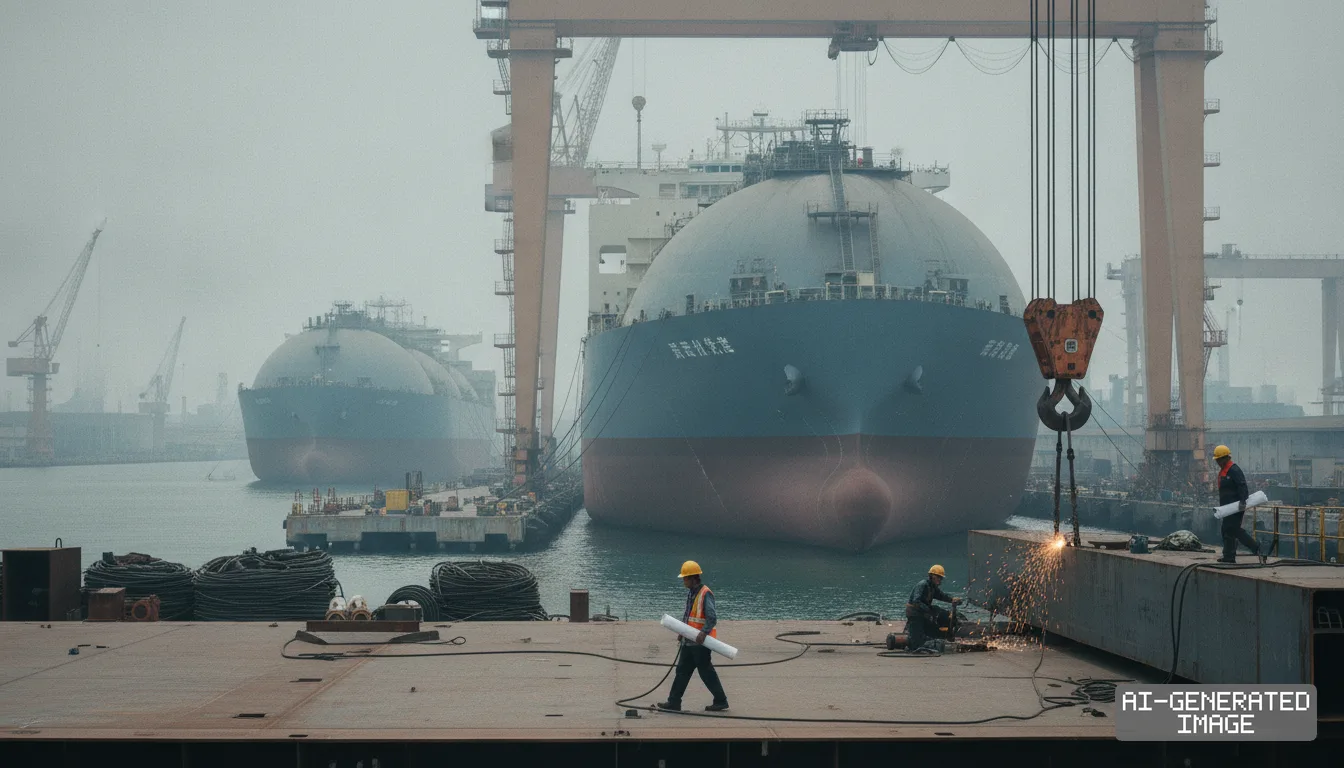
China's Ministry of Commerce extended a suspension of retaliatory sanctions against five US subsidiaries of South Korea's Hanwha Ocean on Nov. 9, 2026, granting a two-month reprieve through Jan. 10, 2027.
The ministry issued the decision as MOFCOM Decree No. 4 of 2026. The decree prolongs an exemption that shields all five American operating units from a complete prohibition on commerce with Chinese enterprises and individuals.
The initial blacklist covered 100% of the five subsidiaries' direct business in China. The two-month stay keeps those operations legally unencumbered while Washington and Beijing maintain negotiated pauses on reciprocal maritime port fees and trade investigations.
The five entities subject to the order are Hanwha Philly Shipyard Inc., Hanwha Shipping LLC, Hanwha Ocean USA International LLC, Hanwha Shipping Holdings LLC and HS USA Holdings Corp.
The targeted units manage Hanwha Ocean's expanding commercial shipbuilding and naval maintenance operations across the United States. Philly Shipyard operates commercial drydocks and handles fleet work in Philadelphia, where Hanwha completed a $100 million acquisition earlier to secure US footprint.
China originally designated the five firms on Oct. 14, 2025, under MOFCOM Decree No. 6 of 2025. That order invoked China's Anti-Foreign Sanctions Law to freeze all domestic cooperation and transactions with the companies.
Beijing cited the five firms' cooperation with an investigation by the Office of the United States Trade Representative. The inquiry targeted China's maritime, logistics and shipbuilding sectors under Section 301 of the US Trade Act of 1974.
The ministry froze the sanctions four weeks later under MOFCOM Decree No. 7 of 2025. That initial one-year suspension took effect Nov. 10, 2025, matching a corresponding one-year pause by the United States on punitive Section 301 tariffs.
The latest two-month continuation follows high-level economic consultations held between Chinese and US officials in September 2026. Those discussions produced a shared consensus to preserve existing tariff pauses, export control standstills and exemptions on special vessel fees.
The order directly shields Hanwha Ocean from dual-track regulatory disruption. Hanwha Ocean holds a Master Ship Repair Agreement with the US Navy, enabling its shipyards to bid on non-combatant maintenance, repair and overhaul contracts.
Chinese retaliatory measures would have barred the five US entities from sourcing steel, ship subcomponents and marine equipment from Chinese manufacturers. The measures also threatened maritime logistics contracts involving Hanwha Shipping tankers calling at Chinese container and bulk terminals.
South Korean shipbuilders depend on cross-border supply chains for standard steel plate and ancillary fittings. Even American-based fabrication programs frequently procure heavy casting inputs and general maritime components fabricated across Asian supply hubs.
The extension prevents an immediate supply disruption at Philly Shipyard as the facility expands fabrication work for Jones Act commercial vessels and allied naval logistics ships. An active ban would have forced subcontractors to reroute component procurement away from Chinese fabricators.
The move also provides stability for Hanwha Ocean USA International, which oversees North American capital allocations and corporate partnerships. The subsidiary coordinates engineering investments across regional ship repair yards and maritime services.
The Ministry of Commerce stated that the decision was taken specifically to carry out the consensus reached during bilateral economic and trade talks. The regulatory reprieve takes effect Nov. 10, 2026, ensuring seamless legal continuity from the expiring 2025 order.
The decree does not alter the underlying legal listing of the companies. All five American units remain formally designated on China's countermeasures list under the Anti-Foreign Sanctions Law, leaving the enforcement mechanism intact if bilateral negotiations lapse.
The legal suspension expires on Jan. 10, 2027, setting that date as the operational deadline for bilateral trade envoys to renew reciprocal exemptions or permit the penalties to revive.
The notice does not state whether further extensions will be granted, and Hanwha Ocean has not published an official regulatory disclosure or statement regarding the latest order.
Impact map
How this development propagates across the region and out to global buyers.
| Event | Korea | China | Japan | Global impact |
|---|---|---|---|---|
| MOFCOM Hanwha Ocean sanctions suspension | Hanwha Ocean avoids supply bottlenecks for Philly Shipyard and maintains US Navy MRO operations | MOFCOM preserves leverage in Section 301 talks while maintaining legal designations under Anti-Foreign Sanctions Law | Japanese commercial yards observe preserved status quo on regional ship plate and equipment logistics | US naval auxiliary maintenance and Jones Act vessel schedules remain insulated from immediate equipment rerouting costs through Jan. 10, 2027 |
In this story
- Companies
- Hanwha Ocean
- Tickers
- 042660.KS
- Exposed
- Philly Shipyard
- Policy
- SanctionsTariffs
- Impact
- ComplianceSupply ChainOrder Book
Track every Tariffs development →
Related briefings
- Hanwha Ocean installs smart yard systems at Philly Shipyard Also on Philly Shipyard, Hanwha Ocean, Order Book
- Pentagon Inspects Hanwha Ocean Docks for US Frigate Programs Also on Philly Shipyard, Hanwha Ocean, Order Book
- Trump waives 100% secondary tariffs on Indian energy imports Also on Sanctions, Tariffs, Compliance
- China curbs drone tech exports to US defense contractors in 2026 Also on Sanctions, Compliance
Sources
Primary documents
Reporting
Confidence: high — how we grade this
The documents behind this briefing are linked above. East Asia Brief produces its English text with AI assistance under human editorial review, and does not translate or republish other outlets' articles. See our methodology and AI policy. Spotted an error? Tell us.
The Morning Brief
What changed in Korean, Chinese and Japanese industry overnight — and what it means for your supply chain. One email, weekday mornings, US time. Free.
The Morning Brief is in preparation. Leave your address and we will write to you once — when the first issue is ready. Nothing before that.