China waives African tariffs to lock in critical minerals
Beijing reaffirmed duty-free access across 53 African nations on Oct. 2, deploying tariff exemptions and mining capital to counter Western supply chain barriers.
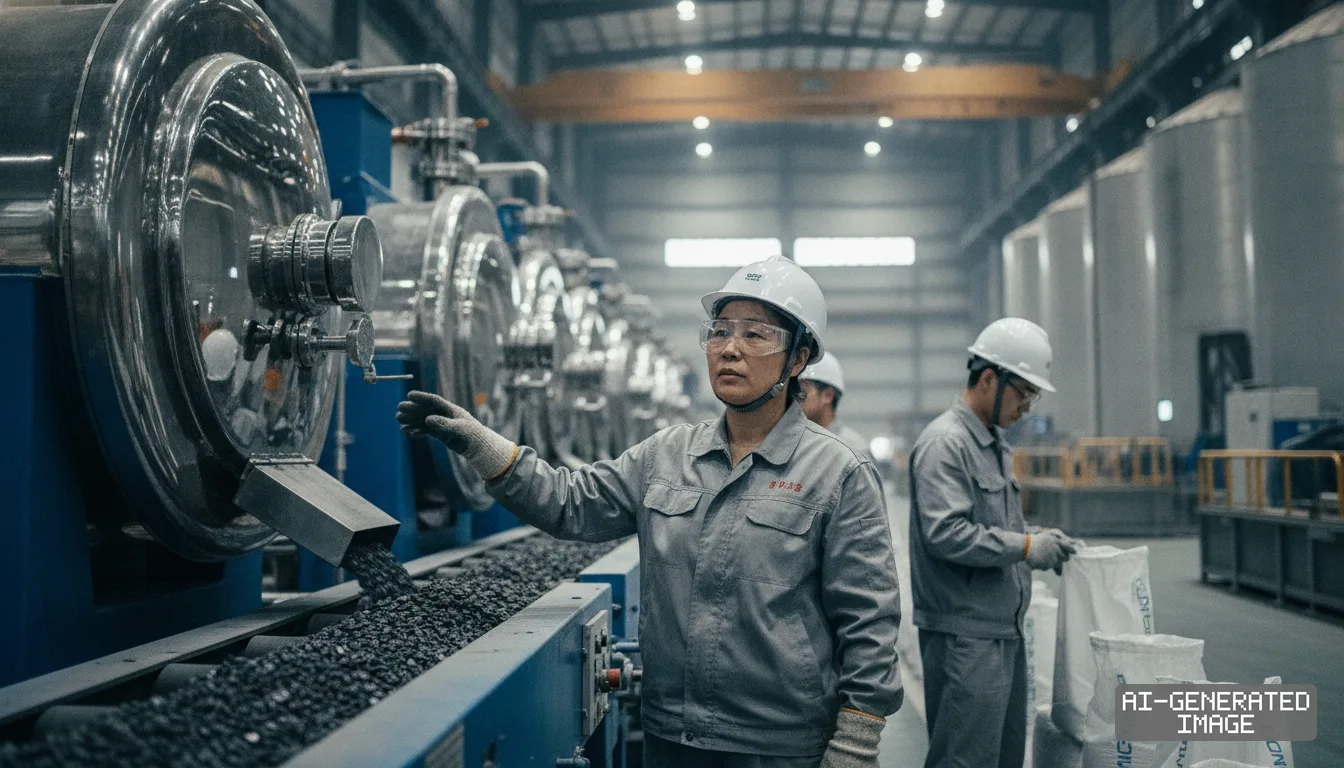
Chinese Vice President Han Zheng reaffirmed zero-tariff access for 53 African nations on Oct. 2, pledging expanded industrial financing to secure critical mineral and battery feedstocks against Western trade restrictions.
Chinese customs clearance data showed imports from Africa reached 193.8 billion yuan ($27.2 billion) during May and June 2026. The intake rose 23.5% from the same period a year earlier.
The preferential treatment follows Announcement No. 5 issued by the State Council Customs Tariff Commission on April 28, 2026. That order took effect May 1, granting duty exemptions on 100% of tariff lines.
The decree added 20 non-least developed African economies, including South Africa, Egypt, Nigeria and Kenya. Beijing previously granted zero-tariff access to 33 least developed African nations on Dec. 1, 2024.
The tariff waivers exclude Eswatini, which maintains formal diplomatic ties with Taiwan. For goods governed by tariff-rate quotas, Beijing reduced only in-quota levies to zero while leaving out-of-quota duties untouched.
The tariff expansion forms part of Beijing's broader drive to anchor the Global South into its manufacturing ecosystem. The initiative counters tariffs and supply chain exclusion rules imposed by the United States and European Union.
South African state freight carrier Transnet reported surging Chinese dry bulk orders through the deep-water Port of Ngqura in late September. Mineral shipments through the Eastern Cape hub expanded at double-digit rates.
Ngqura port authorities said demand centered on chrome, magnetite and iron ore destined for Chinese industrial hubs. South Africa supplies more than 60% of China's total chrome imports.
Chinese refiners have expanded capital commitments across sub-Saharan mining corridors to capture upstream volume. Zhejiang Huayou Cobalt draws over 40% of its raw lithium and cobalt supply from African assets.
Battery manufacturer Contemporary Amperex Technology and domestic chemical processors rely on these African corridors. The zero-tariff umbrella protects input margins against rising geopolitical barriers.
Han emphasized downstream processing during the Oct. 2 diplomatic meetings, pledging Chinese technical assistance. Beijing aims to process raw ores near mine sites before shipping semi-finished feedstocks to mainland factories.
China had already zero-rated most unrefined sub-Saharan mineral ores, including Zambian copper and Congolese cobalt. The new framework expands duty-free benefits to intermediate alloys, chemicals and refined cathode precursors.
By lowering customs costs on processed intermediates, Beijing gives Chinese processors a structural pricing advantage. Western battery makers face higher tariffs and regulatory hurdles when bidding for African mine capacity.
African governments have increasingly restricted exports of unprocessed ores to force local industrialization. Zimbabwe banned raw lithium exports in late 2022, requiring foreign operators to invest in local flotation plants.
Chinese mining conglomerates responded by constructing local processing hubs across southern Africa. Sinomine Resource Group built a $300 million lithium processing facility at the Bikita mine in Zimbabwe to ship concentrates directly to China.
The zero-tariff structure aligns with these host-nation beneficiation mandates. Chinese companies absorb processed minerals tariff-free while European and American refiners incur additional border friction and higher transport fees.
African trade ministers cautioned that bilateral tariff cuts could complicate the African Continental Free Trade Area. The African Union Commission warned that fragmented trade arrangements might disincentivize intra-continental manufacturing supply chains.
Logistics constraints continue to limit export velocity across southern African corridors. South African rail bottlenecks and port delays add up to two hours in customs dwell times for mineral haulers.
Announcement No. 54 issued by the General Administration of Customs on April 28 established origin verification protocols. Chinese customs authorities require exporters to present verified certificates of origin to qualify for zero-tariff clearance.
The origin rules require non-LDC goods to satisfy specific processing criteria before qualifying for exemption. Goods shipped without a valid certificate must pay customs deposits that remain refundable for one year.
The State Council decree maintains zero-tariff preferences through April 30, 2028. Over this two-year period, Beijing intends to sign bilateral partnership pacts under the China-Africa Economic Partnership framework.
The Ministry of Commerce has not published an itemized list clarifying whether highly refined lithium hydroxide qualifies under the mineral exemption, leaving border classification rules unresolved for battery chemical shippers.
Bilateral trade between China and African partners reached $348 billion in 2025, according to official customs records, with Chinese direct investment in Africa expanding 44% in early 2026.
Impact map
How this development propagates across the region and out to global buyers.
| Event | Korea | China | Japan | Global impact |
|---|---|---|---|---|
| China Africa zero tariff policy | Korean battery makers face higher feedstock costs as Chinese refiners secure long-term African mineral off-take | Zhejiang Huayou Cobalt and domestic refiners lock in duty-free chrome, lithium and cobalt supply | Japanese trading houses face intensified bidding competition for Southern African mineral concessions | Critical mineral trade flows shift toward Chinese processors under preferential bilateral tariff rules |
In this story
- Companies
- TransnetZhejiang Huayou CobaltSinomine Resource Group
- Tickers
- 603799.SS002738.SZ
- Exposed
- Contemporary Amperex Technology
- Policy
- TariffsSupply ChainEconomic Security
- Impact
- Supply ChainCost StructureCompliance
Track every Tariffs development → Track every Supply Chain development → Track every Economic Security development →
Related briefings
- Japanese trading houses secure Indonesian HPAL nickel to bypass tolling bottlenecks Also on Zhejiang Huayou Cobalt
- Japan bids to host permanent CPTPP secretariat to steer Asia-Pacific trade rules Also on Supply Chain, Tariffs, Compliance
- US 100% drone tariffs take effect as Chinese hardware faces border wall Also on Supply Chain, Tariffs, Cost Structure
- China waives African import duties to lock in strategic ores Also on Supply Chain, Tariffs, Cost Structure
Sources
Primary documents
Confidence: high — how we grade this
The documents behind this briefing are linked above. East Asia Brief produces its English text with AI assistance under human editorial review, and does not translate or republish other outlets' articles. See our methodology and AI policy. Spotted an error? Tell us.
The Morning Brief
What changed in Korean, Chinese and Japanese industry overnight — and what it means for your supply chain. One email, weekday mornings, US time. Free.
The Morning Brief is in preparation. Leave your address and we will write to you once — when the first issue is ready. Nothing before that.