China caps hybrid car exports to EU to ease rare earth flows
A bilateral pact struck Oct. 9 slashes projected vehicle shipments by over 50% across four years while speeding green-channel export approvals for critical motor magnets.
The European Union and China agreed Oct. 9, 2026, to restrict Chinese hybrid vehicle exports in exchange for streamlined Chinese export licences on critical rare earths.
The compromise emerged from the China-EU Trade and Investment Consultation Mechanism held in Beijing. European Commissioner for Trade and Economic Security Maroš Šefčovič and China's Ministry of Commerce concluded the bilateral understanding.
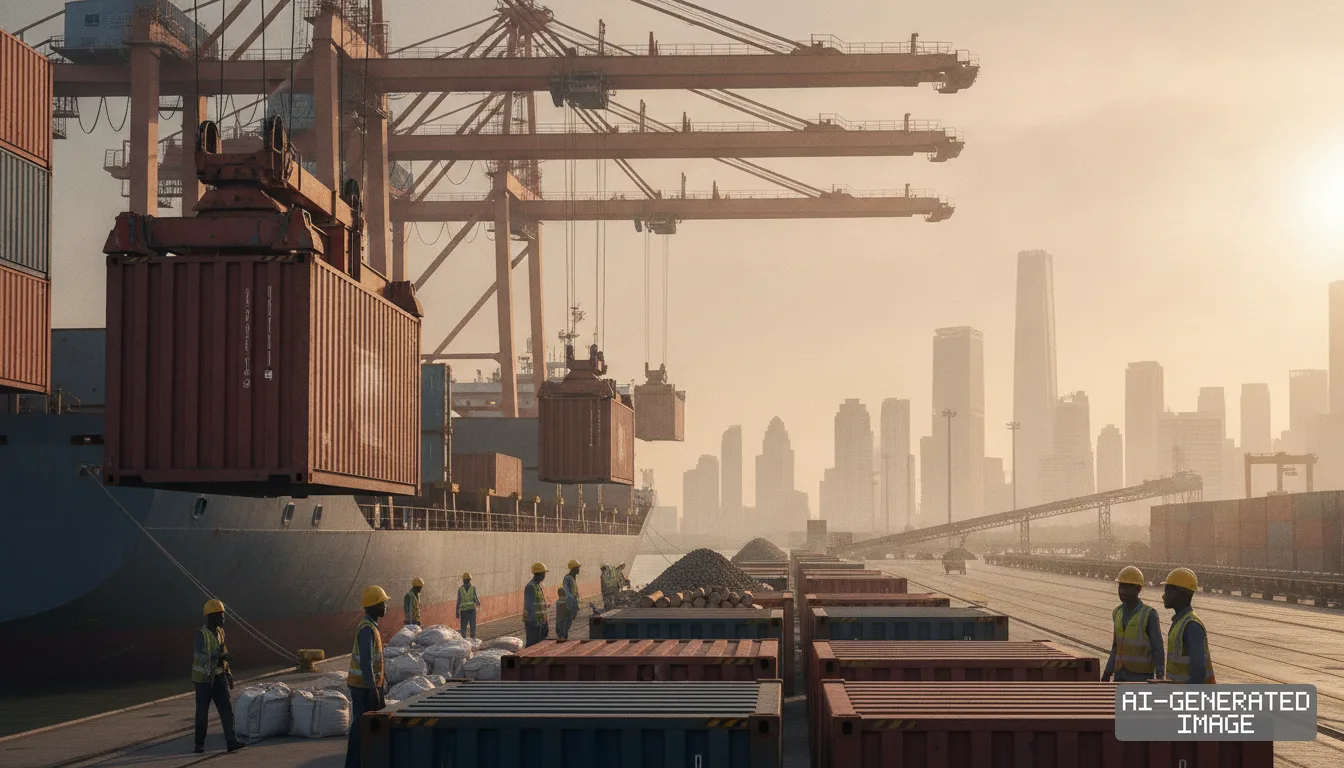
Under the terms, China agreed to cut projected shipments of hybrid and plug-in hybrid passenger cars to the bloc by over 50% over the next four years. That reduction removes millions of planned export units from European docks.
The restriction covers battery-assisted drivetrains that European carmakers warned were displacing domestic models. In return, Beijing pledged an expedited green-channel review for European export applications covering rare earth elements and permanent magnets.
Chinese customs data showed rare earth export clearances to Europe slowed earlier in 2026. The slowdown squeezed European motor manufacturers reliant on Chinese dysprosium and neodymium for electric drivetrains.
The agreement also introduces World Trade Organization price undertakings for surviving vehicle shipments. Exporters must commit to floor prices that prevent European distributors from undercutting domestic factory gate prices.
Beyond automotive powertrains, Beijing agreed to evaluate tariff reductions on €4 billion ($4.36 billion) of European exports. The targeted categories include precision auto parts, footwear and olive oil.
The tariff adjustments would save European exporters roughly €225 million ($245 million) annually in customs duties, European Commission officials said. The concessions mirror reciprocal commitments made by Brussels to assist Chinese firms with dual-use licensing inquiries.
Chinese electric vehicle makers had accelerated hybrid deliveries to Europe after Brussels imposed countervailing tariffs on pure battery-electric cars. The tariff shift had turned hybrid models into the primary volume driver for Chinese brands entering the EU market.
BYD and SAIC Motor had expanded their European dealer networks to handle hybrid shipments. BYD drew roughly 14% of its overseas delivery target from hybrid variants, while SAIC Motor relied on hybrid platforms for over 20% of its European passenger car volume.
European carmakers including Volkswagen and Stellantis had lobbied Brussels for relief against rising hybrid import volumes. Both manufacturers depend on Chinese suppliers for more than 70% of their refined permanent magnets.
The arrangement swaps automotive market share for mineral security. European auto assembly plants avoided supply line halts, while Chinese vehicle makers accepted volume ceilings to protect broader bilateral trade.
The mechanism relies on price undertakings rather than formal statutory quotas. Chinese exporters submit minimum import price schedules directly to the European Commission to verify compliance.
Ministry of Commerce officials in Beijing said the pricing formulas adhere to multilateral trading rules. The ministry maintained that voluntary corporate price commitments prevent unilateral anti-dumping actions.
The bilateral understanding does not resolve every trade tension. The text of the announcement does not state the company-by-company quota distribution among Chinese manufacturers.
The European Commission has not published the specific minimum import price thresholds that hybrid models must observe. Officials also left unconfirmed whether the quotas apply equally to mild hybrids and extended-range electric vehicles.
European heads of state review the negotiated terms for political sign-off at the European Council summit in Brussels during the third week of October 2026. Negotiating teams from Brussels and Beijing scheduled their next formal implementation review for March 2027.
Impact map
How this development propagates across the region and out to global buyers.
| Event | Korea | China | Japan | Global impact |
|---|---|---|---|---|
| China-EU hybrid export quota and rare earth deal | no direct quota impact, Hyundai Motor monitors hybrid pricing parity in Europe | BYD and SAIC accept volume limits on hybrid exports, rare earth licences cleared | Toyota faces tighter price floor discipline in European hybrid segment | automotive magnet supply chains gain licensing certainty through green channel |
In this story
- Companies
- BYDSAIC MotorVolkswagenStellantis
- Tickers
- 002594.SZ600104.SSVOW3.DESTLAM.MI
- Policy
- Export ControlsTariffs
- Impact
- Supply ChainCompliancePricing
Track every Export Controls development → Track every Tariffs development →
Related briefings
- BYD plans three European car plants to counter EU tariffs Also on Volkswagen, Stellantis, BYD
- Lotus absorbs 18.8% EU tariff to defend European deliveries Also on SAIC Motor, BYD, Tariffs
- CATL tops 15 Chinese automakers combined in first-half profits Also on SAIC Motor, BYD, Pricing
- BYD and Geely expand Southeast Asian assembly lines to build regional export hubs Also on SAIC Motor, Tariffs, Pricing
Sources
Reporting
Confidence: medium — how we grade this
The documents behind this briefing are linked above. East Asia Brief produces its English text with AI assistance under human editorial review, and does not translate or republish other outlets' articles. See our methodology and AI policy. Spotted an error? Tell us.
The Morning Brief
What changed in Korean, Chinese and Japanese industry overnight — and what it means for your supply chain. One email, weekday mornings, US time. Free.
The Morning Brief is in preparation. Leave your address and we will write to you once — when the first issue is ready. Nothing before that.