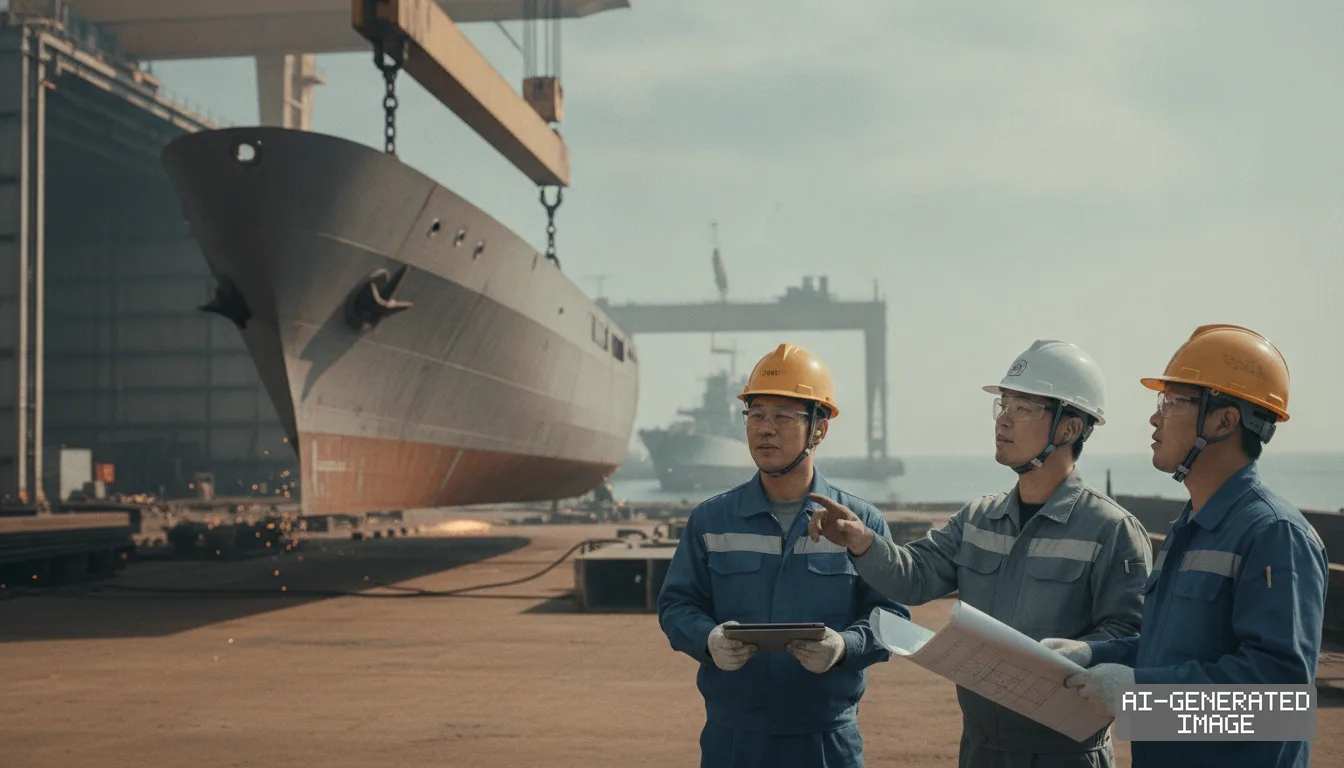
Stealth Maritime splits tanker orders between Hanwha Ocean and HD Hyundai
The Harry Vafias-led group contracts two VLCCs and two LR2 tankers across two Korean shipbuilders for $422 million to secure scarce 2029 and 2030 delivery slots.
Stealth Maritime divided a four-ship tanker order between Hanwha Ocean and HD Hyundai Heavy Industries on Nov. 4, 2026, committing $422 million to secure scarce building slots.
The transaction deploys two 320,000 deadweight-ton very large crude carriers to Hanwha Ocean and two 115,000 deadweight-ton LR2 product tankers to HD Hyundai. The structure separates crude and refined-product tonnage across two different corporate groups.
Hanwha Ocean booked the two crude carriers at 356.8 billion won ($267 million), or roughly $133.5 million per vessel, representing 2.8% of its 2025 revenue. The LR2 pair at HD Hyundai carries an estimated value of $156 million.
The order brings the tanker order book of the Greek shipping group, led by Harry Vafias, to 20 vessels valued at roughly $2.05 billion. All 20 hulls are assigned to shipyards in South Korea.
Major Korean yards have filled their building berths through 2028 with liquefied natural gas carriers and ultra-large container vessels. That congestion leaves little continuous drydock volume for single-buyer tanker programs.
By splitting the contracts, Stealth Maritime avoided bidding against its own delivery schedule at a single builder. The dual-yard approach matches specific vessel dimensions to the most efficient dock dimensions available.
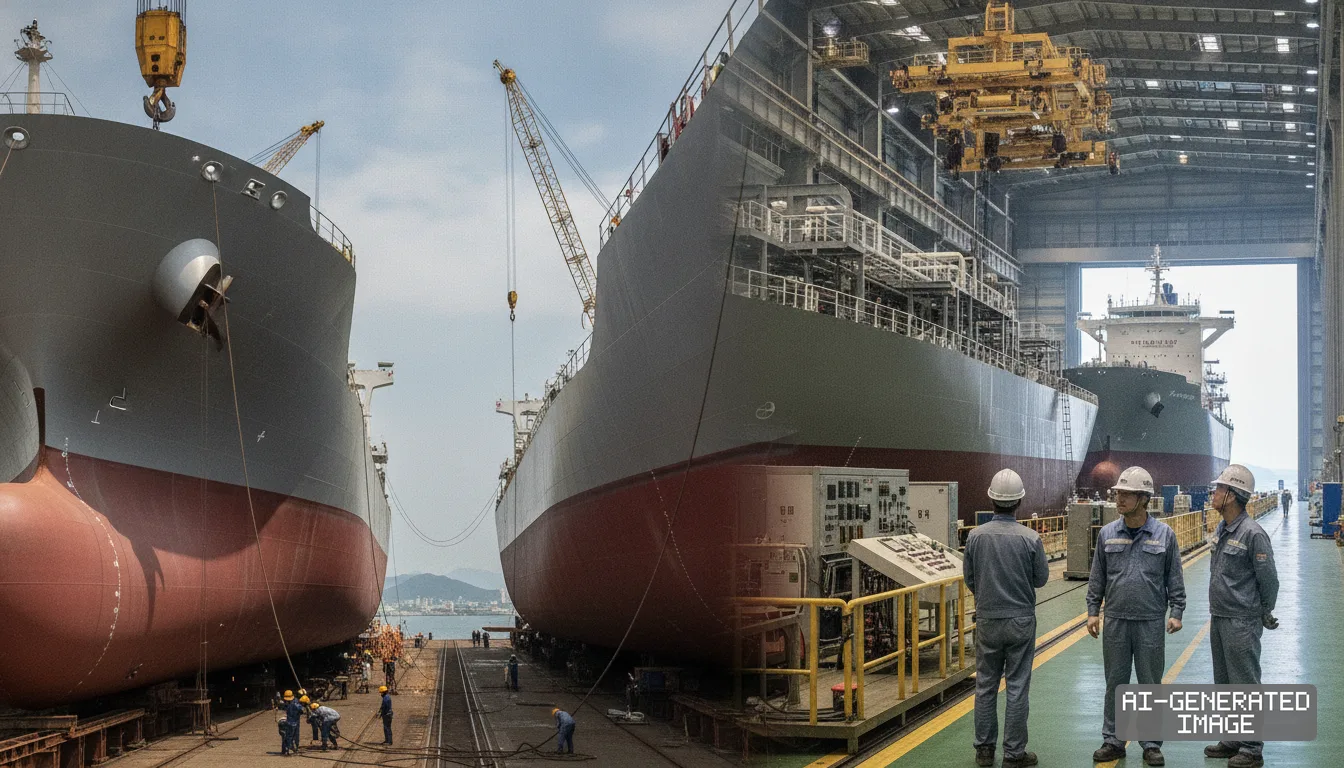
Hanwha Ocean operates one of the world's largest commercial building docks at its Geoje shipyard. The facility is configured for mega-tankers and large gas carriers requiring wide beam clearances.
The two crude carriers lift Hanwha Ocean's publicly disclosed 2026 order intake to 44 vessels worth approximately $8.11 billion. That total includes 21 very large crude carriers, marking a sharp return to conventional oil transport.
HD Hyundai Heavy Industries builds LR2 product tankers in serial lines that cycle faster than crude docks. The 115,000 deadweight-ton hulls fit medium-to-large basins without displacing higher-margin LNG carrier construction.
The new product carriers expand Stealth Maritime's commitments at HD Hyundai yards to 12 tankers. That portfolio includes Suezmax crude carriers, LR2 product tankers and smaller medium-range vessels.
Clarksons Research reported that global yard capacity remains constrained as the worldwide order book reached 226 million compensated gross tons in October 2026. Deliveries of premium commercial tonnage now stretch into the next decade.
Newbuilding prices reflect that tightness across every major tanker class. Benchmark prices for very large crude carriers held near $133 million in October 2026, while LR2 product tankers commanded roughly $78 million.
For shipowners, split contracting prevents delivery bunched in late dock cycles. Stealth Maritime scheduled its LR2 vessels across 2029 and 2030, while the crude carriers take deliveries through late 2030.
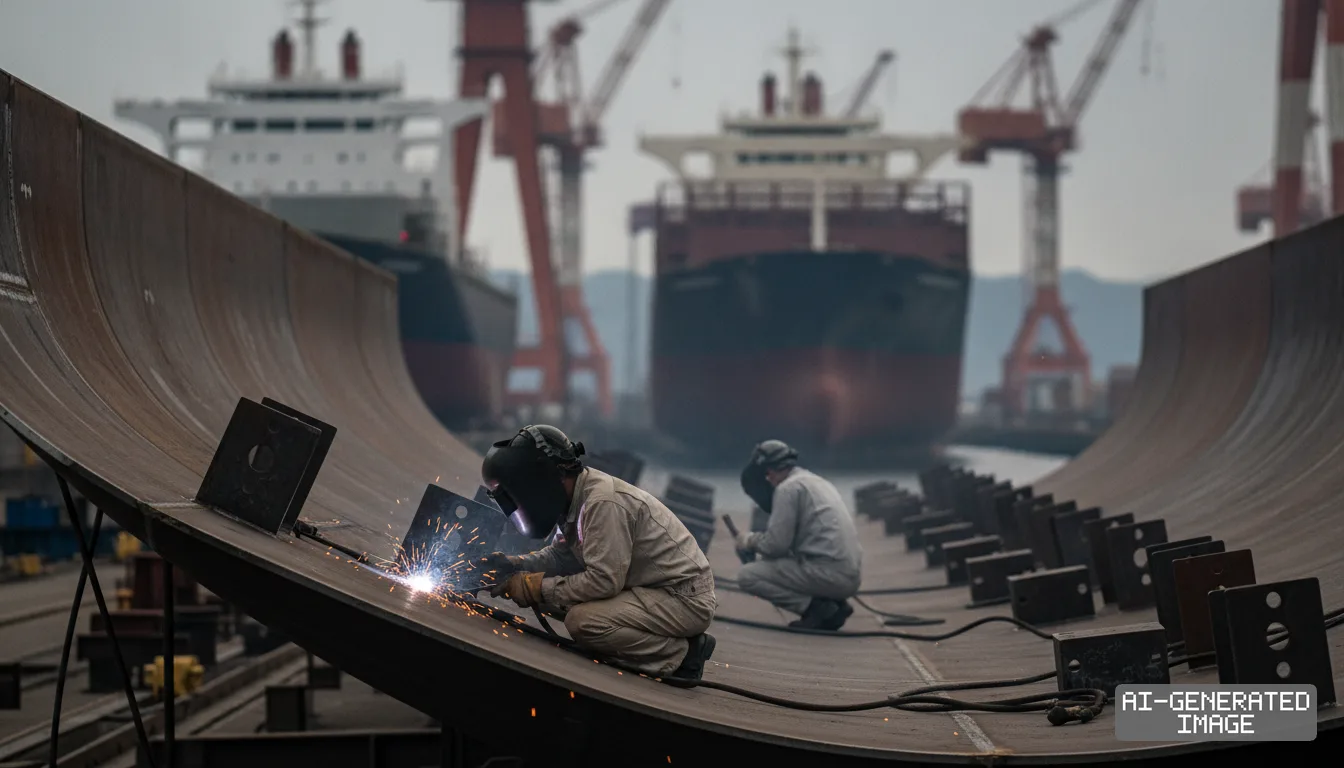
The arrangement also mitigates yard-specific labor bottlenecks. South Korean shipbuilders have faced shortages of qualified welders and hull assembly technicians across South Gyeongsang province.
Spreading steel fabrication across Geoje and Ulsan hedges against localized industrial disruption. Hanwha Ocean has resolved subcontract labor talks in Geoje, but fabrication schedules remain sensitive to subcontractor headcount.
HD Hyundai maintains automated panel welding and block assembly lines in Ulsan. Those systems allow predictable delivery cycles for standard clean-tanker designs.
The ordering strategy illustrates how private Greek shipowners navigate Asian yard consolidation. Chinese shipbuilders hold 65% of global order volume by tonnage, but Greek owners continue to route high-specification tankers to South Korea.
Stealth Maritime operates 46 vessels, comprising 17 tankers and 29 liquefied petroleum gas carriers. The newbuilding program will more than double its operational liquid bulk capacity once delivered.
Korean yards favor the split-order model because it preserves profitable product mix ratios. Dedicating an entire yard sequence to a single tanker owner reduces slot availability for higher-margin gas contracts.
The contracts enforce a clear construction calendar. HD Hyundai is scheduled to deliver the first LR2 tanker in 2029 and the second in 2030, while Hanwha Ocean's contractual delivery deadline runs to Sept. 30, 2030.
Hanwha Ocean's regulatory filing identified the counterparty only as a Bermuda-based owner, and HD Hyundai has not released an exchange notice confirming the LR2 contract terms.
Impact map
How this development propagates across the region and out to global buyers.
| Event | Korea | China | Japan | Global impact |
|---|---|---|---|---|
| Split tanker contracts | Hanwha Ocean books 356.8 billion won; HD Hyundai secures two LR2 hulls | State shipyards lose $422 million in premium tanker slots to Korean berths | Yards bypassed on delivery windows extending to 2030 | Product and crude tanker supply locked through September 2030 |
In this story
- Companies
- Hanwha OceanHD Hyundai Heavy Industries
- Tickers
- 042660.KS329180.KS
- Exposed
- Stealth Maritime
- Impact
- Order BookCapexSupply Chain
Related briefings
- Eastern Pacific Shipping Orders Four Imabari Boxships Also on Hanwha Ocean, HD Hyundai Heavy Industries, Order Book
- Korean Yards Win US Navy Overhauls for 43% of Cargo Fleet Also on Hanwha Ocean, HD Hyundai Heavy Industries, Order Book
- Samsung Heavy targets US Navy MRO work via Vigor partnership Also on Hanwha Ocean, HD Hyundai Heavy Industries, Order Book
- Hanwha Ocean Procures 1,800-Ton Goliath Crane as RIEC Starts Build Also on Hanwha Ocean, HD Hyundai Heavy Industries, Order Book
Sources
Reporting
Confidence: medium — how we grade this
The documents behind this briefing are linked above. East Asia Brief produces its English text with AI assistance under human editorial review, and does not translate or republish other outlets' articles. See our methodology and AI policy. Spotted an error? Tell us.
The Morning Brief
What changed in Korean, Chinese and Japanese industry overnight — and what it means for your supply chain. One email, weekday mornings, US time. Free.
The Morning Brief is in preparation. Leave your address and we will write to you once — when the first issue is ready. Nothing before that.