IHI plans domestic factory to produce 30 small satellites annually
The Japanese machinery maker targets an annual capacity of 20 to 30 synthetic aperture radar units by fiscal 2029 to build a maritime constellation.
IHI Corporation initiated plans on Nov. 11, 2026, to establish a domestic mass-production factory for dual-use small satellites, targeting an annual capacity of 20 to 30 units by fiscal 2029.
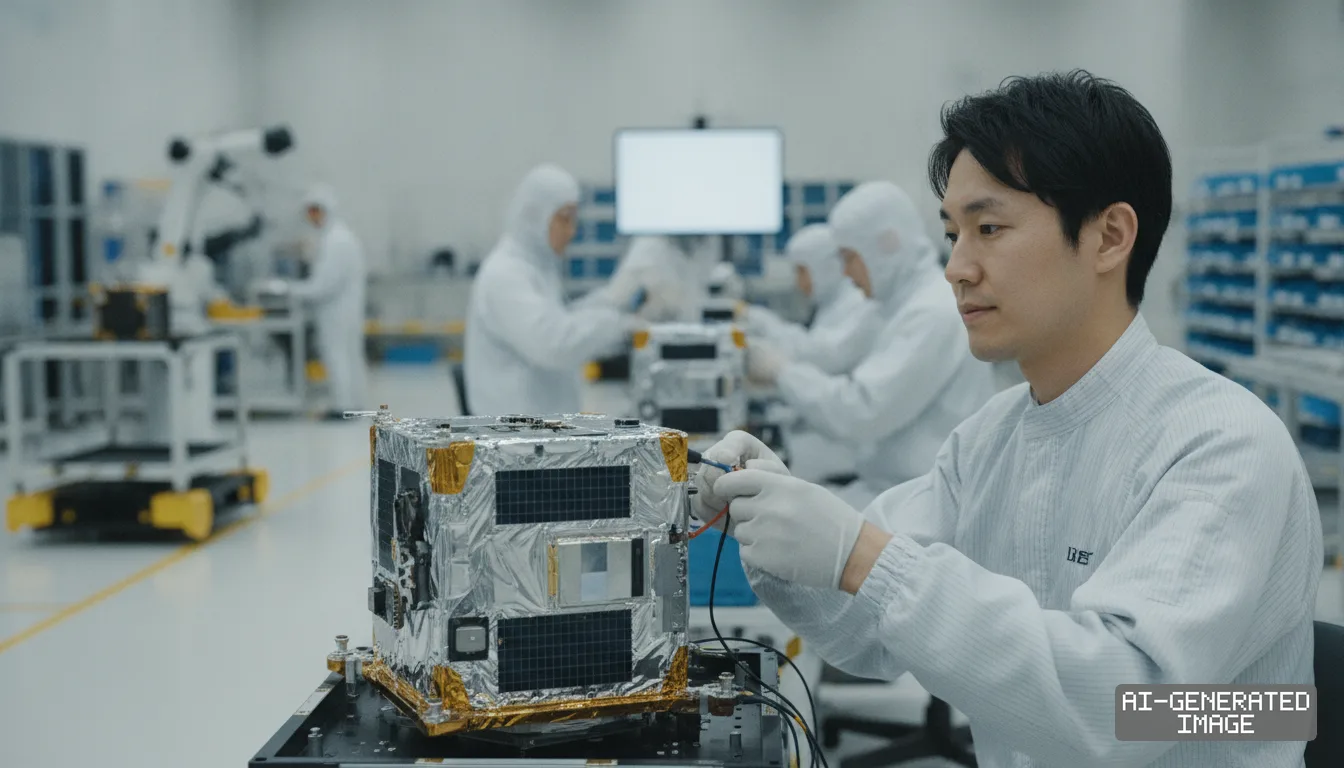
The Tokyo-based heavy machinery manufacturer has commenced low-rate initial assembly of observation platforms. The company aims to shift from procuring orbital hardware overseas to fabricating and testing satellite constellations within Japan.
The planned annual output of 20 to 30 units represents an industrial scale capable of sustaining a 24-satellite constellation. That constellation volume matches the maritime surveillance network that IHI is developing for commercial and national security missions.
Dual-use synthetic aperture radar, known as SAR, uses microwave pulses to map surface topography and maritime traffic through night darkness and dense cloud cover. The technology enables persistent reconnaissance regardless of weather conditions.
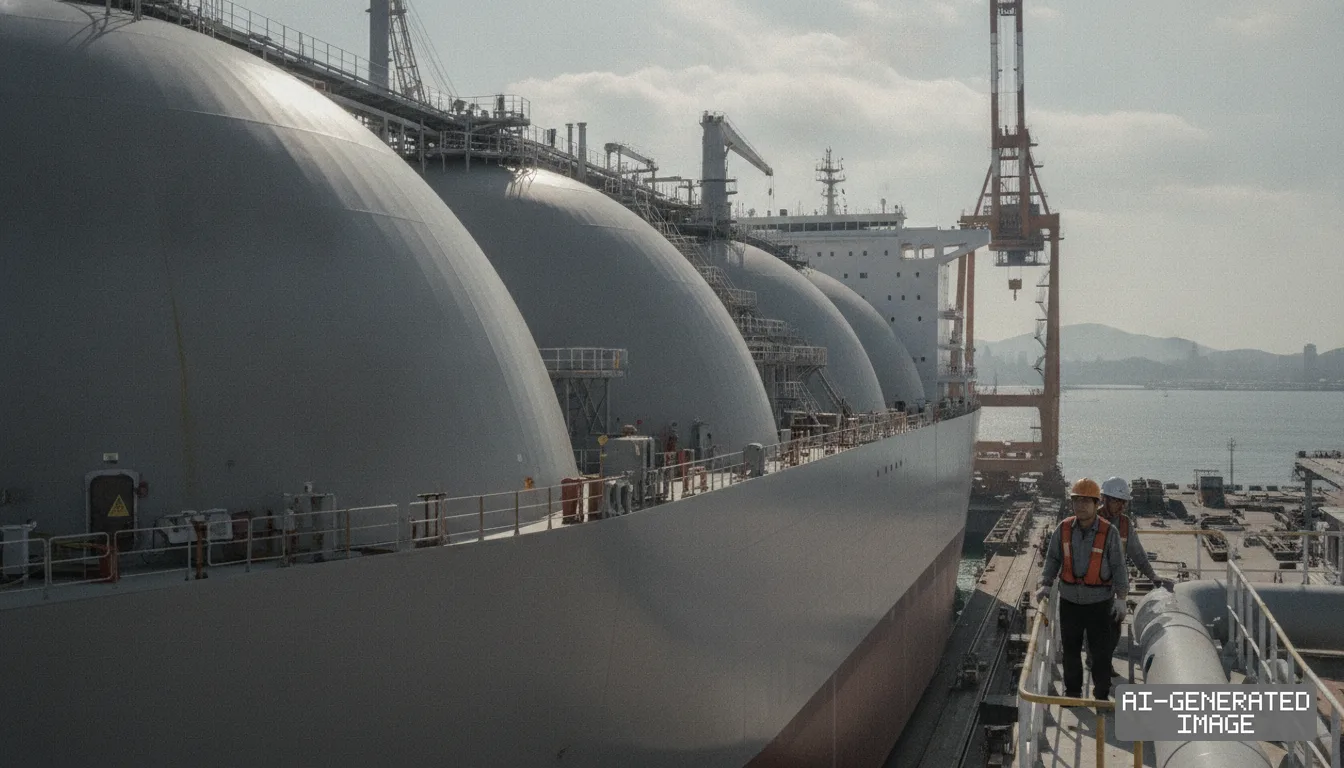
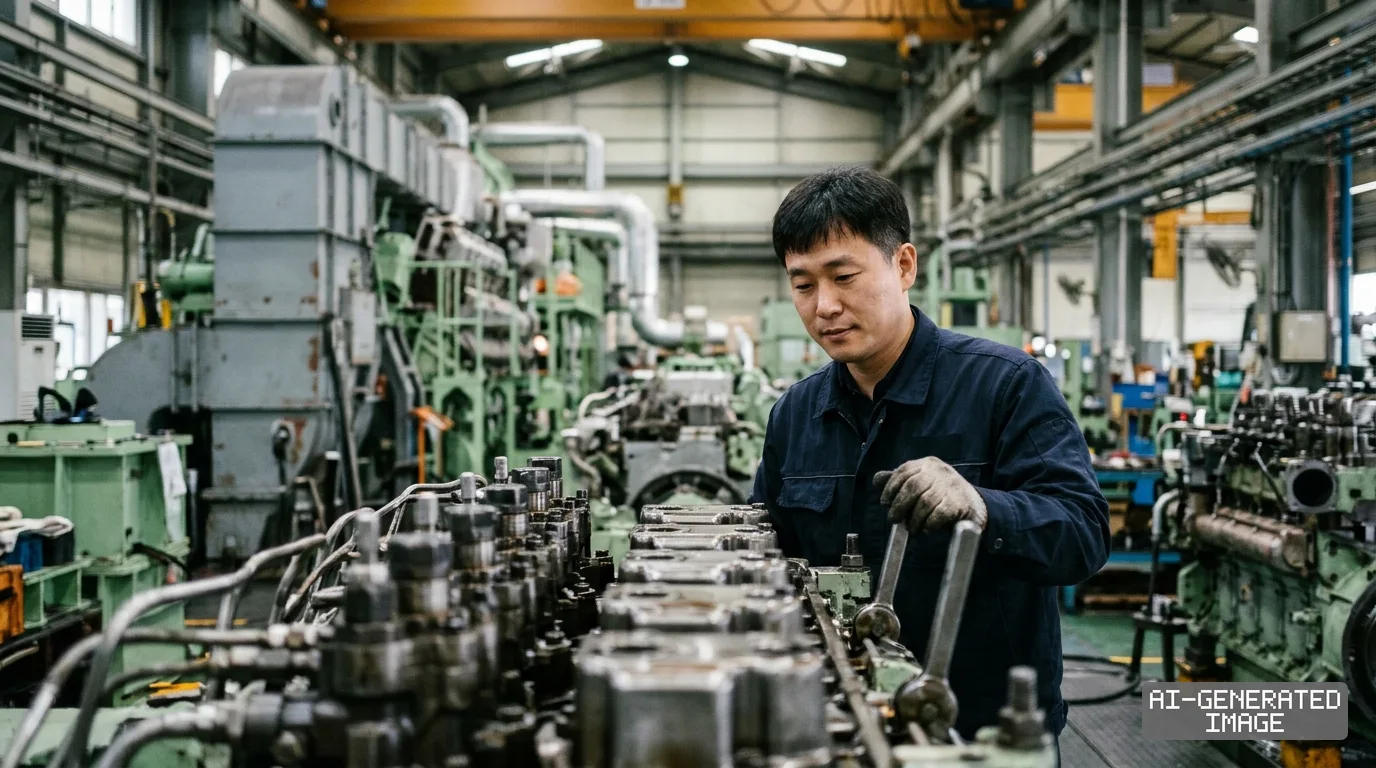
IHI draws its core space capability from its Aero Engine, Space and Defense business area. The unit manufactures solid rocket boosters, turbopumps, and propulsion hardware for Japan's flagship launch vehicles.
The production scale-up builds directly on a procurement contract signed in October 2025 with Finnish radar satellite specialist ICEYE Oy. Under that agreement, IHI placed an initial order for four SAR orbiters with an option for 20 additional spacecraft.
That commercial structure gives IHI access to 24 radar platforms through fiscal 2029. Two of the initial four orbiters were assigned to domestic assembly and integration at IHI aerospace facilities.
IHI began receiving imagery from the first two orbital units in May 2026, entering talks with government and commercial buyers. In July 2026, the company dispatched manufacturing engineers to Finland for a five-week assembly and environmental testing program.
The transition to domestic assembly addresses strategic priorities established by Japan's Ministry of Defense. Tokyo is investing in proliferated low-Earth-orbit constellations to track naval movements and support long-range stand-off defense operations.
Japan allocated approximately 174 billion yen ($1.13 billion) in contract-based funding for defense space programs in fiscal 2026. The allocation supports autonomous orbital infrastructure capable of surviving anti-satellite countermeasures.
The Ministry of Defense previously selected a consortium led by Mitsubishi Electric in December 2025 to develop and operate sovereign satellite constellations. That project integrates commercial imaging providers including Synspective and Axelspace.
IHI is positioning its domestic assembly line as an independent platform supplier for both government procurement and allied export. The company intends to share radar intelligence and manufacturing capacity with partners in Australia and the United Kingdom.
Beyond radar payloads, IHI is broadening sensor packages across the planned constellation. The manufacturer signed agreements to integrate optical imagers, radio-frequency monitors, and VHF Data Exchange System receivers for maritime domain awareness.
The group formed partnerships with British thermal imaging specialist SatVu and Finnish sensor builder Kuva Space. Those pacts add infrared and hyperspectral imaging capabilities to the constellation pipeline.
Domestic series manufacturing lowers unit procurement costs for orbital buses. Mass production of standardized hulls replaces customized, one-off assembly methods that historically dominated Japan's space sector.
Standardized production lines will compress satellite assembly lead times from several years to a matter of months. Faster delivery cycles allow operators to replenish damaged or degraded satellites during regional crises.
The domestic assembly hub also shields orbital supply chains from overseas shipping bottlenecks and export-licensing disruptions. Local integration permits direct calibration of defense-grade encryption and secure communications links inside Japan.
For institutional customers, domestic series production establishes a reliable schedule for constellation replenishment. Commercial operators gain access to indigenous radar hardware without facing foreign technical data restrictions.
IHI has not published capital expenditure figures, site selections, or construction schedules for the projected 2029 mass-production facility in its financial disclosures. The corporation's half-year securities filing confirmed only that defense and aerospace remain priority capital areas.
The next operational milestone arrives in the fourth quarter of fiscal 2026, ending March 31, 2027. IHI is scheduled to complete domestic assembly of two ICEYE SAR satellites and deliver them for orbital launch.
Impact map
How this development propagates across the region and out to global buyers.
| Event | Korea | China | Japan | Global impact |
|---|---|---|---|---|
| IHI small satellite mass production | Hanwha Systems and KAI face Japanese competition in Asia-Pacific small SAR export bids | PLA strategic support planners face denser maritime radar tracking across the first island chain | IHI internalizes radar satellite assembly to capture MoD constellation procurement | ICEYE broadens Asian hardware footprint while commercial SAR data supply expands |
In this story
- Companies
- IHI Corporation
- Tickers
- 7013.T
- Exposed
- Mitsubishi ElectricICEYE
- Policy
- Procurement Rules
- Impact
- Supply ChainCapexOrder Book
Track every Procurement Rules development →
Related briefings
- METI expands Western rare earth alliances as China chokes yttrium Also on IHI Corporation
- Japan Seeks US Help on China Yttrium Curbs as Metal Runs Out Also on IHI Corporation
- Japan and US agree to build an AMRAAM missile assembly plant in Asia Also on Mitsubishi Electric, Procurement Rules, Order Book
- Japan Motion Control Makers Accelerate Real-Time Ethernet on Next-Gen Servos Also on Mitsubishi Electric, Order Book
Sources
Reporting
Confidence: medium — how we grade this
The documents behind this briefing are linked above. East Asia Brief produces its English text with AI assistance under human editorial review, and does not translate or republish other outlets' articles. See our methodology and AI policy. Spotted an error? Tell us.
The Morning Brief
What changed in Korean, Chinese and Japanese industry overnight — and what it means for your supply chain. One email, weekday mornings, US time. Free.
The Morning Brief is in preparation. Leave your address and we will write to you once — when the first issue is ready. Nothing before that.