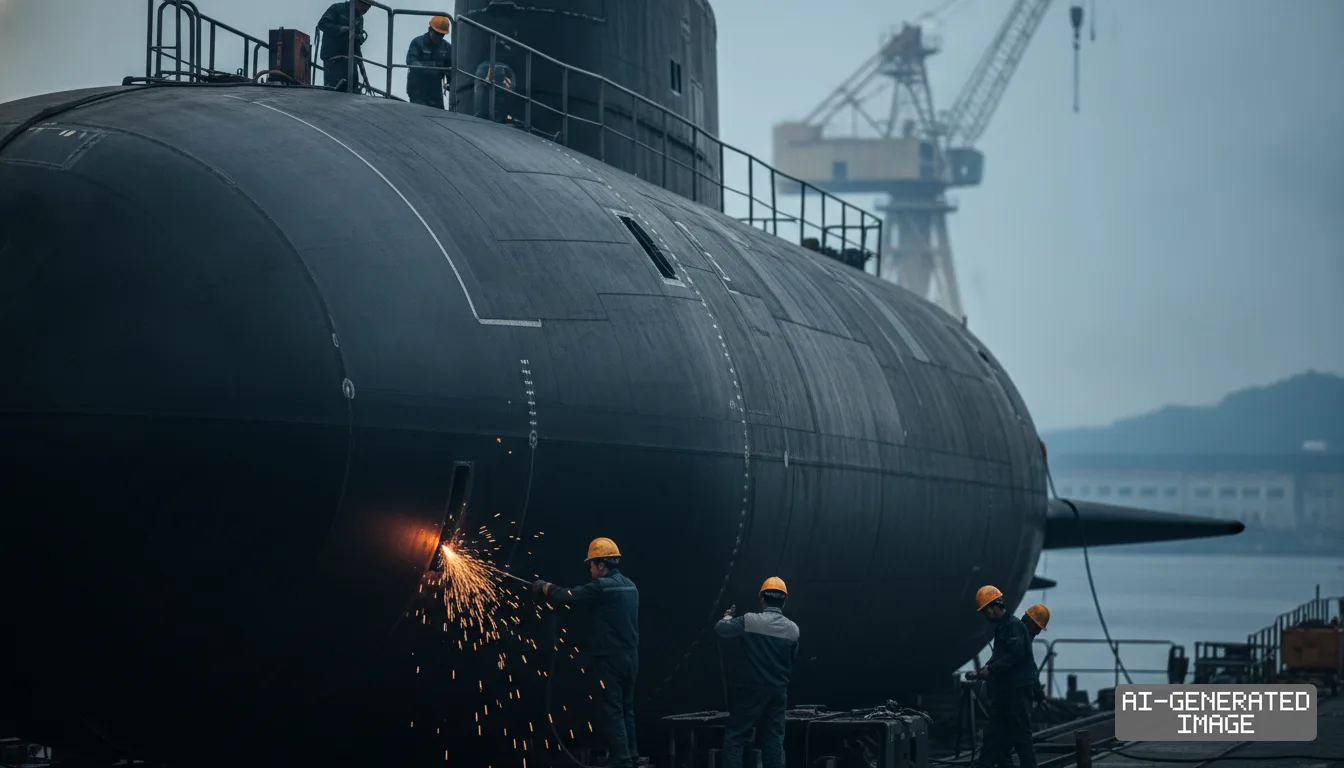
Thenamaris books $494M LNG carrier pair at HD Hyundai Heavy
The Greek shipowner ended an eight-year hiatus by ordering two 174,000-cubic-meter vessels at the Ulsan yard for delivery by October 2029.
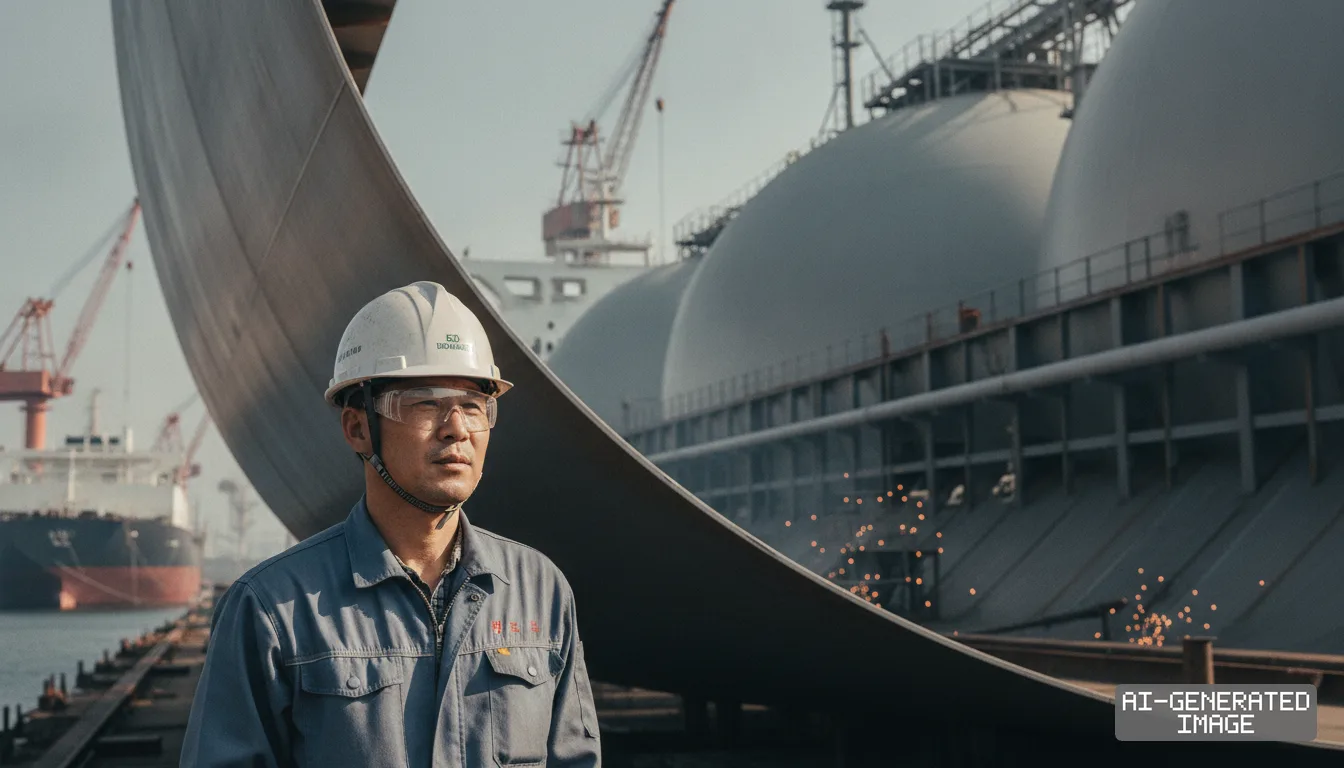
Greek shipowner Thenamaris registered two 174,000-cubic-meter liquefied natural gas carriers on its fleet orderbook Nov. 13, 2026, marking its return to LNG newbuilding after an eight-year hiatus.
The two-vessel order at HD Hyundai Heavy Industries is valued at 662.9 billion won ($494 million), according to a regulatory disclosure filed by parent group HD Korea Shipbuilding & Offshore Engineering.
The contract price works out to approximately $247 million per vessel. Deliveries are scheduled to conclude by Oct. 31, 2029 at the group's primary shipyard in Ulsan, South Korea.
The Greek shipping group listed the pair under hull numbers H3696 and H3697. The agreement ends a commercial gap in LNG contracting that began after its previous order in 2018.
Thenamaris ordered two 174,000-cubic-meter vessels from Hyundai Heavy Industries in 2018, named Cool Discoverer and Cool Racer. Those ships entered commercial service in 2020 and 2021.
The company currently manages seven LNG carriers. The new contract expands an extensive shipbuilding program that covers 21 vessels across crude tankers, product carriers, container vessels and very large ammonia carriers.
Thenamaris oversees an active operating fleet of 87 vessels. The portfolio comprises 48 tankers, 24 bulk carriers, seven LNG carriers, six liquefied petroleum gas carriers and two containerships.
HD Korea Shipbuilding & Offshore Engineering submitted the initial contract notice to the Korea Exchange on Nov. 9, 2026. The contract was formally concluded on Nov. 6, 2026.
The regulatory filing does not name Thenamaris, identifying the contracting party only as an Africa-based shipping firm. International shipowners routinely book yard capacity through offshore special purpose entities.
The deal highlights continuing pressure on global shipyard berth availability. South Korean shipbuilders have committed the majority of their large-scale gas carrier building docks through 2027 and 2028.
Reservation programs for the massive Qatar LNG expansion previously consumed dozens of high-value construction slots. That multi-year backlog left independent shipowners competing for the remaining delivery openings before 2030.
European shipowners are paying firm prices to lock in late-decade delivery windows. Industry pricing for a standard 174,000-cubic-meter LNG carrier has held steady between $245 million and $250 million.
Contracting activity for LNG tonnage has maintained a rapid pace throughout 2026. Global energy operators are ordering dedicated tonnage ahead of planned export terminal expansions in North America and the Middle East.
Clarksons data shows global LNG carrier contracting running near record volume, with contracted capacity expanding sharply through the second half of the year.
Banchero Costa figures recorded 83 LNG carrier orders during the first nine months of 2026. That represents a 345% increase in contracted capacity year on year.
The broker estimated the orderbook-to-fleet ratio for standard 100,000 to 199,999-cubic-meter LNG carriers at 37.5% in capacity terms.
Shipowners also face tightening fleet renewal requirements as older steam-turbine vessels approach international emissions benchmarks. Replacing less efficient carriers has supported steady replacement demand among European independent operators.
Thenamaris has funded its fleet renewal through opportunistic asset sales, divesting very large crude carriers at premium prices in recent quarters.
The company has split its wider 21-vessel orderbook across yards in South Korea and China, including HD Hyundai, Hengli Heavy Industries, Dalian Shipbuilding Industry, COSCO Shipping Heavy Industry and Jiangnan Shipyard.
HD Hyundai Heavy Industries has used the tight berth market to prioritize high-margin gas tonnage. The shipbuilder has limited its intake of lower-yield commercial hull types to preserve yard capacity.
Parent group HD Korea Shipbuilding & Offshore Engineering has already surpassed its annual order target for 2026, driven by high-value gas carrier bookings.
The South Korean yard maintains an established track record in membrane-type gas containment systems. Most modern 174,000-cubic-meter carriers utilize specialized cargo insulation designs engineered to minimize daily cargo boil-off during transit.
The Ulsan shipyard will build both Thenamaris hulls in sequence, with work phasing into drydock schedules ahead of 2029 handovers.
The regulatory notice does not disclose propulsion specifications or charter employment details for the two newbuildings. Thenamaris has not confirmed whether the vessels carry long-term charter commitments.
The final vessel is scheduled for transfer by Oct. 31, 2029, under the terms specified in the Korea Exchange disclosure.
Impact map
How this development propagates across the region and out to global buyers.
| Event | Korea | China | Japan | Global impact |
|---|---|---|---|---|
| Thenamaris LNG carrier order | HD Hyundai Heavy Industries adds $494M in gas tonnage through late 2029 | Rival yards miss European gas order as dual-fuel slots tighten | No exposure, Japanese yards remain outside large membrane LNG construction | Standard 174,000-cbm LNG newbuild prices hold firm near $247M per vessel |
In this story
- Companies
- HD Hyundai Heavy IndustriesThenamaris
- Tickers
- 329180.KS009540.KS
- Exposed
- HD Korea Shipbuilding & Offshore Engineering
- Impact
- Order BookPricingCapex
Related briefings
- HD Hyundai Heavy lands $487 million contract for two LNG ships Also on HD Korea Shipbuilding & Offshore Engineering, HD Hyundai Heavy Industries, Pricing
- HD Hyundai Heavy signs $465m deal for four ammonia vessels Also on HD Korea Shipbuilding & Offshore Engineering, HD Hyundai Heavy Industries, Pricing
- HD Hyundai wins $467 million order from BGN for four VLGCs Also on HD Korea Shipbuilding & Offshore Engineering, HD Hyundai Heavy Industries, Pricing
- HD Hyundai Heavy wins $467 million gas carrier contract Also on HD Korea Shipbuilding & Offshore Engineering, HD Hyundai Heavy Industries, Pricing
Sources
Reporting
Confidence: medium — how we grade this
The documents behind this briefing are linked above. East Asia Brief produces its English text with AI assistance under human editorial review, and does not translate or republish other outlets' articles. See our methodology and AI policy. Spotted an error? Tell us.
The Morning Brief
What changed in Korean, Chinese and Japanese industry overnight — and what it means for your supply chain. One email, weekday mornings, US time. Free.
The Morning Brief is in preparation. Leave your address and we will write to you once — when the first issue is ready. Nothing before that.