HD Hyundai Heavy wins 500 MW Taean offshore substation deal
The full engineering and fabrication deal marks South Korea's first internationally certified offshore wind substation as shipyards shift offshore yards toward clean grid infrastructure.
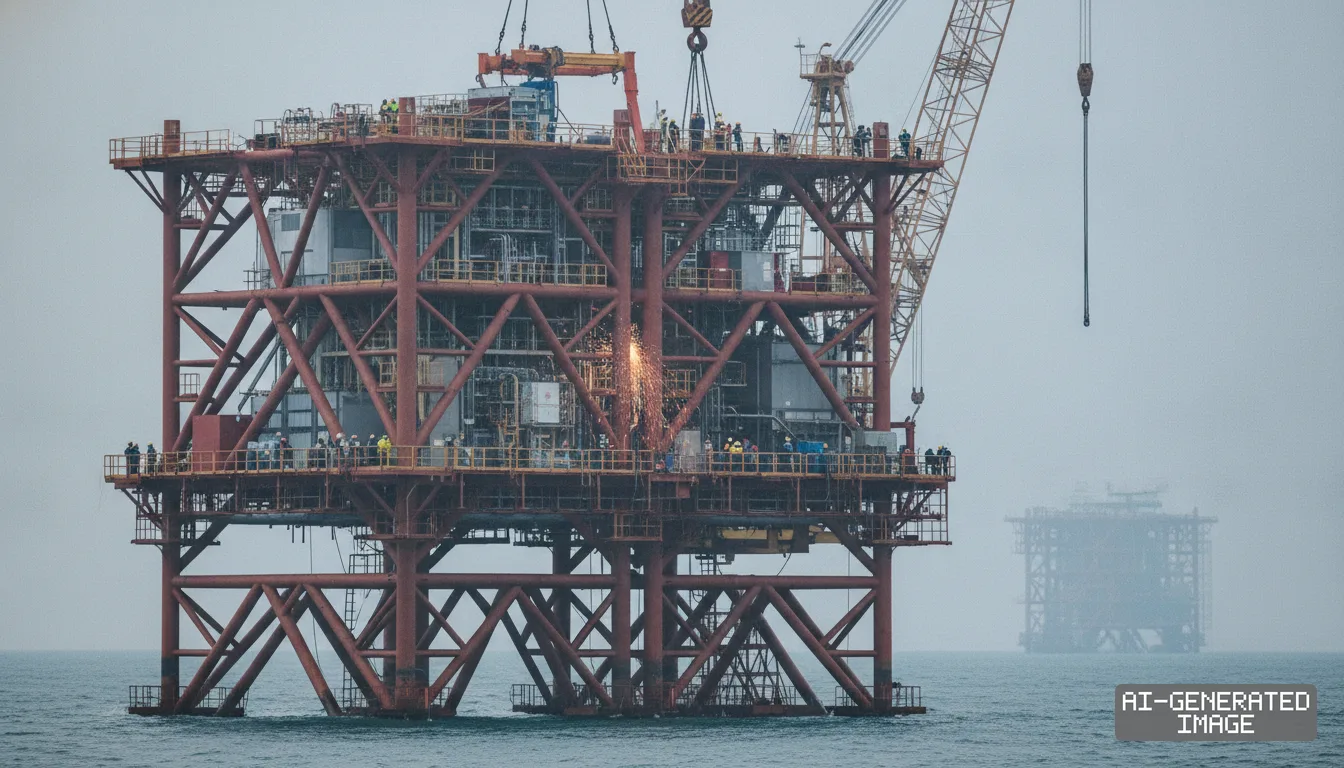
HD Hyundai Heavy Industries announced Oct. 2, 2026 that it signed a turnkey contract to build a 500-megawatt offshore substation for the Taean offshore wind project in South Korea.
The agreement covers the complete engineering, procurement, fabrication, installation and commissioning of the offshore platform. The substation will gather power generated by 36 offshore turbines rated at 14 megawatts each.
The facility serves a 500-megawatt wind farm located in waters off Gauido-ri in Taean County, South Chungcheong Province. The project developer targets commercial operation by 2030, according to project filings.
Project company Taean Wind Power is a joint venture owned 37.5% by Singapore-based Vena Energy, 37.5% by Denmark's Copenhagen Infrastructure Partners and 25% by state utility Korea Western Power.
Offshore Energy Business Unit head Won Gwang-sik and Taean Wind Power Chief Executive Clément Helbig de Balzac signed the construction agreement on Oct. 1 in Seoul, the shipbuilder said.
The final contract concludes a multi-stage contracting process that began with an initial engineering study earlier this year. HD Hyundai Heavy signed a front-end engineering design contract in March and a preferred supplier agreement in July.
Classification society Det Norske Veritas verified the yard's self-developed 500-megawatt substation basic design in August 2025. DNV completed detailed design verification in August, certifying the platform under international offshore safety and structural standards.
The approval represents the first detailed design verification awarded to a domestic offshore wind substation under global maritime standards, the company said. The validation confirms the structural integrity of both the topside processing module and the supporting jacket foundation.
Offshore substations collect medium-voltage electricity from multiple turbine arrays through undersea inter-array cables. Large transformers inside the topside housing raise the voltage to high levels to reduce power losses before subsea export cables transmit the electricity to the mainland grid.
The Taean platform will withstand harsh marine environments in the Yellow Sea, including high tidal currents and seabed silt mobility. The design incorporates corrosion-resistant alloy cladding and automated fire suppression systems engineered for uncrewed offshore operations.
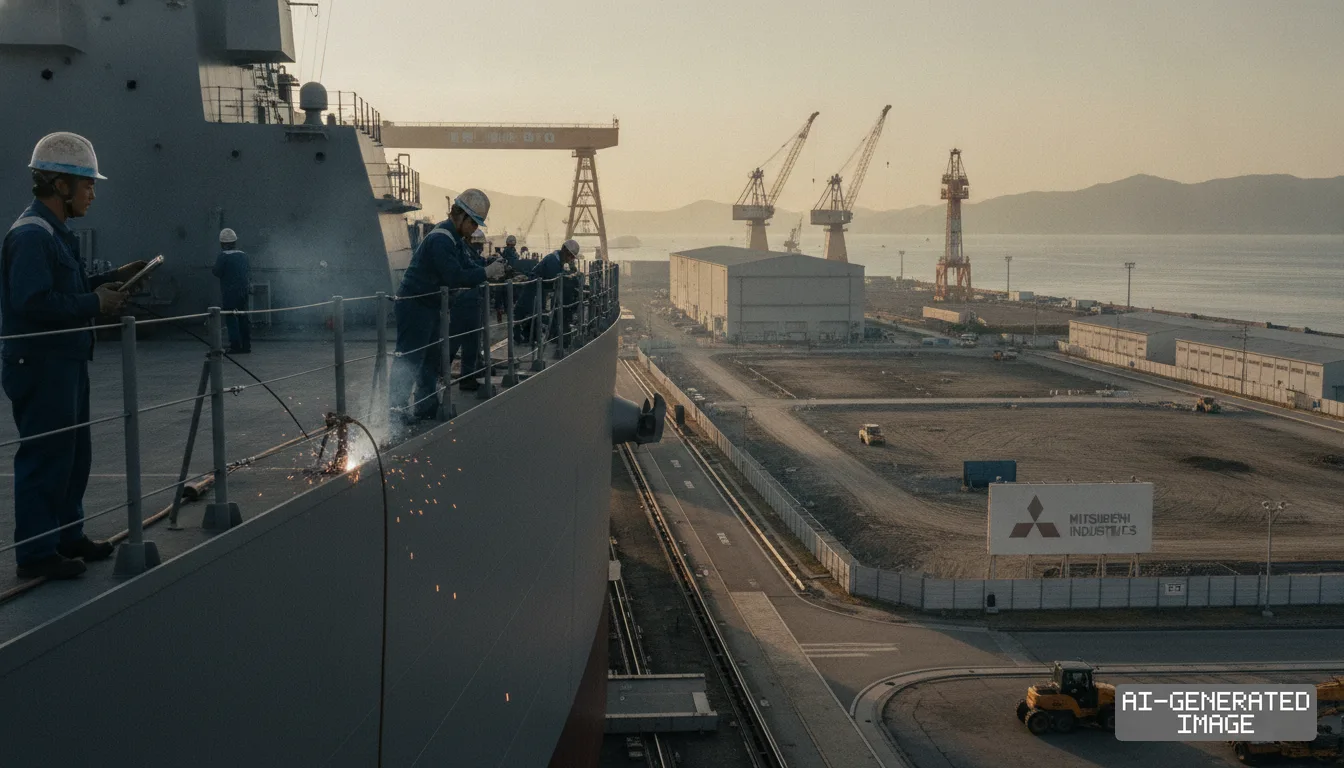
The project marks a commercial pivot for the shipbuilder's offshore division in Ulsan. The yard has traditionally focused on constructing multi-billion-dollar oil and gas production platforms, floating production storage and offloading vessels, and gas compression modules.
Volatile fossil fuel exploration spending prompted South Korean shipbuilders to reassign heavy fabrication yards toward marine renewable energy. HD Hyundai Heavy established its dedicated offshore wind unit to capture demand for fixed substations, high-voltage transmission decks and floating turbine foundations.
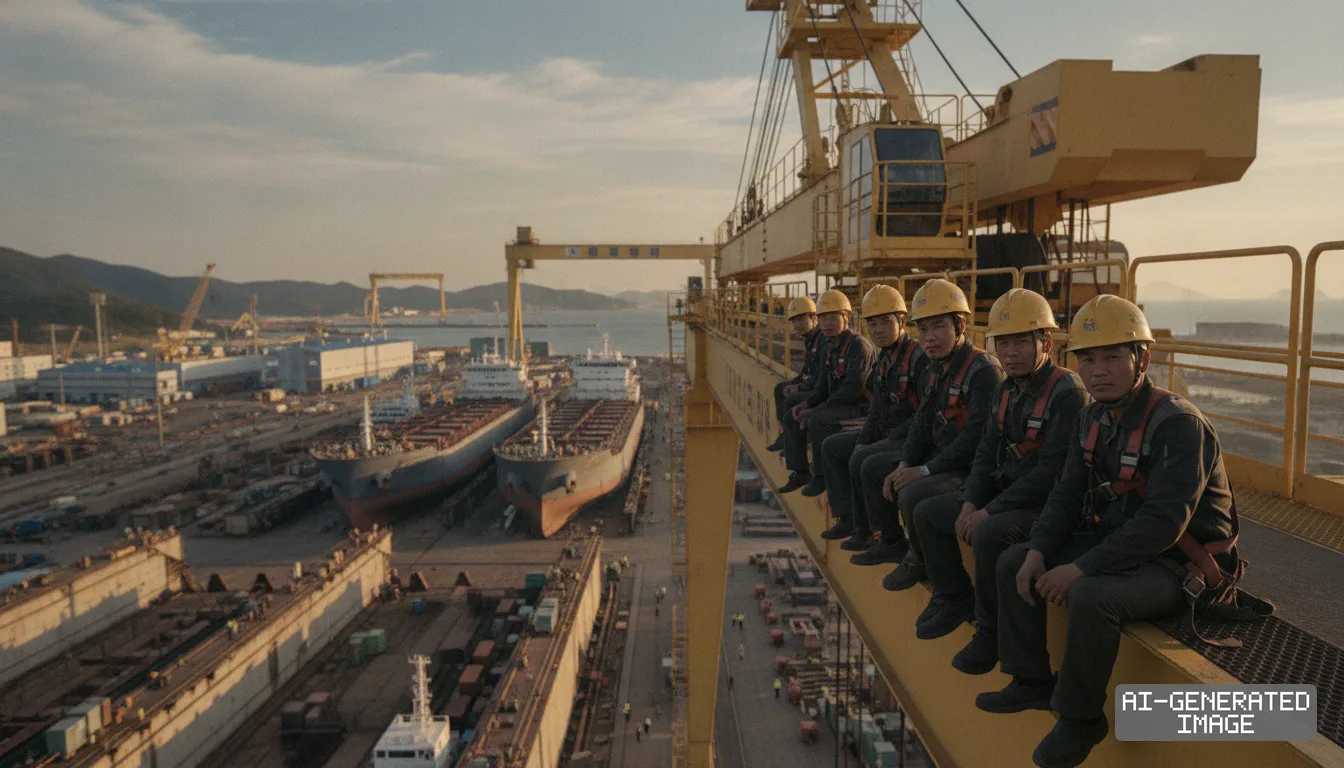
The shipbuilder operates heavy lifting assets in Ulsan, including a 10,000-ton floating crane and two 1,600-ton gantry cranes. Those facilities allow workers to assemble complete multi-deck substation modules onshore before load-out, reducing expensive offshore installation hours.
Domestic shipyard participation in offshore grid equipment directly supports South Korea's national target to install 14.3 gigawatts of offshore wind capacity by 2030. Power transmission bottlenecks and port infrastructure constraints have historically slowed project execution along the western coastline.
State utility Korea Western Power operates thermal generation plants in Taean and will connect the offshore link to nearby regional substations. The arrangement integrates offshore wind generation into the western industrial transmission grid without requiring extensive new overland power corridors.
The contract establishes an operational track record for HD Hyundai Heavy with international renewable infrastructure funds. Copenhagen Infrastructure Partners and Vena Energy manage multi-gigawatt development pipelines across South Korea, Taiwan and Japan.
HD Hyundai Heavy plans to use the Taean project to secure subsequent substation contracts and floating foundation packages under development by the same consortium, the shipbuilder said. The developer group holds development rights for additional offshore blocks in South Chungcheong and South Jeolla provinces.
Competition for Asian offshore wind fabrication contracts is concentrating among South Korean and Chinese yards. While Chinese fabricators maintain a steel cost advantage, South Korean yards point to DNV design verification and established quality management systems to secure international financing.
Fabrication of the Taean substation jacket and topside modules will proceed at the Ulsan yard ahead of planned offshore transport. On-site installation and turbine interconnection will follow in phases leading up to the 2030 commercial operation target.
The companies did not disclose the total contract value, and neither party has published financial terms citing mutual confidentiality provisions. HD Hyundai Heavy did not file a separate regulatory disclosure to the Korea Exchange regarding the contract value.
Impact map
How this development propagates across the region and out to global buyers.
| Event | Korea | China | Japan | Global impact |
|---|---|---|---|---|
| Taean 500MW offshore substation contract | HD Hyundai Heavy converts offshore yards to wind transmission, securing first DNV-certified substation | Chinese platform yards face technical verification barriers on international tenders | Japanese wind developers evaluate Korean yard capacity for offshore collector platforms | International developers secure EPCIC fabrication capacity for 500 MW wind project ahead of 2030 grid targets |
In this story
- Companies
- HD Hyundai Heavy Industries
- Tickers
- 329180.KS
- Exposed
- Korea Western Power
- Policy
- Subsidies
- Impact
- Order BookSupply ChainCapex
Track every Subsidies development →
Related briefings
- HD Hyundai Heavy commits 1.07 trillion won to power engines Also on HD Hyundai Heavy Industries, Order Book
- HD Hyundai widens Philippine naval pact at Subic shipyard Also on HD Hyundai Heavy Industries, Order Book
- Guangzhou Shipyard lands $1 billion dual-fuel car carrier order from Ray Also on HD Hyundai Heavy Industries, Order Book
- South Korea engine builders expand methanol test benches for 2027 ship handoffs Also on HD Hyundai Heavy Industries, Order Book
Sources
Primary documents
Reporting
Confidence: high — how we grade this
The documents behind this briefing are linked above. East Asia Brief produces its English text with AI assistance under human editorial review, and does not translate or republish other outlets' articles. See our methodology and AI policy. Spotted an error? Tell us.
The Morning Brief
What changed in Korean, Chinese and Japanese industry overnight — and what it means for your supply chain. One email, weekday mornings, US time. Free.
The Morning Brief is in preparation. Leave your address and we will write to you once — when the first issue is ready. Nothing before that.