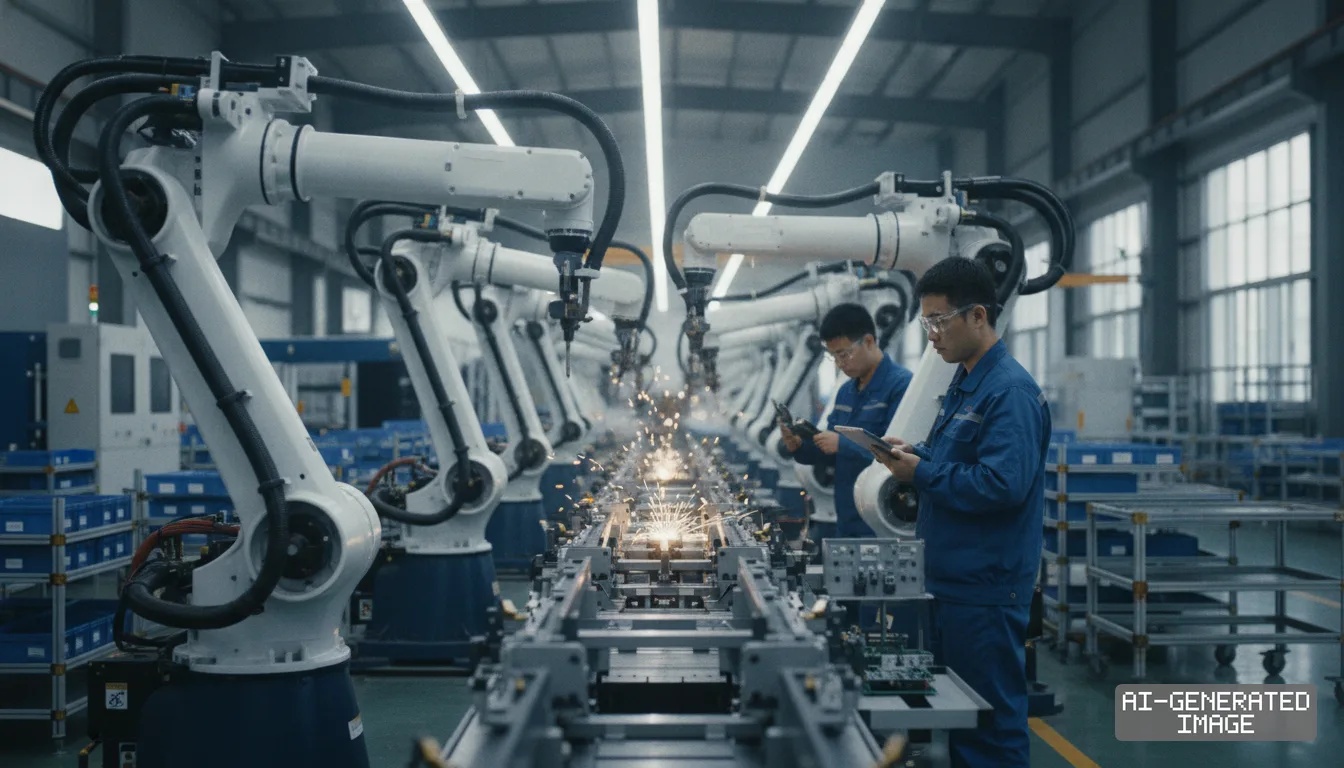
Imabari Shipbuilding expands yard robotics to counter worker gap
Japan's largest shipbuilder is installing autonomous welding robots and heavy jib cranes across two main yards, using an approved 113.8 billion yen state grant to offset acute artisan shortages.
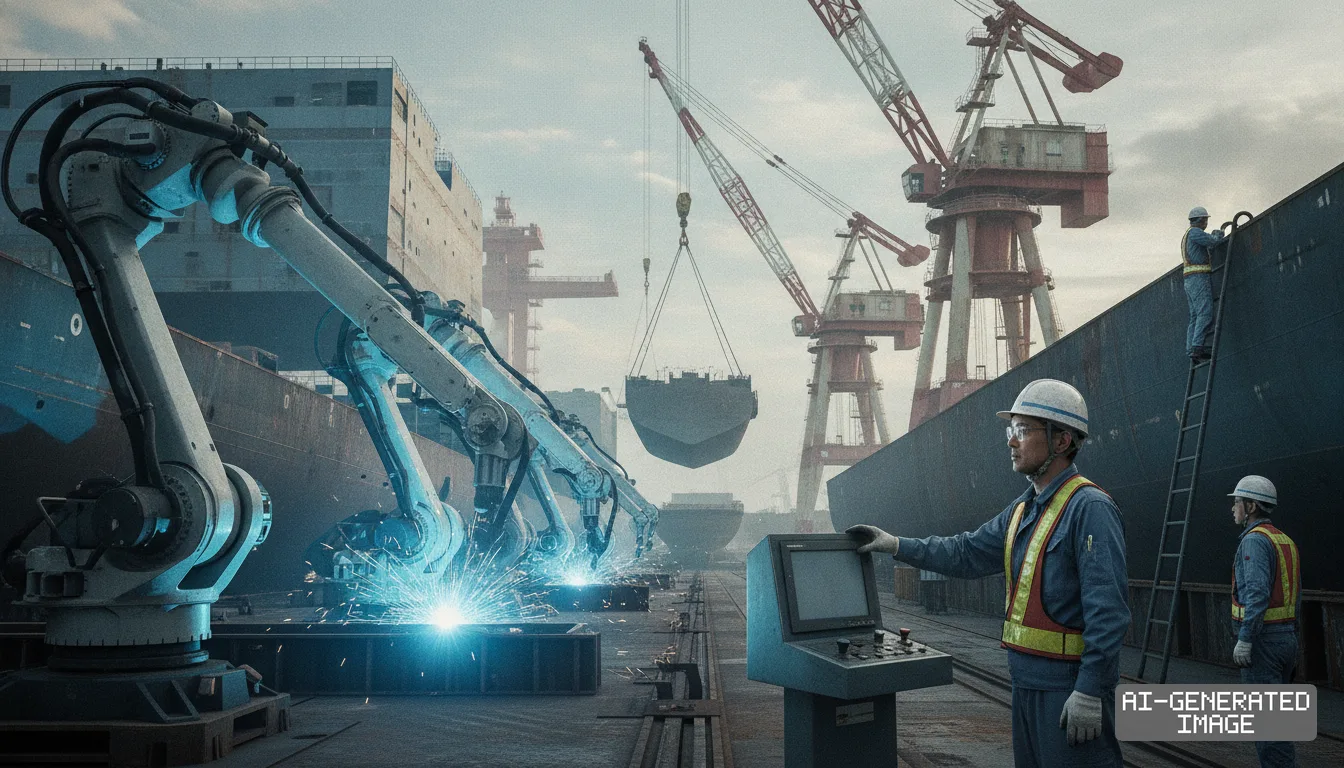
Imabari Shipbuilding expanded the rollout of autonomous welding robots and heavy jib cranes across its assembly yards on Oct. 29, 2026, executing a state-backed automation blueprint to address acute dockside labor shortages.
The capital program draws on a maximum subsidy of 113.8 billion yen ($750 million), approved under Japan's 350 billion yen ($2.3 billion) Shipbuilding Revival Fund. The allocation represents roughly 32% of that national subsidy envelope.
Japan's Ministry of Land, Infrastructure, Transport and Tourism cleared the outlay under the Economic Security Promotion Act. The statute designated vessel hulls as critical materials to halt a structural contraction in domestic commercial shipbuilding.
Imabari Shipbuilding controls more than 50% of Japanese commercial ship construction when combined with its subsidiary network. However, Japanese yards saw their global market share slide to 8% in 2024, down from roughly 16% a decade earlier.
Chinese shipbuilders captured 63% of global vessel orders over recent quarters by relying on massive physical drydocks and lower labor costs. South Korean yards retained 21% of total tonnage by dominating high-value liquefied gas carriers.
Japanese yards face an acute generational transition as veteran tradespeople retire without local replacements. Shipyard headcounts across Japan have dropped steadily, leaving regional builders short of roughly 60,000 workers needed to double national output.
Commercial shipbuilding has historically resisted assembly-line robotics because large steel blocks warp during fabrication. Veteran manual welders traditionally adjusted torch angles by eye to compensate for dimensional plate gaps, a task standard factory manipulators cannot handle.
The automated welding units deployed by Imabari Shipbuilding utilize optical sensors and laser tracking to detect seam gaps autonomously. The systems adjust arc voltage and travel speed in real time without requiring manual teach programming from human operators.
The company is pairing those welding units with high-capacity jib cranes across its Marugame Headquarters and Saijo Works. Jib cranes are rotating overhead lifting systems used to position prefabricated steel blocks into assembly jigs.
The new cranes allow workers to hoist heavier sub-assemblies inside sheltered production halls. By building larger blocks indoors, the yard minimizes the amount of complex manual welding required inside cramped, open-air building docks.
Imabari Shipbuilding formed an operational investment alliance with Tadotsu Shipbuilding and steel processor Steel Hub to absorb the funding. The three partners plan to integrate automated plate cutting, prefabrication and sub-assembly across shared Western Japan logistics links.
Japan Marine United, the country's second-largest shipbuilder, secured a separate 49.4 billion yen ($325 million) subsidy allocation alongside two partners. The group is modernizing fabrication workshops at its Ariake facility to expand high-tensile steel processing capacity.
Osaka-based Namura Shipbuilding and subsidiary Hakodate Dock also received 49.9 billion yen ($328 million) in state backing. The combined grants across the three cohorts total 213.1 billion yen through fiscal 2034.
Tokyo aims to expand total private and public maritime capital expenditure to 1 trillion yen ($6.6 billion) by 2035. The government target seeks to double annual national shipbuilding output to 18 million gross tons.
Japanese shipowners currently purchase roughly 12 million gross tons of newly built tonnage each year. Domestic yards build less than 10 million tons annually, forcing domestic shipping lines to order 30% to 40% of their hulls from Chinese docks.
Automation offers Japanese builders the only realistic pathway to expand dock throughput without importing tens of thousands of foreign laborers. Robotic systems can operate through continuous shifts and maintain weld integrity across repetitive flat panels.
South Korean competitors are pursuing identical shop-floor mechanization to protect their margins. Shipbuilders at HD Hyundai Heavy Industries in Ulsan have deployed collaborative welding arms that complete up to 50 seam passes per shift, compared with roughly 30 passes for human welders.
Imabari Shipbuilding is directing its near-term robotic rollout at flat block sub-assemblies where repetitive welds dominate. Automating those flat seams frees certified senior welders to handle complex three-dimensional hull curves and tight interior pipe runs.
The company is constructing enclosed block fabrication buildings and dedicated painting shops at its Marugame and Saijo facilities. Enclosed workspaces protect automated robotic heads from rain, wind and coastal salt spray that degrade optical tracking.
Imabari Shipbuilding plans to begin trial runs of the new automated machinery at its Tadotsu yard in late fiscal 2027. The joint facilities will transition to full commercial operation during fiscal 2028, according to government project filings.
The ministry notice does not disclose the precise unit volume of welding robots slated for installation, and Imabari Shipbuilding has not published the capital expenditure breakdown between its Marugame and Saijo yards.
The Ministry of Land, Infrastructure, Transport and Tourism scheduled its next formal compliance assessment under the Economic Security Promotion Act for the final quarter of fiscal 2026.
Impact map
How this development propagates across the region and out to global buyers.
| Event | Korea | China | Japan | Global impact |
|---|---|---|---|---|
| Imabari yard automation expansion | HD Hyundai Heavy Industries deploys 35 welding cobots in Ulsan to defend gas carrier delivery slots | State shipyards maintain a 63% global order share relying on manual scale across expansive drydocks | Imabari Shipbuilding deploys robots and jib cranes to bridge an acute 60,000-worker production gap | Commercial vessel delivery bottlenecks ease as Japanese drydock throughput improves |
In this story
- Companies
- Imabari ShipbuildingTadotsu ShipbuildingSteel HubJapan Marine UnitedNamura Shipbuilding
- Tickers
- 7014.T
- Exposed
- HD Hyundai Heavy Industries
- Policy
- Subsidies
- Impact
- CapexSupply ChainOrder Book
Track every Subsidies development →
Related briefings
- Japan shipbuilders launch $5.9B drive to double yard output Also on Namura Shipbuilding, Japan Marine United, Imabari Shipbuilding
- Mitsubishi Heavy buys shipyard land in Shimonoseki buildout Also on Namura Shipbuilding, Japan Marine United, Imabari Shipbuilding
- Japan awards $1.4bn shipbuilding subsidies to Imabari and seven domestic yards Also on Namura Shipbuilding, Japan Marine United, Imabari Shipbuilding
- Japan Clears $635 Million in Subsidies to Modernize Shipyards by 2035 Also on Namura Shipbuilding, Imabari Shipbuilding, Subsidies
Sources
Primary documents
Reporting
Confidence: high — how we grade this
The documents behind this briefing are linked above. East Asia Brief produces its English text with AI assistance under human editorial review, and does not translate or republish other outlets' articles. See our methodology and AI policy. Spotted an error? Tell us.
The Morning Brief
What changed in Korean, Chinese and Japanese industry overnight — and what it means for your supply chain. One email, weekday mornings, US time. Free.
The Morning Brief is in preparation. Leave your address and we will write to you once — when the first issue is ready. Nothing before that.