Hanwha Ocean taps GTT for LNG tanks on two new export carriers
The membrane design order links to a 680 billion won African carrier deal, leaving South Korean shipbuilders dependent on Paris-based licensing despite decades of state-backed tank development.
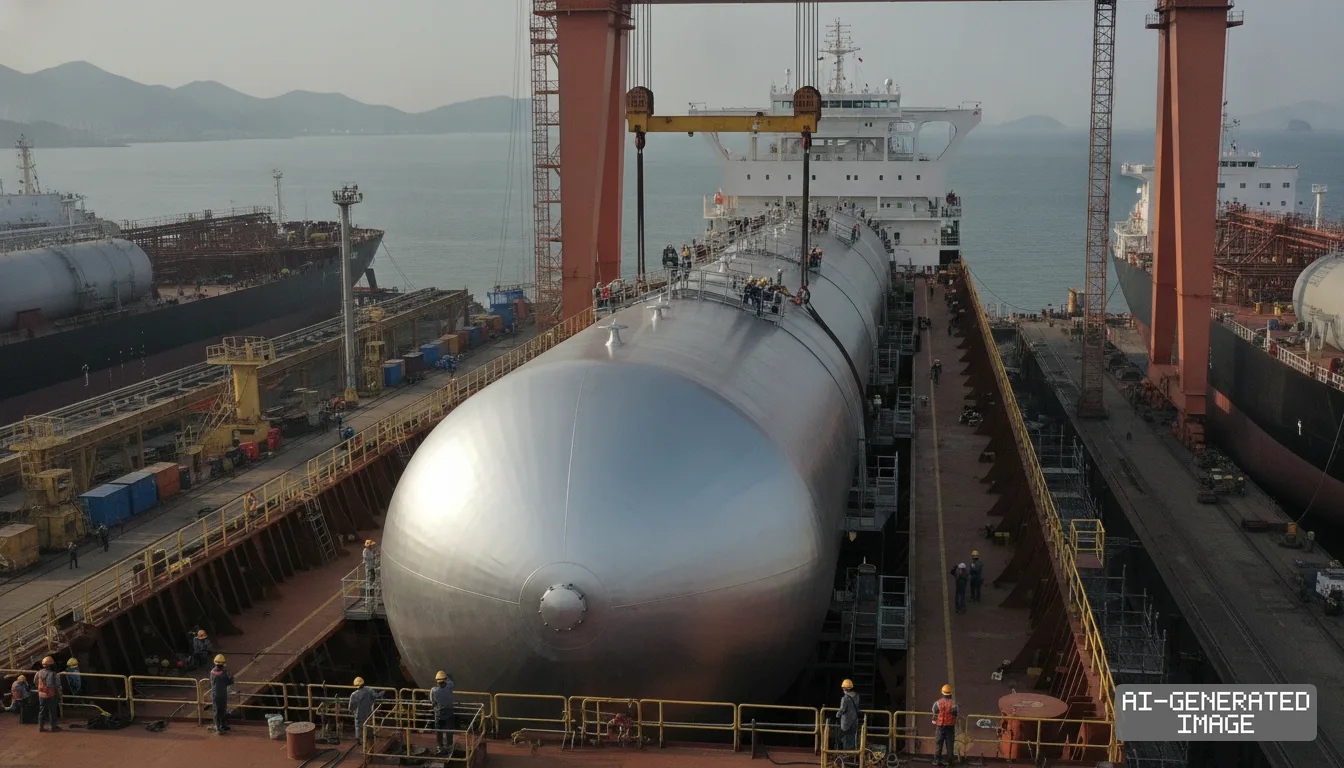
Hanwha Ocean selected French engineering firm Gaztransport & Technigaz on Oct. 18, 2026 to design cryogenic membrane cargo tanks for two 174,000-cubic-meter liquefied natural gas carriers.
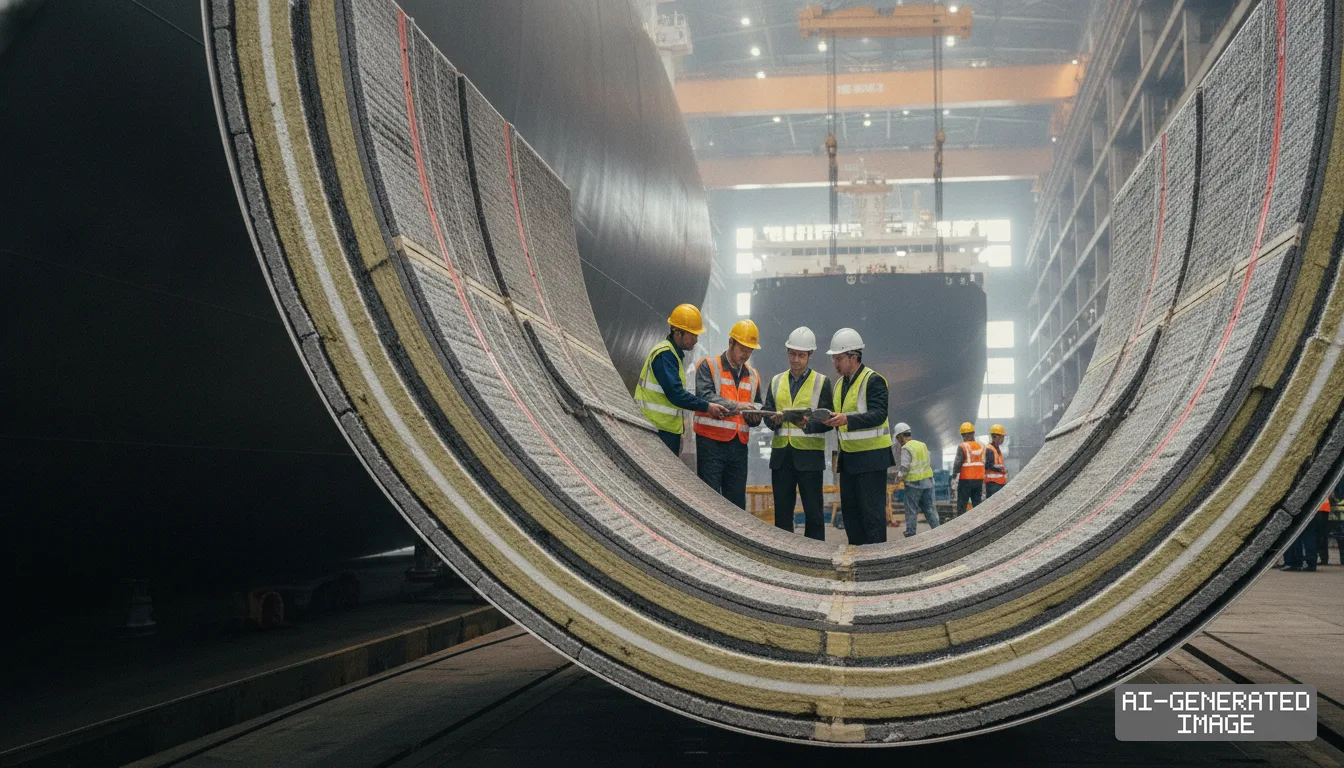
The engineering contract covers tanks using GTT's proprietary NO96 Super+ membrane containment system. The technology limits cargo vaporization through reinforced polyurethane foam panels that hold liquefied natural gas at minus 162 degrees Celsius.
The agreement equips two vessels valued at 680 billion won ($500 million) ordered in late September. That order represents 5.3% of Hanwha Ocean's annual revenue and accounts for two of eight LNG carriers booked by the yard this year.
Standard design fees paid to GTT equal roughly 5% of newbuild vessel prices, or $12.5 million per hull. The licensing outflow underscores the continued failure of domestic South Korean alternatives to unseat the French containment designer.
State utility Korea Gas Corporation spent more than 10 years and over $40 million developing the KC-1 indigenous containment system. That initiative aimed to eliminate royalty payments that drain roughly $10 million to $13 million from every Korean-built gas carrier.
Commercial adoption of KC-1 stalled after two 174,000-cubic-meter vessels delivered by Samsung Heavy Industries in 2018 suffered severe insulation defects. Cargo hold cold spots grounded both ships, prompting years of court litigation over structural liability.
The Ministry of Trade, Industry and Energy supported an upgraded KC-2 design on an LNG bunkering vessel in 2023. Government targets call for domestic technology on two large gas carriers by 2028, but commercial export shipowners remain hesitant.
Hanwha Ocean previously engineered its own independent containment concept called Solidus to avoid foreign licensing. The design secured approvals in principle from major classification societies, yet commercial buyers declined to specify it on deep-sea export contracts.
Western energy majors and vessel financiers reject unproven containment designs on high-value gas tonnage. A single deep-sea LNG carrier costs upward of $250 million, and institutional charterers will not underwrite non-standard tank architectures.
GTT holds more than 95% of the worldwide order book for large membrane-type gas carriers. Shipyards in South Korea, China and Japan must install GTT systems to ensure shipowners secure vessel financing from international commercial lenders.
Financiers require warranties backed by decades of commercial sailings before approving capital syndication for export carriers. GTT's operational track record spans more than 60 years and hundreds of operational vessels across international trading routes.
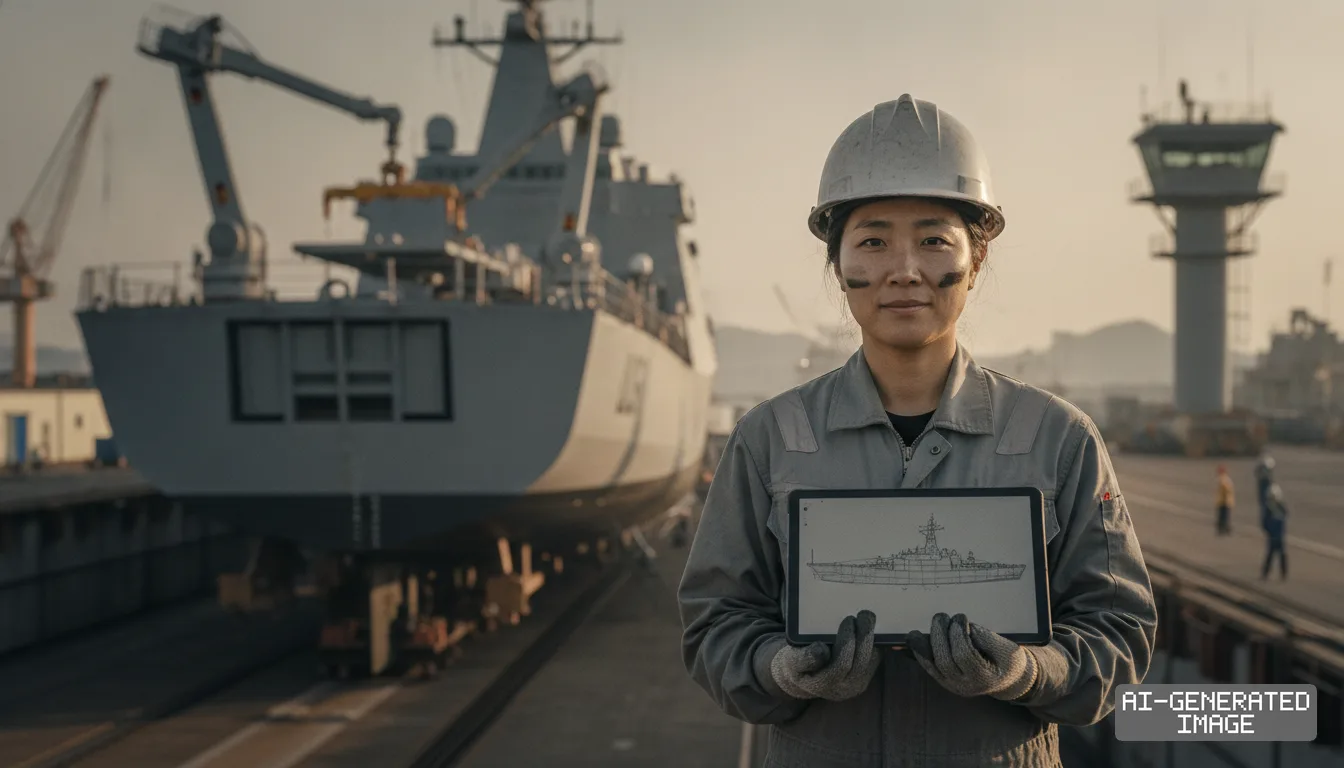
Hanwha Ocean builds commercial ships, naval vessels and offshore facilities at its Geoje shipyard. The yard secured 41 vessel contracts worth $7.71 billion through September 2026, comprising crude tankers, ammonia carriers, container vessels and eight LNG carriers.
Market records link the two 174,000-cubic-meter newbuilds to Zodiac Maritime, the United Kingdom shipping company managed by Eyal Ofer. The contract represents the shipowner's first entry into LNG carrier ownership and includes options for two additional vessels.
The NO96 Super+ system specified for the hulls reduces the vessel boil-off rate to 0.085% of cargo volume daily. The design integrates reinforced foam insulation into both primary and secondary barriers while preserving double Invar alloy membranes.
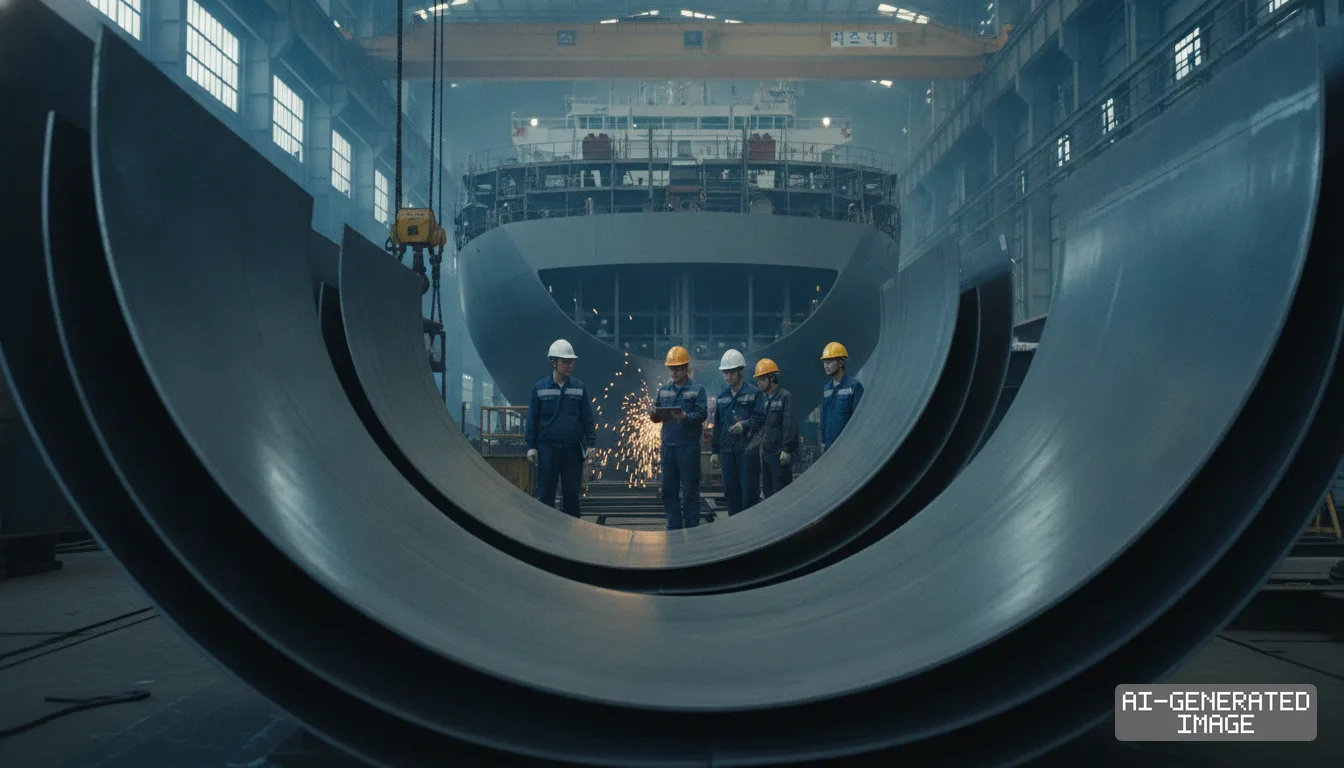
GTT first booked the design package during the third quarter of 2026, formalizing technical parameters ahead of steel cutting. Hanwha Ocean engineers will construct the cargo hold structures while GTT supplies licensing materials, technical oversight and insulation approval.
South Korean shipbuilders face mounting competition from Chinese yards such as Hudong-Zhonghua Shipbuilding, which completed the first NO96 Super+ tanks in 2024. Chinese yards hold identical GTT production licenses, eroding South Korea's historical technical edge in gas carrier fabrication.
Korean shipbuilders pay GTT an estimated 400 billion won ($294 million) in aggregate annual royalties across all yards. The expense represents roughly one-third of the operating profit generated by domestic yards on specialized gas carrier lines.
The notice does not state the exact licensing fee paid to GTT, and neither Hanwha Ocean nor the French designer published the financial consideration for the two-ship design package.
Delivery of both vessels from the Geoje shipyard is scheduled by the fourth quarter of 2029, when charter contracts will commence on international transit routes.
Impact map
How this development propagates across the region and out to global buyers.
| Event | Korea | China | Japan | Global impact |
|---|---|---|---|---|
| Cryogenic cargo tank licensing | Hanwha Ocean cedes ~5% of vessel value in royalties to GTT | Hudong-Zhonghua retains design parity with Korean yards using identical GTT license | NYK and MOL charter fleets continue reliance on GTT membrane warranties | LNG carrier capital expenditure anchored at ~$250 million per 174,000 cbm hull |
| Cryogenic cargo tank licensing | Hanwha Ocean cedes ~5% of vessel value in royalties to GTT | Hudong-Zhonghua retains design parity with Korean yards using identical GTT license | NYK and MOL charter fleets continue reliance on GTT membrane warranties | LNG carrier capital expenditure anchored at ~$250 million per 174,000 cbm hull |
In this story
- Companies
- Hanwha OceanGaztransport & Technigaz
- Tickers
- 042660.KSGTT.PA
- Exposed
- Zodiac MaritimeSamsung Heavy IndustriesKorea Gas Corporation
- Impact
- Cost StructureSupply ChainOrder Book
Related briefings
- Hanwha Ocean wins $500 million LNG carrier deal from Zodiac Also on Zodiac Maritime, Hanwha Ocean, Order Book
- Hanwha Ocean and POSCO target GTT with manganese LNG tanks Also on Gaztransport & Technigaz, Korea Gas Corporation, Samsung Heavy Industries
- KOGAS Plans LNG Carrier Tender to Test Domestic Tank Design Also on Gaztransport & Technigaz, Samsung Heavy Industries, Hanwha Ocean
- Hanwha Ocean equips MOL LNG carrier with dual rigid sails Also on Gaztransport & Technigaz, Hanwha Ocean, Cost Structure
Sources
Reporting
Confidence: medium — how we grade this
The documents behind this briefing are linked above. East Asia Brief produces its English text with AI assistance under human editorial review, and does not translate or republish other outlets' articles. See our methodology and AI policy. Spotted an error? Tell us.
The Morning Brief
What changed in Korean, Chinese and Japanese industry overnight — and what it means for your supply chain. One email, weekday mornings, US time. Free.
The Morning Brief is in preparation. Leave your address and we will write to you once — when the first issue is ready. Nothing before that.