Hanwha Ocean and POSCO target GTT with manganese LNG tanks
The South Korean shipbuilder and steelmaker agreed to build a demonstration gas carrier, challenging French containment royalties that exceed 7 trillion won.
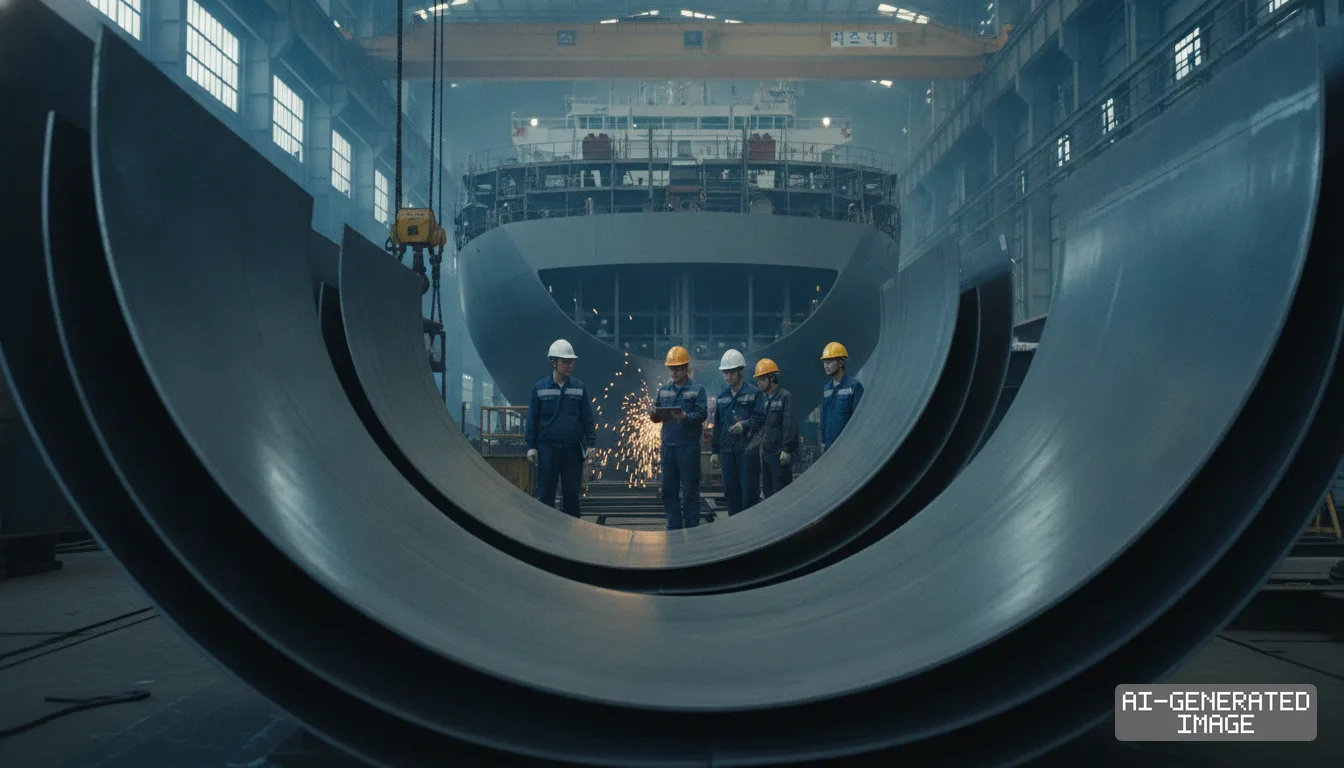
Hanwha Ocean and POSCO finalized operational plans Oct. 16 to build a full-scale demonstration carrier equipped with high-manganese steel cargo tanks, challenging a long-standing French monopoly on liquefied natural gas containment.
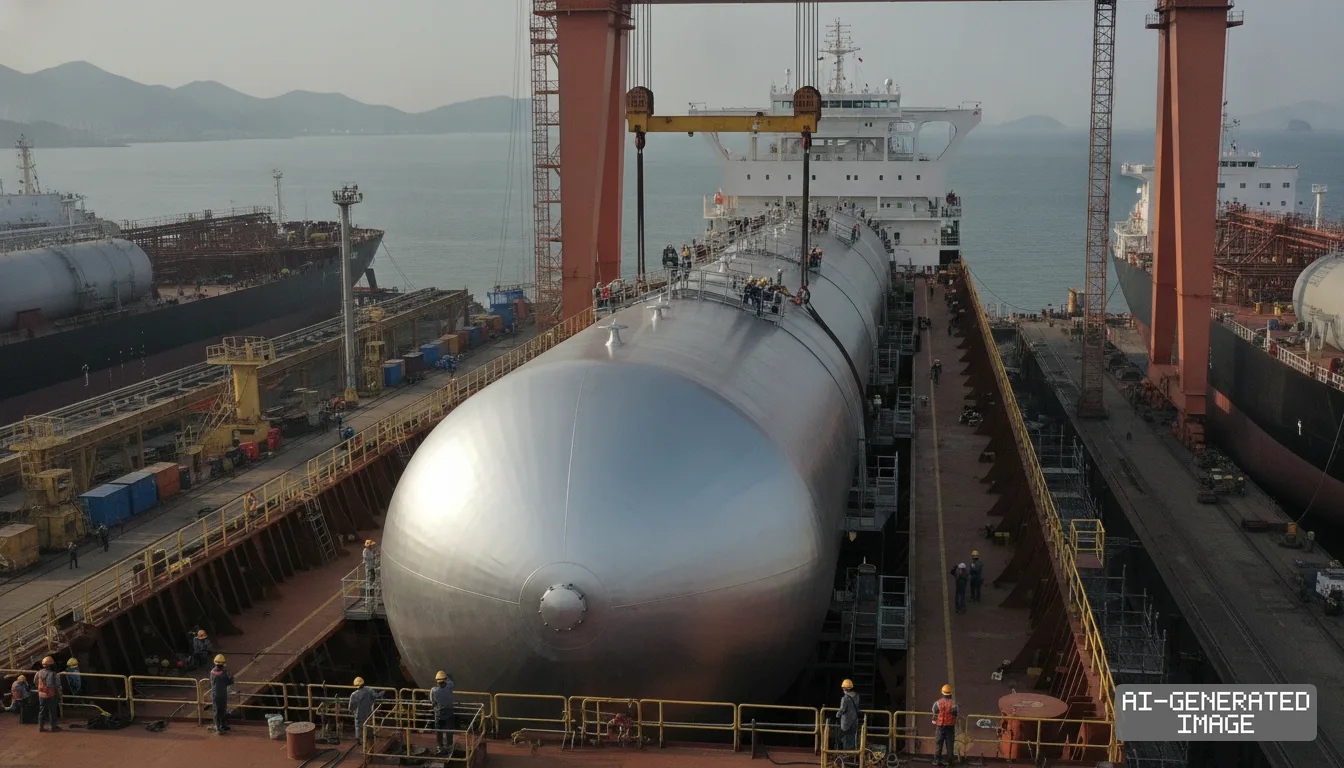
The project scales domestic cryogenic alloy technology from auxiliary bunker fuel tanks to primary cargo holds. Large liquefied natural gas carriers require more than 10,000 metric tons of cryogenic steel plates per vessel, ten times the 1,000 metric tons used in bunker tanks.
French naval engineering firm Gaztransport & Technigaz collects a licensing royalty of roughly 5% on the contract price of every membrane-type vessel built in South Korea. That fee has generated cumulative royalties exceeding 7 trillion won ($5.1 billion) from Korean shipbuilders over three decades.
POSCO developed high-manganese steel in 2013 to withstand temperatures of minus 163 degrees Celsius without brittle fracture. The alloy costs roughly 30% less than conventional 9% nickel alloy steel and invar, an iron-nickel composite widely used in membrane tanks.
Manganese reserves are globally abundant, offering domestic yards insulation from wild price swings in the nickel market. The material also exhibits higher tensile strength and abrasion resistance under cryogenic thermal stress, according to POSCO technical specifications.
Hanwha Ocean agreed to integrate the metal into an independent, self-supporting cargo containment system at its Geoje shipyard. The memorandum of understanding was signed on site by POSCO President Lee Hee-geun and Hanwha Ocean Chief Executive Officer Kim Hee-cheol.
Unlike thin membrane barriers attached directly to inner hull insulation, an independent tank structure absorbs cargo movement internally. The design eliminates liquid sloshing constraints that damage conventional membrane tanks when vessels sail partially loaded, shipyard officials said.
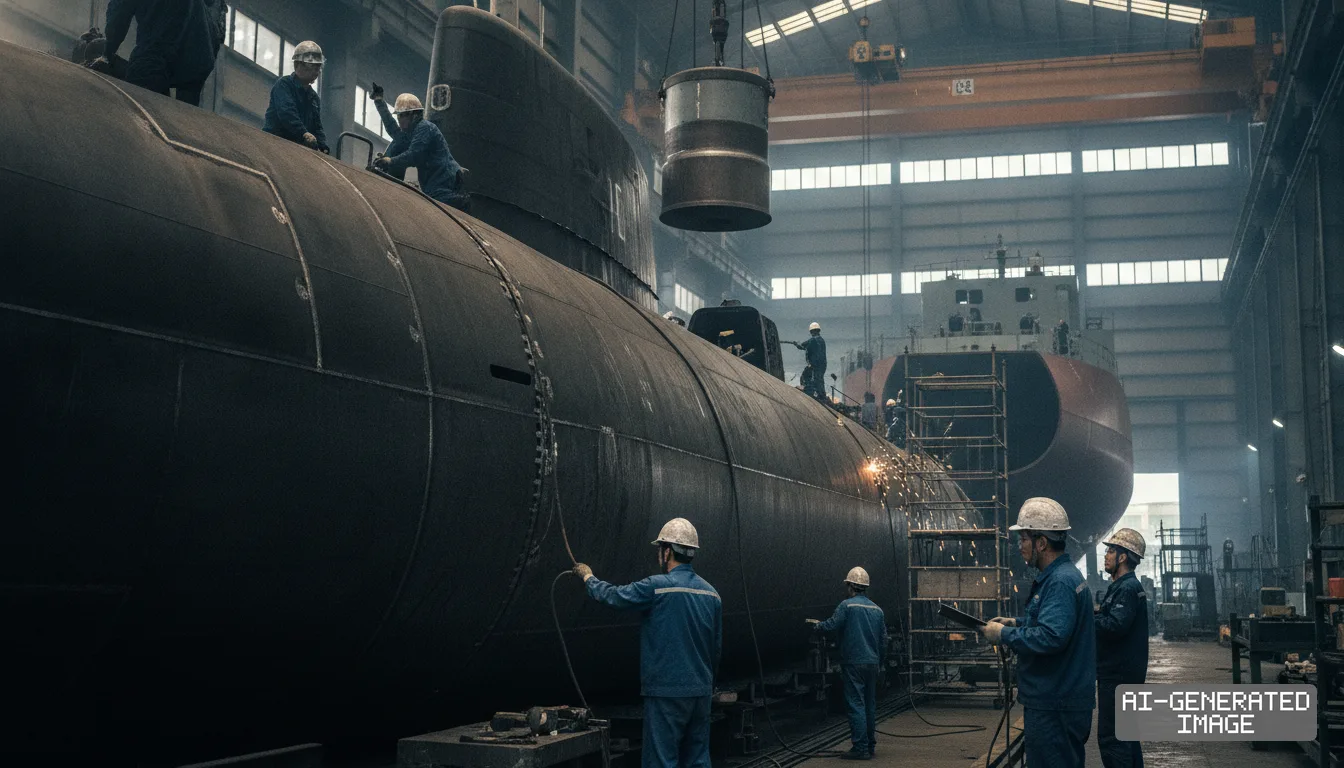
The self-supporting structural configuration also permits workers to assemble cargo tanks separately in modular blocks before lifting them into the hull. Yard managers project that offline fabrication will shorten dry-dock erection schedules and lower crane bottlenecks.
Trading arm POSCO International and transport affiliate POSCO Flow joined the partnership to secure bunkering access and cargo handling. The group aims to create an integrated commercial network spanning raw materials, tank fabrication and seaborne gas transport.
POSCO first commercialized high-manganese steel in 2019 for coastal storage tank five at its Gwangyang liquefied natural gas terminal. The company later partnered with Hanwha Ocean to install high-manganese bunker tanks on very large crude carriers and dual-fuel container vessels.
High-manganese steel tanks have been installed on 51 commercial vessels through October, but all previous marine applications were confined to propulsion fuel storage. Global shipowners require audited sea trials before approving unproven containment systems for revenue-generating cargo holds.
South Korean yards build over 70% of the world's liquefied natural gas fleet but remain reliant on French engineering patents for cargo hold integration. Past national efforts to commercialize indigenous membrane systems, such as the KC-1 design, suffered thermal insulation defects and protracted legal disputes.
Samsung Heavy Industries tested an updated second-generation system called KC-2C on a 7,500-cubic-meter coastal vessel in 2025. That design has yet to secure adoption on full-size export vessels exceeding 174,000 cubic meters.
State utility Korea Gas Corporation plans to tender an order for a 174,000-cubic-meter commercial test carrier by December to establish deep-sea operational references. Hanwha Ocean intends to market high-manganese holds for floating storage regasification units and liquefied ammonia carriers once trials conclude.
The companies did not disclose the scheduled delivery date, the yard investment budget, or the legal expiry date of the memorandum of understanding.
Impact map
How this development propagates across the region and out to global buyers.
| Event | Korea | China | Japan | Global impact |
|---|---|---|---|---|
| High-manganese LNG cargo tank commercialization | Hanwha Ocean targets 5% royalty elimination per ship, POSCO secures 10,000-ton steel demand per vessel | Hudong-Zhonghua remains tied to GTT membrane licences on standard export carriers | Imabari Shipbuilding faces widening cost gap against Korean modular tank assembly | GTT faces long-term erosion of its 5% fee monopoly on global LNG carrier order books |
In this story
- Companies
- Hanwha OceanPOSCO
- Tickers
- 042660.KS005490.KS
- Exposed
- Gaztransport & TechnigazSamsung Heavy IndustriesKorea Gas Corporation
- Impact
- Supply ChainCost StructureCapex
Related briefings
- KOGAS Plans LNG Carrier Tender to Test Domestic Tank Design Also on Gaztransport & Technigaz, Samsung Heavy Industries, Hanwha Ocean
- Hanwha Ocean equips MOL LNG carrier with dual rigid sails Also on Gaztransport & Technigaz, Hanwha Ocean, Cost Structure
- MOL names world's first LNG carrier fitted with rigid sails Also on Gaztransport & Technigaz, Hanwha Ocean
- HD Hyundai Samho builds three-tank LNG carriers for BW LNG Also on Gaztransport & Technigaz, Cost Structure
Sources
Primary documents
Reporting
Confidence: high — how we grade this
The documents behind this briefing are linked above. East Asia Brief produces its English text with AI assistance under human editorial review, and does not translate or republish other outlets' articles. See our methodology and AI policy. Spotted an error? Tell us.
The Morning Brief
What changed in Korean, Chinese and Japanese industry overnight — and what it means for your supply chain. One email, weekday mornings, US time. Free.
The Morning Brief is in preparation. Leave your address and we will write to you once — when the first issue is ready. Nothing before that.