Hanwha Ocean secures 478 billion won order for three gas carriers through 2030
The contract with an Oceania shipowner expands the South Korean yard's 2026 orderbook to 32 vessels worth $5.94 billion as gas carrier demand pushes delivery slots to 2030.
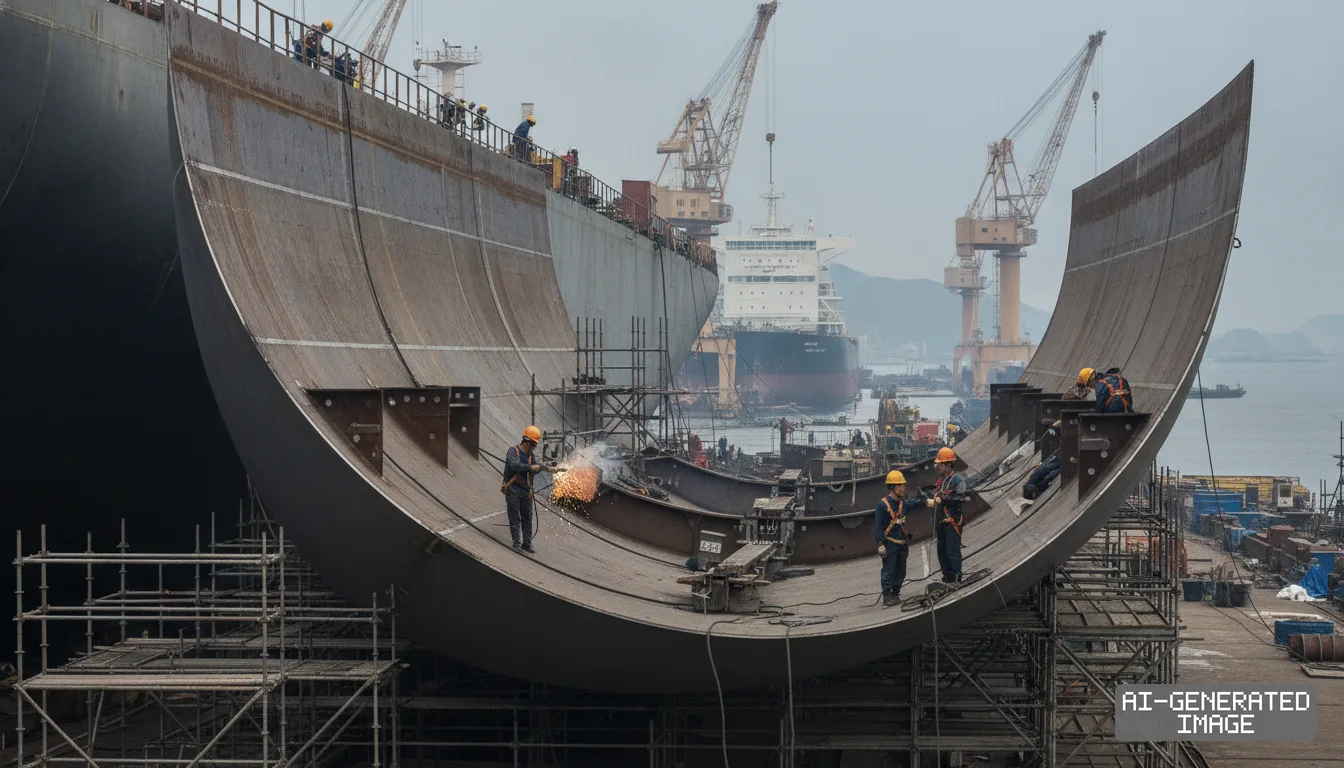
Hanwha Ocean said Sept. 1 it won a 477.8 billion won ($347.1 million) contract to construct three Very Large Gas Carriers for an Oceania-based shipowner.
The contract, signed Aug. 31, commits the shipbuilder to deliver the liquefied petroleum gas vessels by Dec. 6, 2030, according to a regulatory disclosure filed with the Korea Exchange.
The order equals 3.7% of Hanwha Ocean’s 2025 consolidated annual revenue of 12.78 trillion won. Each vessel is priced at roughly 159.3 billion won ($115.7 million).
The transaction lifts the shipbuilder’s cumulative 2026 order intake to 32 vessels worth $5.94 billion. That total equals approximately 8.18 trillion won at prevailing exchange rates.
The yard’s 2026 backlog includes 17 very large crude carriers, six liquefied natural gas carriers, three very large ammonia carriers, three gas carriers, one offshore wind turbine installation vessel and one onshore plant.
Hanwha Ocean structured the transaction around advance payments and staged milestone collections. Installment payments will occur across construction phases including steel cutting, keel laying and vessel launch.
The regulatory disclosure filed with the Financial Supervisory Service did not name the counterparty. The document classified the buyer only as an Oceania-based shipping firm.
The contract highlights sustained owner demand for specialized gas transport capacity. Global energy shipping lines are securing newbuilding slots to accommodate expanding liquefied petroleum gas trade volumes.
Shifts in trade flows have lengthened average voyage distances for gas carriers. Asian importers have increased purchases of liquefied petroleum gas from terminals located along the U.S. Gulf Coast.
Transit limits at the Panama Canal and security disruptions along traditional maritime routes have forced gas carriers to detour around the Cape of Good Hope. Those diversions add substantial sailing time to round trips.
Longer voyages absorb active vessel capacity across the global fleet. Elevated freight rates have generated operational cash flow for gas shipowners, prompting investment in fleet renewal programs.
South Korean shipyards are using strong carrier demand to enforce selective order intake. Builders are pricing forward construction slots at a premium rather than competing for volume.
Hanwha Ocean has secured forward commercial shipyard work covering more than three years of operations. That order buffer allows the company to prioritize contracts offering higher profit margins.
The company's primary production yard in Geoje is focusing dock capacity on high-specification gas carriers, ammonia tankers and crude oil vessels.
Commercial drydock slots across South Korea’s major shipyards are largely committed through 2028. Fresh orders for specialized gas and energy carriers are pushing delivery timelines into late 2030.
The unit price of $115.7 million per vessel reflects tight global shipyard availability for large gas carrier construction slots.
South Korean yards face continued input cost pressures from domestic steel mills over heavy plate prices. Higher vessel contract values help shipbuilders protect margins against raw material expenses.
Stricter carbon intensity regulations from the International Maritime Organization are prompting shipping companies to retire older tonnage in favor of modern dual-fuel designs.
Rival South Korean shipbuilders, including HD Korea Shipbuilding & Offshore Engineering and Samsung Heavy Industries, have similarly filled drydock schedules through 2028 with high-margin gas and tanker orders.
Hanwha Ocean expanded its exposure to energy transport vessels throughout 2026. Crude tankers and gas carriers represent more than 85% of its newly contracted commercial hulls this year.
The company’s 2025 revenue of 12.78 trillion won serves as the baseline for mandatory single-contract reporting under South Korean securities regulations.
Hanwha Ocean stated that contract execution dates, milestone schedules and vessel delivery deadlines remain subject to operational adjustments during engineering and construction.
The shipbuilder plans to target high-value gas and crude carrier designs for its remaining open dock space scheduled between 2029 and 2030.
Impact map
How this development propagates across the region and out to global buyers.
| Event | Korea | China | Japan | Global impact |
|---|---|---|---|---|
| Gas carrier order | shipyard dock slots filled through 2030 | — | — | LPG fleet expansion |
In this story
- Companies
- Hanwha Ocean
- Tickers
- 042660.KS
- Exposed
- HD Hyundai Heavy IndustriesSamsung Heavy Industries
- Impact
- Order BookCapexSupply Chain
Related briefings
- HD Hyundai and Hanwha Ocean Lock In LNG Carrier Berth Slots Through 2029 Also on Samsung Heavy Industries, Hanwha Ocean, HD Hyundai Heavy Industries
- HD Hyundai Heavy union launches partial strike as shipyard wage talks break down Also on Samsung Heavy Industries, Hanwha Ocean, HD Hyundai Heavy Industries
- Asian Shipyard Heavy Plate Costs Diverge as Mills and Builders Clash Over Contract Pricing Also on Samsung Heavy Industries, Hanwha Ocean, HD Hyundai Heavy Industries
- Shipyard labor policies diverge as Korea, Japan, and China tackle yard manning gaps Also on Samsung Heavy Industries, Hanwha Ocean, Order Book
Sources
Reporting
Confidence: medium — how we grade this
The documents behind this briefing are linked above. East Asia Brief produces its English text with AI assistance under human editorial review, and does not translate or republish other outlets' articles. See our methodology and AI policy. Spotted an error? Tell us.