HD Hyundai Heavy ratifies wage deal as Hanwha Ocean faces yard protest
The union vote removes strike risk at Ulsan dry docks, but an ongoing crane occupation at Hanwha Ocean leaves shipyard delivery schedules exposed to subcontracting disputes.
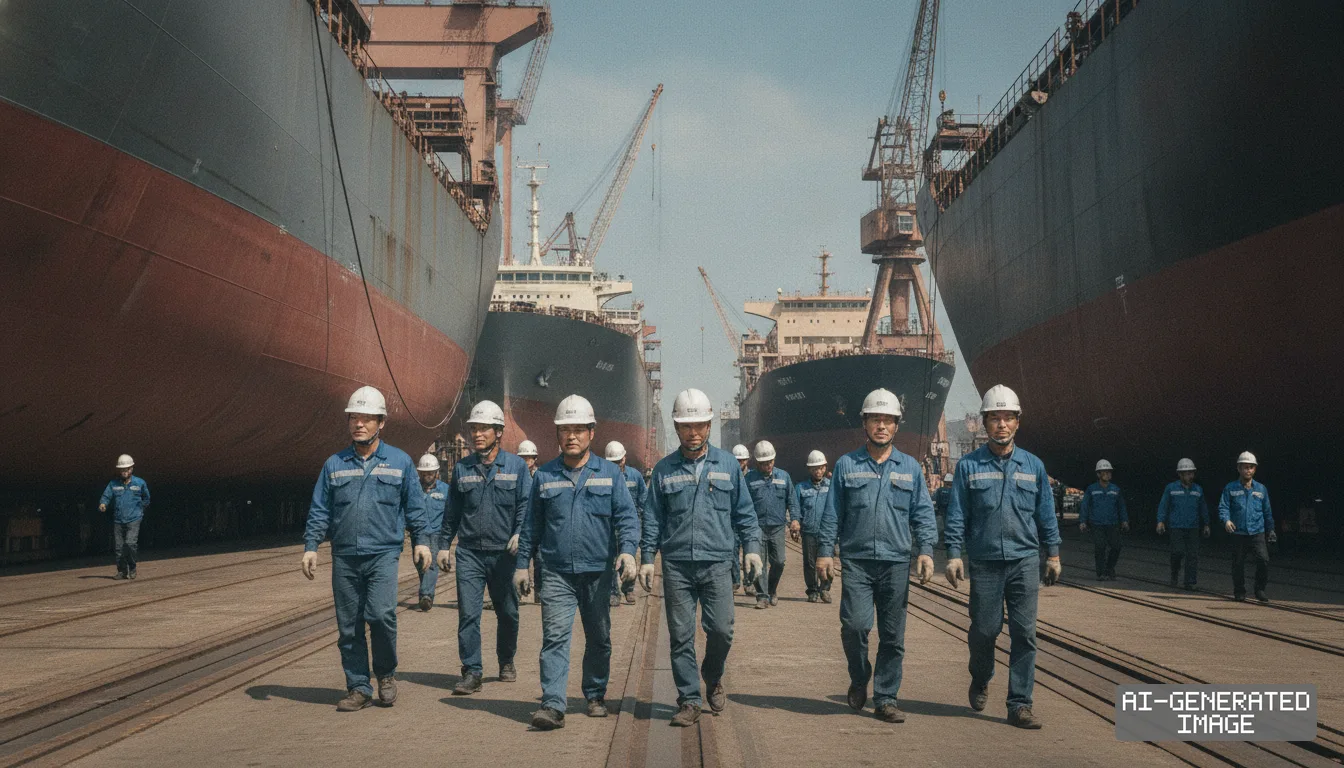
HD Hyundai Heavy Industries union members voted Oct. 27, 2026, to approve a collective wage agreement, ending a five-month standoff while labor unrest persisted at rival Hanwha Ocean.
The ballot drew 7,724 workers, or 94.28% of the 8,193 union members at the Ulsan complex, with 55.06% voting in favor of the deal. Approval came 147 days after talks opened June 2.
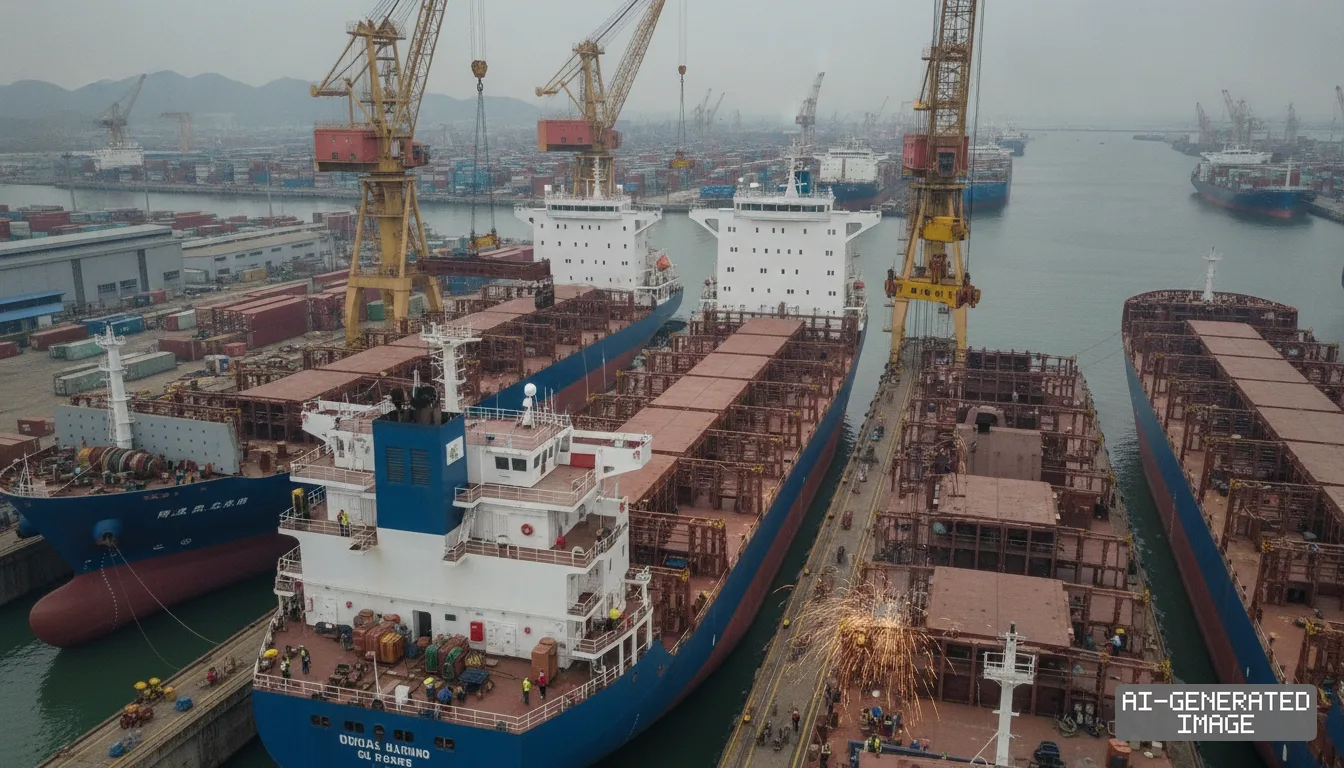
The settlement clears production hurdles across 10 dry docks in Ulsan. Those docks are filled with liquefied natural gas carriers booked through 2028 at prices exceeding $260 million per hull.
The approved package raises basic monthly wages by 120,000 won ($89), which includes a seniority step increase of 55,000 won. It adds a lump-sum payment of 11.5 million won ($8,500) plus 200% of base pay.
Workers also receive 300,000 won in annual welfare credits. The contract unifies employment rules following the integration of HD Hyundai Mipo, preserving a 14-day retirement leave provision from the merged entity.
Ratification followed weeks of friction that included 11 partial walkouts. Union members rejected an earlier draft on Oct. 2, prompting union chief Kim Dong-ha to mount a five-day crane sit-in that ended Oct. 23.
The agreement insulates the world's largest shipyard from further walkouts during a heavy delivery window. Global shipowners have tied premium pricing to strict delivery schedules for dual-fuel gas vessels.
Operating conditions differ sharply at Hanwha Ocean's Geoje shipyard, roughly 100 kilometers southwest. The company faces fractured labor relations despite reaching its own tentative deal with regular staff.
Hanwha Ocean management and regular union negotiators settled on a provisional contract Oct. 27 after 30 bargaining rounds. That pact raises base monthly pay by 140,000 won ($104).
The Hanwha Ocean offer includes 8.5 million won in lump-sum bonuses and 1 million won in annual welfare allowances. It also establishes a joint task force to revise incentive structures by Dec. 31, 2026.
Regular union members plan to vote on the provisional agreement Oct. 29. A positive vote would end a separate crane sit-in begun Oct. 8 by branch leader Kim Yu-cheol.
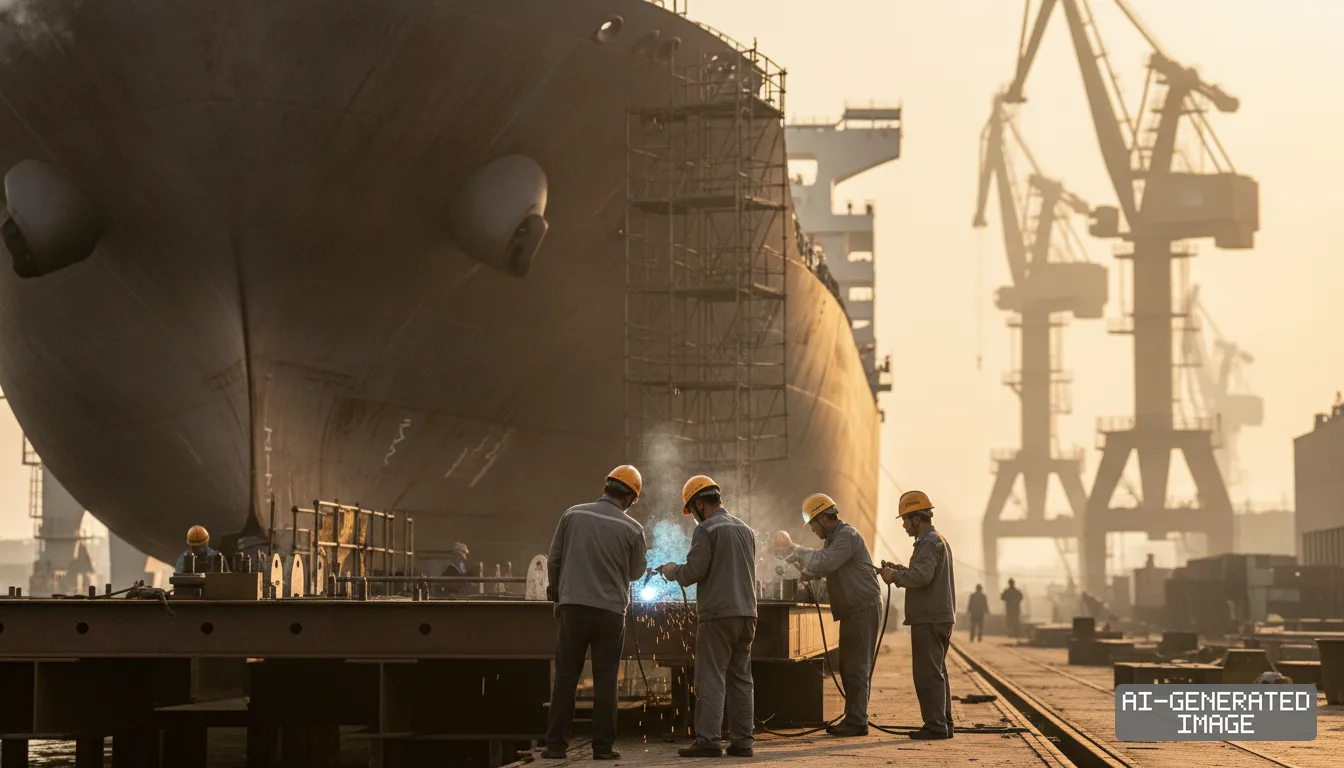
Yet labor risk at Geoje extends beyond regular employees. Subcontracted workers belonging to the Korean Metal Workers' Union have occupied tower cranes and paint shop facilities since Sept. 30.
The six protesting subcontractor executives demand direct wage bargaining with Hanwha Ocean under South Korea's amended Trade Union Act. The statute widened lead contractor liability for workplace conditions.
Subcontracted labor provides more than 80% of outfitting and hull assembly hours at the Geoje facility. The occupied paint shop and scaffolding yard feed modular blocks directly into the yard's primary building dock.
Extended disruption to block staging threatens erection schedules for high-margin container vessels and naval craft. Hanwha Ocean holds a commercial backlog dominated by high-pressure gas carriers scheduled for delivery over the next 36 months.
Disputes over productivity incentives and statutory employer definitions continue to stall talks between management and staffing vendors. Hanwha Ocean maintains that direct negotiations with subcontracted labor breach established statutory procedures.
The company notices do not state how many dry dock erection hours were lost to the crane occupations, and neither shipbuilder has published revised fourth-quarter delivery dates.
Samsung Heavy Industries avoided similar disruptions by finalizing its wage agreement in September. That accord raised base pay by 131,786 won alongside 7 million won in bonuses.
Shipyards across South Korea are operating near technical capacity to fulfill contracts signed during the 2022 to 2024 ordering surge. Delivery slots for large LNG carriers remain fully booked across domestic berths through mid-2028.
Divergence in labor stability now shapes operational predictability between the main yards. HD Hyundai Heavy Industries has secured steady dock cycles through 2027, while Hanwha Ocean must still resolve dual-track labor tension to preserve dock flow.
Hanwha Ocean regular union members cast ballots on their wage package Oct. 29, while subcontractor sit-ins continue at the Geoje outfitting docks.
Impact map
How this development propagates across the region and out to global buyers.
| Event | Korea | China | Japan | Global impact |
|---|---|---|---|---|
| Shipyard labor agreement divergence | HD Hyundai Heavy locks in wage terms for 8,193 workers while Hanwha Ocean faces ongoing subcontractor strike at Geoje | CSSC yards maintain full operating continuity for competitive delivery slots | Imabari and Nihon Shipyard see steady execution on standard bulk and boxship slots | LNG carrier delivery schedules stabilize at Ulsan while Geoje slots face subcontractor bottleneck risk |
In this story
- Companies
- HD Hyundai Heavy IndustriesHanwha OceanSamsung Heavy Industries
- Tickers
- 329180.KS042660.KS010140.KS
- Impact
- Order BookCost StructureCompliance
Related briefings
- HD Hyundai Heavy union votes down wage deal, reopening talks Also on Samsung Heavy Industries, Hanwha Ocean, HD Hyundai Heavy Industries
- Hanwha Ocean and Samsung Heavy diverge on currency hedging Also on Samsung Heavy Industries, Hanwha Ocean, HD Hyundai Heavy Industries
- HD Hyundai Heavy Industries faces delivery risks after wage rejection Also on Samsung Heavy Industries, Hanwha Ocean, HD Hyundai Heavy Industries
- Samsung Heavy orders GTT tank designs for four LNG ships Also on Samsung Heavy Industries, Hanwha Ocean, HD Hyundai Heavy Industries
Sources
Reporting
Confidence: medium — how we grade this
The documents behind this briefing are linked above. East Asia Brief produces its English text with AI assistance under human editorial review, and does not translate or republish other outlets' articles. See our methodology and AI policy. Spotted an error? Tell us.
The Morning Brief
What changed in Korean, Chinese and Japanese industry overnight — and what it means for your supply chain. One email, weekday mornings, US time. Free.
The Morning Brief is in preparation. Leave your address and we will write to you once — when the first issue is ready. Nothing before that.