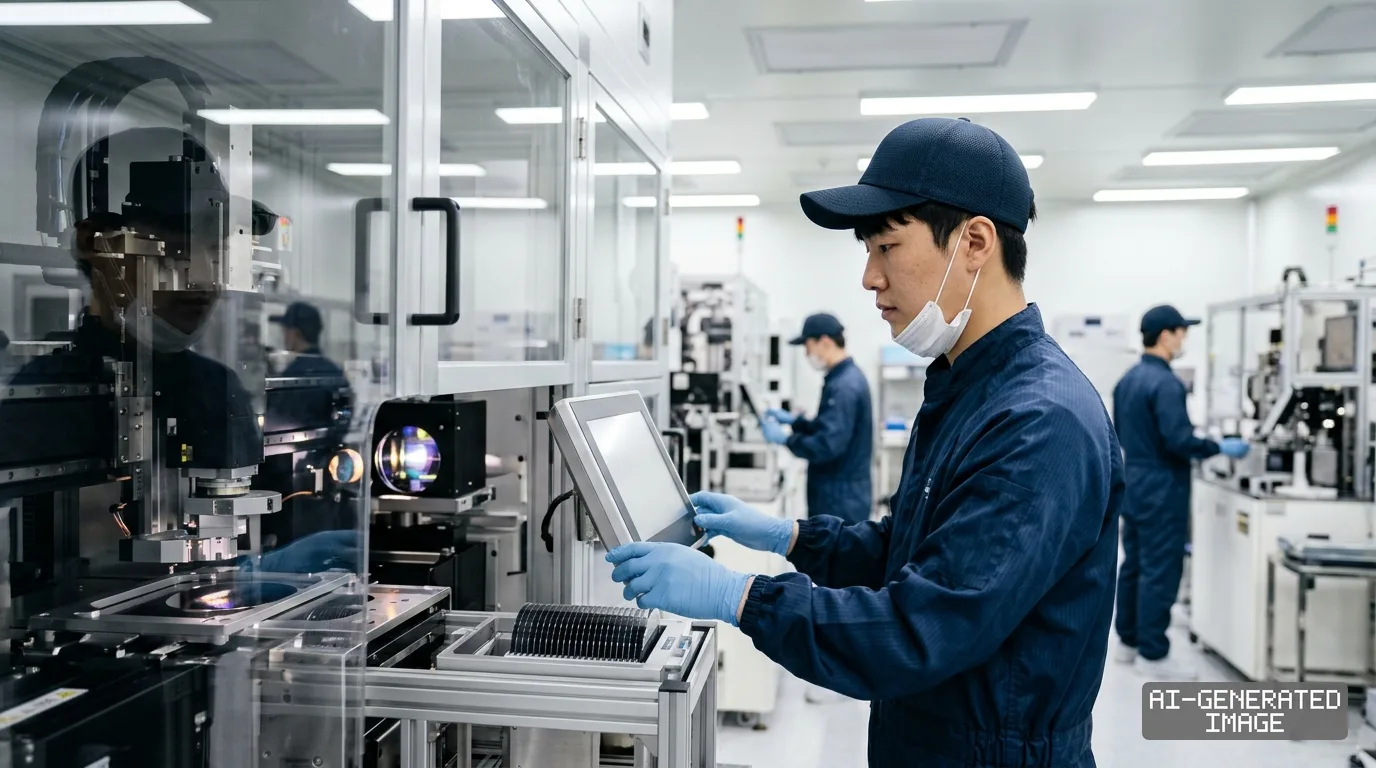
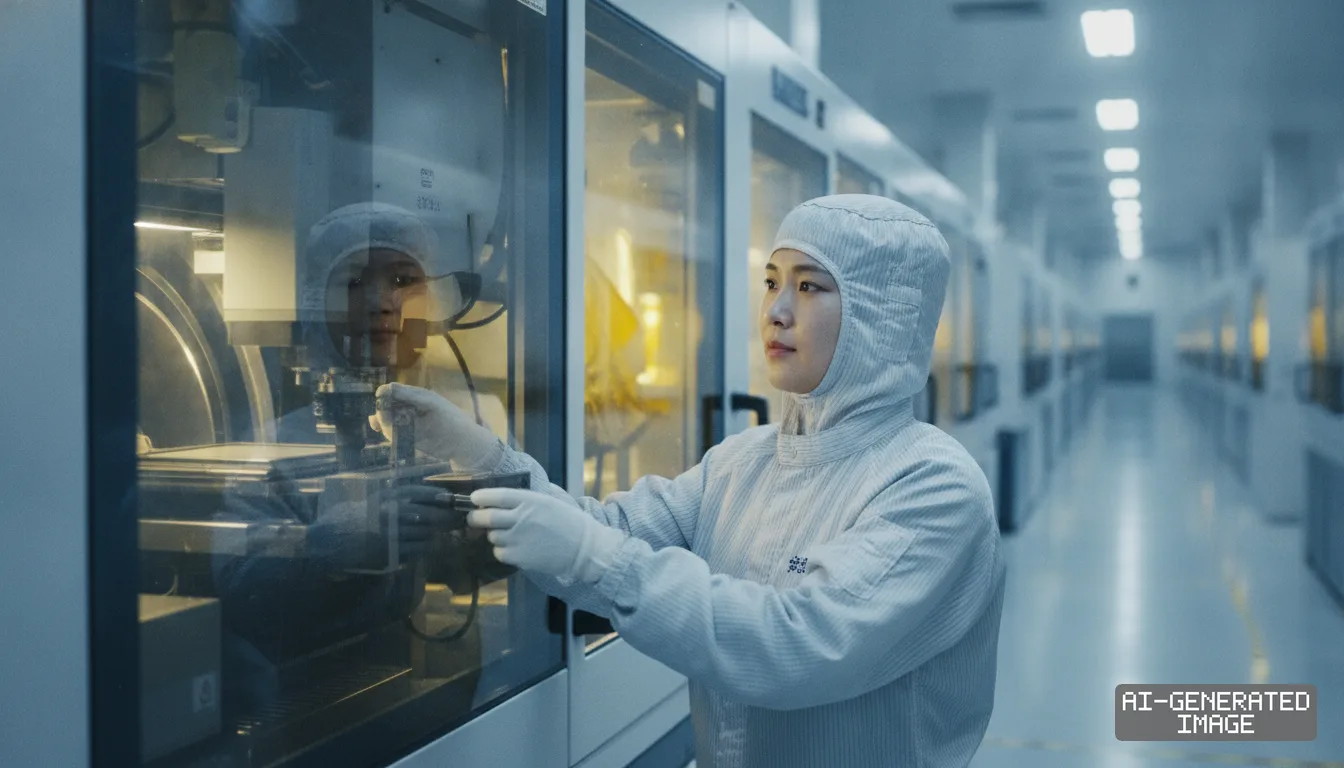
TSMC tightens credit for AI chip designers on wafer shortages
A $40.93 billion capex approval on Nov. 10 coincides with strict foundry terms forcing custom ASIC designers to raise debt for advanced allocations.
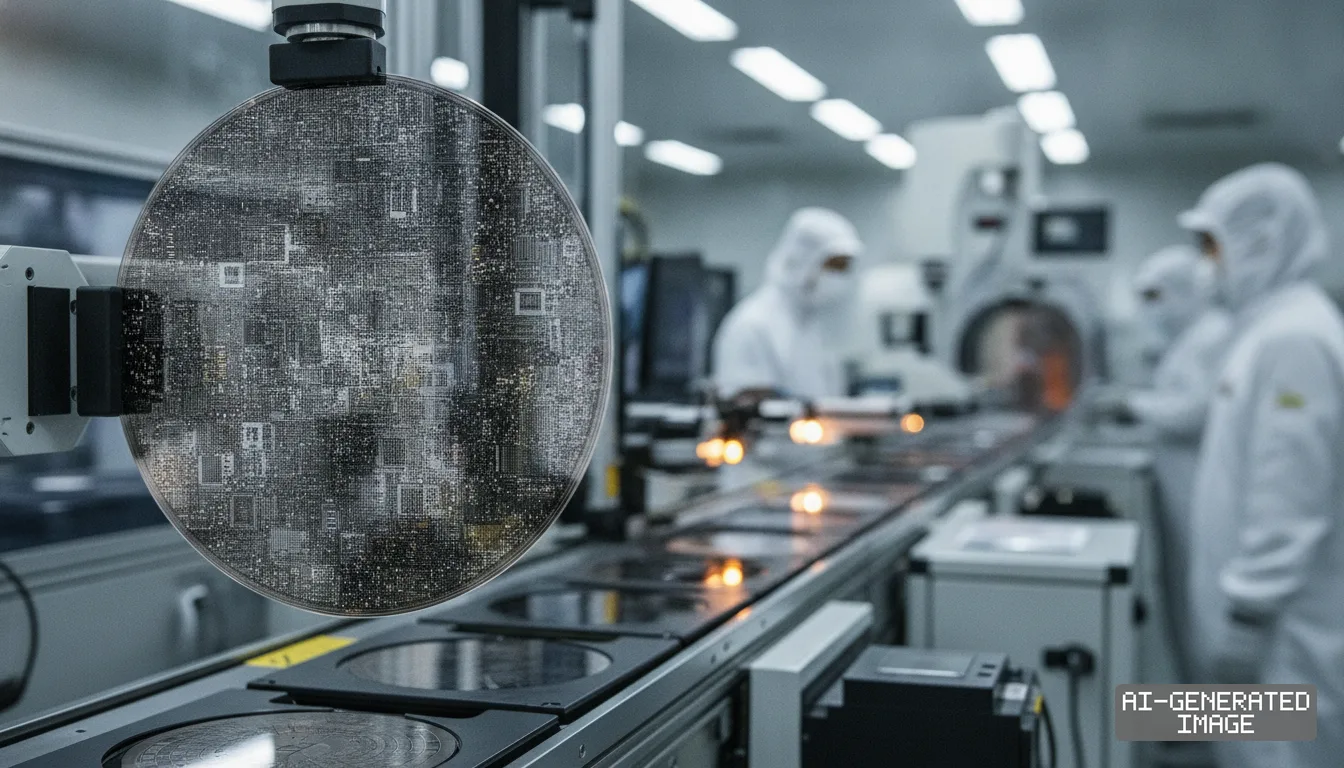
Taiwan Semiconductor Manufacturing Co. faced scrutiny on Nov. 18, 2026, over credit limits on artificial intelligence chip designers as foundry bottlenecks force customers to finance advanced wafer allocations upfront.
The contract manufacturer approved approximately $40.93 billion in capital appropriations on Nov. 10. That appropriation accounts for roughly two-thirds of the foundry's planned annual capital expenditure program for advanced manufacturing capacity, packaging lines and research facilities.
The board also authorized three separate equity allocations capped at $500 million each. Those commitments target Anthropic common stock, OpenAI preferred shares and an internal vehicle for semiconductor ecosystem investments.
Together, the $1.5 billion in investment ceilings equals 2.4% of annual capital guidance. The authorisations position the world's dominant foundry as a shareholder in the machine-learning laboratories that generate end-user computing demand.
Direct fabless designers and custom application-specific integrated circuit developers face different commercial conditions. The foundry establishes balance-sheet thresholds for wafer allocations, requiring customers to pay cash upfront whenever production orders exceed their approved credit limits.
Surging demand for leading-edge nodes has widened the working-capital deficit across fabless design firms. Foundries collect payment when wafers ship, but cloud providers settle accounts only after receiving packaged processor modules months later.
That settlement gap has forced specialized design service firms to secure emergency funding in public markets. Wafer prices at sub-3-nanometer nodes exceed $20,000 per unit, multiplying cash demands as production volumes scale.
Alchip Technologies raised $510 million through a global depositary receipt offering in Luxembourg. The capital injection provides liquidity to cushion wafer procurement obligations for hyperscale cloud clients.
MediaTek finalized a five-year, zero-coupon overseas convertible bond offering worth $3.9 billion. Nvidia subscribed to $3.5 billion of that issuance, taking 89.7% of the total offering to support co-developed enterprise processor runs.
Global Unichip Corp., known as Creative, approved an $800 million convertible bond alongside a NT$40 billion ($1.24 billion) bank credit facility. The design house acts as an intermediary, absorbing wafer delivery liabilities before system buyers pay.
The financing scramble illustrates how foundry pricing power redistributes cyclical risk. Pure-play foundries protect balance sheets against cancellation shocks by demanding customer co-investment, while cash-strapped chip startups bear the carrying costs of work-in-progress inventory.
Financial returns at the manufacturing tier remain insulated from speculative design failures. Consolidated net income at TSMC reached NT$763.06 billion ($23.8 billion) in the third quarter of 2026, generating a 51.1% net profit margin.
October revenue expanded 59.7% from a year earlier to NT$586.89 billion. Advanced nodes below 7 nanometers generated 79% of total wafer revenue during the third quarter, leaving prospective accelerator designers with few alternative suppliers.
Alternative foundry providers cannot absorb redirected volume quickly. Samsung Electronics continues to retool advanced packaging lines, while Intel Foundry remains focused on internal product transitions and yields.
Hyperscale operators have responded by extending balance-sheet support to favored architectural partners. Cloud platform operators provide purchase guarantees or advance deposits, while independent startups without cloud patrons face wafer rationing.
The resulting credit discipline alters competitive dynamics across Silicon Valley and Asian hardware clusters. Well-funded chip enterprises lock in 2-nanometer production slots, while unbacked startups encounter insurmountable working-capital barriers before tape-out.
Financial intermediaries report that merchant silicon startups now spend up to 40% of early venture funding on fab deposits. Those payments sit in escrow months before physical wafers enter lithography bays.
The financial strain spreads down the packaging supply chain. Substrate suppliers and testing houses increasingly mirror foundry payment structures, asking unrated chip firms for milestone deposits prior to assembly runs.
TSMC has not published any customer notice or regulatory filing mandating 100% cash prepayments across AI startups, and the foundry has not disclosed internal customer credit limits.
Anthropic prices its initial public offering on Nov. 18, 2026, providing a public benchmark for model developers as TSMC prepares to execute its authorized $500 million share purchase.
Impact map
How this development propagates across the region and out to global buyers.
| Event | Korea | China | Japan | Global impact |
|---|---|---|---|---|
| AI foundry credit limits | Samsung Foundry captures zero spillover orders due to packaging bottlenecks | Fabless startups face tighter offshore cash access under strict credit scoring | Substrate suppliers Ibiden and Shinko demand upfront deposits on raw materials | AI chip designers raise over $5 billion in debt to fund TSMC wafer working capital |
| AI foundry credit limits | Samsung Foundry captures zero spillover orders due to packaging bottlenecks | Fabless startups face tighter offshore cash access under strict credit scoring | Substrate suppliers Ibiden and Shinko demand upfront deposits on raw materials | AI chip designers raise over $5 billion in debt to fund TSMC wafer working capital |
In this story
- Companies
- Taiwan Semiconductor Manufacturing Co.MediaTekAlchip TechnologiesGlobal Unichip Corp.
- Tickers
- 2330.TW2454.TW3661.TW3443.TW
- Exposed
- NvidiaOpenAIAnthropic
- Impact
- Supply ChainPricingCost Structure
Related briefings
- TSMC launches $500 million venture fund for early chip startups Also on Anthropic, OpenAI, Taiwan Semiconductor Manufacturing Co.
- TSMC foundry monopoly captures value across rival AI chipmakers Also on Anthropic, OpenAI, Nvidia
- Nvidia defends $7.9B China sales as Jensen Huang resists wider curbs Also on Anthropic, Nvidia
- Anthropic flags TSMC foundry bottleneck as major risk in S-1 filing Also on Anthropic, Nvidia
Sources
Primary documents
Reporting
Confidence: high — how we grade this
The documents behind this briefing are linked above. East Asia Brief produces its English text with AI assistance under human editorial review, and does not translate or republish other outlets' articles. See our methodology and AI policy. Spotted an error? Tell us.
The Morning Brief
What changed in Korean, Chinese and Japanese industry overnight — and what it means for your supply chain. One email, weekday mornings, US time. Free.
The Morning Brief is in preparation. Leave your address and we will write to you once — when the first issue is ready. Nothing before that.