EIB signs $330 million credit facility for African minerals
The agreement with South Africa's IDC marks the lender's first external mineral package, aiming to mobilize €900 million for mining and refining infrastructure.
The European Investment Bank signed a 300 million euro ($330 million) credit facility with South Africa's Industrial Development Corporation on Nov. 27, 2026. The agreement marks the bank's first dedicated critical minerals lending framework established outside the European Union.
The credit package aims to mobilize roughly 900 million euros ($990 million) in total public and private co-investment across Sub-Saharan Africa. The funds target mining, chemical refining and mineral processing projects tied to European industrial supply chains.
The agreement executes the bank's Critical Raw Materials Strategic Initiative, approved by directors in March 2025. That plan directs European policy capital toward metals required for permanent magnets, wind turbines and electric vehicle traction motors.
European manufacturers import more than 95% of their refined permanent-magnet rare earths and over 70% of processed battery cobalt directly from Chinese chemical processors. The new facility seeks to establish alternative refining capacity closer to African extraction sites.
The state-owned Industrial Development Corporation manages more than 140 billion rand ($7.9 billion) in South African industrial assets. Under the agreement, the corporation will on-lend European Investment Bank funds to commercial developers as senior loans and project credit lines.
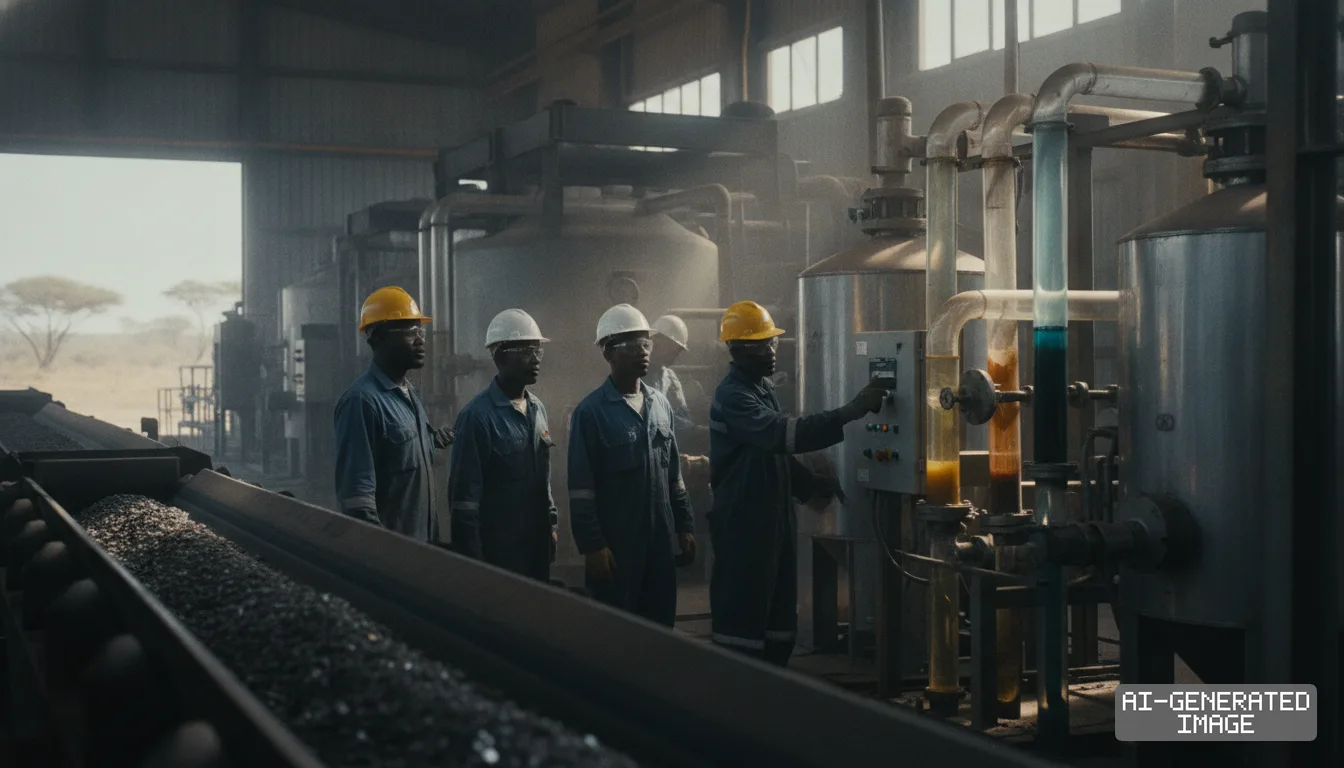
Eligible activities extend beyond raw ore extraction. The financing mandate explicitly covers intermediate processing, hydrometallurgical refining, scrap recycling and essential support infrastructure including dedicated power lines, water recycling plants and regional haulage networks.
The facility links Brussels to Pretoria's 2025 Critical Minerals Strategy, which penalizes unrefined ore exports while subsidizing domestic smelting. South Africa holds roughly 70% of global platinum-group metal reserves and significant deposits of rare earths, manganese and vanadium.
The capital channel offers long-tenor financing that commercial banks frequently avoid in early-stage African processing ventures. Beneficiary projects will access euro-denominated debt with maturities exceeding 10 years, lowering capital overhead for downstream hydrometallurgical refining plants.
European industrial buyers will receive long-term procurement off-take agreements from funded sites. This arrangement mirrors the binding criteria enacted under the European Union Critical Raw Materials Act, which took effect in May 2024.
That statute mandates that the bloc extract at least 10% and process at least 40% of its strategic mineral consumption domestically by 2030. It caps single-country import reliance at 65% for any designated raw material.
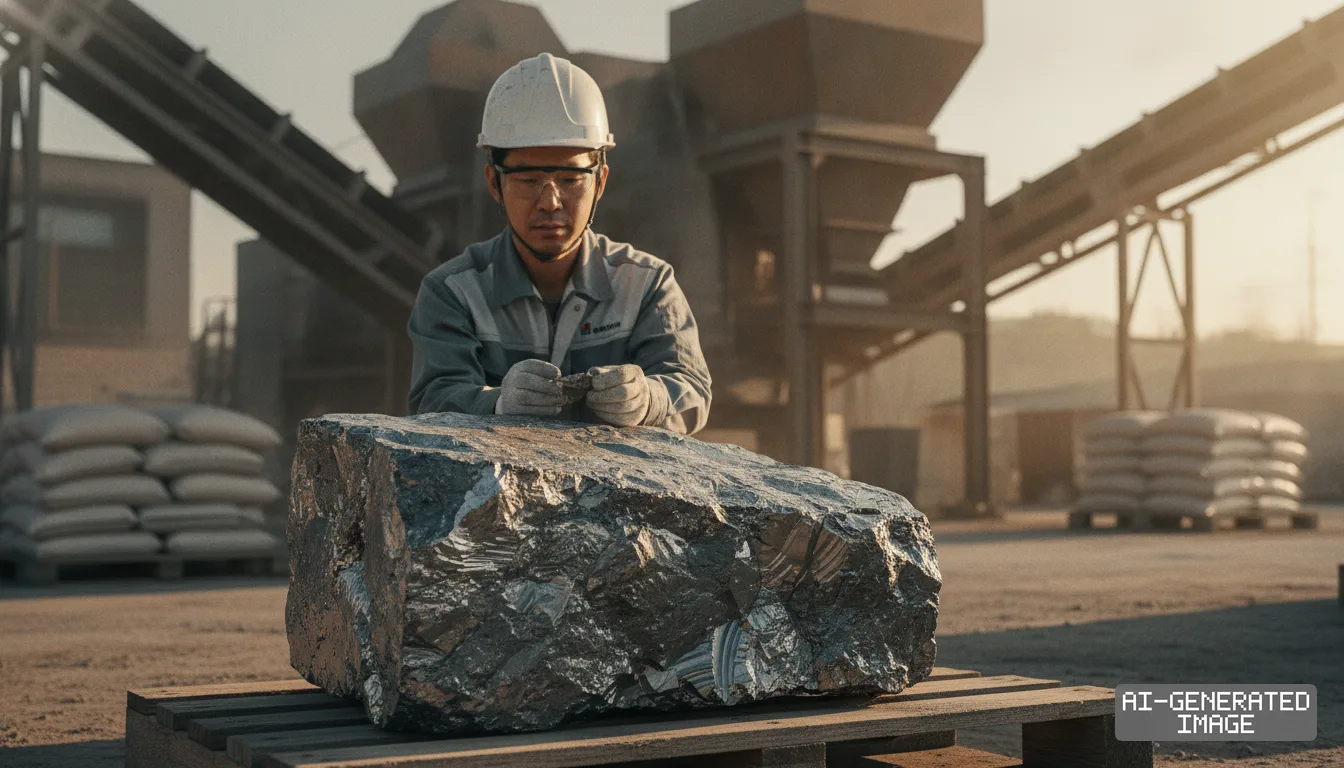
Meeting that threshold requires opening non-Chinese refining routes for heavy rare earths like dysprosium and terbium. African pegmatite and monazite deposits present one of the few alternative mineral corridors capable of commercial scale.
Industrial Development Corporation Chief Executive Officer Mmakgoshi Lekhethe signed the accord in Johannesburg alongside European lenders. The institution will administer local technical evaluations and monitor environmental compliance across candidate processing hubs.
The facility will also support cross-border mineral corridors extending north from South Africa into neighboring producers. Projects in Zambia, Namibia and the Democratic Republic of Congo qualify if they export refined materials through Southern African logistics hubs.
South African mining companies have struggled to fund capital-intensive separation plants due to domestic electricity shortfalls and high local borrowing rates. European concessional lending reduces borrowing margins by an estimated 150 to 250 basis points compared with domestic private debt.
The credit facility requires that participating facilities demonstrate verifiable chain-of-custody tracking from mine face to export port. The terms bar projects that use unmitigated coal-fired power or fail to meet European environmental benchmarks.
The agreement does not state which individual mining or refining operators will receive the initial tranche allocations, and the institutions have not published the project-level disbursement schedule.
Project sponsors must submit preliminary technical and feasibility filings to the joint evaluation committee before March 31, 2027. The first debt drawdowns are scheduled to clear credit committee approval by June 30, 2027.
Impact map
How this development propagates across the region and out to global buyers.
| Event | Korea | China | Japan | Global impact |
|---|---|---|---|---|
| EIB-IDC Africa minerals debt facility | Battery cathode makers gain secondary non-China refining channels for manganese and cobalt feedstock | Domestic refiners face European off-take competition for raw African unrefined ores | Trading houses gain co-investment syndicate options for Sub-Saharan mineral processing assets | Permanent magnet and battery value chains diversify processing margins away from East Asian monopsony |
In this story
- Companies
- Industrial Development Corporation of South Africa
- Policy
- SubsidiesStandards
- Impact
- Supply ChainCapexCost Structure
Track every Subsidies development → Track every Standards development →
Related briefings
- CATL flags sulfide battery bottlenecks under China 2030 mandate Also on Standards, Subsidies, Cost Structure
- CATL and BAIC Sign Battery-Swap Pact to Target 1 Million EVs Also on Standards, Subsidies, Cost Structure
- Japan ties ¥2.56T chip aid to strict supplier audit rules Also on Standards, Subsidies, Cost Structure
- Korea directs 464 billion won to deploy uncrewed ships by 2032 Also on Standards, Subsidies
Sources
Primary documents
Reporting
Confidence: high — how we grade this
The documents behind this briefing are linked above. East Asia Brief produces its English text with AI assistance under human editorial review, and does not translate or republish other outlets' articles. See our methodology and AI policy. Spotted an error? Tell us.
The Morning Brief
What changed in Korean, Chinese and Japanese industry overnight — and what it means for your supply chain. One email, weekday mornings, US time. Free.
The Morning Brief is in preparation. Leave your address and we will write to you once — when the first issue is ready. Nothing before that.