Develop Global idles Pioneer Dome lithium pit on persistent price slump
The Western Australian direct-shipping ore operation will enter care and maintenance in December despite keeping capex at A$18 million.
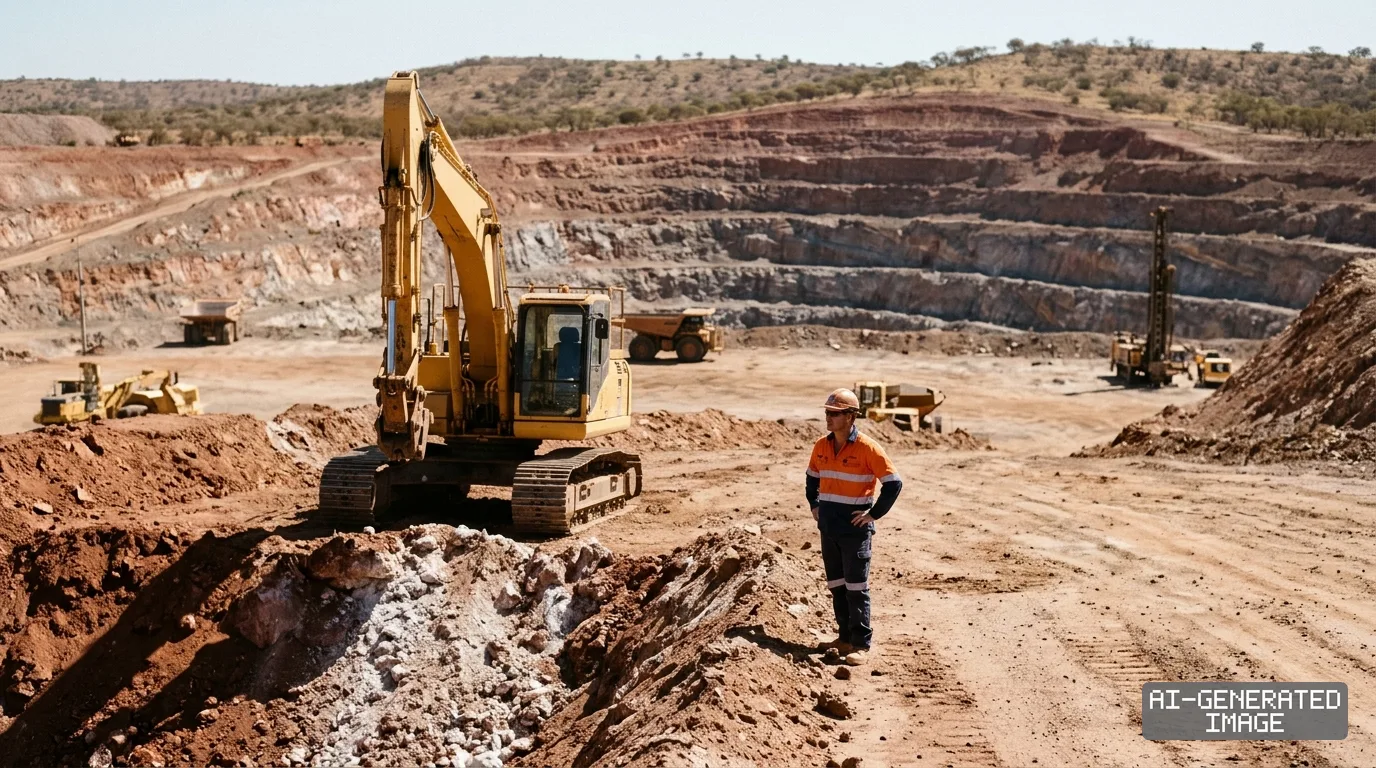
Develop Global halted work at its Pioneer Dome project on Nov. 26, 2026, moving the Western Australian direct-shipping lithium operation into care and maintenance.
The Australian miner said sustained weakness in spodumene and lithium raw material prices forced the shutdown. The open pit will cease active extraction within days of entering December.
The project incurred site capital expenditure of A$18 million ($12 million) to begin production. That spending was 40% below the company's initial A$30 million development budget.
Develop Global ships direct-shipping ore — raw crushed lithium rock exported without on-site concentration. Direct shipping avoids the capital cost of a multi-hundred-million-dollar concentrator plant.
The operating model exposes the company directly to bulk shipping costs and lower contained metal value. Unprocessed direct-shipping rock carries far higher freight cost per unit of lithium than concentrated spodumene.
The company exported its first parcel of 24,000 tonnes grading 1.33% lithium oxide on Nov. 12 through the port of Esperance. The decision to halt operations came less than two weeks after that maiden cargo departed.
Mining at the Cade open pit had commenced in the September quarter. Early works centered on waste pre-stripping and haulage infrastructure before extraction reached primary mineralization.
The project relied on a commercial agreement with commodity trader Trafigura. Trafigura agreed to purchase the direct-shipping volume under a pricing structure that included a contract floor price.
That protective floor price expires on Dec. 31, 2026. Develop Global said production cannot continue profitably once market sales must clear at prevailing spot indices without that contractual safety net.
Develop Global plans to export two remaining cargoes before the pricing mechanism ends. Those shipments will total between 40,000 and 50,000 tonnes of crushed ore.
The three scheduled cargoes will bring total deliveries to roughly 70,000 tonnes. The original mine plan had targeted direct-shipping inventory of approximately 850,000 tonnes from the Cade pit.
Managing Director Bill Beament said the company will not expend high-grade resources when market pricing fails to generate sufficient margins. The workforce will deploy toward higher-margin assets, Beament said.
Develop Global expects revenue from the three contracted cargoes to recoup the entire A$18 million invested in site works. That recovery protects the company balance sheet against stranded construction losses.
A skeleton crew will remain on site to oversee environmental compliance and assets. The crew will maintain site equipment so extraction can resume rapidly if benchmark spodumene prices recover.
The company has not disclosed the dollar floor price agreed with Trafigura, citing commercial confidentiality clauses in the sales agreement. The realized profit margin on the initial shipment remains undisclosed.
The suspension illustrates how weak commodity pricing penalizes direct-shipping operations before conventional beneficiation mines. Conventional mines separate lithium from waste rock on site, raising ore purity to 6% lithium oxide.
Without a concentration circuit, direct-shipping miners ship mostly inert rock across maritime routes. When freight rates rise or lithium chemical benchmarks drop, raw ore margins vanish quickly.
The shutdown removes non-concentrated Australian tonnage from merchant trade routes entering Chinese converters. Chinese chemical plants have absorbed unrefined rock to blend with lower-grade domestic lepidolite feedstocks.
The broader Australian lithium sector has curtailed high-cost output throughout 2026. Junior developers have cut drilling budgets, while integrated operators have delayed expansion phases at operational flotation mills.
Develop Global will continue metallurgical work on a potential Stage 2 underground mine at Pioneer Dome. The subterranean development would extract deeper pegmatites if long-term battery raw material pricing improves.
Offtake shipments under the current floor price terms conclude formally on Dec. 31, 2026, after which site activity transitions entirely to standby monitoring.
Impact map
How this development propagates across the region and out to global buyers.
| Event | Korea | China | Japan | Global impact |
|---|---|---|---|---|
| Pioneer Dome DSO lithium pause | Cathode makers see merchant hard-rock supply concentrate into major spodumene producers | Merchant refiners lose unrefined direct-shipping blending feed, increasing reliance on domestic lepidolite | Trading houses avoid direct-shipping exposures, retaining equity ties to concentrated spodumene | Direct-shipping lithium supply exits the market, establishing an effective price floor for raw hard-rock exports |
| Pioneer Dome DSO lithium pause | Cathode makers see merchant hard-rock supply concentrate into major spodumene producers | Merchant refiners lose unrefined direct-shipping blending feed, increasing reliance on domestic lepidolite | Trading houses avoid direct-shipping exposures, retaining equity ties to concentrated spodumene | Direct-shipping lithium supply exits the market, establishing an effective price floor for raw hard-rock exports |
In this story
- Companies
- Develop Global
- Tickers
- DVP.AX
- Exposed
- Trafigura
- Impact
- Supply ChainCapexPricing
Related briefings
- Korea Zinc advances $7.4B US smelter for critical minerals Also on Trafigura, Pricing
- Pentagon commits $174M to Australian gallium plant to break China monopoly Also on Trafigura
- Jiangnan Shipyard puts twin 93,000-cbm ammonia tankers in service Also on Trafigura
- Korea Zinc Secures US Backing for $7.4B Tennessee Smelter Also on Trafigura
Sources
Reporting
Confidence: medium — how we grade this
The documents behind this briefing are linked above. East Asia Brief produces its English text with AI assistance under human editorial review, and does not translate or republish other outlets' articles. See our methodology and AI policy. Spotted an error? Tell us.
The Morning Brief
What changed in Korean, Chinese and Japanese industry overnight — and what it means for your supply chain. One email, weekday mornings, US time. Free.
The Morning Brief is in preparation. Leave your address and we will write to you once — when the first issue is ready. Nothing before that.