Cathode output outside China lags behind 5.4 TWh cell demand by 2040
Production outside China will rise 122% by 2040 while Western gigafactories expand demand toward 5.4 terawatt-hours, opening persistent bottlenecks.
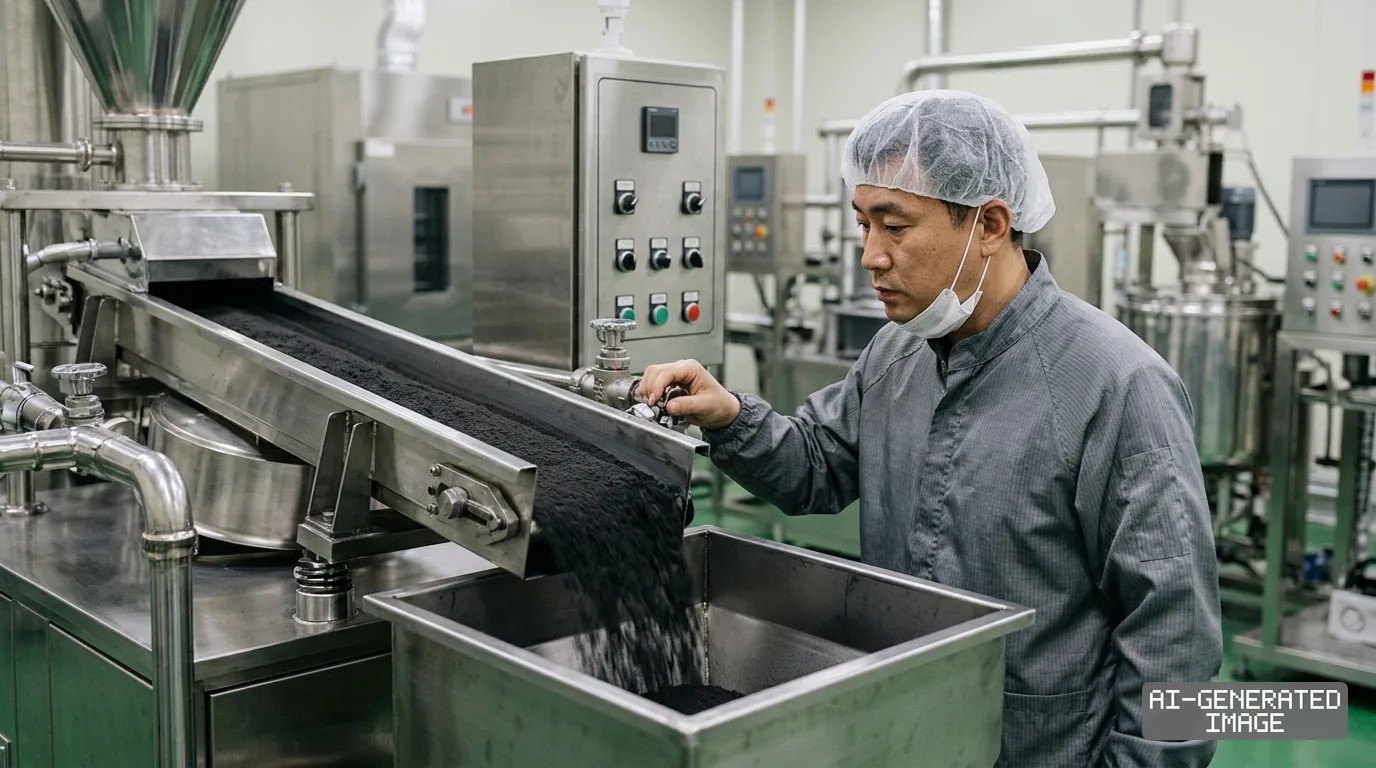
Benchmark Mineral Intelligence said Nov. 13, 2026, that cathode active material production outside China will expand by 122% through 2040, trailing far behind global requirements for electric vehicle battery cells.
Cathode active material — the processed powder containing lithium, nickel and cobalt that determines battery storage capacity and cost — faces widening supply shortages. The market faces bottlenecks as Western battery cell factories accelerate installations.
Demand for battery cells outside China will surge 404% between 2026 and 2040, climbing from current consumption levels to 5.4 terawatt-hours, the London-based intelligence agency said in its market report.
Cell manufacturing capacity outside China will rise from 451 gigawatt-hours to 1.3 terawatt-hours over the same period, according to the research group. That leaves cell output far below overall power requirements.
The global cathode market will remain balanced until 2027, according to the agency’s forecast model. The sector enters a persistent supply deficit immediately after that threshold as assembly operations outpace chemical processing.
Only China and neighboring Asian manufacturing hubs currently maintain surplus cathode supply relative to domestic cell assembly lines, the agency said. North America and Europe face deep structural shortfalls.
China controlled 87% of worldwide cathode active material manufacturing capacity in 2024, the intelligence agency said. The country will retain 84% of total capacity by 2030 despite Western industrial onshore mandates.
South Korea maintains the largest cathode manufacturing capacity outside China, according to agency records. South Korean chemical groups carry heavy direct exposure to North American vehicle supply chains through multi-year delivery contracts.
EcoPro BM produces roughly 34% of global nickel-cobalt-aluminum cathode material, according to agency data. The company holds a 43.9 trillion won ($34 billion) long-term contract to supply cell maker Samsung SDI.
LG Chem committed 25 trillion won ($18.7 billion) in cathode deliveries to General Motors in North America, agency data showed. The chemical maker also signed a 2.9 trillion won ($2.2 billion) supply deal with Toyota.
POSCO Future M signed a 40 trillion won ($33 billion) 10-year cathode contract with Samsung SDI. The group operates high-nickel lines designed to supply joint-venture cell plants across North America.
Building cathode capacity outside Asia requires substantial lead times and heavy capital allocations. Developing commercial chemical synthesis plants typically takes four to seven years from ground-breaking to stable commercial yields.
Midstream chemical synthesis accounts for 52% of total battery processing investment needed by 2040, the agency said in separate capital expenditure modeling. Total industry investment across all tiers must reach $1.6 trillion.
High capital costs and complex environmental permitting frameworks in North America and Europe have slowed plant completions. Several materials suppliers have deferred expansion schedules as electric vehicle adoption paces fluctuate.
Upstream mineral refining remains concentrated in China, creating additional cost barriers for independent cathode producers in allied nations. Converting raw lithium and nickel into precursor chemical solutions requires specialized technical infrastructure.
Automakers building localized cell assembly plants in North America face persistent reliance on imported cathode chemicals. Trade barriers and domestic content requirements penalize battery packs that utilize Chinese midstream active materials.
The supply gap will widen steadily as automotive production lines commission new high-nickel pack platforms after 2027. Non-Chinese cell manufacturers will face escalating feedstock procurement costs as regional materials supplies tighten.
Battery pack producers in Europe face acute procurement vulnerability because regional cathode chemical capacity trails automotive factory construction, the report noted. European battery plants rely predominantly on Korean and Chinese chemical imports.
The agency said its baseline supply projection assumes that all announced ex-China cathode facilities begin commercial deliveries on schedule. Any commercial project cancellations or operational delays will widen the projected deficit.
The cathode market balance tips into deficit at the end of 2027, the agency said. The agency did not publish company-specific metric tonnage targets or plant-level allocation figures through 2040, which remain restricted to proprietary database tiers.
Impact map
How this development propagates across the region and out to global buyers.
| Event | Korea | China | Japan | Global impact |
|---|---|---|---|---|
| Ex-China cathode deficit post-2027 | EcoPro BM, LG Chem and POSCO Future M face bottleneck filling $85B+ Western contracts without Chinese precursor inputs | Domestic suppliers retain 84% of global cathode capacity through 2030, reinforcing pricing power over refined minerals | Toyota and Panasonic face higher procurement premiums for US cell ventures as non-China CAM remains scarce | Non-Chinese EV battery cell manufacturing falls short of 5.4TWh 2040 demand, raising pack BOM costs |
In this story
- Companies
- EcoPro BMLG ChemPOSCO Future MSamsung SDI
- Tickers
- 247540.KS051910.KS003670.KS006400.KS
- Exposed
- General MotorsToyota
- Policy
- Local Content RulesSubsidies
- Impact
- Supply ChainCapexPricing
Track every Local Content Rules development → Track every Subsidies development →
Related briefings
- Topre commits $140M for auto frame plants in Alabama and Tennessee Also on Toyota
- Korean cathode makers pivot to LMR to halt Chinese LFP gains in EVs Also on LG Chem, EcoPro BM, General Motors
- Korean cathode makers automate single-crystal calcination lines to secure yields Also on LG Chem, EcoPro BM, General Motors
- POSCO Future M plans domestic LFP precursor supply by 2029 Also on LG Chem, EcoPro BM, POSCO Future M
Sources
Reporting
Confidence: medium — how we grade this
The documents behind this briefing are linked above. East Asia Brief produces its English text with AI assistance under human editorial review, and does not translate or republish other outlets' articles. See our methodology and AI policy. Spotted an error? Tell us.
The Morning Brief
What changed in Korean, Chinese and Japanese industry overnight — and what it means for your supply chain. One email, weekday mornings, US time. Free.
The Morning Brief is in preparation. Leave your address and we will write to you once — when the first issue is ready. Nothing before that.