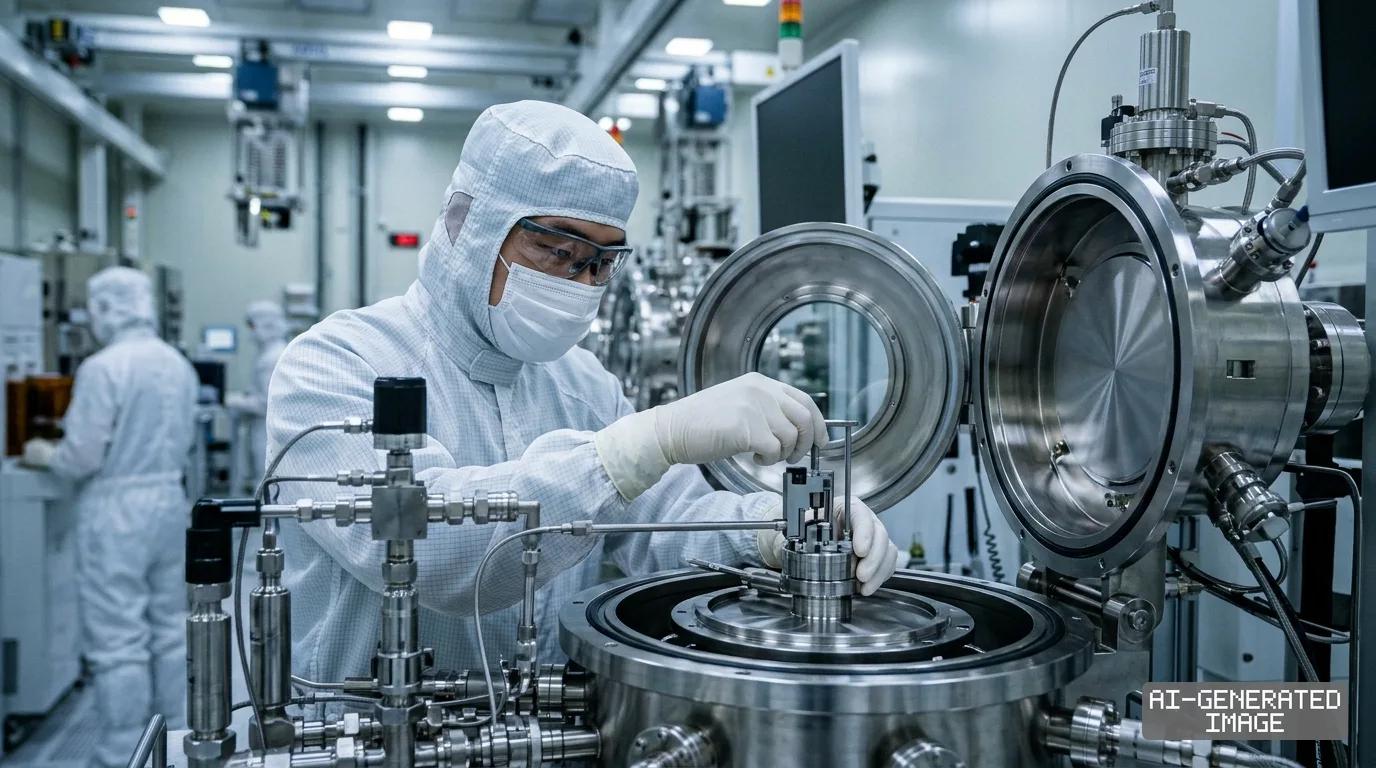
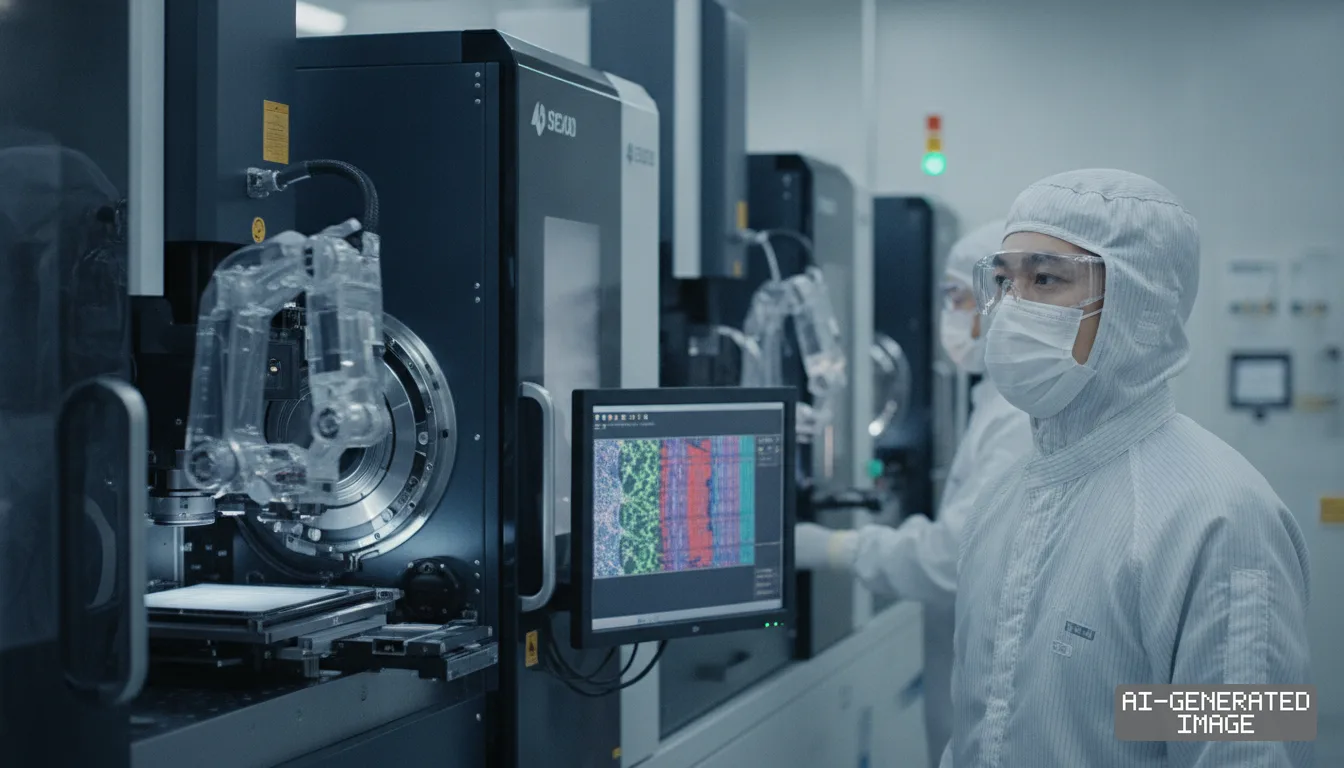
BofA projects TSMC annual capex reaching $90 billion by 2027
The foundry allocated 56% of its latest $40.93 billion appropriation to advanced nodes as utilization across leading-edge fabs remains over 100%.
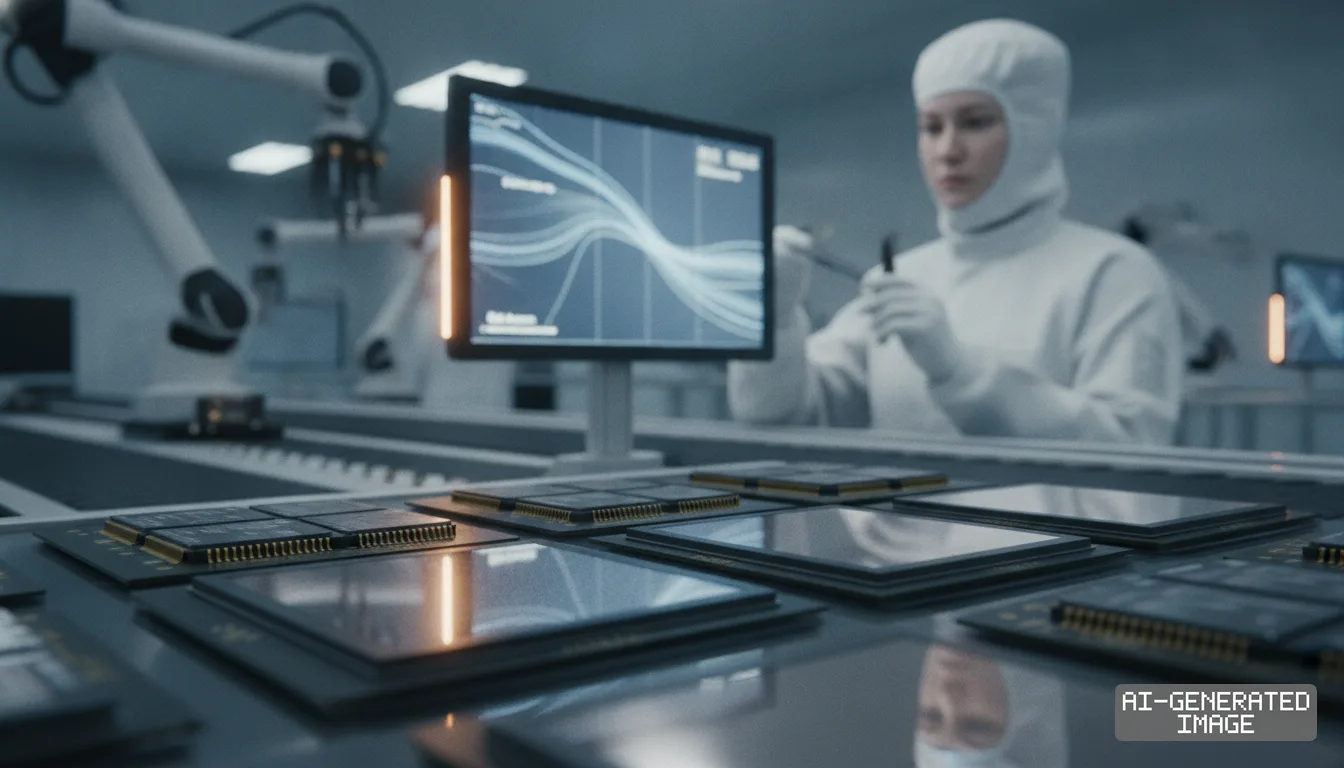
Bank of America Securities said Nov. 16 that Taiwan Semiconductor Manufacturing Company's capital spending pipeline points to sustained demand for artificial intelligence accelerators from North American chip designers through 2027.
The investment bank projected TSMC's annual capital expenditures will reach between $80 billion and $90 billion in 2027. That estimate surpasses the prevailing market consensus of approximately $80 billion.
TSMC's board of directors approved $40,926.70 million in capital appropriations on Nov. 10. The board allocated 56% of those funds to expanding and upgrading advanced-node wafer production, the highest proportion directed to front-end lines since 2022.
The foundry operator directs the capital into 2-nanometer and 3-nanometer production facilities alongside advanced packaging operations. Advanced packaging binds logic and memory dies together on a silicon base to maximize data transfer rates.
Bank of America estimated that utilization rates across TSMC's advanced nodes will exceed 100% through 2027. The brokerage modeled that leading-edge fab lines will maintain high run rates even if broader data center equipment procurement moderates during 2028.
Expanding demand for merchant graphics processing units and custom application-specific integrated circuits drives the capacity expansion. Cloud hyperscalers continue to design internal accelerators to cut operating overhead and lower server power consumption.
Nvidia relies on TSMC for its complete accelerator roadmap and consumes an estimated 50% of the foundry's chip-on-wafer-on-substrate packaging throughput. Packaging lines remain the critical bottleneck constraining global artificial intelligence server shipments.
Broadcom designs custom accelerators for cloud operators and commands roughly 30% of the custom silicon market. Broadcom books volume manufacturing runs across TSMC's 3-nanometer fabs and has reserved production slots on upcoming 2-nanometer lines.
The scale of the appropriations contradicts assumptions that data center infrastructure investments are nearing an immediate cyclical peak. Combined capital spending among the nine largest cloud service providers will exceed $1.5 trillion in 2027, according to TrendForce data.
TSMC reported consolidated net revenue of NT$1,494.24 billion ($46.8 billion) and net income of NT$763.06 billion for the third quarter of 2026. Diluted earnings per share reached NT$29.43, according to financial statements approved by directors.
Revenue in October 2026 reached NT$586.89 billion ($17.88 billion), an increase of 59.7% from the same month a year earlier. Advanced nodes measuring 5 nanometers and below generated more than two-thirds of total wafer sales during the period.
Bank of America projected TSMC's earnings per share will compound at an annual rate of 34% between 2026 and 2028. The bank estimated free cash flow will expand from $53 billion to $109 billion across the three-year forecast period.
TSMC's board also authorized direct equity investments of up to $500 million each in Anthropic and OpenAI on Nov. 10. The company approved a separate authorization of up to $500 million to establish an investment vehicle for semiconductor ecosystem supply firms.
Direct minority holdings in model creators align TSMC with the software architectures driving hardware demand. Frontier developers draft models that determine memory bandwidth requirements and die size parameters for future silicon.
Overseas fab projects in the United States absorb a portion of the approved manufacturing funds. TSMC continues installing commercial tool sets at its Phoenix, Arizona site, where cleanrooms have begun producing operational silicon wafers.
The Arizona manufacturing unit generated NT$39 billion in sales and NT$19 billion in net profit during the first quarter of 2026. Operating margins at the facility reached 45% when excluding federal government grant funding.
Front-end tool purchases represent the bulk of the newly authorized capital appropriations. Fab campuses under construction in Hsinchu and Kaohsiung require extreme ultraviolet lithography systems to prepare for high-volume 2-nanometer tape-outs.
Equipment makers in Japan and the United States book purchase orders up to a year ahead of physical installation. TSMC commits capital for cleanroom facilities months before customers finalize initial wafer volumes.
High-performance computing silicon now accounts for more than half of TSMC's overall wafer revenue. Smartphone application processors, which historically set the cadence of foundry capacity additions, now represent a secondary share of leading-edge production lines.
The brokerage memo did not publish customer-level wafer volume allocations for proprietary cloud server chips. TSMC has not published the exact output capacity split between its planned 2-nanometer fabs in Baoshan and Kaohsiung.
Common shares will trade ex-dividend on March 11, 2027, ahead of a March 17 record date. TSMC will distribute the third-quarter cash dividend of NT$9.00 per share to eligible shareholders on April 8, 2027.
Impact map
How this development propagates across the region and out to global buyers.
| Event | Korea | China | Japan | Global impact |
|---|---|---|---|---|
| Foundry capex expansion | Samsung Electronics faces wider advanced packaging gap in high-bandwidth memory integration | Domestic AI designers remain excluded from TSMC sub-5nm fabrication runs | Tokyo Electron and Screen Holdings secure expanded etch and clean equipment delivery slots | Hyperscale cloud operators absorb higher leading-edge wafer costs across 2nm hardware rollouts |
In this story
Track every Subsidies development →
Related briefings
- TSMC launches $500 million venture fund for early chip startups Also on Anthropic, OpenAI, Broadcom
- TSMC foundry monopoly captures value across rival AI chipmakers Also on Anthropic, OpenAI, Broadcom
- TSMC tightens credit for AI chip designers on wafer shortages Also on Anthropic, OpenAI, Nvidia
- Anthropic flags TSMC foundry bottleneck as major risk in S-1 filing Also on Anthropic, Broadcom, Nvidia
Sources
Reporting
Confidence: medium — how we grade this
The documents behind this briefing are linked above. East Asia Brief produces its English text with AI assistance under human editorial review, and does not translate or republish other outlets' articles. See our methodology and AI policy. Spotted an error? Tell us.
The Morning Brief
What changed in Korean, Chinese and Japanese industry overnight — and what it means for your supply chain. One email, weekday mornings, US time. Free.
The Morning Brief is in preparation. Leave your address and we will write to you once — when the first issue is ready. Nothing before that.