Samsung and Hyundai target hospital robotics with industrial tech
The chaebol groups adapt factory drive gears and sensors to challenge Intuitive Surgical in an $8.4 billion clinical sector where da Vinci systems cost up to $3 million.
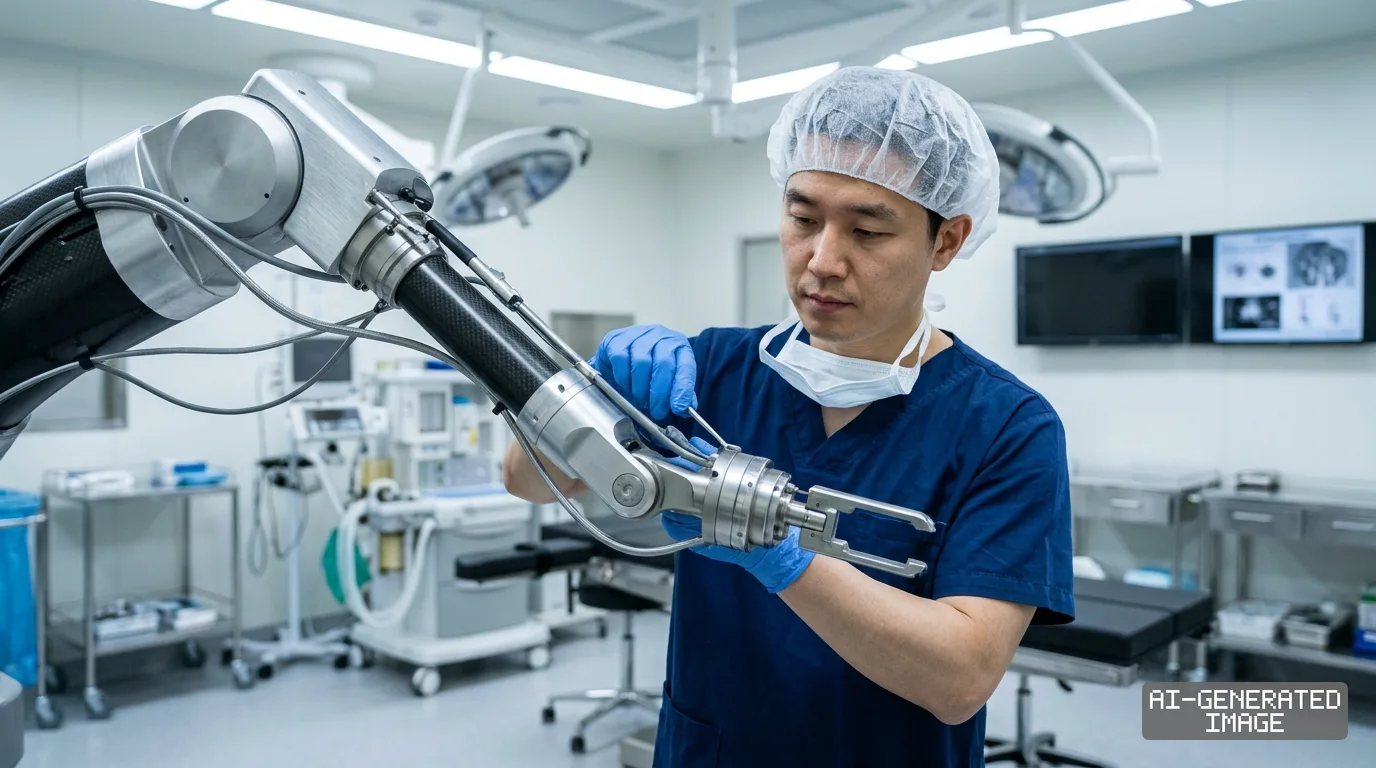
Samsung Electronics affiliates and Hyundai Motor Group expanded deployments into surgical operating rooms and rehabilitation clinics on Nov. 9, 2026, redirecting industrial actuator hardware into higher-margin hospital robotics.
The push targets an $8.4 billion global surgical robotics market, where Intuitive Surgical controls 71% of soft-tissue procedures. A single da Vinci Xi surgical system costs between $2.5 million and $3.0 million, with instruments generating 61% of total vendor revenue.
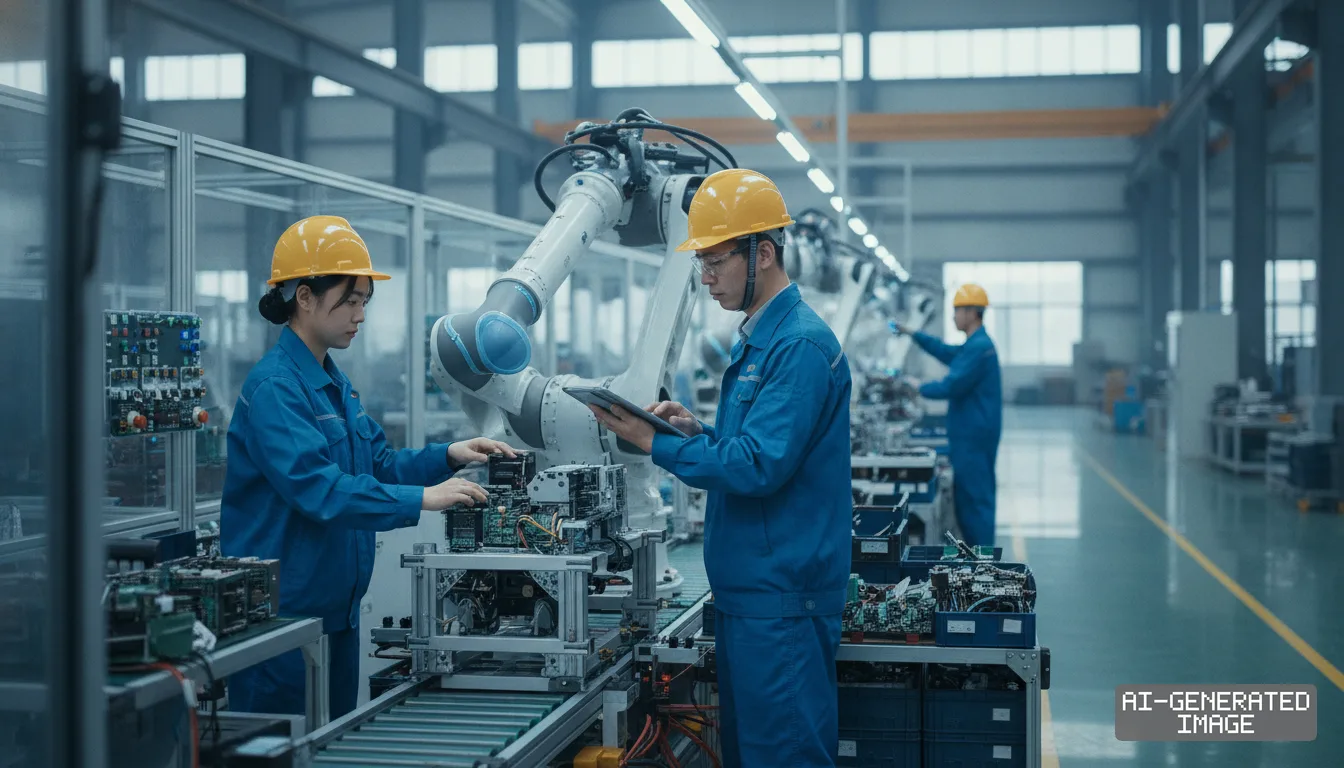
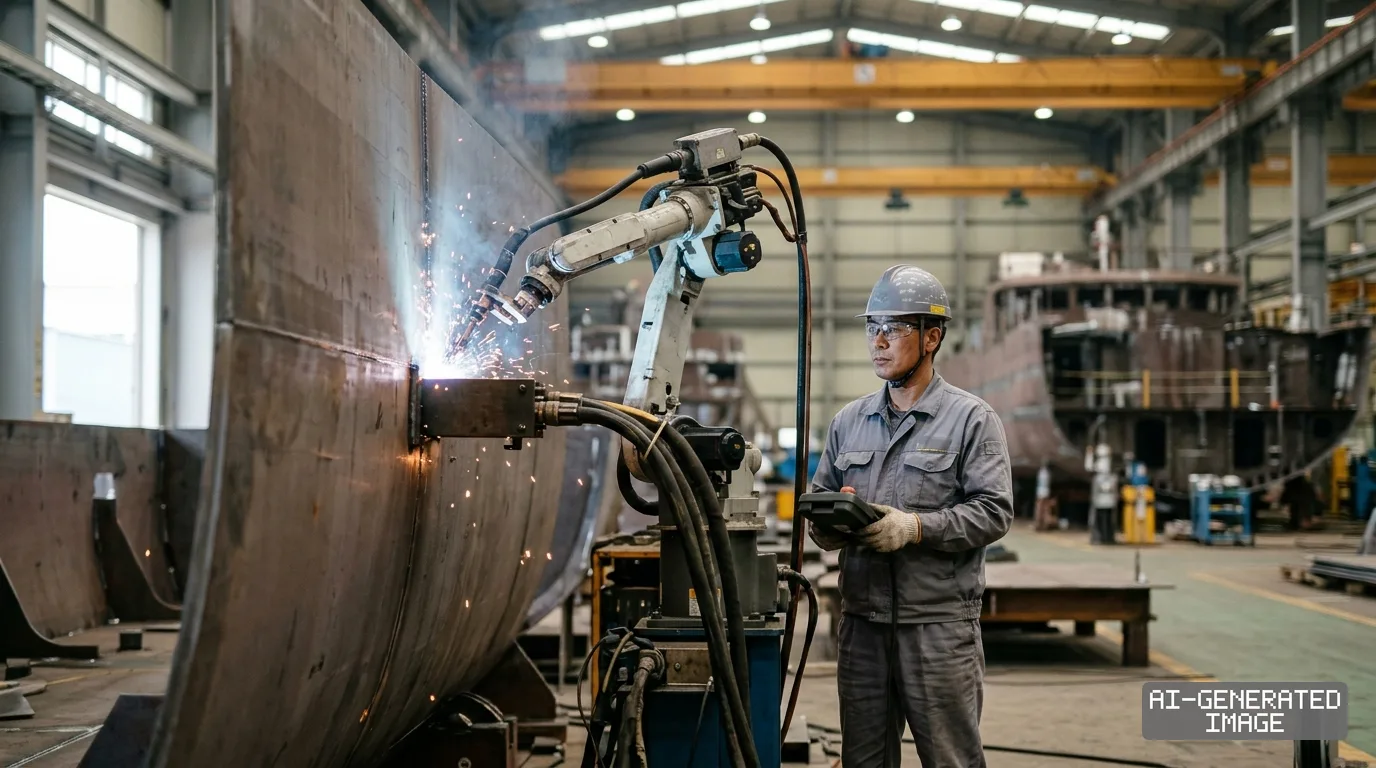
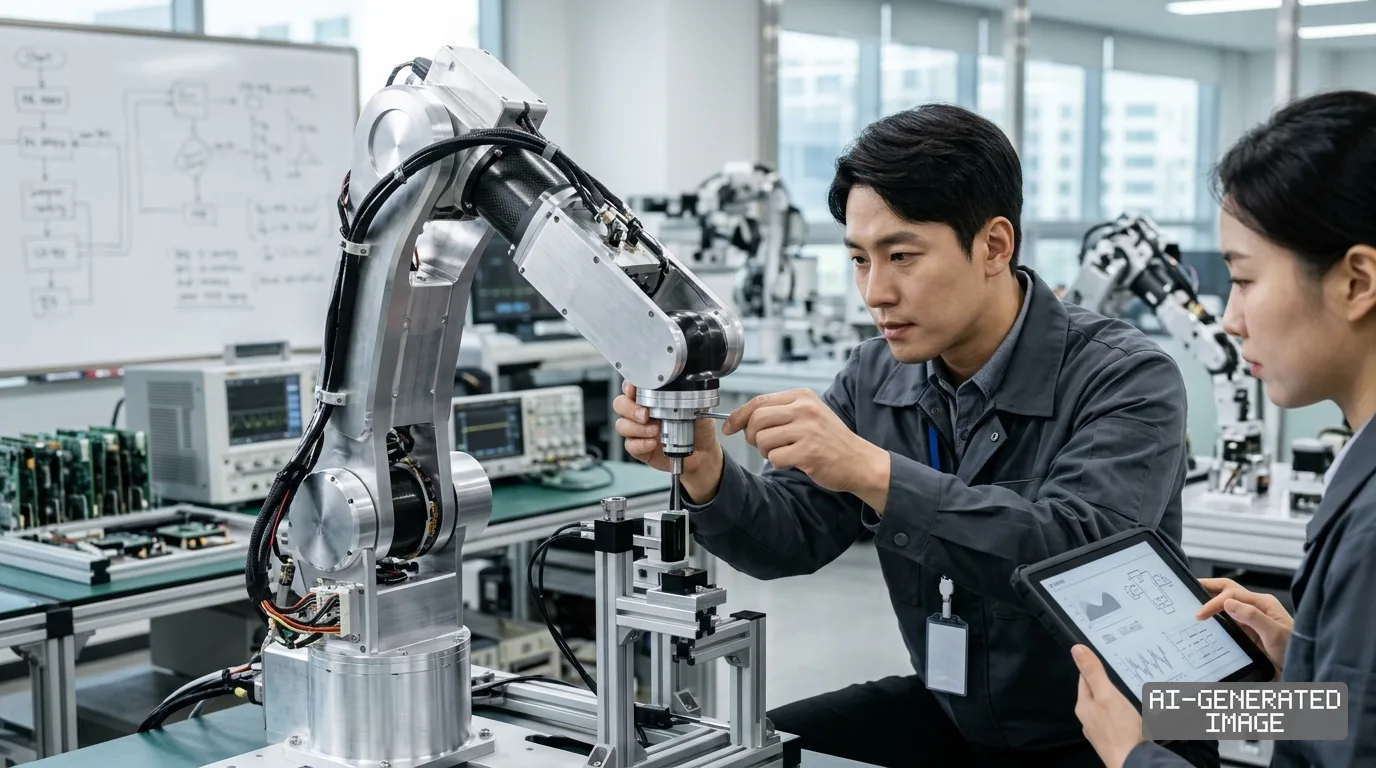
South Korean manufacturers want to capture that recurring revenue by adapting automotive and semiconductor robotics for medical care. Industrial motion controllers, cycloidal drive gears and torque sensors are moving from cleanrooms into operating theatres.
Samsung Electronics holds a 14.83% equity stake and call options to acquire control of Rainbow Robotics, its core automation affiliate. The venture developed the RB-Y1 bimanual mobile manipulator to transition industrial cobots into medical tasks.
The RB-Y1 robot platform features two arms with seven degrees of freedom each and a single leg with six degrees of freedom. The 131-kilogram machine rides on an omnidirectional wheeled base to manoeuvre through crowded hospital suites.
Rainbow Robotics demonstrated the system on Sept. 16, 2026 at Samsung Medical Center under the state-backed ARPA-H project. Fitted with sensor grippers from Aidin Robotics, the machine holds laparoscopic cameras and passes instruments in response to spoken commands from surgeons.
Rainbow Robotics also signed a joint development agreement with medical robotics specialist Irop to commercialise the Iroptic 2 laparoscopic system. The platform steadies endoscopic cameras during spinal and abdominal procedures without requiring a dedicated human assistant.
Automating support tasks lowers operating overhead for hospital networks facing clinical staffing shortages. Laparoscopic procedures require steady camera angles for hours, making mechanical holding arms an immediate efficiency gain for surgical teams.
Hyundai Motor Group is attacking clinical mobility through its Robotics LAB, deploying the X-ble MEX wearable exoskeleton. The 18-kilogram powered frame assists paraplegic patients with walking, sitting, standing and climbing stairs.
The automaker secured Class 2 and Class 3 medical device approvals for the exoskeleton from South Korea's Ministry of Food and Drug Safety. The unit operates on a lightweight lithium-ion pack providing 90 minutes of continuous walking per charge.
Hyundai Motor Group supplied the equipment to Asan Medical Center, the Armed Forces Capital Hospital and the National Fire Hospital. Paraplegic patients completed 14 rehabilitation sessions to regain upright mobility under clinical supervision.
Hyundai Motor Group builds actuators and walking gait software using patents developed for automotive factory exoskeletons. Reusing components across both industrial and medical lines lowers production costs relative to specialist medical device makers.
The conglomerate strategy challenges foreign incumbents that rely on proprietary hardware architectures. Intuitive Surgical placed 546 da Vinci units in the third quarter of 2026, lifting quarterly revenue to $3.05 billion.
Intuitive Surgical saw its United States procedure growth slow to 10% in the third quarter of 2026. That deceleration creates room for modular surgical tools that cost less than complete Western robotic consoles.
Medtronic is expanding sales of its Hugo robotic system across Europe and Asia, pricing placements below da Vinci. Korean conglomerates aim to undercut both Western suppliers by supplying hospitals with modular assistant arms rather than monolithic surgical suites.
Domestic medical specialists welcome the conglomerate supply chain but face heightened competitive pressure. Meerecompany builds the Revo-i surgical platform, while Curexo manufactures robotic joint replacement systems.
Specialist medical device makers struggle to match the component purchasing volume of Samsung Electronics and Hyundai Motor Group. The conglomerates purchase harmonic drive reducers, servomotors and printed circuit boards at steep volume discounts.
The supply chain crossover is shifting business for domestic precision component vendors. Motor manufacturers and harmonic drive suppliers are redesigning standard industrial parts to meet hospital electromagnetic compatibility and sterilization rules.
Medical certifications remain the highest barrier to revenue generation for industrial newcomers. Operating room manipulators must pass strict electrical leakage tests, biocidal wiping requirements and software reliability audits before treating patients.
The companies have not published commercial unit prices for their clinical platforms, and regulatory filings do not settle the timeline for commercial reimbursement under South Korea's National Health Insurance Service.
Clinical trial schedules determine the next market milestone. The ARPA-H consortium led by Samsung Medical Center and Rainbow Robotics targets clinical application of humanoid surgical assistants by 2029.
Impact map
How this development propagates across the region and out to global buyers.
| Event | Korea | China | Japan | Global impact |
|---|---|---|---|---|
| Industrial robot makers enter clinical suites | Samsung and Hyundai convert factory actuators into medical platforms to replace costly foreign hospital machinery | Domestic robotic surgery contenders face Korean hardware competition in export markets | Precision motion component makers gain medical demand to offset automotive production slowdowns | Hospital procurement desks gain lower-cost robotic alternatives to $3 million consoles from Intuitive Surgical |
In this story
- Companies
- Samsung ElectronicsHyundai Motor GroupRainbow Robotics
- Tickers
- 005930.KS005380.KS277810.KS
- Exposed
- Intuitive SurgicalMedtronicMeerecompany
- Impact
- Cost StructurePricing
Related briefings
- Samsung Medical Center tests dual humanoid surgical robots Also on Intuitive Surgical, Rainbow Robotics
- USTR and MOFCOM set $60B tariff cuts on non-sensitive items Also on Medtronic, Pricing, Cost Structure
- LG Energy Solution beats profit views on grid battery orders Also on Hyundai Motor Group, Pricing, Cost Structure
- East Asia accelerates 8-inch silicon carbide capacity race as power chip makers scale output Also on Hyundai Motor Group, Pricing, Cost Structure
Sources
Reporting
Confidence: medium — how we grade this
The documents behind this briefing are linked above. East Asia Brief produces its English text with AI assistance under human editorial review, and does not translate or republish other outlets' articles. See our methodology and AI policy. Spotted an error? Tell us.
The Morning Brief
What changed in Korean, Chinese and Japanese industry overnight — and what it means for your supply chain. One email, weekday mornings, US time. Free.
The Morning Brief is in preparation. Leave your address and we will write to you once — when the first issue is ready. Nothing before that.