Fanuc raises annual sales forecast past ¥1 trillion on factory recovery
The industrial robot builder authorized a ¥50 billion share buyback through April 2027 as full-year revenue is projected to hit ¥1.01 trillion.
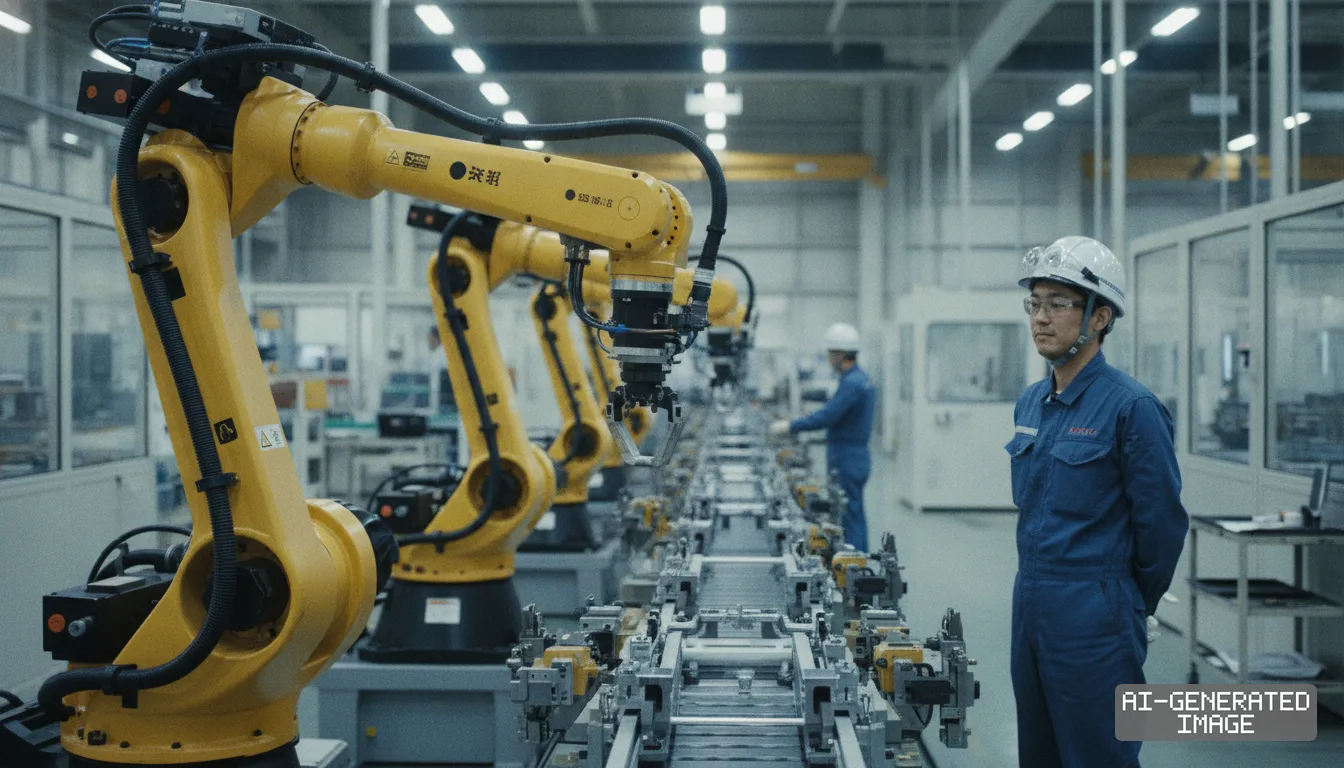
Fanuc Corporation reaffirmed its factory automation recovery trajectory on Nov. 6, 2026, advancing a ¥50 billion ($325 million) share buyback and lifting its annual net sales forecast above ¥1 trillion.
The Tokyo-listed industrial robot builder raised its full-year sales guidance to ¥1.01 trillion from an earlier estimate of ¥948.10 billion. The revision marks the first time annual revenue will cross ¥1 trillion in the company's corporate history.
The board authorized open-market purchases of up to 10 million common shares on the Tokyo Stock Exchange. The ceiling represents 1.08% of outstanding shares excluding treasury stock, with repurchases scheduled to run through April 30, 2027.
Fanuc also expanded its interim dividend to ¥72.54 per share, up 41.3% from ¥51.33 a year earlier. Total interim payout reaches ¥67.09 billion, aligning with the company's formal target of returning 60.0% of consolidated net income.
Operating income for the six months ended Sept. 30 climbed 35.7% to ¥116.66 billion on net sales of ¥473.71 billion. Net income attributable to owners of the parent rose 41.0% to ¥112.58 billion, according to financial results.
Consolidated operating margin widened 3.54 percentage points to reach 24.63% during the first half. Higher factory throughput and favorable currency translation supported operating margins, following two consecutive years of subdued machinery investment across East Asia.
The factory automation division generated 26% of consolidated sales in the second quarter. Strong machine tool demand across China and Japan lifted shipments of computerized numerical control systems, which direct automated cutting tools on industrial production lines.
Chinese manufacturers accelerated equipment procurement for electric vehicles, humanoid robot components and artificial intelligence server hardware. Machine tool builders in Japan and Taiwan also placed larger controller orders to support precision aerospace manufacturing.
The robotics division recorded rising shipments across the Americas and China. Automotive manufacturers in North America resumed delayed assembly line modernizations, while aerospace fabricators and general industrial plants increased installations of heavy-payload articulated robotic arms, Fanuc said.
Robomachine shipments, which include compact machining centers and electric injection molding systems, experienced steady recovery. Subcontractors in South Korea and Taiwan expanded tool orders for consumer electronic enclosures and high-density semiconductor test fixtures.
The operational rebound signals that global factory automation demand has passed its cyclical trough. Machinery builders across East Asia had endured prolonged inventory destocking as rising borrowing costs dampened manufacturing capital expenditure.
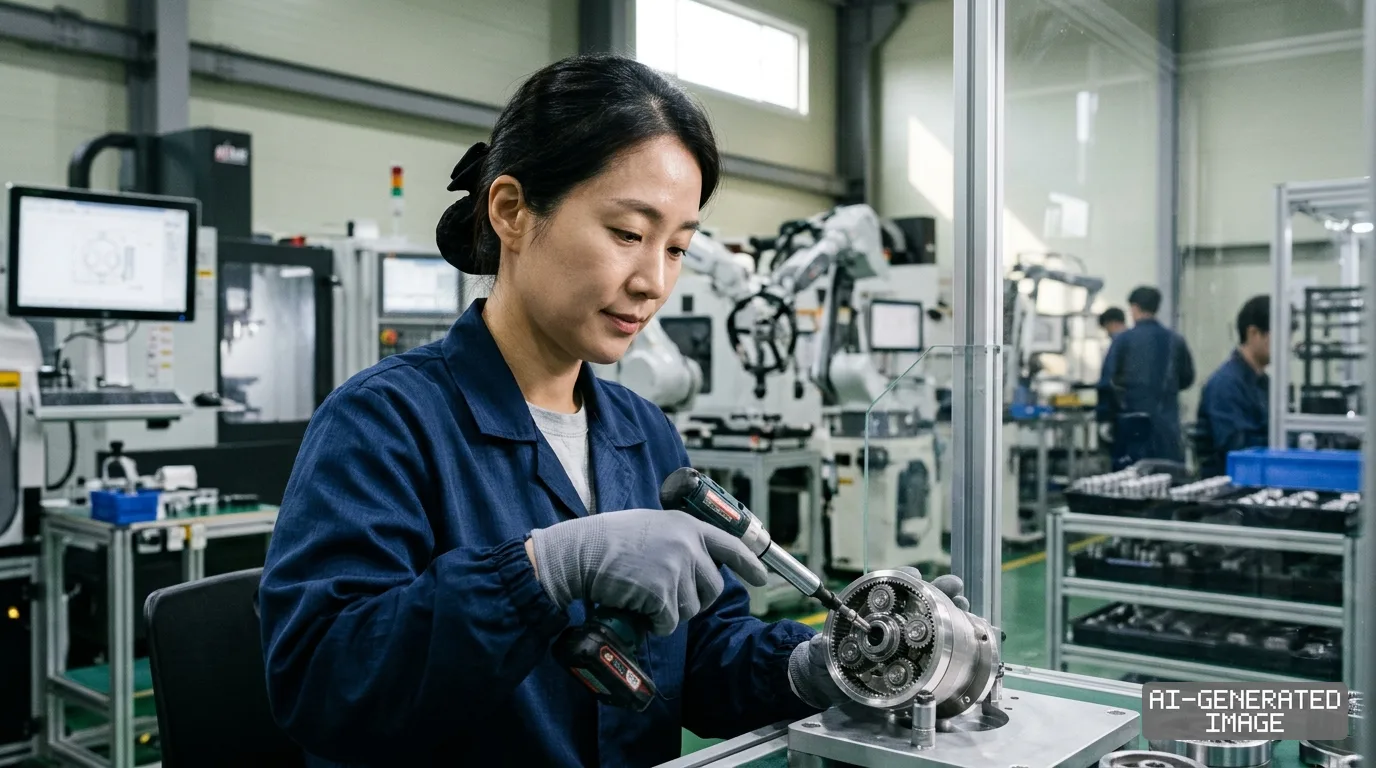
Component suppliers in the robotic motion ecosystem are directly exposed to Fanuc's production volume. Japan's Nabtesco Corporation manufactures precision cycloidal speed reducers for industrial robot joints, with robotic components accounting for approximately 30% of its machinery revenue.
Nabtesco depends on assembly rates at major robot manufacturers to absorb gearbox inventories. An acceleration in six-axis robot arm output at Fanuc stabilizes precision reducer delivery schedules after several quarters of declining factory throughput.
Industrial peer Yaskawa Electric Corporation generates roughly 35% of its group revenue from motion control equipment. Yaskawa absorbed margin pressure earlier this year when industrial servo motor demand stalled across export-oriented manufacturing hubs in East Asia.
Machine tool builder Okuma Corporation relies on external computerized numerical control hardware for about 60% of its specialized cutting machines. Rising controller availability and firming factory floor utilization provide visibility for Japanese machinery builders booking delivery slots through 2027.
Industrial demand in Europe remains the weakest component in Fanuc's regional delivery portfolio. European manufacturing activity has staged only an incremental recovery, weighed down by elevated energy tariffs and slowing automotive capital spending in Germany.
Fanuc framed its upward earnings forecast around assumed foreign exchange rates of 150 yen per US dollar and 175 yen per euro. The weaker yen boosted repatriated operating profits, though management cited underlying order growth across non-automotive sectors.
Internal cash reserves funded the expanded shareholder distributions without recourse to commercial debt. Fanuc held 57,358,897 treasury shares on Sept. 30 and disbursed ¥50.0 billion on share buybacks during the first half, cash-flow statements show.
Capital efficiency measures reflect broader governance pressure from the Tokyo Stock Exchange. Japanese authorities have urged listed corporations to optimize capital structures, trim non-productive cash holdings and commit to predictable cash return frameworks for equity investors.
Fanuc submitted its latest monthly share repurchase status filing to the Tokyo Stock Exchange on Nov. 5, 2026. Interim dividend disbursements of ¥72.54 per share will commence on Dec. 1, 2026, to shareholders registered as of Sept. 30.
The statutory semi-annual financial report is scheduled for formal submission to Japanese regulators on Nov. 11, 2026. The ¥50 billion share buyback authorization remains active through April 30, 2027, unless the repurchased total reaches 10 million shares earlier.
The company has not published any separate board resolutions dated Nov. 6, 2026, and filings do not specify the exact share volume repurchased during market transactions on that single day.
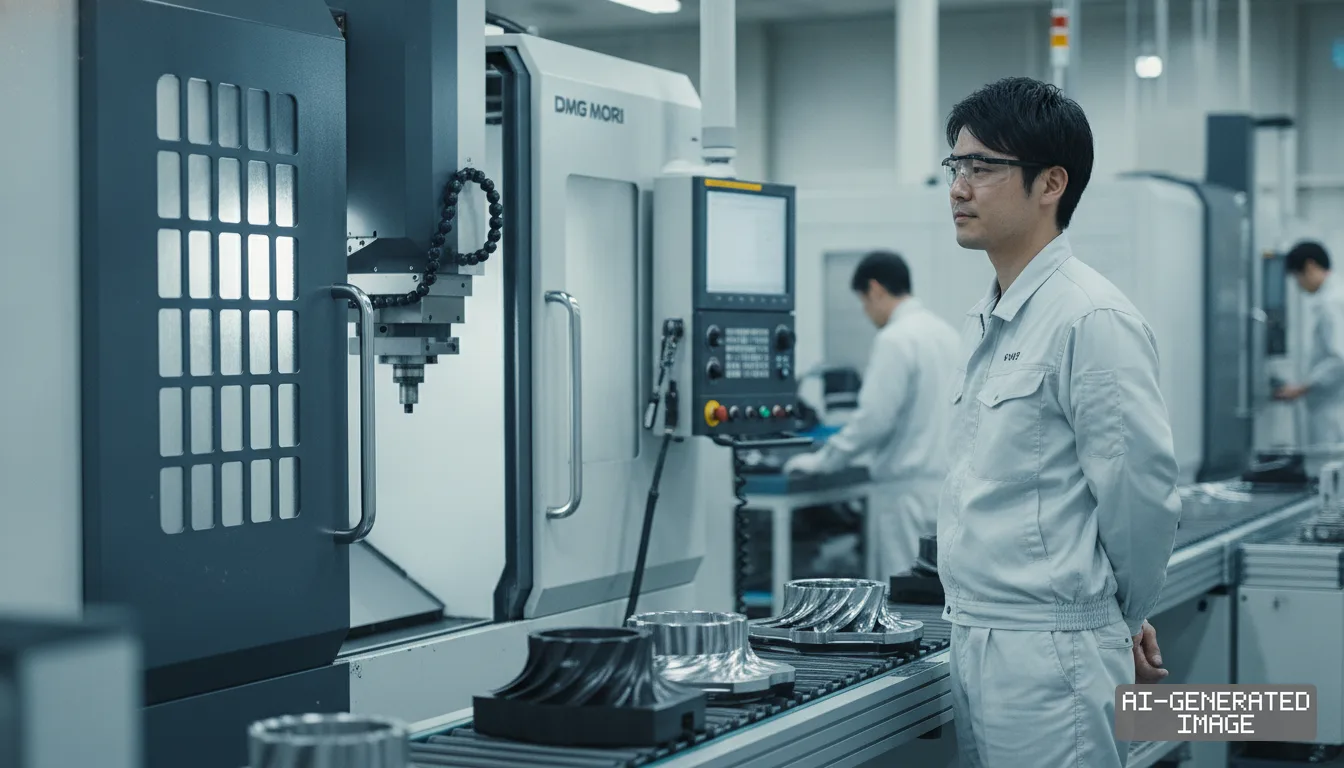
Fanuc concentrates manufacturing operations at its corporate headquarters complex in Yamanashi Prefecture, Japan. The facility continues to assemble computer numerical controls, robomachines and industrial robots for export to automated assembly plants worldwide.
Impact map
How this development propagates across the region and out to global buyers.
| Event | Korea | China | Japan | Global impact |
|---|---|---|---|---|
| Fanuc guidance raise and capital return | Precision machining tool orders rebound for semiconductor test fixtures | Machine tool builders boost CNC procurement for AI hardware and EV lines | Nabtesco and Yaskawa see factory automation orders stabilize after cyclical bottom | Industrial capex rebounds in North America while European machinery demand lags |
In this story
- Companies
- Fanuc Corporation
- Tickers
- 6954.T
- Exposed
- Yaskawa ElectricNabtescoOkuma Corporation
- Impact
- CapexOrder BookCost Structure
Related briefings
- Okuma Books Record Machine Orders as Automation Demand Surges Also on Okuma Corporation, Cost Structure, Order Book
- Yaskawa Electric raises sales outlook to 600 billion yen Also on Nabtesco, Yaskawa Electric, Cost Structure
- Estun lifts net profit as Chinese robot gross margins widen Also on Nabtesco, Yaskawa Electric, Cost Structure
- Harmonic Drive expands Japanese reducer capacity for humanoid robotics demand Also on Nabtesco, Yaskawa Electric, Order Book
Sources
Primary documents
Reporting
Confidence: high — how we grade this
The documents behind this briefing are linked above. East Asia Brief produces its English text with AI assistance under human editorial review, and does not translate or republish other outlets' articles. See our methodology and AI policy. Spotted an error? Tell us.
The Morning Brief
What changed in Korean, Chinese and Japanese industry overnight — and what it means for your supply chain. One email, weekday mornings, US time. Free.
The Morning Brief is in preparation. Leave your address and we will write to you once — when the first issue is ready. Nothing before that.