Doosan Robotics targets 2028 humanoid trials on factory lines
The South Korean cobot builder aims to deploy worker-mimicking humanoid prototypes in 2028, combining proprietary torque sensors with Nvidia software to address assembly plant labor shortages.
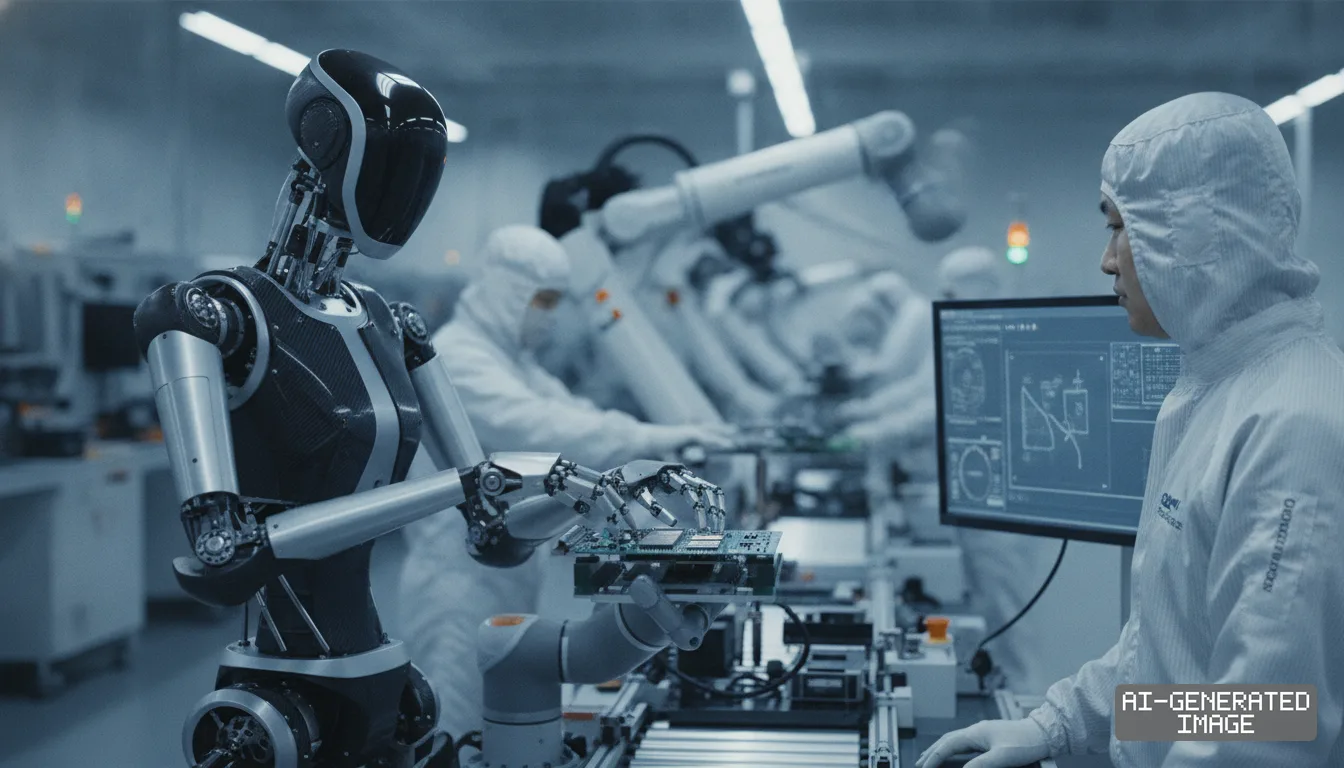
Doosan Robotics outlined plans on Sept. 8 to start factory-floor proof-of-concept testing for an industrial humanoid robot by 2028, targeting skilled assembly tasks on precision manufacturing lines.
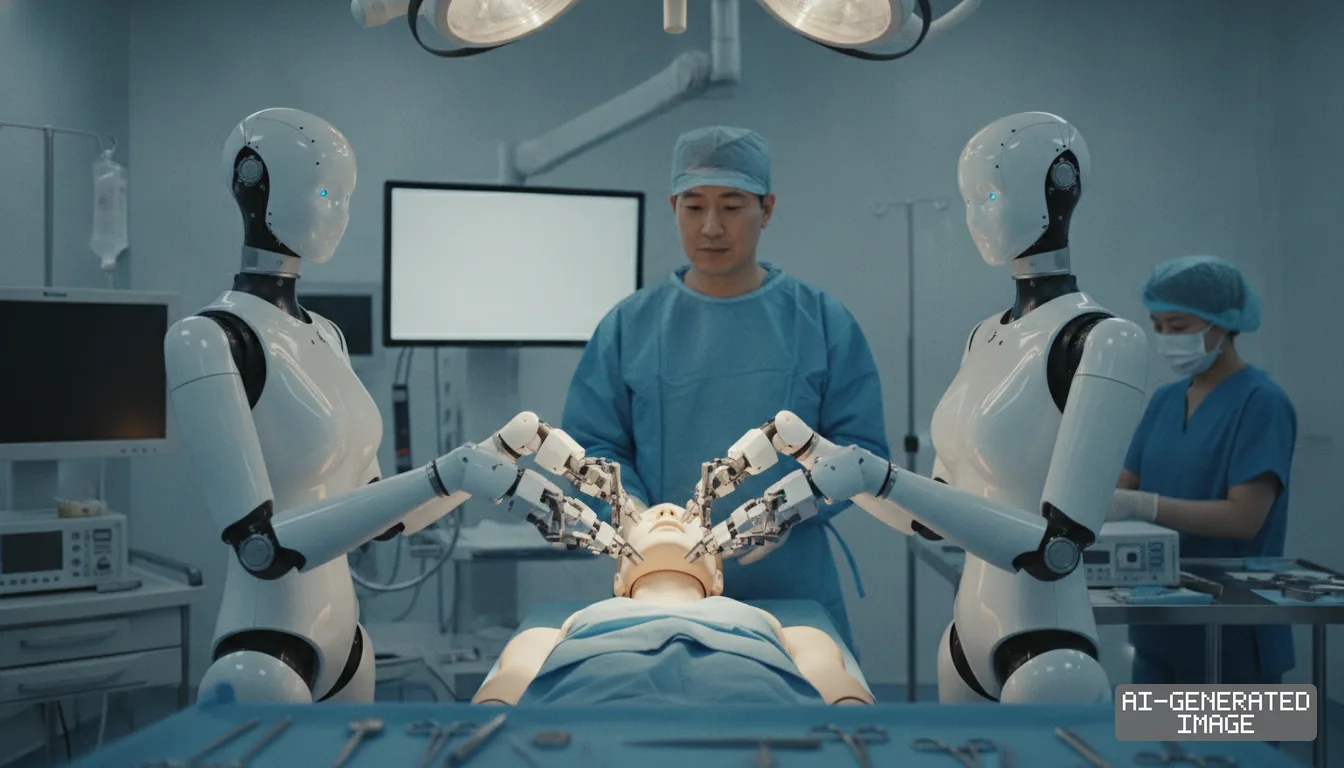
The company, South Korea's largest collaborative robot manufacturer by volume, plans to bypass consumer humanoid form factors to build specialized bipedal or wheeled platforms that replicate complex manual labor in industrial plants.
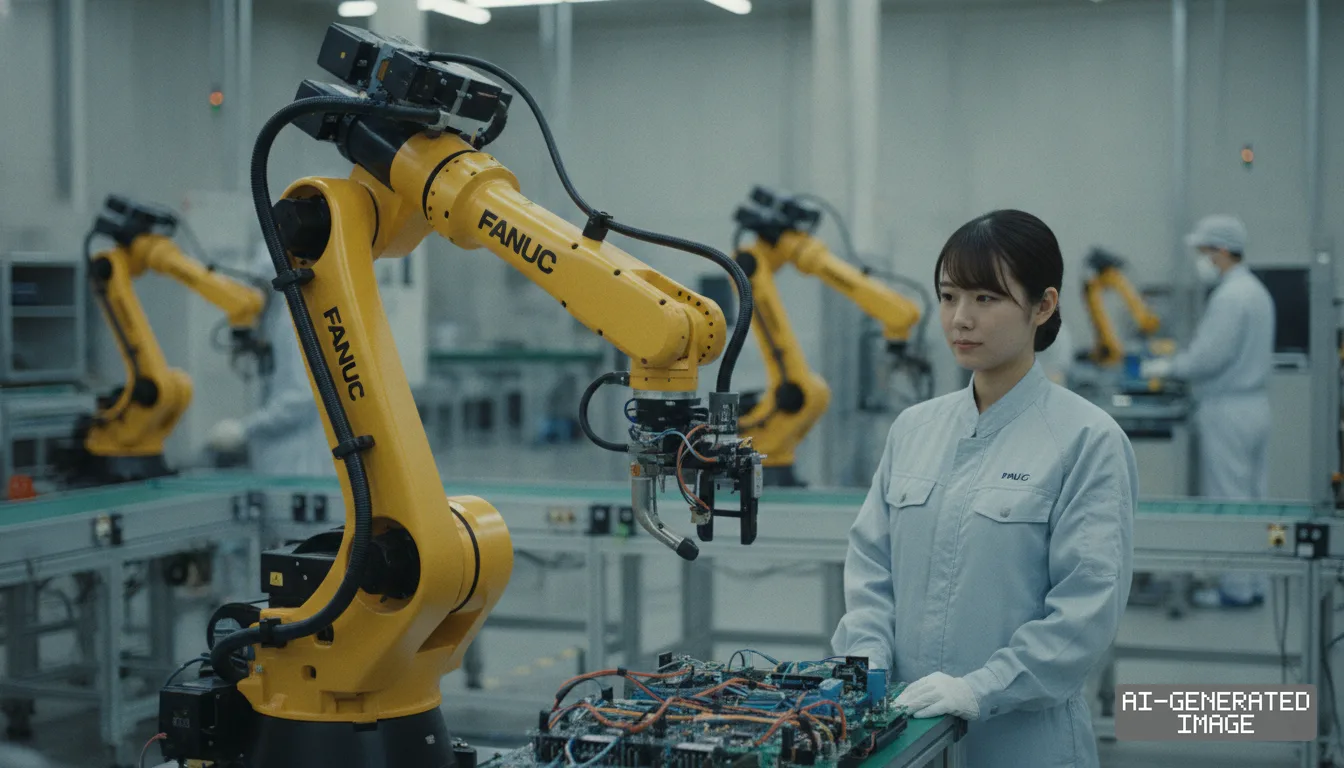
Development is concentrated at the company's 6,600-square-meter Innovation Center in Seongnam, where 80 researchers—accounting for 40% of its total workforce—handle joint drive modules, torque sensors and software.
Chief Executive Kim Min-pyo disclosed the deployment schedule during a keynote address at the 2026 Global Mechanical Technology Forum in Seoul, hosted by the Korea Institute of Machinery and Materials.
The transition relies on a three-stage product roadmap that advances from fixed six-axis collaborative arms to intelligent automation modules in 2027, culminating in task-specialized humanoid trials in 2028, Kim said.
The strategic shift addresses tightening labor shortages across East Asian industrial corridors, where heavy manufacturing facilities struggle to replace experienced welders, machine operators and surface finishing technicians.
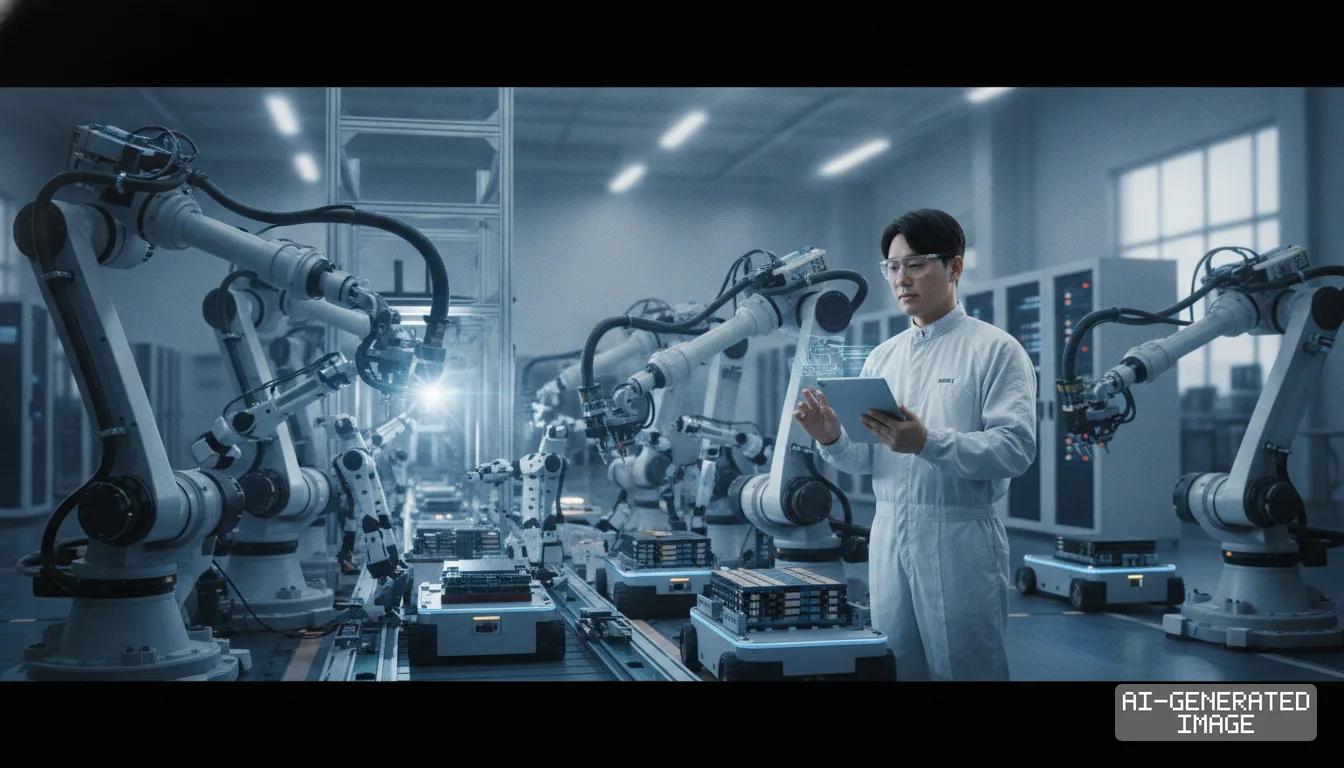
Traditional industrial automation requires engineers to program exact tool coordinates and motion boundaries for every separate workpiece variation, limiting deployment to high-volume, standardized production batches.
Doosan Robotics intends to alter that operational structure by deploying task-oriented autonomous agents capable of adjusting tool pressure and arm angles without manual line-side reprogramming.
Physical artificial intelligence differs fundamentally from digital large language models because software logic alone cannot manage friction, workpiece elasticity and tool slip in real time, Kim said.
Industrial robots must interpret sensory feedback and mechanical resistance instantly, requiring physical calibration that software algorithms cannot replicate without direct hardware data, the chief executive said.
The manufacturer is using operating telemetry from its collaborative arms to build foundational dataset libraries covering joint torque curves, vibration spikes and structural fatigue under continuous factory operation.
Because the company designs its own motor drive controllers and wrist sensors, researchers can extract internal communication logs that third-party systems seal off behind proprietary firmware barriers, Kim said.
The hardware architecture pairs high-torque joint actuators with six-axis force-torque sensors embedded across each articulation point, allowing the robot to feel resistance during assembly operations.
To supply the computational infrastructure for on-robot decision making, Doosan Robotics is deepening its technical integration with Nvidia's physical artificial intelligence computing stack.
The collaboration connects Doosan's proprietary Agentic Robot Operating System with Nvidia Isaac Sim virtual training environments, Cosmos foundation models and Jetson Thor onboard compute processors.
Nvidia senior director Madison Huang visited the Seongnam center on April 29 to review control protocols and safety guardrails required for multi-joint industrial execution platforms.
Virtual simulation allows robotic models to rehearse complex material handling millions of times in digital twin factories before engineers transfer motion weights onto physical prototype arms.
South Korean manufacturing supply chains carry heavy exposure to shop-floor demographic decline, as the median age of skilled machinists across domestic automotive and shipbuilding vendors exceeds 52 years.
Automotive parts supplier Kwangjin Group and European logistics hubs have already adopted Doosan's automated laser welding and bin-picking modules to stabilize throughput across labor-constrained shift rotations.
Applying humanoid form factors to these manufacturing cells allows facilities to automate workstations designed around human body proportions without rebuilding physical conveyor infrastructure.
Dual-arm manipulators mounted on mobile chassis can maneuver through narrow factory aisles, pick loose components from standard storage totes and operate standard pneumatic hand tools.
Precision component sourcing remains an operational bottleneck for advanced robotics, requiring localized supply pipelines for strain-wave gear reducers, cross-roller bearings and rare-earth magnetic motors.
South Korean robot parts suppliers have accelerated domestic production of cycloidal drives and optical encoders to reduce dependence on Japanese component manufacturers like Harmonic Drive Systems.
Doosan Robotics did not issue a regulatory filing on Sept. 8, and the company has not published capital expenditure figures or bill-of-materials cost projections for the 2028 platform.
The company plans to release its Agentic Robot Operating System commercially in 2027 and demonstrate prototype field results jointly with Nvidia ahead of the 2028 factory pilot trials.
Impact map
How this development propagates across the region and out to global buyers.
| Event | Korea | China | Japan | Global impact |
|---|---|---|---|---|
| Industrial humanoid 2028 PoC roadmap | Doosan Robotics reallocates 40% of R&D staff to humanoid joint and OS development | Domestic cobot builders face higher compute barriers in physical AI software | Harmonic Drive Systems sees specialized reducer demand expand into humanoid joints | Factory automation BOM shifts from custom fixed tooling toward autonomous multi-arm units |
In this story
- Companies
- Doosan Robotics
- Tickers
- 454910.KS
- Exposed
- NvidiaKwangjin GroupHarmonic Drive Systems
- Policy
- Economic Security
- Impact
- CapexSupply ChainOrder Book
Track every Economic Security development →
Related briefings
- Korean electronics component suppliers deploy AI dual-arm robots as factory labor pool shrinks Also on Doosan Robotics, Harmonic Drive Systems
- KFTC opens supply contract probe into tier-one robotics and battery parts Also on Doosan Robotics, Harmonic Drive Systems
- LG taps Samsung Foundry for appliance AI chips under Korean state project Also on Doosan Robotics, Order Book
- Harmonic Drive expands Japanese reducer capacity for humanoid robotics demand Also on Harmonic Drive Systems, Order Book
Sources
Primary documents
Reporting
Confidence: high — how we grade this
The documents behind this briefing are linked above. East Asia Brief produces its English text with AI assistance under human editorial review, and does not translate or republish other outlets' articles. See our methodology and AI policy. Spotted an error? Tell us.
The Morning Brief
What changed in Korean, Chinese and Japanese industry overnight — and what it means for your supply chain. One email, weekday mornings, US time. Free.
The first issue goes out shortly. Sign up now and you will not miss it.