Malaysia upholds raw rare earth export ban despite US pact
Kuala Lumpur reaffirmed its prohibition on unprocessed mineral shipments to force domestic refining, capping trial exports to a 700-ton pilot batch.
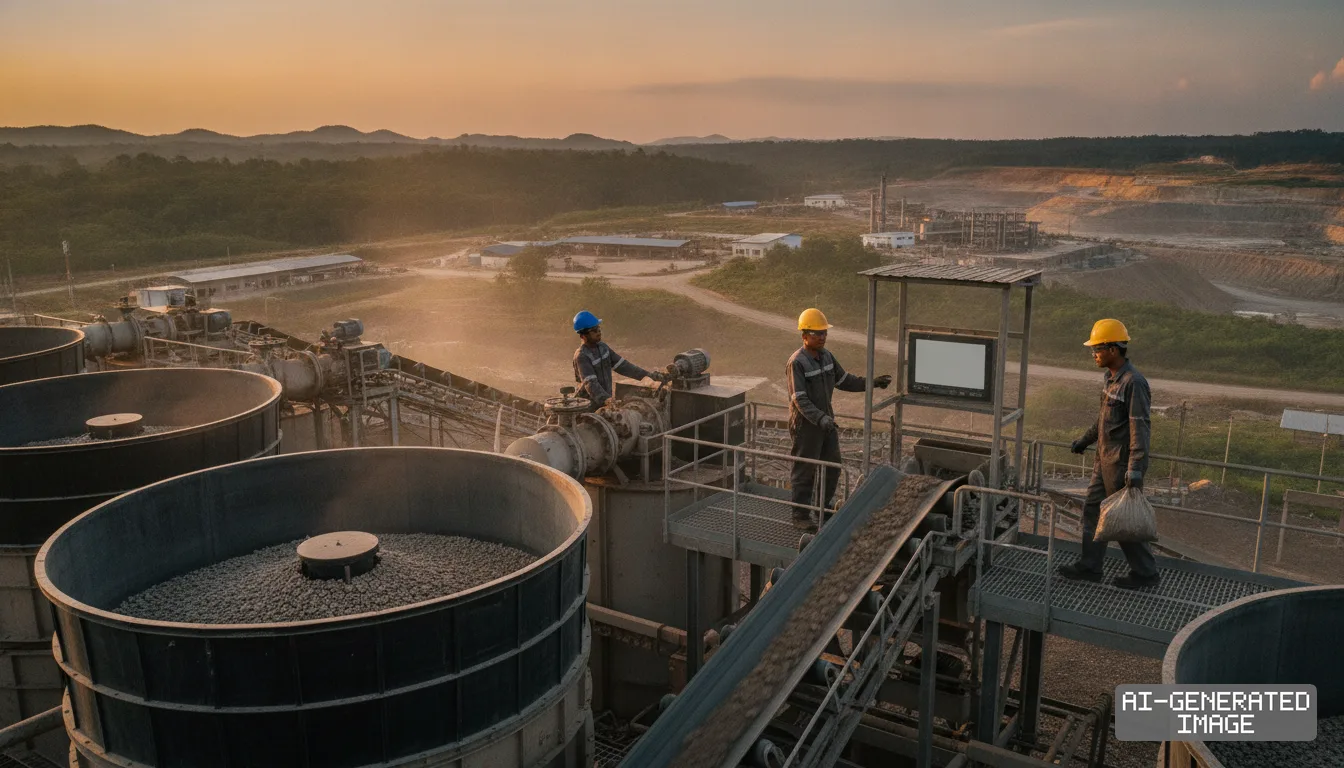
The Malaysian government affirmed on Oct. 30, 2026, that its nationwide ban on raw rare earth exports remains in place following bilateral trade consultations with the United States.
The policy ring-fences Malaysia's estimated 16.1 million metric tons of rare earth deposits. That geological reserve represents roughly 14% of known global resources, according to U.S. Geological Survey data.
Trade officials maintain that unrefined ionic clays must stay onshore to anchor a domestic refining sector. Kuala Lumpur seeks to capture high-margin processing rather than operating as an ore quarry for foreign consumers.
The reaffirmed export prohibition follows the one-year milestone of a bilateral critical minerals memorandum of understanding. Prime Minister Anwar Ibrahim and American officials signed that framework on Oct. 26, 2025, in Kuala Lumpur.
The bilateral agreement barred Malaysia from imposing export bans or quota limits on processed rare earth products and finished magnets. However, the legal text preserved Malaysia's sovereign right to prohibit raw mineral ore shipments.
Investment, Trade and Industry Minister Tengku Zafrul Aziz told the Dewan Rakyat that Malaysia will not dig up and ship out cheap raw materials. He stated that mineral trade must adhere strictly to domestic laws.
The minister emphasized that strategic resources will not be extracted under the dictates of foreign buyers. Malaysia intends to develop local high-technology industries rather than acting as a low-margin exporter of unseparated clays.
Australia's Lynas Rare Earths operates the largest commercial rare earth separation plant outside China at Gebeng in Pahang state. Lynas is deploying A$180 million ($118 million) to build a 5,000-metric-ton heavy rare earth facility.
The Gebeng facility currently refines cracked mineral concentrate imported from Mt Weld in Western Australia. Lynas does not process Malaysian clay feedstock, leaving domestic reserves completely covered by the federal extraction and export moratorium.
Unlike Australian hard-rock deposits, Malaysia's deposits consist of non-radioactive ionic adsorption clays located in states like Perak, Pahang and Kedah. These clays offer simpler chemical extraction and carry minimal environmental remediation liabilities.
Ionic clay reserves contain heavy rare earth elements including dysprosium and terbium. Both elements are critical inputs for heat-resistant permanent magnets used in defense guidance electronics, wind turbines and electric vehicle traction motors.
China currently controls more than 90% of global heavy rare earth separation capacity. Western automotive manufacturers and military contractors have sought Southeast Asian supply agreements to build alternative refining channels outside Chinese jurisdiction.
Malaysia introduced its initial moratorium on unprocessed rare earth exports on Jan. 1, 2024. The federal cabinet extended the measure through 2027 to shelter emerging domestic separation plants from raw feedstock shortages.
The Natural Resources and Environmental Sustainability Ministry confirmed that policy in an Oct. 8 parliamentary written reply. The ministry stated that raw mineral exports remain prohibited except under strict research and development waivers.
The government issued conditional export guidelines earlier in October to govern those narrow exemptions. Foreign applicants must demonstrate technical qualification and provide binding commitments to establish domestic separation facilities, the ministry said.
The Department of Mineral and Geoscience Malaysia approved the first conditional export permit under the revised framework on Oct. 22. Authorities granted the single permit for technical testing and chemical characterization in overseas laboratories.
DTEC Mineral and Metal Technology, a joint venture with 51% American ownership, secured that initial export permit on Oct. 27. The company received clearance to export up to 700 metric tons of rare earth carbonate from Perak.
DTEC Chief Executive Milan Perlly said an initial trial batch of 30 metric tons will ship to American research facilities. The shipment will allow metallurgists to test commercial separation processes on Malaysian ionic clay feedstocks.
Perlly said the company plans to build a commercial separation plant in Malaysia within three years. He noted preliminary support from the Export-Import Bank of the United States for up to $650 million in project debt financing.
Malaysia previously granted selective export permissions to a state-level pilot project in Kenering, Perak, sending carbonate to Chinese refiners. That pilot drew political pushback from parliamentarians demanding equal enforcement of downstream processing rules.
Malaysia's mineral strategy mirrors resource nationalism policies across Southeast Asia. The framework follows Indonesia's 2020 raw nickel export ban, which forced global battery and stainless steel producers to invest billions in domestic smelting complexes.
For Western procurement managers, the Malaysian policy prevents access to merchant ore. Securing Malaysian heavy rare earths requires direct capital deployment into local chemical refineries, compounding technical qualification hurdles and project execution timelines.
The Natural Resources and Environmental Sustainability Ministry has not published technical qualification criteria for downstream licenses or confirmed whether additional temporary export permits will be granted before year-end.
DTEC Mineral and Metal Technology scheduled its initial 30-ton test cargo for dispatch in early November 2026, while the ministry reviews industrial performance metrics under the conditional framework ahead of a Dec. 31 administrative audit.
Impact map
How this development propagates across the region and out to global buyers.
| Event | Korea | China | Japan | Global impact |
|---|---|---|---|---|
| Malaysia raw rare earth export ban | no direct domestic ionic clay supply, battery and magnet makers rely on Lynas or Chinese refiners | preserves domestic dominance in heavy rare earth separation as Malaysian ore cannot bypass local processing | JOGMEC-backed Lynas capacity in Gebeng remains primary non-China source for dysprosium and terbium | US and European magnet makers forced to fund Malaysian downstream refineries instead of importing raw feedstock |
| Malaysia raw rare earth export ban | no direct domestic ionic clay supply, battery and magnet makers rely on Lynas or Chinese refiners | preserves domestic dominance in heavy rare earth separation as Malaysian ore cannot bypass local processing | JOGMEC-backed Lynas capacity in Gebeng remains primary non-China source for dysprosium and terbium | US and European magnet makers forced to fund Malaysian downstream refineries instead of importing raw feedstock |
| Malaysia raw rare earth export ban | no direct domestic ionic clay supply, battery and magnet makers rely on Lynas or Chinese refiners | preserves domestic dominance in heavy rare earth separation as Malaysian ore cannot bypass local processing | JOGMEC-backed Lynas capacity in Gebeng remains primary non-China source for dysprosium and terbium | US and European magnet makers forced to fund Malaysian downstream refineries instead of importing raw feedstock |
In this story
- Companies
- DTEC Mineral and Metal TechnologyLynas Rare Earths
- Tickers
- LYC.AX
- Policy
- Export Controls
- Impact
- Supply ChainCapexCompliance
Track every Export Controls development →
Related briefings
- DTEC plans $600m Malaysia rare earth refinery for US supply Also on DTEC Mineral and Metal Technology, Lynas Rare Earths, Export Controls
- Malaysia curbs raw rare earth exports to force local refining in 2026 Also on DTEC Mineral & Metal Technology, Lynas Rare Earths, Export Controls
- Malaysia links rare earth export permits to technology deals Also on Lynas Rare Earths, Export Controls, Compliance
- LS Eco Energy builds Vietnam samarium hub ahead of defense ban Also on Lynas Rare Earths, Export Controls, Compliance
Sources
Reporting
Confidence: medium — how we grade this
The documents behind this briefing are linked above. East Asia Brief produces its English text with AI assistance under human editorial review, and does not translate or republish other outlets' articles. See our methodology and AI policy. Spotted an error? Tell us.
The Morning Brief
What changed in Korean, Chinese and Japanese industry overnight — and what it means for your supply chain. One email, weekday mornings, US time. Free.
The Morning Brief is in preparation. Leave your address and we will write to you once — when the first issue is ready. Nothing before that.