DTEC plans $600m Malaysia rare earth refinery for US supply
The startup targets 10,000 metric tons of annual ionic clay capacity within three years as Kuala Lumpur eases export controls on raw carbonates to build domestic processing.
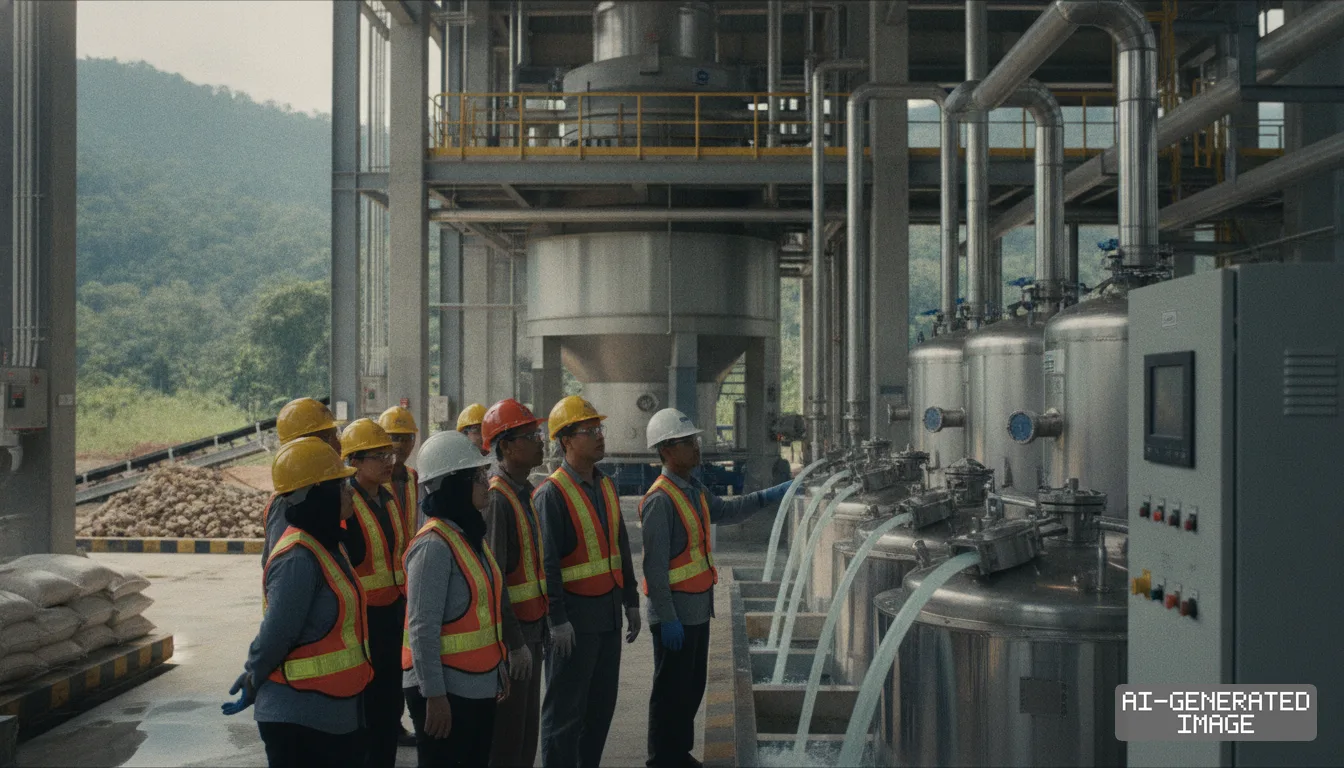
DTEC Mineral and Metal Technology said Oct. 30, 2026, it plans to invest $600 million to build a rare-earth refinery network in Malaysia over the next three years.
The venture aims to establish two chemical separation plants with a combined processing capacity of 10,000 metric tons each year. Milan Perlly, chief executive officer of DTEC, outlined the project following preliminary export clearances.
The initial plant will provide 5,000 metric tons of capacity on Malaysia's east coast. A second facility will add another 5,000 metric tons on the west coast to complete the commercial processing corridor.
The planned 10,000-ton capacity represents the first integrated refining project dedicated to processing Southeast Asian ionic adsorption clay outside China. Western magnet suppliers currently depend almost entirely on Chinese refiners for these elements.
Malaysia granted DTEC a conditional export permit on Oct. 27 to ship up to 700 metric tons of rare-earth carbonate from Perak state to the United States. The material will go toward separation research and commercial development.
An initial parcel of 30 metric tons will depart Penang port on Oct. 31, bound for the port of Long Beach, California. The shipment marks the first legal export of Malaysian rare-earth carbonate to an American destination.
The cargo will test industrial separation methods developed by American research laboratories. DTEC seeks to validate modern solvent extraction circuits designed to isolate dysprosium and terbium with minimal chemical waste.
Malaysia's Ministry of Natural Resources and Environmental Sustainability confirmed the policy framework in a parliamentary statement earlier in October. The ministry permits limited raw exports for research if applicants commit to building domestic processing.
The regulatory shift amends a blanket moratorium enacted in January 2024 that prohibited raw mineral outflows. Malaysian authorities enacted the initial export curbs to retain mineral value and force refiners to invest domestically.
Federal regulators told DTEC it could only qualify for export allocations after purchasing legally mined carbonates upfront. The company paid local miners in full before the ministry reviewed its export application.
DTEC operates as a private joint venture with 51% held by American founders and 49% by a Malaysian partner. Perlly said American partners directed the capital strategy to establish an allied processing channel outside East Asian state controls.
Perlly said DTEC secured an expression of support from the Export-Import Bank of the United States for up to $650 million in potential debt financing. The federal export credit agency assists American companies procuring strategic industrial supplies.
The Export-Import Bank of the United States has not published an official loan authorization or confirmed the credit letter. The American Embassy in Kuala Lumpur has also made no formal announcement regarding specific project guarantees.
The Ministry of Natural Resources and Environmental Sustainability confirmed the broad permit rules in parliament but has not published a formal decree naming DTEC. Government records disclose the conditional policy framework rather than individual company contracts.
Malaysia's inland reserves consist primarily of ion-adsorption clay deposits rather than hard-rock formations. These clays hold heavy rare earths bound to surface soil, which makes leaching less energy-intensive than crushing hard rock.
Heavy elements such as dysprosium and terbium give permanent magnets heat resistance inside electric vehicle drive motors and defense guidance systems. China currently processes more than 99% of global heavy rare earths.
Australia's Lynas Rare Earths operates a commercial cracker and leaching plant in Gebeng, Pahang, producing light rare earths. That facility processes imported concentrates from its Mount Weld mine in Australia and does not treat Malaysian clay carbonates.
Domestic miners in Perak state have historically sold all carbonate output to Chinese state-backed refiners. DTEC plans to redirect feedstocks from Perak, Pahang and neighboring regional deposits directly into its two domestic plants.
American and European automakers face tightening critical mineral quotas under clean procurement laws in their home markets. Automotive procurement teams have sought direct agreements with non-Chinese refiners to secure traceable magnet supply lines.
Malaysia's federal structure divides resource management between state governments and federal trade ministries. State authorities retain constitutional ownership over land and mining concessions, while federal agencies control customs gates and export licensing.
The initial 30-ton test batch comes from legally licensed surface extraction pits in Perak state. Mining operators in Perak produce rare-earth carbonates by running ammonium sulfate leaching solutions through shallow clay basins.
Building out the planned 10,000-ton capacity requires DTEC to build effluent management systems to handle chemical tailings. Environmental opposition to industrial residue has previously stalled chemical processing projects across peninsular Malaysia.
DTEC targets completion of its first 5,000-ton eastern plant by late 2028, with the full 10,000-ton footprint operational within three years. The project requires final environmental impact assessments and site zoning permits from state authorities before construction starts.
The Oct. 31 vessel loading at Penang port represents the next physical milestone for the supply agreement. Customs clearance documents will verify the weight and chemical composition of the cargo as it heads across the Pacific.
Impact map
How this development propagates across the region and out to global buyers.
| Event | Korea | China | Japan | Global impact |
|---|---|---|---|---|
| Malaysia rare earth refinery push | Posco International and battery firms gain secondary access to non-China dysprosium feedstocks | State refiners face regional diversion of Malaysian ionic clay concentrates | Magnet makers Shin-Etsu and Proterial gain traceable non-Chinese heavy rare earth channels | EV automakers gain initial pathway to break reliance on Chinese heavy rare earth separation |
In this story
- Companies
- DTEC Mineral and Metal Technology
- Exposed
- Lynas Rare Earths
- Policy
- Export ControlsLocal Content Rules
- Impact
- Supply ChainCapexCompliance
Track every Export Controls development → Track every Local Content Rules development →
Related briefings
- Malaysia curbs raw rare earth exports to force local refining in 2026 Also on DTEC Mineral & Metal Technology, Lynas Rare Earths, Export Controls
- Malaysia links rare earth export permits to technology deals Also on Lynas Rare Earths, Export Controls, Compliance
- LS Eco Energy builds Vietnam samarium hub ahead of defense ban Also on Lynas Rare Earths, Export Controls, Compliance
- LS Eco Energy builds Vietnam samarium line as US rules loom Also on Lynas Rare Earths, Export Controls, Compliance
Sources
Reporting
Confidence: medium — how we grade this
The documents behind this briefing are linked above. East Asia Brief produces its English text with AI assistance under human editorial review, and does not translate or republish other outlets' articles. See our methodology and AI policy. Spotted an error? Tell us.
The Morning Brief
What changed in Korean, Chinese and Japanese industry overnight — and what it means for your supply chain. One email, weekday mornings, US time. Free.
The Morning Brief is in preparation. Leave your address and we will write to you once — when the first issue is ready. Nothing before that.