China threatens rare earth export curbs against chip fabricators
Controlling 91% of global refining capacity, Beijing signals trade retaliation as spot dysprosium oxide prices reach $4,100 per kilogram in North America.
Chinese trade advisers warned on Nov. 14, 2026, that Beijing could restrict rare earth shipments to semiconductor fabricators if Washington expands chip export controls, testing a fragile bilateral trade truce.
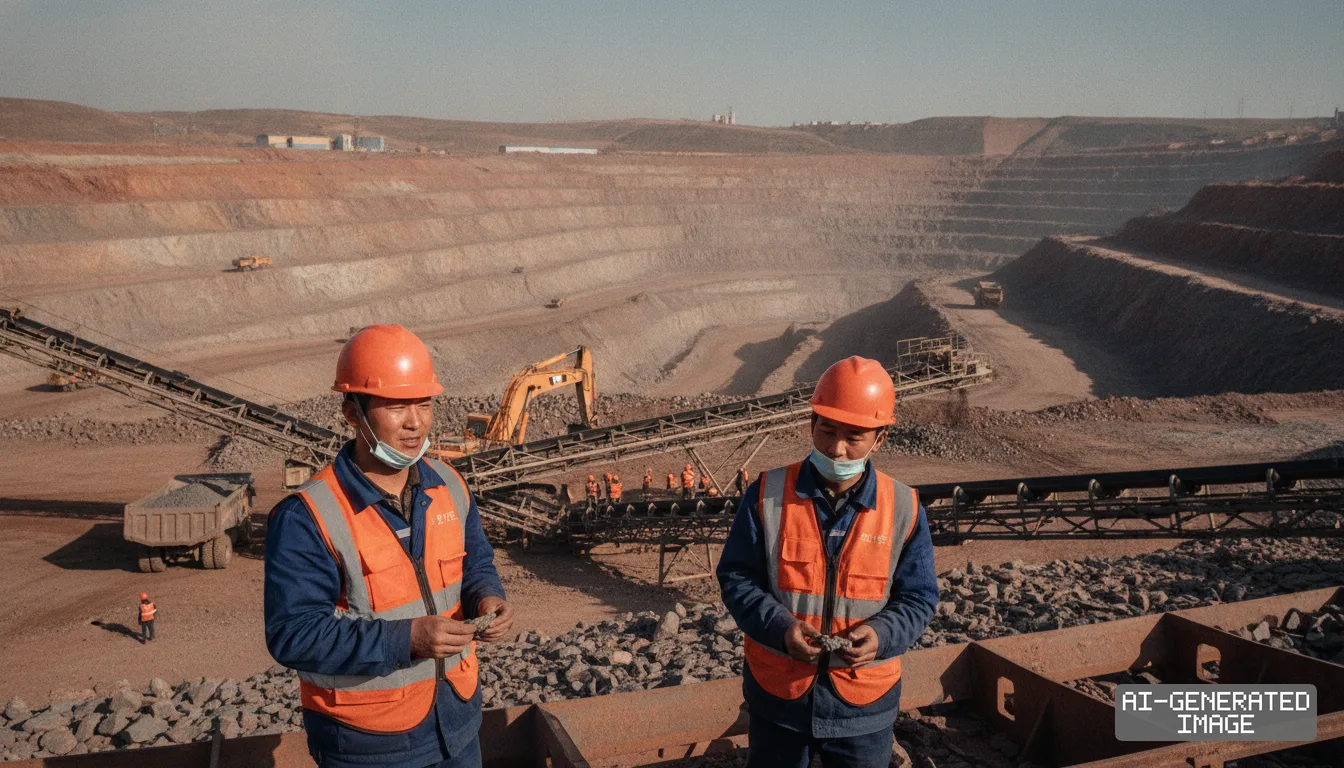
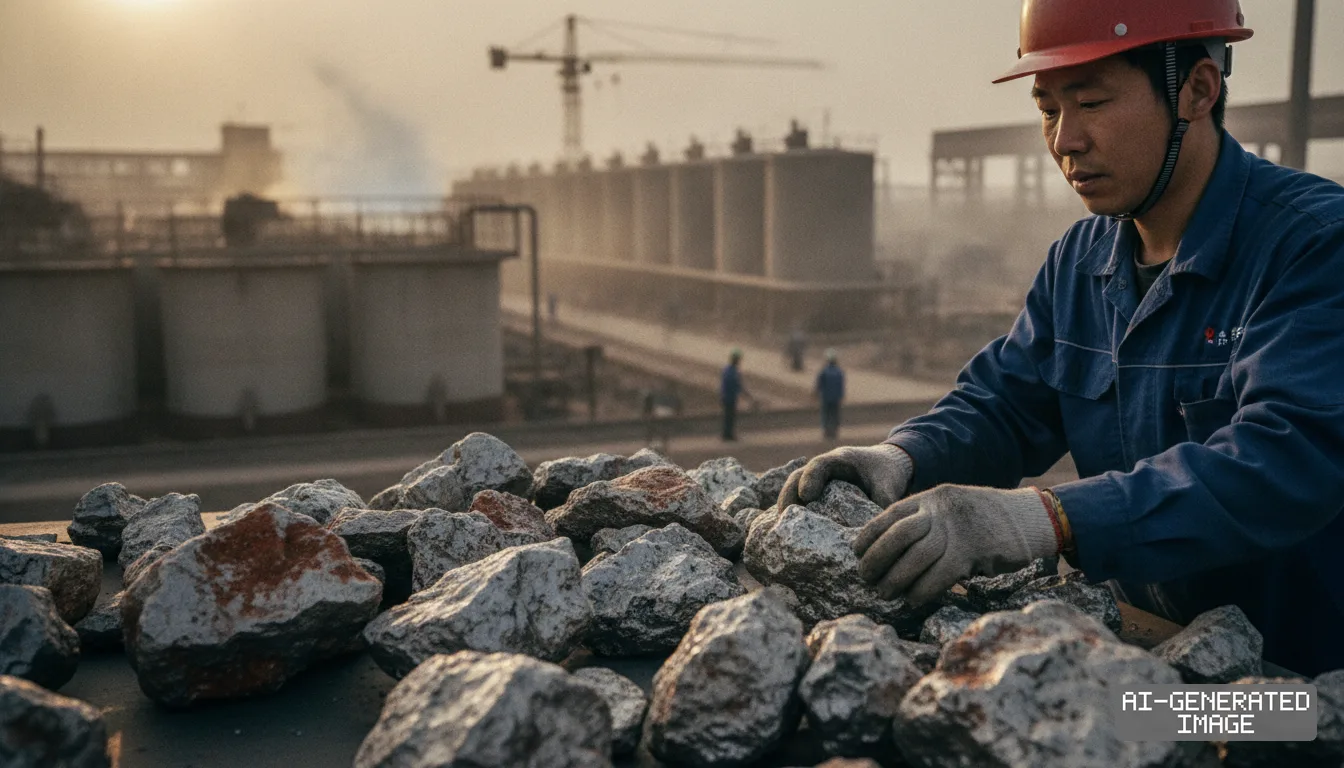
China controlled 91% of global refining and processing capacity for major rare earths and 61% of global mined output in 2024, according to data from the International Energy Agency.
Export licensing restrictions have already pushed North American dysprosium oxide spot prices to $4,100 per kilogram, up 242% from $1,200 in March, market assessment records from S&P Global showed.
The United States relied entirely on foreign suppliers for yttrium in 2025, with incoming volume falling to 300 metric tons from 457 metric tons in 2024 under Chinese export quota caps.
Victor Gao, vice president of the Center for China and Globalization in Beijing, said rare earth export controls provide China with reciprocal leverage against proposed American semiconductor restrictions.
Wang Yingliang, editor at economic research group Sharp Voice, said any additional American sanctions targeting artificial intelligence accelerators would prompt Beijing to restrict critical mineral flows to chipmakers.
Official regulatory filings show no new restrictions took effect on Nov. 14, 2026. China's Ministry of Commerce announced on Nov. 9 that it extended its suspension of expanded rare earth controls.
The commerce ministry moved the expiration date of that suspension to Jan. 10, 2027. The order covers five rare earth elements, battery materials and manufacturing technologies used in mineral refining.
Mandatory export licensing introduced in April 2025 remains active for seven medium and heavy rare earths, including dysprosium, terbium and yttrium, the Ministry of Commerce said in earlier notices.
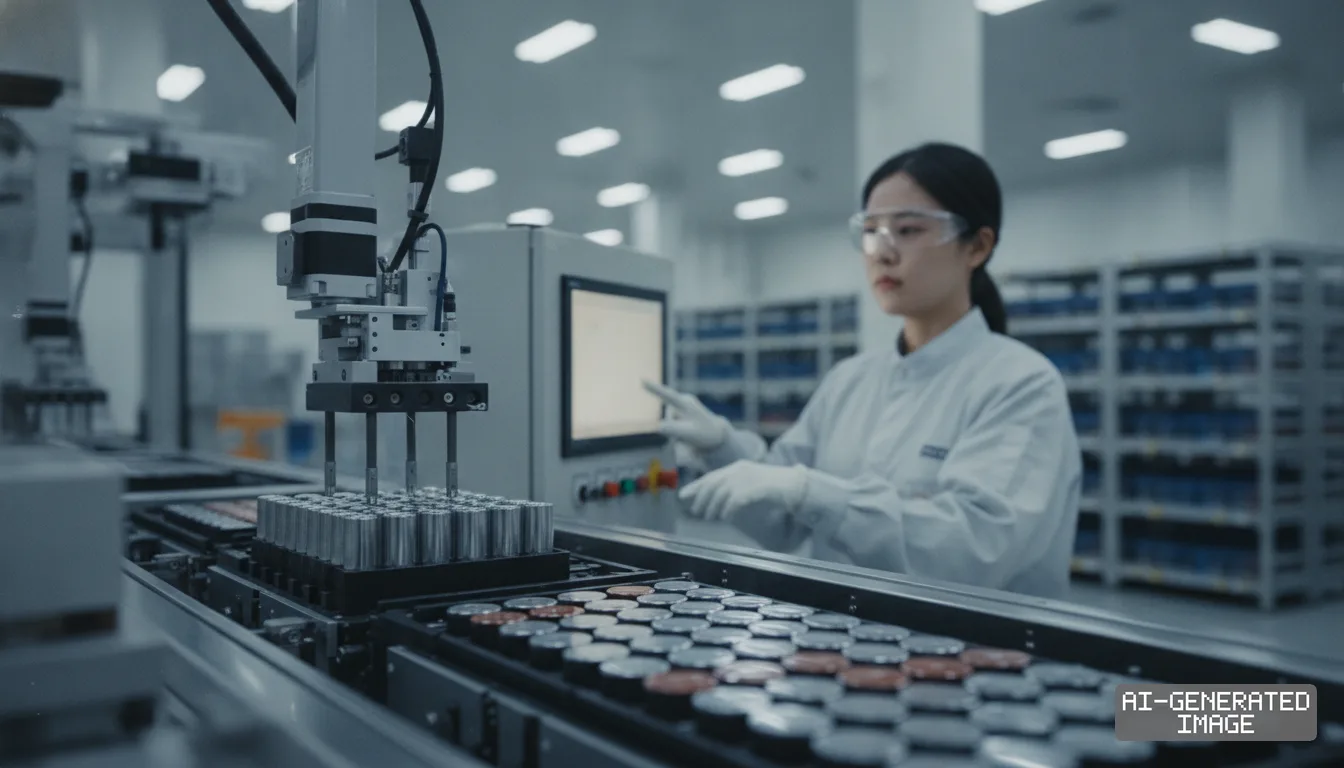
Semiconductor fabs require cerium oxide for chemical mechanical planarization — the chemical polishing step that flattens silicon wafers before circuit printing. Alternative refining lines outside China remain limited.
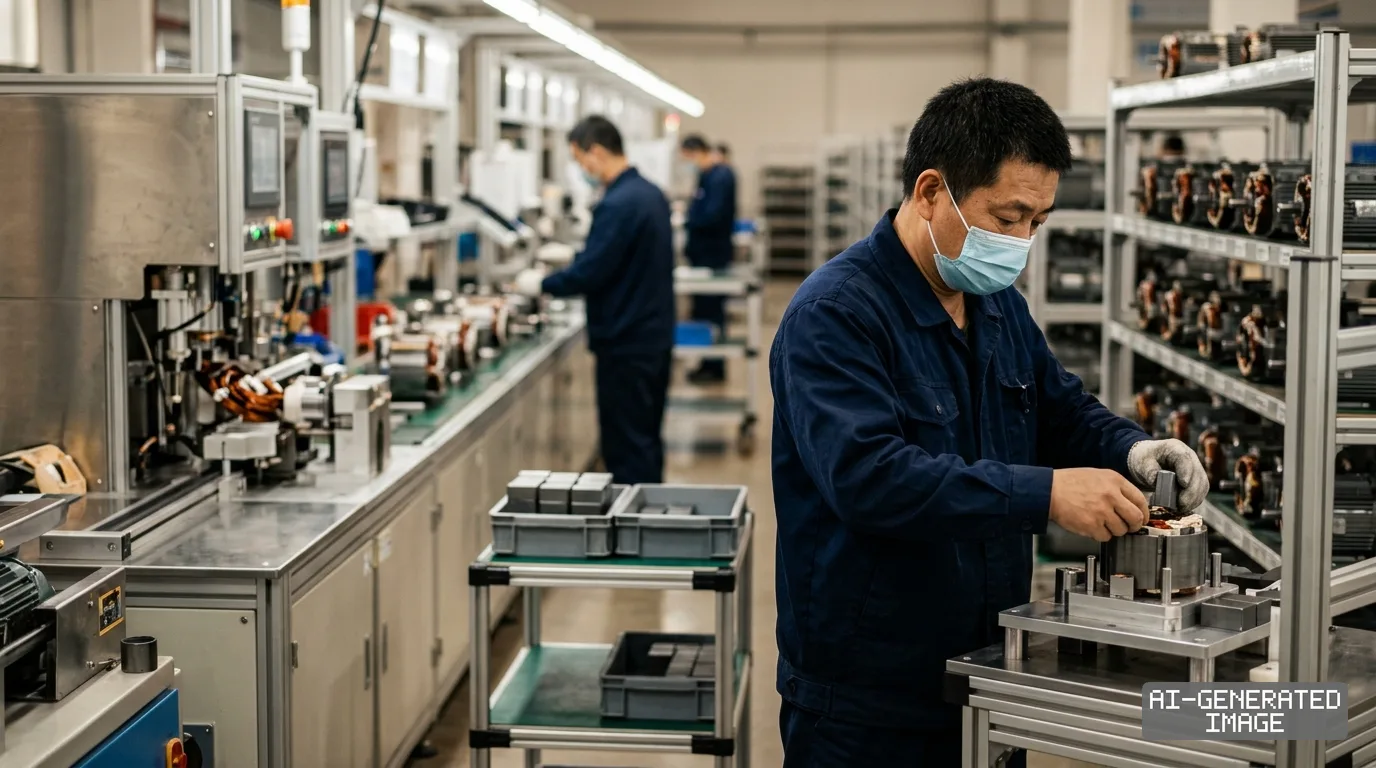
Advanced chip equipment uses neodymium-iron-boron magnets doped with dysprosium and terbium to operate high-precision motion stages in lithography scanners. Those magnets lose magnetic strength at high operating temperatures without dysprosium.
At a regular press briefing on Nov. 13, Chinese Foreign Ministry spokesperson Mao Ning reiterated opposition to export control abuses when asked about American congressional efforts to restrict chipmaking equipment.
Mao called for stabilizing bilateral economic ties and did not announce any retaliatory mineral bans, the Ministry of Foreign Affairs said in an official briefing transcript.
The Ministry of Commerce confirmed on Nov. 14 that Chinese and American trade officials held their inaugural trade council meeting via video link on Nov. 13, focusing on tariff frameworks and agricultural trade.
Nvidia faces scrutiny under draft legislation in the United States Congress targeting overseas deliveries of advanced processors, including H200 accelerators purchased by Chinese academic research facilities earlier this year.
Procurement managers at global chip foundries typically maintain two to four months of specialized polishing slurry and magnet inventories. Extended customs reviews at Chinese ports would deplete commercial safety buffers.
Active licensing rules have divided global mineral pricing. Yttrium oxide traded at $1.15 million per metric ton in Europe compared to $9,144 inside China, reflecting tight overseas cargo allocations.
China previously placed gallium and germanium under dual-use export licensing regimes in August 2023. Western chip foundries subsequently experienced multi-month shipping delays while awaiting ministerial dual-use approval certificates.
Under China's dual-use export control regulations enacted in late 2024, exporters must submit detailed end-user certificates and manufacturing schematics to the Ministry of Commerce before receiving shipment clearance.
Japan remains dependent on Chinese heavy rare earths for high-performance magnet fabrication, with yttrium deliveries from China falling to near-zero levels under current customs inspections.
Alternative separation projects in Australia and the United States continue to face chemical processing bottlenecks, leaving Western fabricators reliant on Chinese refining facilities for commercial-scale purity.
The Ministry of Commerce has not published any administrative decree or licensing guidance establishing rare earth export curbs specifically aimed at semiconductor manufacturers.
The current suspension of expanded export controls expires on Jan. 10, 2027, when the Ministry of Commerce will decide whether to enforce the rules or grant another extension.
Impact map
How this development propagates across the region and out to global buyers.
| Event | Korea | China | Japan | Global impact |
|---|---|---|---|---|
| Rare earth chip retaliation risk | Foundries hold two to four months of slurry buffers, vulnerable to cerium refining bottlenecks | MOFCOM preserves domestic mineral processing while maintaining retaliatory leverage | Magnet makers face yttrium deficits as dysprosium CIF North America trades at $4,100 per kilogram | AI chipmakers face higher packaging costs if Jan. 10, 2027 MOFCOM suspension expires |
In this story
- Companies
- Nvidia
- Tickers
- NVDA
- Policy
- Export Controls
- Impact
- Supply ChainPricing
Track every Export Controls development →
Related briefings
- Foreign funds pull $2B from Samsung and SK hynix in two-day rout Also on Nvidia, Export Controls, Pricing
- Analysts reject Elon Musk warning on China memory chip glut Also on Nvidia, Export Controls, Pricing
- TSMC captures 72.5% foundry share as gap with Samsung widens Also on Nvidia, Export Controls, Pricing
- TSMC revenue rises 53% on AI demand to record NT$514 billion Also on Nvidia, Export Controls, Pricing
Sources
Primary documents
Reporting
Confidence: high — how we grade this
The documents behind this briefing are linked above. East Asia Brief produces its English text with AI assistance under human editorial review, and does not translate or republish other outlets' articles. See our methodology and AI policy. Spotted an error? Tell us.
The Morning Brief
What changed in Korean, Chinese and Japanese industry overnight — and what it means for your supply chain. One email, weekday mornings, US time. Free.
The Morning Brief is in preparation. Leave your address and we will write to you once — when the first issue is ready. Nothing before that.