China export curbs send overseas yttrium prices to $1,100/kg
The spot price sits 120 times above China's domestic rate of $8.60 per kilogram as refiners hold 99% of global solvent-extraction capacity.
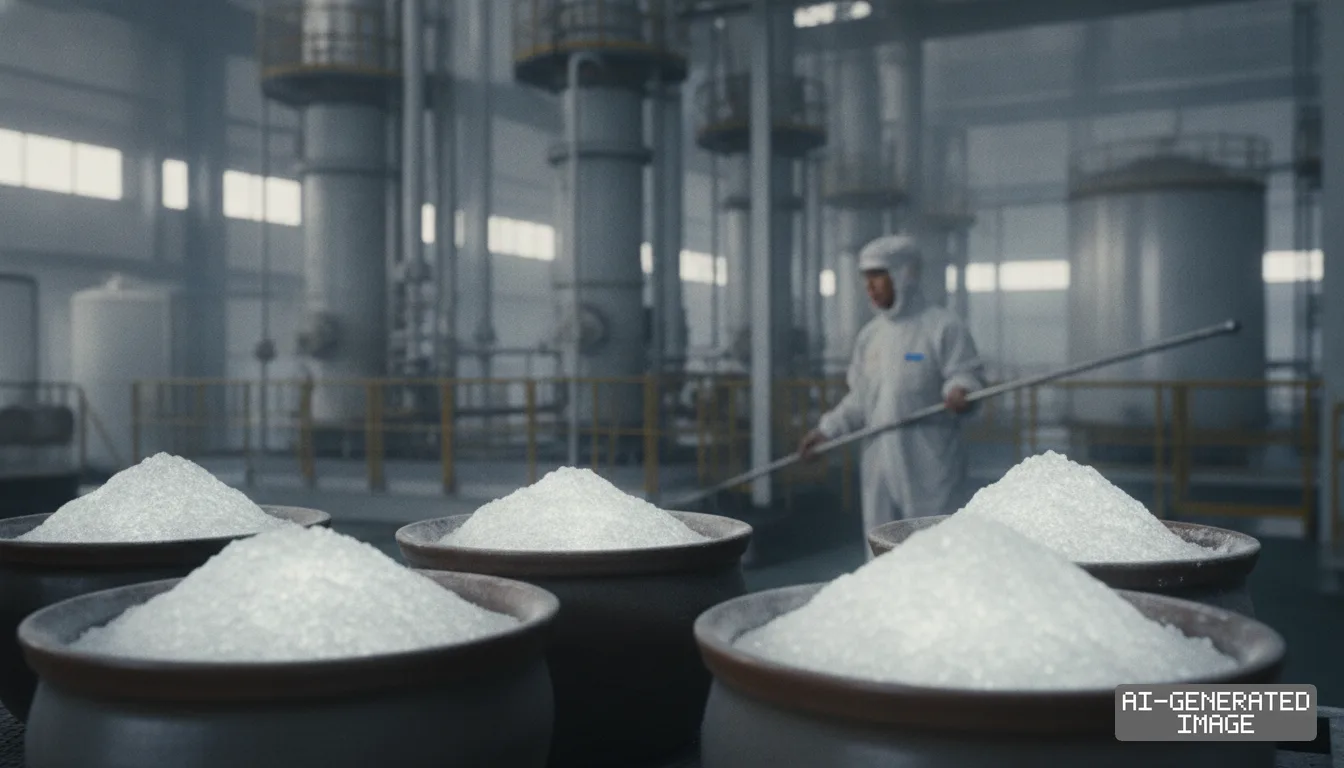
China's Ministry of Commerce held international yttrium oxide spot prices at $1,100 per kilogram on Nov. 6, 2026, as tightened export licensing throttled material flows from Chinese separation plants.
The overseas price sits more than 120 times above China's domestic level of 62,000 yuan ($8,600) per metric ton, or $8.60 per kilogram. China operates roughly 99% of global solvent-extraction capacity for heavy rare earths.
Beijing placed yttrium oxide, metals and chemical compounds under dual-use export licensing in April 2025. That regime requires Chinese refiners to secure commerce ministry authorization for every cross-border shipment.
Yttrium stabilizes thermal-barrier coatings that shield nickel-alloy turbine blades in commercial jet engines from melting. In wafer fabrication, yttria-stabilized ceramics protect plasma etching chambers from reactive halogen process gases.
State-owned China Rare Earth Group dominates domestic refining from ionic clay deposits in Jiangxi and Guangdong provinces. Its Ganzhou facilities process nearly 10,000 metric tons of separated oxides each year.
Feedstock from mines in Myanmar and Laos supplied more than 90% of Chinese rare earth imports in 2025. That raw concentrate enters Chinese solvent plants, leaving Western buyers reliant on Chinese refining rather than mine output.
Chinese customs data showed refiners shipped 4 metric tons of yttrium oxide to Japan in September 2026. That marks a 92% decline from 51 metric tons recorded in September 2025.
Shipments to Japan totaled 18 metric tons across the first nine months of 2026, down 98% from 888 metric tons during the same period a year earlier.
Japanese Ministry of Finance statistics recorded first-half 2026 yttrium oxide imports of 204 metric tons. That volume fell 74% below the 785 metric tons imported during the first half of 2024.
The delivery squeeze lands directly on Japanese advanced materials specialist Tosoh Corporation. The company relies on yttrium oxide for high-purity zirconia powders, where the element makes up 3% to 8% of raw batch weight.
Tosoh delivers those powders to fabricators of semiconductor etching rings and structural components. Without steady oxide deliveries, precision ceramic molders face thinning buffer stocks and extended manufacturing lead times.
Osaka-based Daiichi Kigenso Kagaku Kogyo faces direct procurement exposure in its thermal-barrier coating division. The company supplies specialized zirconium-yttrium compounds that Western aerospace engine manufacturers use across commercial fleets.
Commercial jet engine manufacturers cannot easily substitute alternative chemical formulations. Modifying coating chemistries requires Federal Aviation Administration re-certification, an engineering audit cycle that typically takes three to five years to complete.
Chinese domestic spot prices for 99.9% yttrium metal stood at 250 yuan ($35) per kilogram in October. FOB export quotations surged 23% in September as traders priced in expanding licensing backlogs.
The price gulf distorts procurement across North America and Europe. While Chinese ceramic producers pay single-digit dollar prices per kilogram, Western procurement desks must pay spot premiums exceeding $1,000 per kilogram to secure deliverable inventory.
Quoted overseas spot prices reflect thin secondary merchant trading rather than long-term contract volumes. Material already held in bonded warehouses outside China commands extreme scarcity premiums because fresh Chinese export quotas arrive sporadically.
Western mining ventures hold undeveloped yttrium reserves but lack operating solvent-extraction plants. Building multistage separation lines requires specialized environmental permits, acid handling infrastructure and hundreds of extraction mixer-settlers.
The technical barrier concentrates commercial leverage inside China's refining hubs. Even when foreign miners extract bastnasite or monazite ores, they routinely ship mixed rare earth concentrates back to Chinese refiners for final chemical separation.
Sovereign Metals is evaluating 193 metric tons per year of by-product yttrium oxide from its Kasiya project in Malawi. That volume equals roughly 35% of annual US consumption, but its pre-feasibility study remains scheduled for 2027.
Commercial alternative separation capacity outside China will not arrive before early 2028, when Australia's Lynas Rare Earths plans to commission its heavy rare earth refining circuit. That project will yield the first commercial ex-China yttrium oxide streams.
Until that capacity operates, Western consumers must navigate Chinese export control approvals. Permitting delays at Chinese provincial commerce departments currently exceed five months for standard industrial import applications.
Regulatory friction deepened after Beijing sanctioned the US supply chain group Responsible Business Alliance in August. Chinese suppliers now hesitate to sign Western due diligence forms for fear of violating domestic counter-espionage and data security laws.
The Ministry of Commerce has not published approval ratios or processing timelines for pending yttrium export license applications. Exporters cannot predict when submitted cargo filings will clear ministerial review.
Western defense contractors and electronics groups continue to draw down domestic safety reserves. Without predictable Chinese export quotas, factory inventories across Japan and the United States will approach critical depletion levels before year-end.
Impact map
How this development propagates across the region and out to global buyers.
| Event | Korea | China | Japan | Global impact |
|---|---|---|---|---|
| China yttrium export licensing squeeze | semiconductor etch component molders absorb $1,100 per kilogram spot oxide surcharges | China Rare Earth Group shields domestic ceramic and alloy makers at $8.60 per kilogram | Tosoh and Daiichi Kigenso face stockout risks as September China imports collapsed 92% | Western aerospace jet engine coatings and chip tool ceramics face a 120-fold price penalty |
| China yttrium export licensing squeeze | semiconductor etch component molders absorb | — | — | — |
| China yttrium export licensing squeeze | semiconductor etch component molders absorb $1,100 per kilogram spot oxide surcharges | China Rare Earth Group shields domestic ceramic and alloy makers at $8.60 per kilogram | Tosoh and Daiichi Kigenso face stockout risks as September China imports collapsed 92% | Western aerospace jet engine coatings and chip tool ceramics face a 120-fold price penalty |
In this story
- Companies
- China Rare Earth GroupTosoh CorporationDaiichi Kigenso Kagaku Kogyo
- Tickers
- 000831.SZ4042.T4082.T
- Exposed
- Lynas Rare EarthsSovereign Metals
- Policy
- Export Controls
- Impact
- Supply ChainPricing
Track every Export Controls development →
Related briefings
- China Sets Consolidated Late-2026 Light Rare Earth Mining Quota to Cap Northern Bastnasite Extraction Also on China Rare Earth Group, Lynas Rare Earths
- China brings rare earth industry body under direct Communist Party rule Also on China Rare Earth Group, Export Controls, Pricing
- China smelters lift Myanmar rare earth imports to 5,021 tons in fall Also on China Rare Earth Group, Export Controls, Pricing
- China Customs logs 6.7% rise in September rare earth exports Also on China Rare Earth Group, Export Controls, Pricing
Sources
Primary documents
Reporting
Confidence: high — how we grade this
The documents behind this briefing are linked above. East Asia Brief produces its English text with AI assistance under human editorial review, and does not translate or republish other outlets' articles. See our methodology and AI policy. Spotted an error? Tell us.
The Morning Brief
What changed in Korean, Chinese and Japanese industry overnight — and what it means for your supply chain. One email, weekday mornings, US time. Free.
The Morning Brief is in preparation. Leave your address and we will write to you once — when the first issue is ready. Nothing before that.