CATL Jianxiawo lithium mine faces output cuts as China pulls environmental permit
Yichun regulators revoked the environmental acceptance notice for China's largest lepidolite mine, leaving operations idle and halving projected 2026 output to 32,000 tonnes.
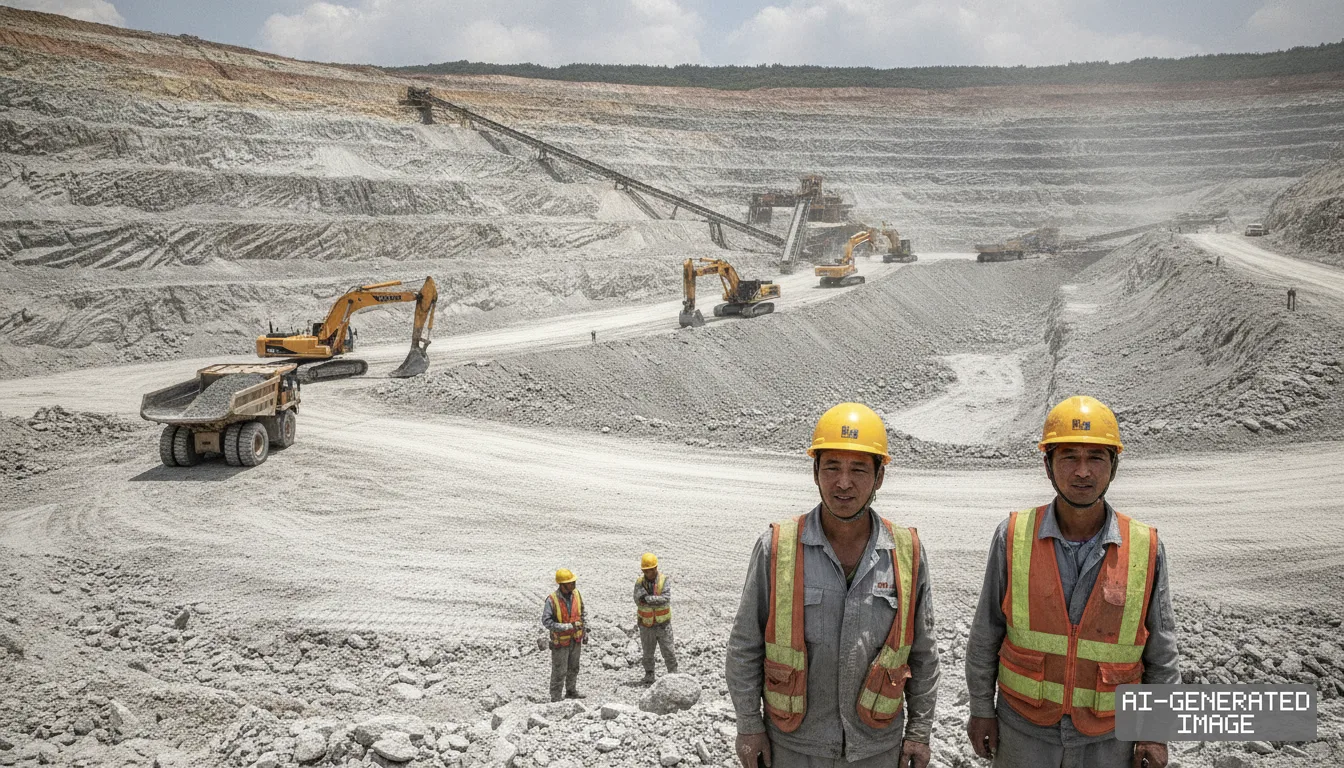
Benchmark Mineral Intelligence cut its 2026 output forecast for CATL's Jianxiawo mine to 32,000 tonnes on Sept. 1 after Chinese authorities revoked an environmental review notice.
The Yichun Municipal Ecology and Environment Bureau in Jiangxi Province withdrew the acceptance notice on Aug. 26. The bureau cited procedural compliance objections raised during statutory public consultations.
The decision keeps China's largest single-deposit lepidolite lithium project in care and maintenance. The mine accounts for roughly 4% to 5% of global mined lithium supply when operating at full design capacity.
Public complaints surfaced during a comment window scheduled from Aug. 17 to Aug. 28. Regulators found that the project developer used commercial websites for earlier disclosures rather than verified government platforms.
Yichun Times New Energy Mining, a subsidiary of Contemporary Amperex Technology (CATL), operates the site across Yifeng and Fengxin counties. CATL acquired the exploration rights for 865 million yuan ($122 million) in April 2022.
The bureau said it will reissue the public notice only after verification is completed and all statutory criteria are met. Municipal regulators gave no target timetable for when the environmental assessment would be finalized.
The revocation prolongs an operational stoppage that began on Aug. 9, 2025. Extraction was halted when the mine's original ceramic clay mining permit expired.
China's revised Mineral Resources Law took effect in July 2025 and classified lithium as an independent strategic mineral. The legislative update forced regional miners to convert old industrial mineral rights into dedicated lithium concessions.
Under the previous framework, miners in Yichun extracted lithium-bearing lepidolite ore under permits designated for ceramic clay. Regulators required operators to reapply for licenses, pay updated mineral transfer fees and submit fresh environmental impact assessments.
Yichun Times New Energy secured a new mining license in November 2025, which remains valid through Nov. 27, 2047. The mine also received a critical safety production permit on June 29, 2026.
Those milestones raised expectations across the battery supply chain that the site would resume commercial operations by late September. The environmental permit remained the final regulatory prerequisite before commercial extraction could restart.
CATL posted a draft environmental report on July 27, 2026, outlining a designed mining capacity of 30 million tonnes of ore per year. The company submitted that document for formal municipal approval before the procedural objection was filed.
Benchmark reduced its full-year 2026 production estimate for Jianxiawo to 32,000 tonnes of lithium carbonate equivalent. That represents a 49% reduction from the research group's earlier baseline projection of 62,500 tonnes.
Lepidolite extraction carries higher energy requirements and generates larger volumes of chemical tailings than spodumene mining or lithium brine extraction. Chinese environmental authorities have increased scrutiny across Jiangxi Province to curb hazardous waste runoff and protect local water basins.
The protracted shutdown constrains domestic merchant supply of lithium chemical feedstock within China. Domestic lithium carbonate spot prices have faced downward pressure over the past two years as global cell capacity expanded.
Chinese battery manufacturers have used domestic lepidolite deposits to establish a cost floor against imported Australian spodumene and South American brines. The prolonged permitting delay removes a significant portion of expected near-term domestic raw material supply.
Local environmental inspectors confirmed that on-site equipment remains halted, with no active ore transport or crushing taking place. The mine had undergone brief testing in July before authorities ordered full compliance with review procedures.
CATL has not published a formal regulatory filing on the Shenzhen Stock Exchange regarding the withdrawal of the environmental review notice. People close to the battery manufacturer said the company is cooperating with municipal authorities to complete required filings.
The company has not provided an updated target date for the resubmission of the environmental report. Operations at the Jianxiawo facility remain limited to equipment maintenance.
Impact map
How this development propagates across the region and out to global buyers.
| Event | Korea | China | Japan | Global impact |
|---|---|---|---|---|
| Jianxiawo lithium EIA revocation | — | domestic lepidolite output halted | — | raw lithium floor supported |
In this story
- Companies
- Contemporary Amperex Technology
- Tickers
- 300750.SZ
- Exposed
- Benchmark Mineral Intelligence
- Policy
- Economic Security
- Impact
- Supply ChainPricing
Track every Economic Security development →
Related briefings
- CATL expands sodium storage supply in Europe for 2027 rollouts Also on Contemporary Amperex Technology, Pricing
- Li Auto drops CATL from 2026 i6, tapping Sunwoda and CALB Also on Contemporary Amperex Technology, Pricing
- BYD fully opens 16 GWh Xi'an battery plant to scale EV cells in 2026 Also on Contemporary Amperex Technology, Pricing
- CATL buys 20,000 tons of cathode copper in $320 million pact Also on Contemporary Amperex Technology, Pricing
Sources
Reporting
Confidence: medium — how we grade this
The documents behind this briefing are linked above. East Asia Brief produces its English text with AI assistance under human editorial review, and does not translate or republish other outlets' articles. See our methodology and AI policy. Spotted an error? Tell us.
The Morning Brief
What changed in Korean, Chinese and Japanese industry overnight — and what it means for your supply chain. One email, weekday mornings, US time. Free.
The Morning Brief is in preparation. Leave your address and we will write to you once — when the first issue is ready. Nothing before that.