Korea Precursor Makers Ramp Sulfide Battery Materials for 2027 Pilot Lines
ISU Specialty Chemical and EcoPro BM expand lithium sulfide capacity and government-backed R&D to meet solid-state cell qualification targets.
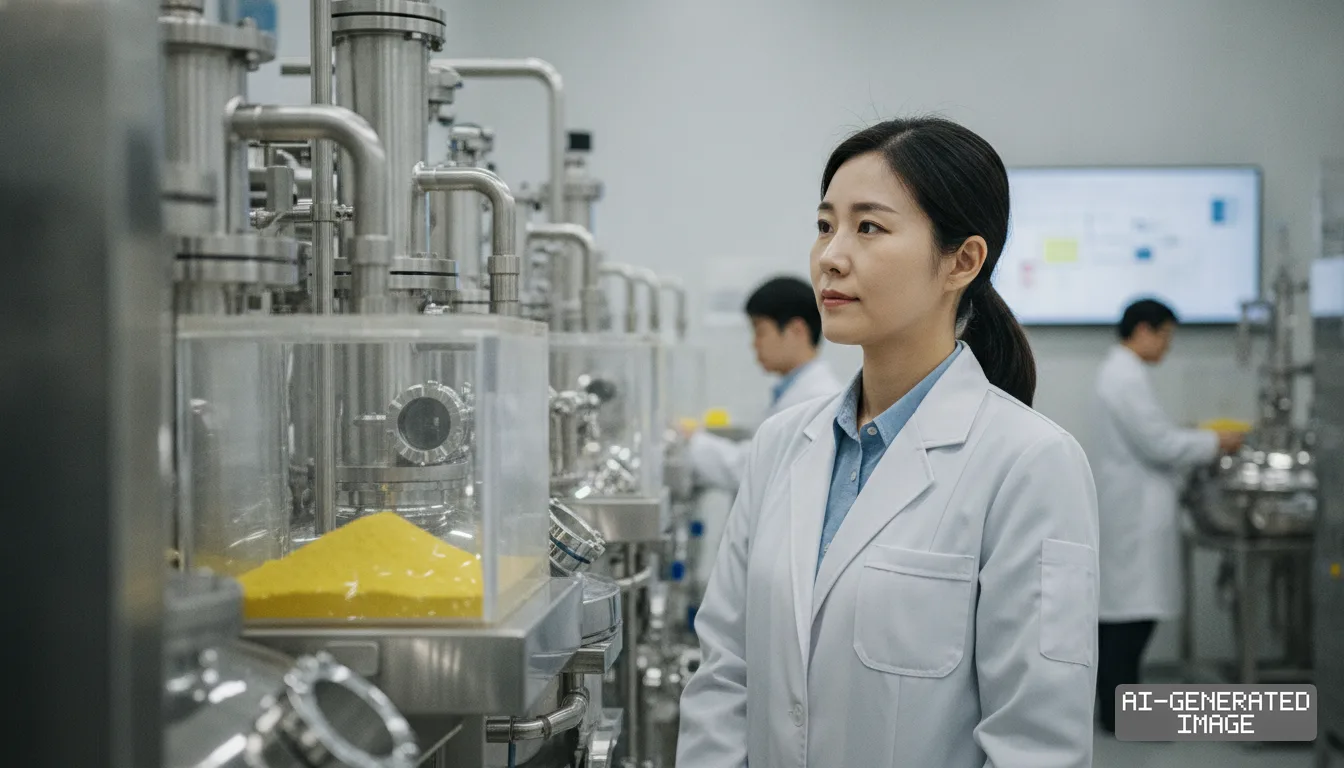
South Korean battery material suppliers are accelerating commercial production of lithium sulfide precursors, aiming to secure volume qualification for sulfide-based solid-state battery pilot lines scheduled to enter operation in 2027. Chemical specialists in the country are transitioning from batch-scale synthesis to continuous processing facilities to supply regional cell manufacturers with high-purity feedstocks. The scale-up centers on resolving yield losses and hazardous gas containment during large-scale lithium sulfide synthesis, which represents the primary cost bottleneck in all-solid-state cell manufacturing.
South Korea's fine chemical sector occupies an established position in sulfur chemistry, deriving operational expertise from the industrial production of organic sulfur compounds and polymer regulators. Cell developers including Samsung SDI have designated sulfide-type solid electrolytes primarily argyrodite and lithium phosphorus sulfur chloride chemistries as their leading pathway for commercial solid-state electric vehicle packs. Producing these electrolyte materials requires battery-grade lithium sulfide as a starting precursor, yet global production has historically been constrained by low batch yields, high raw material costs, and severe toxicity risks associated with hydrogen sulfide release during processing.
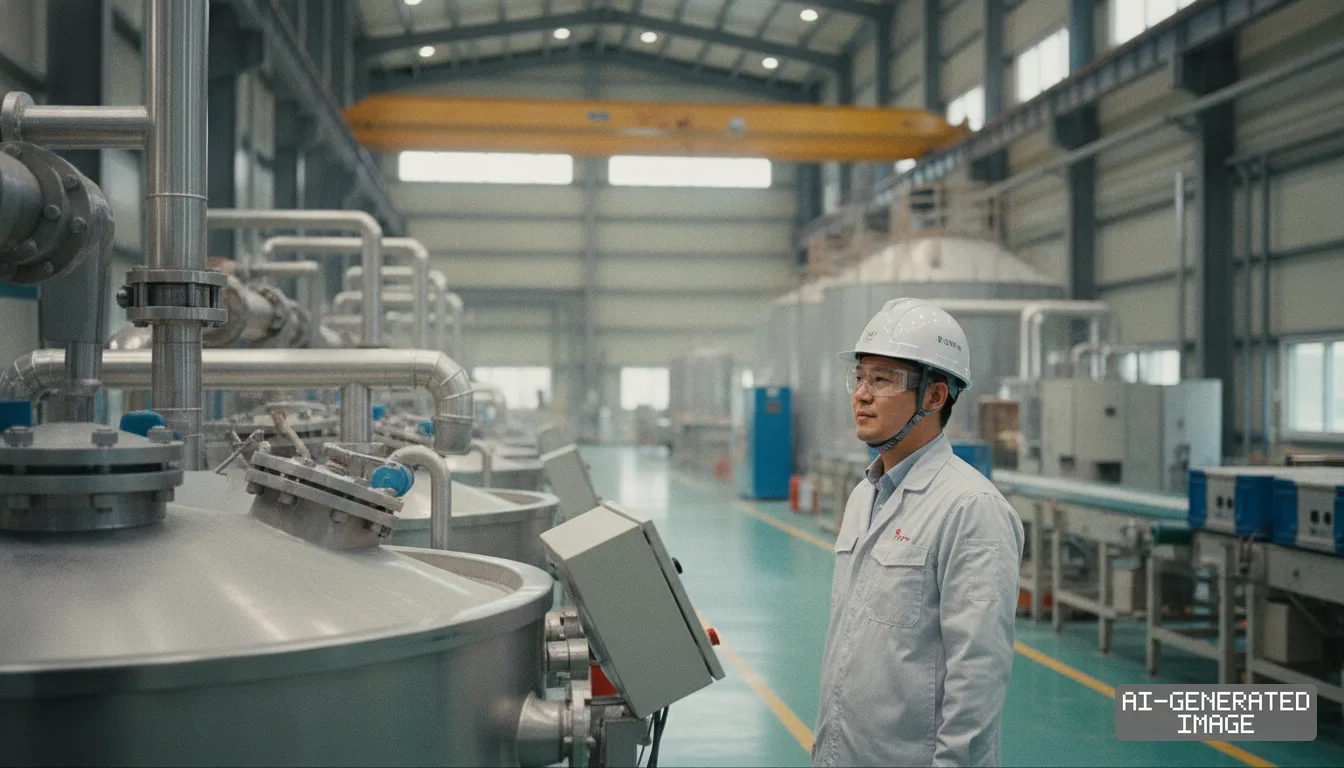
ISU Specialty Chemical has completed a dedicated lithium sulfide production facility at its site in Onsan-eup, Ulju-gun, Ulsan, establishing an initial output capacity of 150 metric tons per year with engineering provisions to scale the site to 500 metric tons per year. The plant utilizes continuous synthesis technology developed in partnership with United States engineering firm KBR. The companies expanded their collaboration to transition the proprietary PureLi2S process to commercial scale following the operation of an on-site demonstration plant, shifting manufacturing away from conventional batch-reactor configurations to lower unit costs and minimize off-specification output.
State financing mechanisms have stepped in to underwrite the capital expenditure required for specialized sulfur handling facilities. On Feb. 26, 2026, South Korea's Financial Services Commission approved a 100 billion won ($70 million), 10-year low-interest loan for ISU Specialty Chemical's Ulsan factory through the Advanced Strategic Industry Fund under the Public Growth Fund program. The government facility carries an interest rate in the low 3 percent range, designed to insulate specialized materials suppliers from capital market volatility while battery makers finalize cell designs.
Downstream cathode and electrolyte developers are simultaneously expanding their synthesis operations to capture value across the entire solid-state stack. On Aug. 6, 2026, the Ministry of Trade, Industry and Energy selected cathode manufacturer EcoPro BM for the third cohort of its Super Eul project, an initiative designed to cultivate domestic supply chain leaders in strategic manufacturing sectors. Under the designation, EcoPro BM receives up to 20 billion won ($14.1 million) in state research and development funding over a minimum seven-year period to advance sulfide-based solid electrolyte synthesis and qualification.
While public research institutions continue to publish data on low-temperature liquid-phase synthesis and co-sintering methods to reduce electrolyte processing temperatures, commercial suppliers are focusing their near-term industrial investments on stabilizing thermal conversion yields and scaling battery-grade lithium sulfide purity. Liquid-phase precipitation and sol-gel routes developed by national laboratories demonstrate lower synthesis temperatures in laboratory environments, but industrial chemical plants in Ulsan and Ochang remain committed to scalable thermal and mechanochemical pathways that guarantee consistent halogen doping and uniform crystal structures required by automotive tier-one buyers.
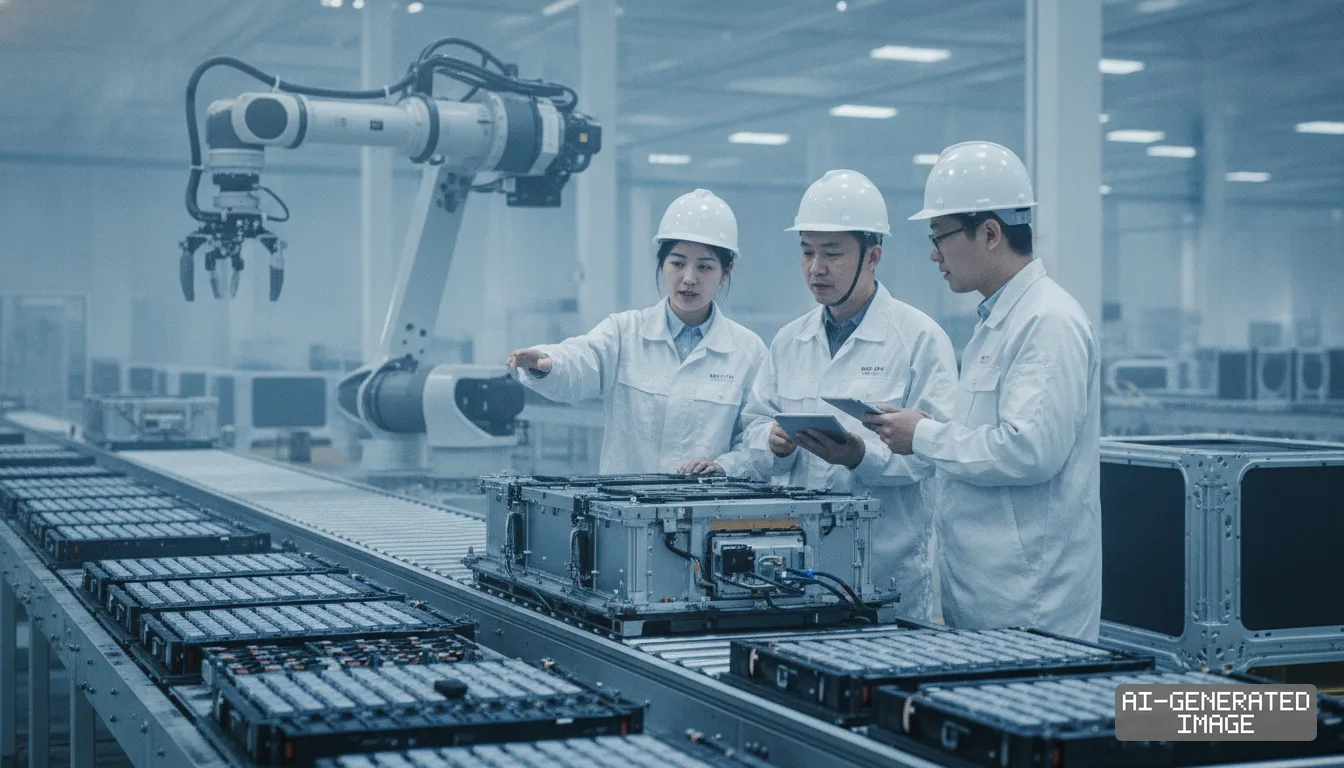
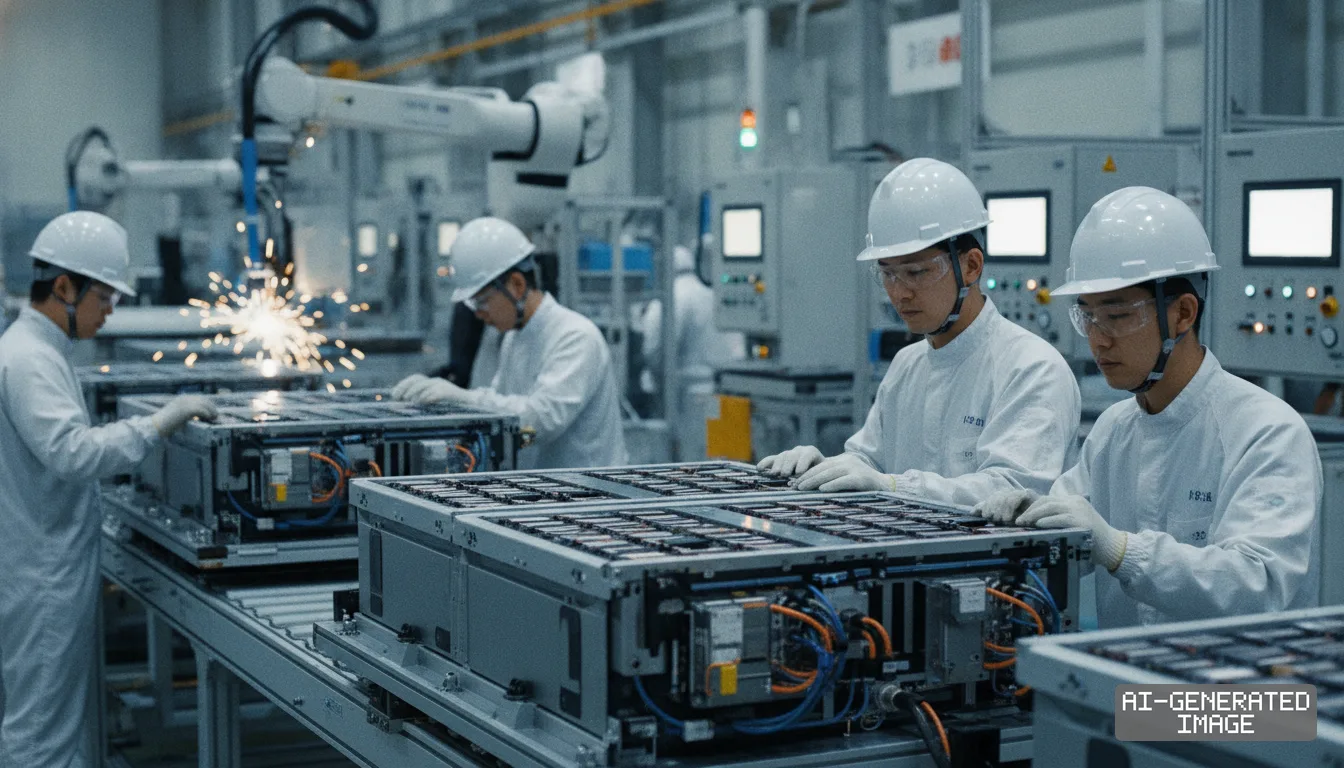
The acceleration in precursor capacity directly targets the technical milestones set by domestic and international battery manufacturers. Samsung SDI operates a dedicated solid-state battery pilot line in Suwon, targeting cell sample validation and automated assembly verification ahead of planned volume lines in 2027. International developers, including United States-based Solid Power, rely on consistent lithium sulfide feedstock supplies to produce proprietary argyrodite electrolyte powders for automotive sampling programs. For procurement directors at automotive joint ventures, securing domestic precursor capacity reduces reliance on fragmented spot markets and establishes traceable chemical supply chains outside mainland China.
The economics of sulfide-based solid electrolytes depend heavily on driving down the cost of lithium sulfide, which currently accounts for more than 60 percent of total solid electrolyte material expense. Fine chemical manufacturers expect continuous processing lines to narrow the pricing premium between sulfide precursors and conventional liquid electrolyte salts by increasing precursor conversion efficiency and lowering reactant recovery costs. Achieving these cost benchmarks is necessary for solid-state cells to compete in premium electric vehicle segments against high-nickel liquid lithium-ion and sodium-ion platforms.
Suppliers in Ulsan have begun shipping initial qualification lots from the 150-metric-ton Onsan facility to domestic cell makers for automated line integration tests, with formal material sign-offs scheduled across the second half of 2026.
Impact map
How this development propagates across the region and out to global buyers.
| Event | Korea | China | Japan | Global impact |
|---|---|---|---|---|
| Sulfide precursor scale-up | chemical plants expand capacity | cell rivals track precursor supply | solid electrolyte suppliers face scale competition | EV solid-state line qualifications accelerate |
In this story
- Companies
- ISU Specialty ChemicalEcoPro BM
- Tickers
- 457190.KS247540.KQ
- Exposed
- Samsung SDISolid PowerKBR
- Policy
- SubsidiesEconomic Security
- Impact
- Supply ChainCapexCost Structure
Track every Subsidies development → Track every Economic Security development →
Related briefings
- South Korea Expands Advanced Battery Tax Credits to Rebalance Domestic Fabs Also on EcoPro BM, Samsung SDI, Cost Structure
- EcoPro replaces affiliate CEOs to defend margins in EV slump Also on EcoPro BM, Samsung SDI, Cost Structure
- CATL targets 2027 pilot output for all-solid-state batteries Also on EcoPro BM, Samsung SDI
- EcoPro BM and Samsung SDI agree to co-develop solid-state materials Also on EcoPro BM, Samsung SDI
Sources
Primary documents
Reporting
Confidence: high — how we grade this
The documents behind this briefing are linked above. East Asia Brief produces its English text with AI assistance under human editorial review, and does not translate or republish other outlets' articles. See our methodology and AI policy. Spotted an error? Tell us.
The Morning Brief
What changed in Korean, Chinese and Japanese industry overnight — and what it means for your supply chain. One email, weekday mornings, US time. Free.
The Morning Brief is in preparation. Leave your address and we will write to you once — when the first issue is ready. Nothing before that.