CATL adds four Chinese cities to municipal bus swapping network
Pacts in Benxi, Changzhou, Guiyang and Lanzhou push network past 20 cities under a 42,000-yuan central subsidy for battery pack replacement.
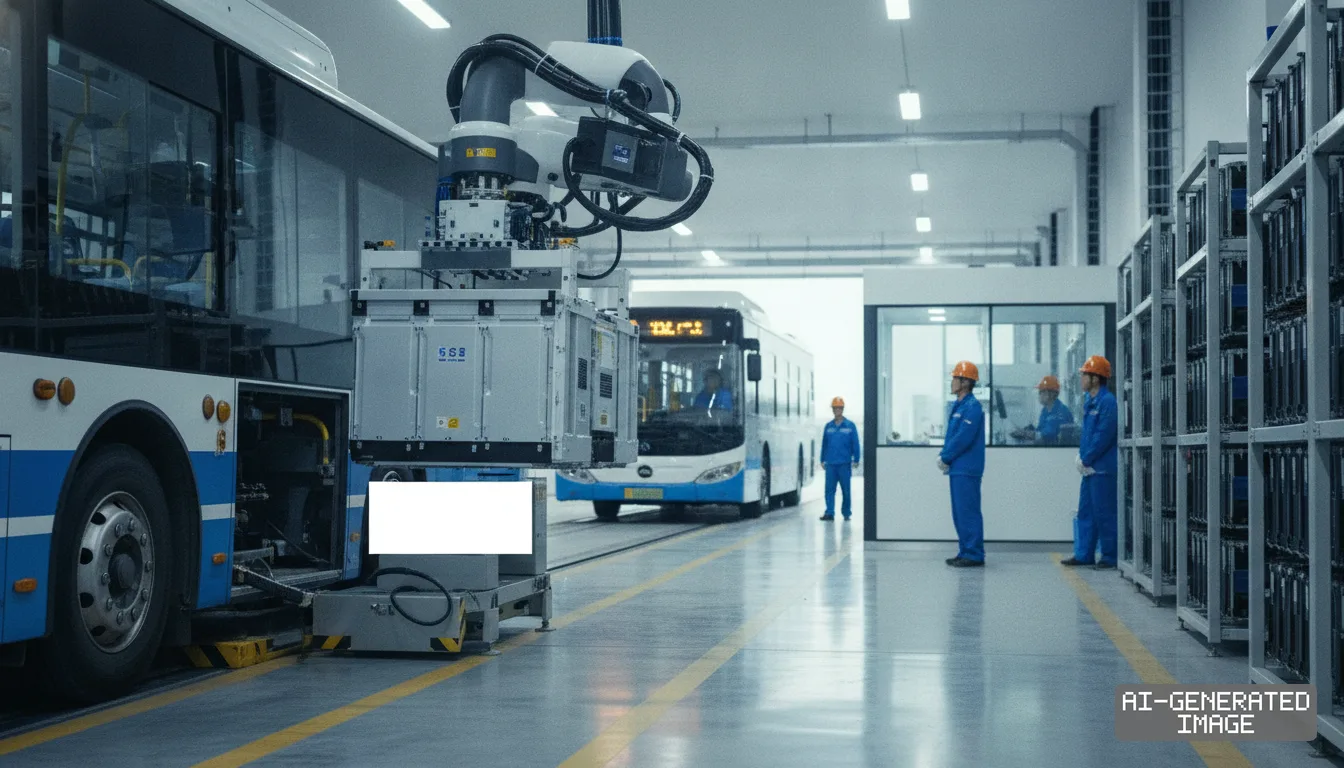
Contemporary Amperex Technology Co. signed battery supply and swapping agreements on Nov. 10, 2026 with municipal bus operators in four Chinese cities as public transit fleets reach replacement age.
The agreements cover Benxi, Changzhou, Guiyang and Lanzhou, pushing CATL’s public transit network past 20 Chinese cities. Under joint central guidelines, Beijing subsidizes battery pack replacements at 42,000 yuan ($5,900) per bus.
The Ministry of Transport and the National Development and Reform Commission fund the disbursements through ultra-long special treasury bonds. Replacing an entire electric bus draws a higher average government subsidy of 80,000 yuan ($11,200).
Municipal public transit agencies face widespread battery degradation across first-generation electric buses deployed between 2015 and 2018. Most commercial lithium iron phosphate battery packs carried manufacturer warranties of eight years that have lapsed or will expire shortly.
Guiyang Public Transport Group in Guizhou province signed to coordinate depot infrastructure with CATL’s battery supply chain. The municipal carrier manages urban transit routes across Guiyang and plans to convert bus charging stations into shared municipal energy hubs.
The Guiyang project combines charging, swapping, stationary energy storage and vehicle-to-grid power dispatch into a single operating model. The municipal agency aims to demonstrate commercial grid-balancing services rather than simple hardware procurement, the battery maker said.
In Jiangsu province, Changzhou Public Transport Group entered an equivalent strategic framework to overhaul degraded packs across its urban fleet. Changzhou operates public transit for an industrial metropolitan population exceeding 5 million residents.
Lanzhou Public Transport Group in northwestern Gansu province agreed to standardize its electric bus battery maintenance and replacement schedules with CATL. The state-owned carrier runs public transit lines connecting Lanzhou’s urban core and surrounding mountain districts.
Benxi Passenger Transport Group in Liaoning province rounded out the four-city cohort by adopting the battery manufacturer’s swapping protocols. The northeastern operator manages both inner-city transit routes and inter-district passenger corridors across the steel-manufacturing center.
CATL structured the four municipal pacts across the complete operational lifespan of commercial vehicle batteries. The collaborative scope covers cell supply, pack replacement, vehicle aftermarket maintenance, swapping stations, battery recycling and bidirectional power transmission, the company said.
Vehicle-to-grid systems allow parked electric buses to feed stored battery energy back into city distribution grids during peak demand hours. Municipal transit fleets follow predictable route timetables, making bus depots suitable for balancing regional grid loads during evening consumption surges.
The four municipal pacts follow similar direct operating tie-ups CATL established in major transit hubs including Guangzhou, Nanjing, Wuhan, Xiamen and Suzhou. In Nanjing, Nanjing Public Transportation Group operates 5,000 electric buses, with over 95% equipped with CATL batteries.
By locking municipal transit groups into comprehensive operational agreements, CATL establishes its commercial battery standards directly with regional authorities. The direct municipal relationship helps shield domestic market share against domestic rivals like BYD and Gotion High-tech.
Commercial vehicle battery replacement provides CATL with stable, multi-year cash flow that does not depend entirely on private passenger car sales. Urban public transit contracts feature steady municipal budget backstops and legally mandated equipment upgrade cycles.
Direct deals with transit operators also allow the battery giant to bypass intermediate vehicle manufacturers during the replacement phase. Bus assemblers historically controlled equipment specifications, but municipal operators now contract directly with cell makers to manage long-term replacement costs.
The arrangement secures a reliable domestic stream of degraded battery packs for CATL’s materials recycling operations. Commercial bus packs that drop below 80% original capacity can transition to stationary industrial storage before entering physical disassembly and metal extraction facilities.
State transport planners introduced the battery replacement subsidy to mitigate fire risks and performance decline in aged commercial packs. Lithium iron phosphate cells degrade faster when subjected to years of continuous fast-charging and demanding daily city transit duty cycles.
The joint rules issued by the transport and economic planning ministries require replacement battery systems to include a warranty of at least five years. All new battery modules must comply with mandatory national safety standards and carry production dates after Jan. 1, 2024.
The announcements did not disclose the total monetary value of the four municipal contracts, the exact volume of replacement packs, or the construction timeline for the planned swapping stations.
Municipal transit operators must execute replacement contracts and lodge verified subsidy applications before Dec. 31, 2026, when the current central budget window for out-of-warranty battery packs expires.
Provincial transport and finance authorities disburse the statutory allowances directly to certified bus operators once technical inspectors verify that degraded battery packs have been transferred to qualified recycling centers.
Impact map
How this development propagates across the region and out to global buyers.
| Event | Korea | China | Japan | Global impact |
|---|---|---|---|---|
| Municipal bus battery replacement pacts | LG Energy Solution and Samsung SDI face high structural barriers to Chinese municipal bus tenders | CATL secures recurring replacement demand across 20 cities under 42,000 yuan central pack subsidies | Panasonic remains shut out of Chinese transit fleets, prioritizing North American light EV supply | Standardized commercial swapping models gain operating scale across public transportation networks |
In this story
- Companies
- Contemporary Amperex Technology Co.
- Tickers
- 300750.SZ
- Exposed
- BYDGotion High-tech
- Policy
- SubsidiesStandards
- Impact
- Order BookSupply ChainPricing
Track every Subsidies development → Track every Standards development →
Related briefings
- CATL splits six-minute charging cells from 1,000-km platform Also on Contemporary Amperex Technology Co., Standards, BYD
- CATL warns EV price war compromises battery safety standards Also on Gotion High-tech, Standards, BYD
- Changan and CATL invest 5 billion yuan to add 25 GWh battery fab Also on Contemporary Amperex Technology Co., Standards
- Chinese battery makers take 73% share as Korean trio falls Also on Gotion High-tech, BYD, Pricing
Sources
Primary documents
Reporting
Confidence: high — how we grade this
The documents behind this briefing are linked above. East Asia Brief produces its English text with AI assistance under human editorial review, and does not translate or republish other outlets' articles. See our methodology and AI policy. Spotted an error? Tell us.
The Morning Brief
What changed in Korean, Chinese and Japanese industry overnight — and what it means for your supply chain. One email, weekday mornings, US time. Free.
The Morning Brief is in preparation. Leave your address and we will write to you once — when the first issue is ready. Nothing before that.