India and Japan deepen defense ties to secure supply chains
Defense and foreign ministry officials held talks in New Delhi on Sept. 22 to advance joint naval equipment production and shield critical technology supply chains from regional disruptions.
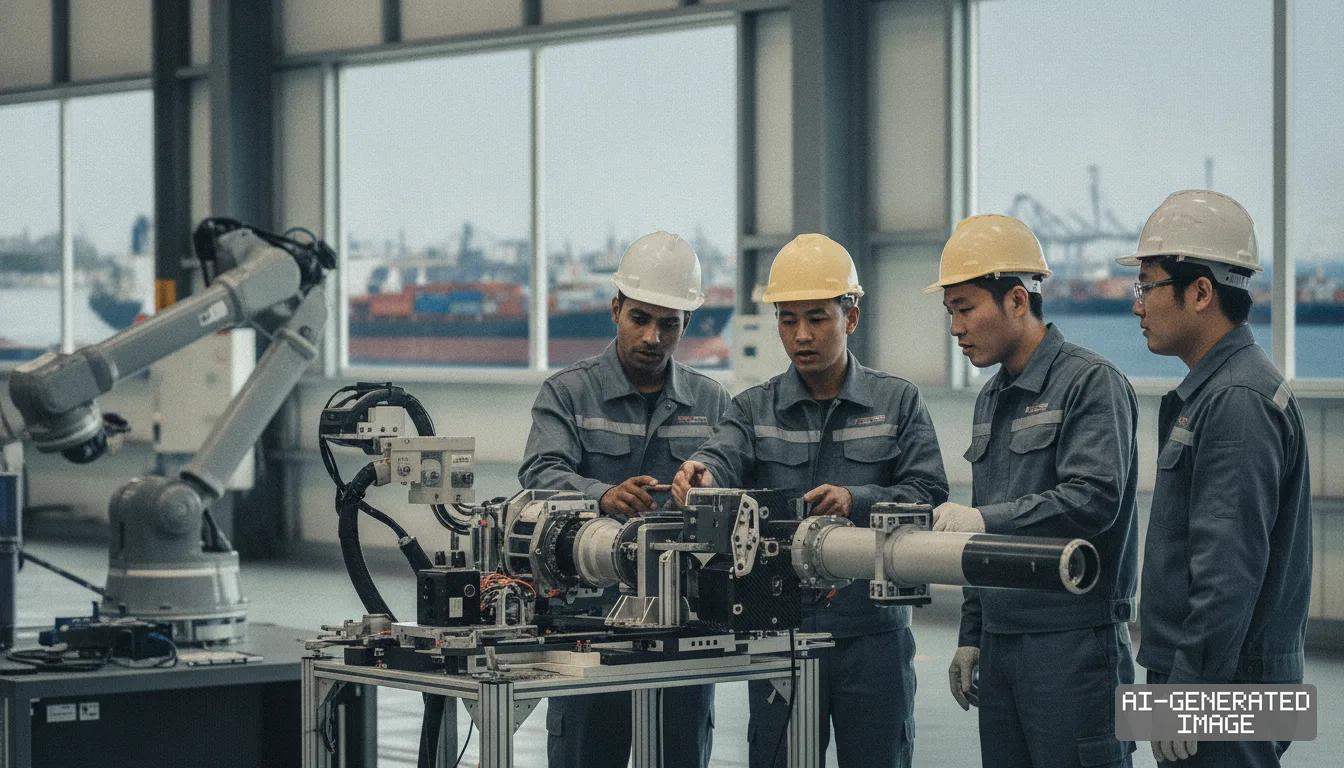
India's Ministry of Defence met with a Japanese parliamentary delegation on Sept. 22 to accelerate joint defense equipment production and strengthen critical supply chain resilience across the Indo-Pacific.
Defense Secretary Rajesh Kumar Singh received the visiting delegation led by Taro Kono in New Delhi. Kono serves as director of the international bureau of Japan's ruling Liberal Democratic Party and previously held the defense and foreign affairs portfolios.
The discussions evaluated joint technology manufacturing, bilateral operational exercises and coordinated industrial policies. Both governments sought to align Japanese precision engineering with India's manufacturing base to reduce strategic supply chain vulnerabilities.
India plans to spend $16 billion on tactical communications procurement between 2025 and 2035. Maritime communication systems account for about $2.3 billion of that planned procurement, representing roughly 14.5% of the total tactical communications allocation.
The bilateral defense dialogue coincided with high-level diplomatic consultations at the Ministry of External Affairs in New Delhi. Indian Foreign Secretary Vikram Misri hosted the Japanese delegation on Sept. 21, with the ministry issuing official proceedings on Sept. 22.
The delegation included Japanese lawmakers Kenji Nakanishi, Karen Makishima and Sakon Yamamoto. The participants conducted an in-depth review of bilateral defense cooperation, economic security priorities, risk-reduction strategies and deep-technology supply chain integration.
The delegations focused on economic derisking to reduce excessive reliance on concentrated manufacturing sources. The discussions reviewed vulnerable links across industrial hardware, electronic components and advanced sub-assemblies.
Japanese lawmakers concluded an on-site inspection of Indian defense manufacturing facilities prior to the New Delhi meetings. The delegation visited the Bengaluru manufacturing complex of Bharat Electronics Limited on Sept. 19.
Bharat Electronics Limited serves as India's state-owned aerospace and defense electronics manufacturer. The company generates more than 80% of its annual operating revenue from domestic defense contracts.
Bharat Electronics Limited is collaborating with Japanese defense suppliers to co-develop the Unified Complex Radio Antenna, designated UNICORN. The system integrates communication and data-link antennas inside a single stealth radar mast to lower the radar cross-section of warships.
The Japanese industrial consortium behind the mast includes prime contractor NEC Corporation, Sampa Kogyo K.K. and The Yokohama Rubber Co. NEC Corporation supplies advanced communications and sensor integration systems to the Japan Maritime Self-Defense Force.
Japan has deployed the UNICORN mast system on 12 Mogami-class stealth frigates, with an additional 12 upgraded frigates on order. The co-development framework transfers system assembly, localized fabrication and hull integration to Bharat Electronics Limited shipyards in India.
The naval electronics program represents the first co-development defense project between Japan and India. The program serves as an operational benchmark for bilateral coproduction in tactical systems.
The New Delhi talks reviewed implementation milestones established during the 16th India-Japan Annual Summit held on July 2, 2026. Indian Prime Minister Narendra Modi and Japanese Prime Minister Sanae Takaichi adopted a joint declaration expanding economic security cooperation during that summit.
The summit declaration identified five priority sectors for supply chain resilience: semiconductors, critical minerals, telecommunications and ICT, clean energy and pharmaceuticals. Both governments agreed to build diversified production networks across these designated pillars.
The current discussions also built upon the bilateral defense ministerial meeting held in New Delhi on Aug. 20, 2026. Indian Defence Minister Rajnath Singh and Japanese Defense Minister Shinjiro Koizumi signed a Memorandum of Arrangement on maritime security and defense equipment cooperation during that session.
The technical framework allows Indian defense shipbuilders to integrate Japanese electronic hardware directly into next-generation surface combatants. The integration supports Indian Navy platform builds under the national Make in India procurement program.
The defense and foreign ministries aim to insulate regional supply channels against geopolitical shocks and unexpected export controls. The coordinated industrial approach establishes verified fabrication facilities for dual-use components outside Mainland China.
The Indian defense ministry did not publish an aggregate investment figure or sign binding defense equipment procurement contracts during the Sept. 22 meetings. The ministry characterized the bilateral talks as an implementation review rather than a formal procurement round.
The defense ministry has not published a finalized timetable for serial production of the naval antenna mast at the Bengaluru facility. The bilateral working group on defense equipment and technology is scheduled to review joint manufacturing milestones during fourth-quarter intergovernmental consultations in Tokyo.
Impact map
How this development propagates across the region and out to global buyers.
| Event | Korea | China | Japan | Global impact |
|---|---|---|---|---|
| India-Japan Defense Supply Chain Accord | Hanwha Ocean faces direct regional naval radar competition across non-aligned export bids | PLA naval tracking advantages narrow as Indian combatants adopt low-RCS Japanese masts | NEC Corporation broadens defense electronics production channels into the Indian market | Tactical communications spending shifts $2.3 billion into secure Indo-Pacific allied supply networks |
In this story
- Companies
- Bharat Electronics LimitedNEC Corporation
- Tickers
- 500049.BO6701.T
- Exposed
- The Yokohama Rubber Co.Sampa Kogyo K.K.
- Policy
- Economic SecuritySubsidiesExport Controls
- Impact
- Supply ChainOrder BookCapex
Track every Economic Security development → Track every Subsidies development → Track every Export Controls development →
Related briefings
- Naura and SMEE Accelerate Domestic Tool Shipments to Chinese Fabs Also on Export Controls, Order Book
- SK hynix starts $4 billion packaging plant in Indiana to feed US AI Also on Export Controls, Order Book
- China Consolidates State Antimony and Gallium Refining to Lock Down Metal Value Chain Also on Export Controls, Order Book
- Pentagon Inspects Hanwha Ocean Docks for US Frigate Programs Also on Export Controls, Order Book
Sources
Primary documents
Reporting
Confidence: high — how we grade this
The documents behind this briefing are linked above. East Asia Brief produces its English text with AI assistance under human editorial review, and does not translate or republish other outlets' articles. See our methodology and AI policy. Spotted an error? Tell us.
The Morning Brief
What changed in Korean, Chinese and Japanese industry overnight — and what it means for your supply chain. One email, weekday mornings, US time. Free.
The Morning Brief is in preparation. Leave your address and we will write to you once — when the first issue is ready. Nothing before that.