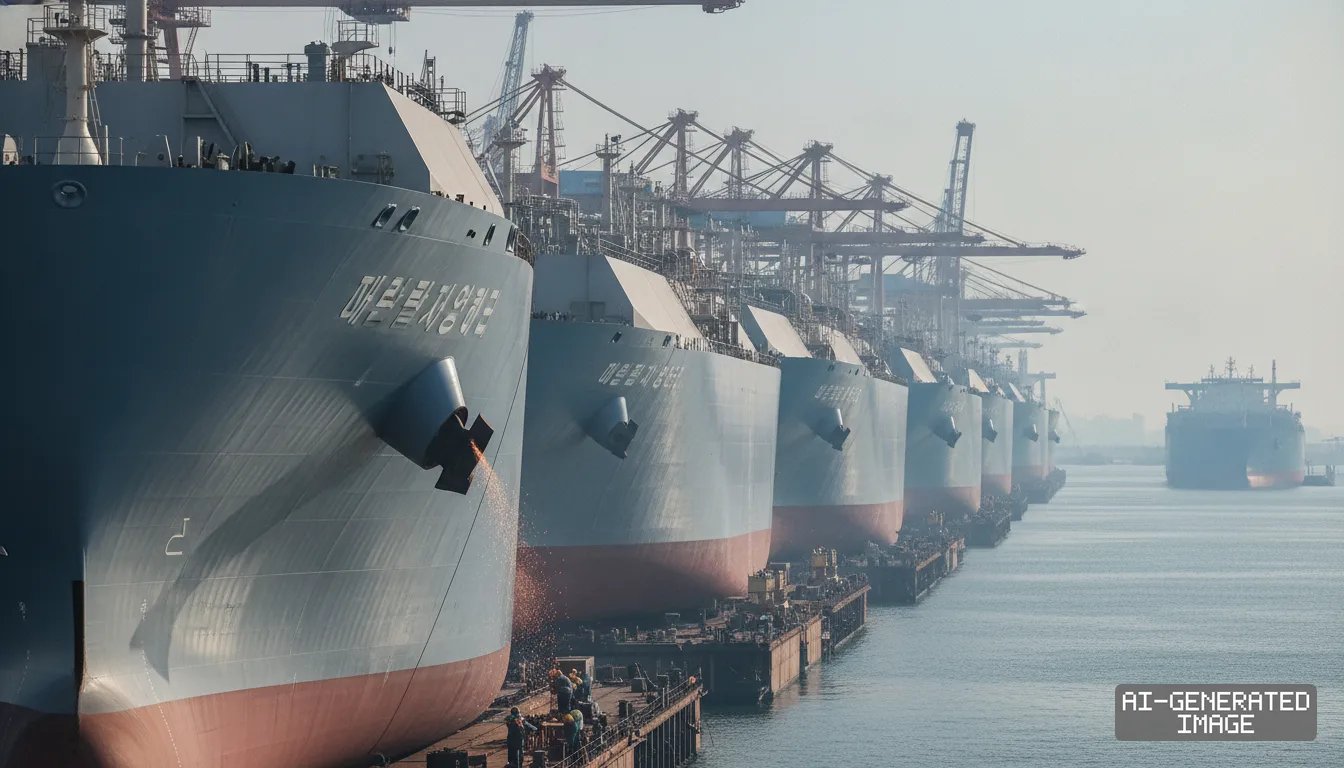
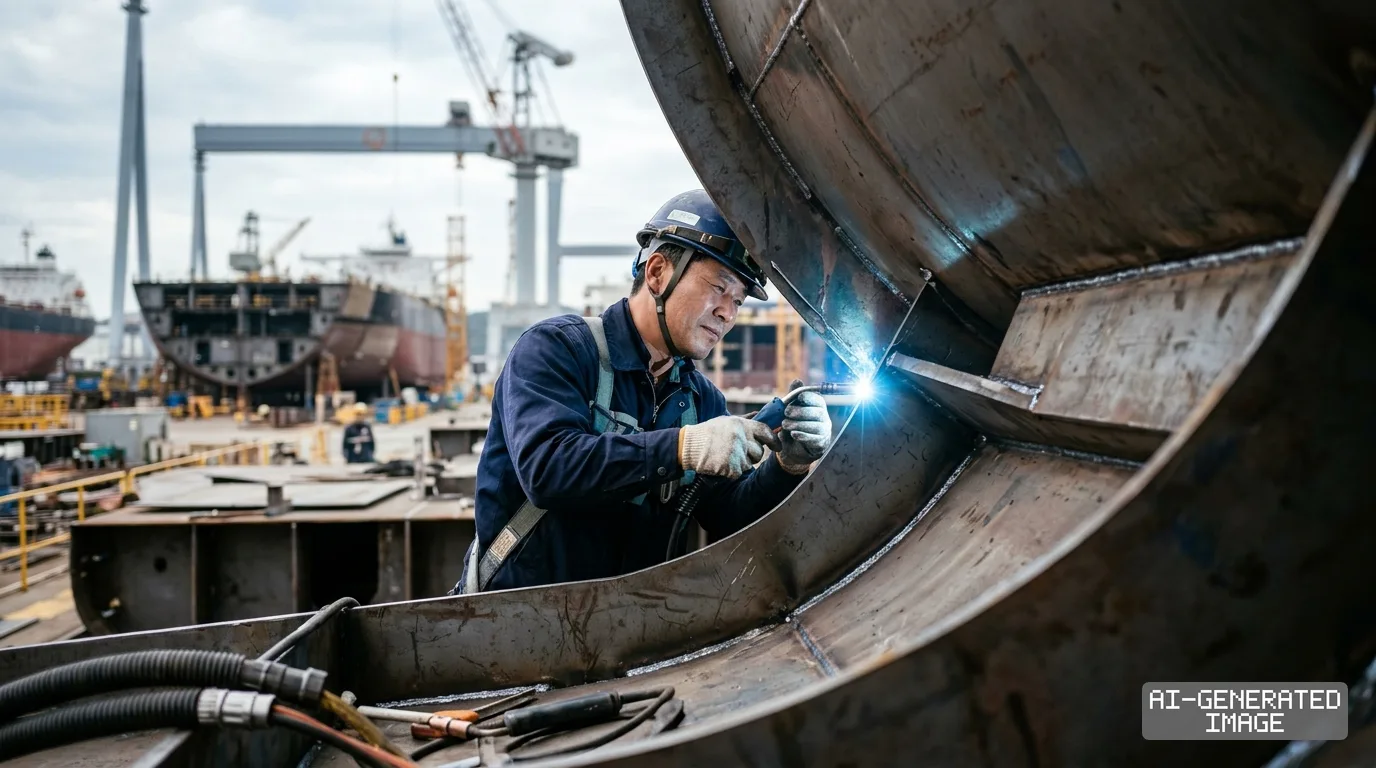
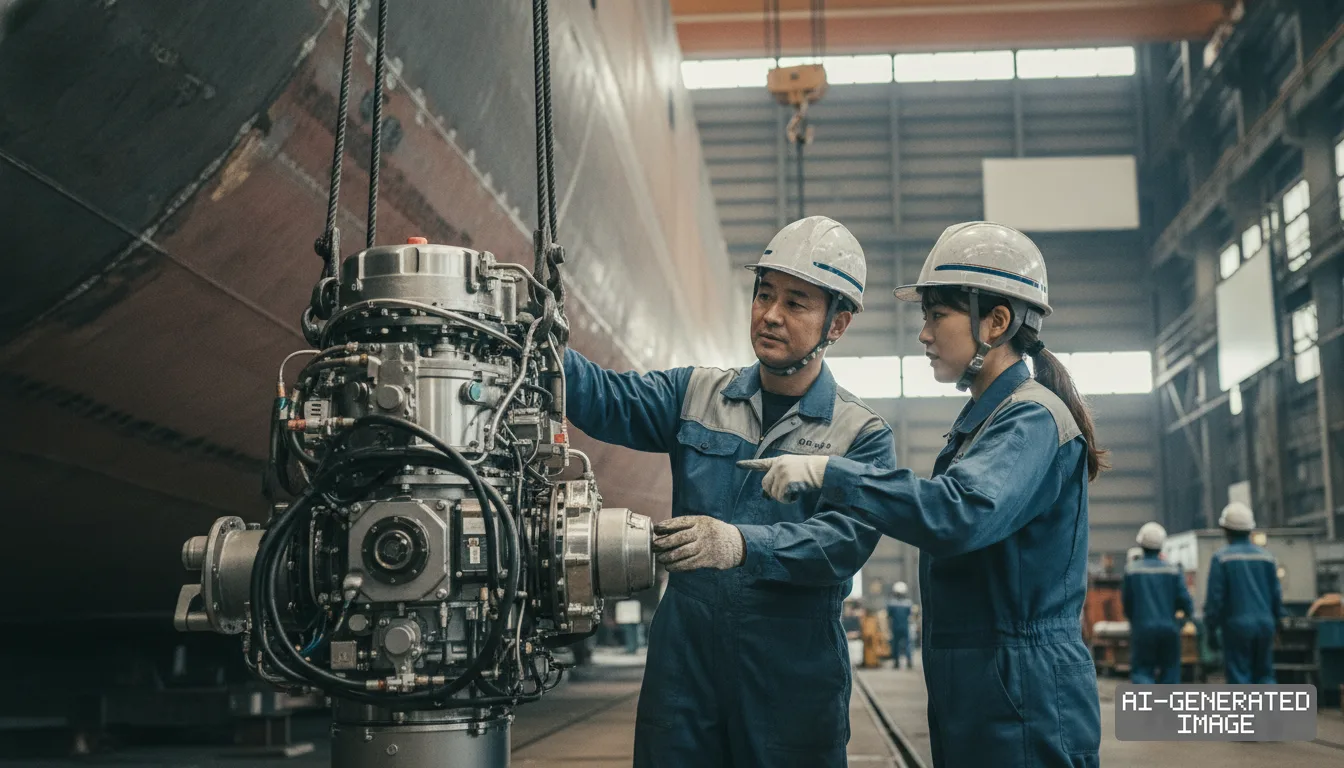
South Korea opens warship MRO to Hanwha Ocean and HD Hyundai yards
The defense procurement shift transfers depot-level overhauls of front-line warships to commercial yards as domestic builders expand maintenance contracts with the U.S. Seventh Fleet.
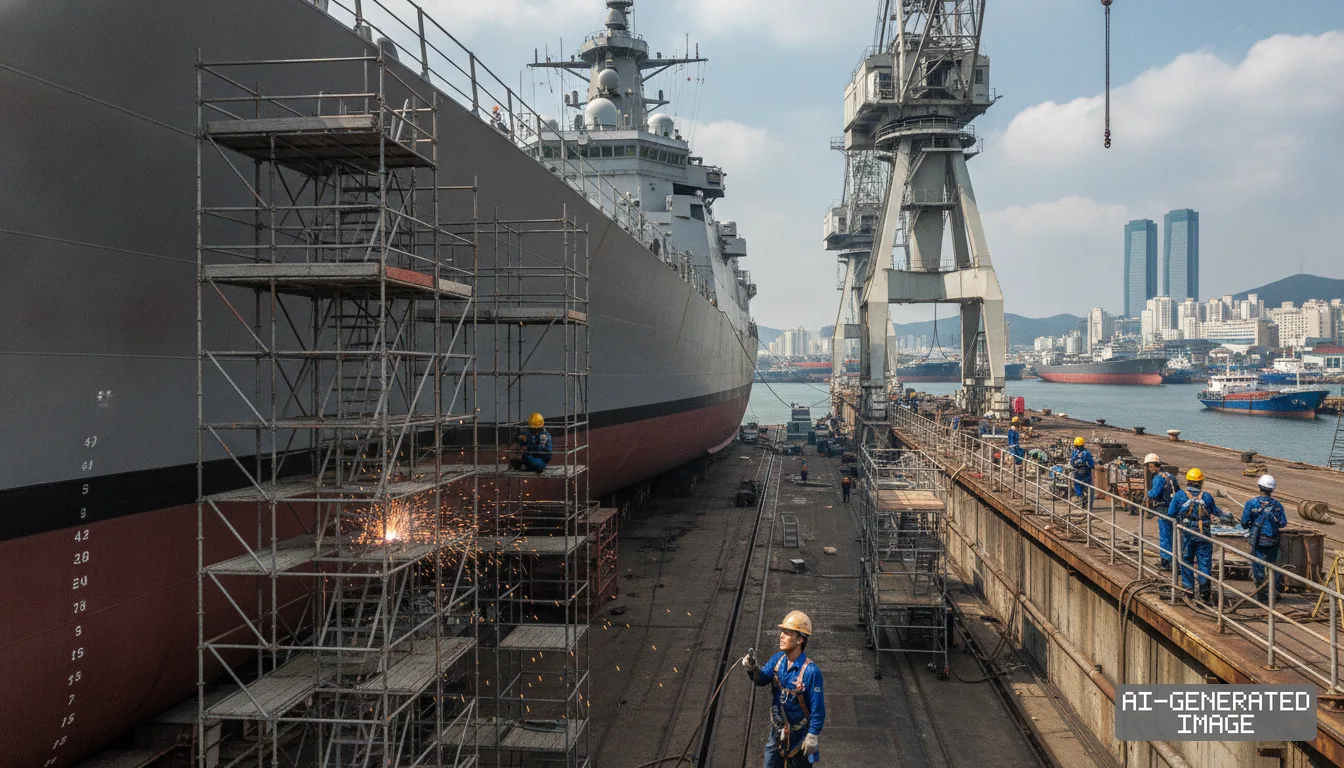
South Korea's Defense Acquisition Program Administration opened naval maintenance, repair and overhaul contracts to private shipbuilders Nov. 3, 2026, granting commercial yards access to warship depot overhauls.
The policy shift ends decades of reliance on state-run naval dockyards for top-tier vessel overhauls. Military planners are reallocating active-duty personnel to sea duty while contracting heavy structural maintenance to private shipbuilders.
The agency committed 49 billion won ($36 million) through 2030 to build an industrial naval overhaul cluster. South Korean defense planners estimate annual domestic warship maintenance spending exceeds 1 trillion won ($740 million).
Depot maintenance involves dismantling a vessel down to the hull frame to inspect combat systems, repair machinery and reinstall upgraded electronics. Military docks handled that work internally until shipyard personnel shortages accelerated outsourcing plans.
South Korea's navy began testing the model in late August by contracting the overhaul of the 7,600-ton Aegis destroyer ROKS Sejong the Great to Hanwha Ocean. The vessel entered the company's Geoje shipyard in September.
Hanwha Ocean assigned dedicated dry dock capacity to the six-month destroyer refit. The contract marks the first time a private South Korean yard has taken full overhaul custody of a capital surface combatant.
The procurement transition provides domestic builders with recurring defense revenue that offsets cyclical downturns in commercial shipbuilding. Shipyards can book multiyear maintenance streams alongside volatile merchant ship orders.
Commercial shipyards also use domestic naval work to prove technical standards required by foreign navies. The qualification standards mirror those applied to auxiliary vessels and combatants deployed across the Indo-Pacific.
HD Hyundai Heavy Industries, which booked 17.57 trillion won ($12.9 billion) in companywide revenue in 2025, has focused naval engineering capacity on forward-deployed foreign supply vessels. The company operates ten dry docks at its primary Ulsan yard.
HD Hyundai Heavy Industries secured regular overhaul contracts for two 41,000-ton auxiliary supply vessels, the USNS Cesar Chavez and the USNS Richard E. Byrd. Both ships operate under the U.S. Seventh Fleet logistics command.
The Ulsan yard completed an overhaul on the cargo ship USNS Alan Shepard late last year. Company engineers repaired roughly 100 mechanical and hull components before returning the auxiliary vessel to active theater operations.
Hanwha Ocean has secured six maintenance awards for American naval support vessels since 2024. The company carries out work under a Master Ship Repair Agreement issued by the U.S. Naval Supply Systems Command.
The American defense maintenance market generates roughly 20 trillion won ($14.7 billion) in annual vessel upkeep. Washington has sought allied yard capacity across Asia to relieve severe maintenance backlogs inside domestic naval shipyards.
HJ Shipbuilding & Construction is also competing for outsourced defense orders. The shipbuilder is performing scheduled maintenance on the 40,000-ton supply ship USNS Amelia Earhart at its Yeongdo shipyard in Busan.
Mid-sized shipbuilders view domestic navy maintenance as a financial baseline. Government contracts guarantee overhead absorption and labor retention during gaps between export patrol vessel awards.
The Defense Agency for Technology and Quality applied a new naval maintenance inspection manual to the current Aegis destroyer project. The standard harmonizes military inspection protocols with commercial marine safety rules.
Naval authorities plan to expand private contractor involvement into regional operating bases. The navy has scheduled a pilot outsourcing program for its Jeju operational maintenance center between 2027 and 2028.
Hanwha Ocean is scheduled to complete the overhaul of the Sejong the Great in March 2027. Naval inspectors will evaluate dockyard turnaround time and combat system integration before opening bids for 2027 surface overhauls.
The Defense Acquisition Program Administration has not published the final contract value for the ongoing destroyer overhaul or the specific bidding schedule for 2027 fleet maintenance.
Impact map
How this development propagates across the region and out to global buyers.
| Event | Korea | China | Japan | Global impact |
|---|---|---|---|---|
| warship MRO privatization | Hanwha Ocean and HD Hyundai secure multiyear defense maintenance revenue | PLAN maintains all overhauls in state-controlled CSSC and CSIC shipyards | JMSDF sustains private maintenance sharing across Mitsubishi and JMU yards | U.S. Navy expands Pacific fleet repair capacity through Korean commercial docks |
In this story
- Companies
- Hanwha OceanHD Hyundai Heavy Industries
- Tickers
- 042660.KS329180.KS
- Exposed
- HJ Shipbuilding & Construction
- Policy
- Procurement RulesSubsidies
- Impact
- Order BookCost Structure
Track every Procurement Rules development → Track every Subsidies development →
Related briefings
- Samsung Heavy targets US Navy MRO work via Vigor partnership Also on HJ Shipbuilding & Construction, Hanwha Ocean, HD Hyundai Heavy Industries
- Korean Yards Win US Navy Overhauls for 43% of Cargo Fleet Also on Procurement Rules, Hanwha Ocean, HD Hyundai Heavy Industries
- US Envoy Visits Samsung Heavy to Expand Naval Fleet Repair Also on Procurement Rules, Hanwha Ocean, HD Hyundai Heavy Industries
- Hanwha Ocean and HD Hyundai target new submarine export deals Also on Procurement Rules, Hanwha Ocean, HD Hyundai Heavy Industries
Sources
Primary documents
Reporting
Confidence: high — how we grade this
The documents behind this briefing are linked above. East Asia Brief produces its English text with AI assistance under human editorial review, and does not translate or republish other outlets' articles. See our methodology and AI policy. Spotted an error? Tell us.
The Morning Brief
What changed in Korean, Chinese and Japanese industry overnight — and what it means for your supply chain. One email, weekday mornings, US time. Free.
The Morning Brief is in preparation. Leave your address and we will write to you once — when the first issue is ready. Nothing before that.