POSCO and Hanwha Ocean sign pact to test manganese LNG tanks
The memorandum of understanding paves the way for a demonstration vessel to validate domestic cryogenic alloy holds against nickel-based containment systems.
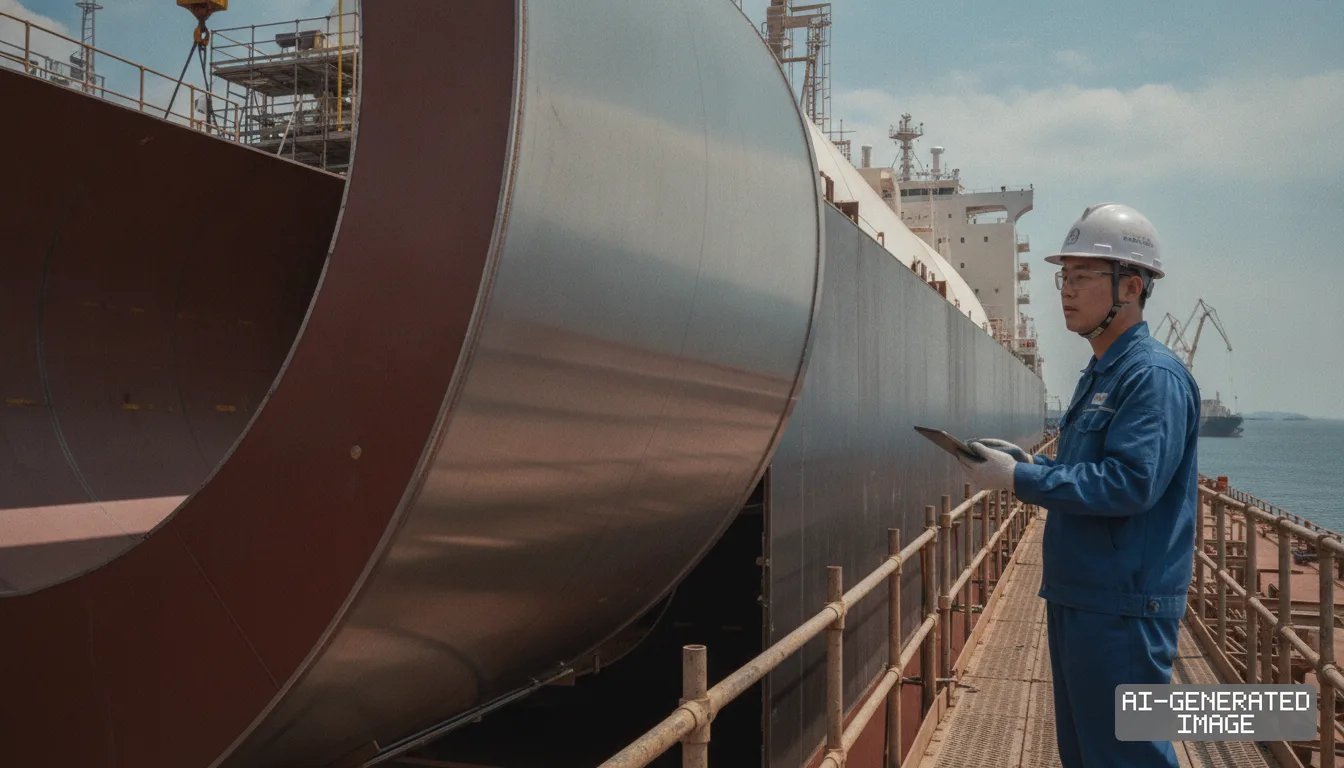
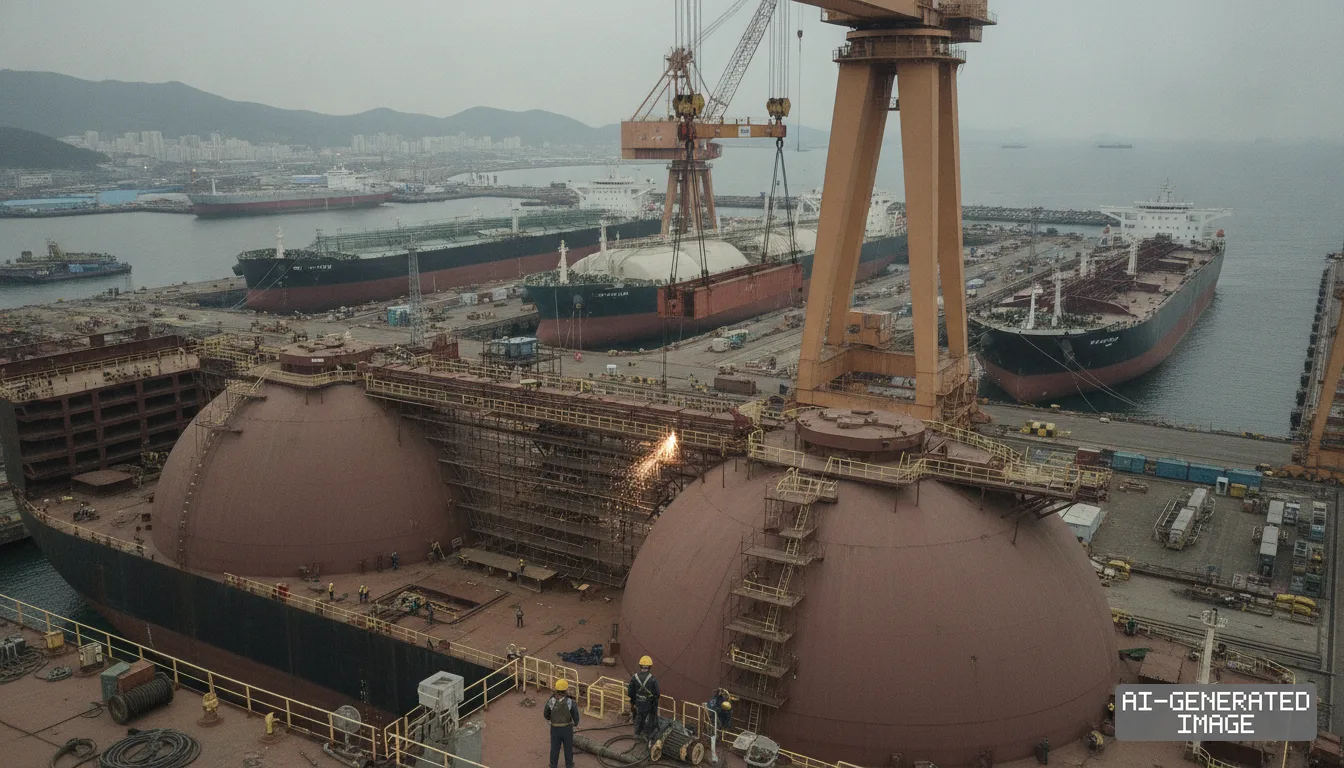
POSCO and Hanwha Ocean signed an agreement on Oct. 15, 2026, to build a demonstration vessel testing proprietary high-manganese steel inside liquefied natural gas cargo containment holds.
The memorandum of understanding was signed at Hanwha Ocean's Geoje shipyard by POSCO President Lee Hee-geun and Hanwha Ocean Chief Executive Kim Hee-cheul. Group trading affiliates POSCO International and POSCO Flow also joined to support vessel operations.
The project targets a market ten times larger than existing maritime cryogenic steel applications. A conventional LNG fuel tank requires roughly 1,000 metric tons of cryogenic steel per hull, while a full LNG cargo containment hold requires more than 10,000 metric tons.
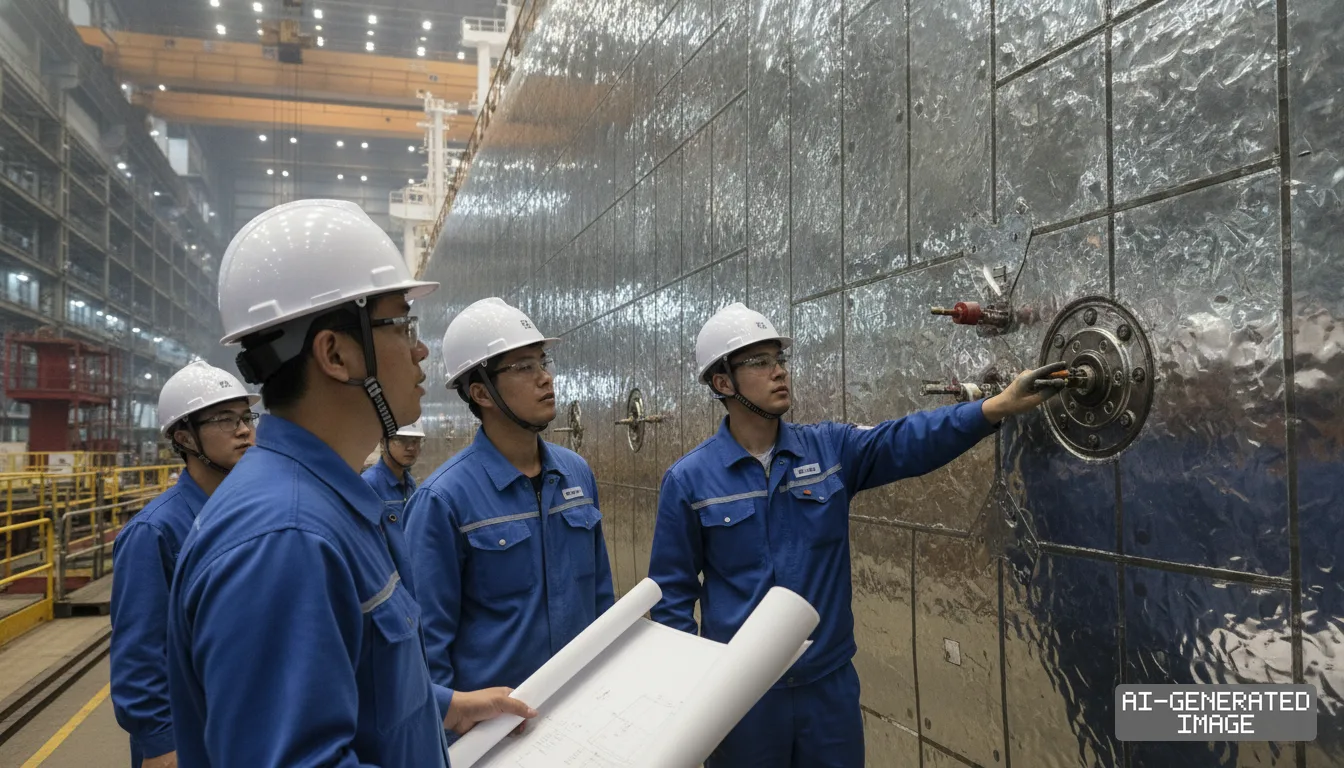
High-manganese steel is an alloy developed by POSCO that retains mechanical strength and impact toughness at minus 163 degrees Celsius. That temperature threshold is required to keep natural gas in liquid form during ocean transport.
The material replaces expensive nickel alloys with abundant manganese. Commercial LNG cargo holds currently rely on Invar, an iron-nickel alloy containing 36% nickel, or specialized stainless steels.
By replacing nickel with manganese, POSCO aims to insulate shipyards from volatile nickel prices. The alloy also provides structural rigidity against sloshing, the internal wave action of liquefied gas hitting tank walls during rough seas.
South Korean shipbuilders have delivered most of the world's commercial LNG carriers, but they remain dependent on foreign cargo containment designs. France-based Gaztransport & Technigaz, known as GTT, licenses the membrane containment technology used across global yards.
GTT collects licensing royalties estimated at about 5% of a vessel's total contract value. That fee amounts to more than $12 million on a standard 174,000-cubic-meter LNG carrier priced at $246 million.
Cumulative royalty payments from South Korean shipbuilders to GTT have reached an estimated 7.4 trillion won ($5.3 billion) over three decades. Replacing imported membrane systems with domestic alloy holds would eliminate those licensing payouts.
The demonstration vessel is designed to generate operational track records under real sea conditions. Conservative commercial shipowners require documented sailing data before ordering vessels built with unproven tank materials.
Hanwha Ocean will lead the engineering and construction of the demonstration hull. The ship will use an independent tank structure, which can be fabricated separately and lifted into the hull.
Fabricating tanks outside the drydock shortens hull assembly time at the yard, POSCO said. The design also allows operators to customize boil-off rates, which measure natural gas vaporized during the voyage.
POSCO and Hanwha Ocean, formerly Daewoo Shipbuilding & Marine Engineering, have collaborated on cryogenic alloys for more than a decade. The partners initially applied high-manganese plates to onshore storage facilities.
POSCO approved high-manganese steel for Tank No. 5 at its Gwangyang LNG Terminal in 2017. The terminal storage tank was completed in 2019, providing the first large-scale validation for land-based cryogenic storage.
The material was later cleared by the International Maritime Organization for use in cryogenic marine fuel tanks and piping systems. In October 2022, the Geoje shipyard delivered its first commercial vessel equipped with a high-manganese fuel tank.
POSCO said 51 vessels worldwide were operating with its high-manganese steel in fuel tanks and related systems as of Oct. 15, 2026. The new pact marks the first time the material is being deployed to hold export cargo rather than ship fuel.
The demonstration program comes as global demand for LNG shipping capacity remains tight. Shipbroker Clarkson Research recorded standard LNG carrier newbuilding prices at $246 million in early October.
Brokerages project global LNG carrier contracting to reach 81 vessels in 2026 and 88 hulls in 2027. South Korea's four major shipbuilders can deliver a combined 70 to 75 gas carriers each year.
Capturing cargo hold construction with domestic steel would increase POSCO's heavy plate shipments to shipbuilders. A single 10,000-ton cargo hold contract consumes ten times the tonnage of a standard bunker tank order.
The partners also plan to apply high-manganese holds to LNG bunkering vessels and floating storage and regasification units. Later iterations could store liquid hydrogen, ethane and ammonia, the companies said.
The agreement does not state the capital expenditure for the project, the number of demonstration hulls, or the delivery date for the first vessel. POSCO has not published the financial contributions pledged by its trading and logistics affiliates.
Sea trials will follow the vessel's completion to verify insulation performance and cargo stability under dynamic open-water loads. Commercial marketing to international shipowners will begin after operating data is certified by classification societies.
Impact map
How this development propagates across the region and out to global buyers.
| Event | Korea | China | Japan | Global impact |
|---|---|---|---|---|
| High-manganese steel LNG cargo hold MOU | Hanwha Ocean cuts GTT royalty exposure, POSCO expands cryogenic plate market tenfold | Rival LNG yards remain tied to French membrane licensing and imported nickel steel | Membrane insulation suppliers face prospective shift toward independent Korean steel tanks | Shipowners gain alternative cargo system that cuts exposure to volatile nickel pricing |
In this story
- Companies
- POSCOHanwha Ocean
- Tickers
- 005490.KS042660.KS
- Exposed
- GTTPOSCO International
- Policy
- Economic Security
- Impact
- Supply ChainCost StructureOrder Book
Track every Economic Security development →
Related briefings
- Hanwha Ocean awards GTT tank design for two new LNG carriers by 2029 Also on GTT, Hanwha Ocean, Cost Structure
- Samsung Heavy orders GTT tank designs for four LNG ships Also on GTT, Hanwha Ocean, Cost Structure
- HD Hyundai and Hanwha Ocean split naval platforms for export Also on Posco International, Hanwha Ocean, Order Book
- HD Hyundai develops 150,000 cbm ultra-large ethane carrier Also on GTT, Cost Structure, Order Book
Sources
Primary documents
Reporting
Confidence: high — how we grade this
The documents behind this briefing are linked above. East Asia Brief produces its English text with AI assistance under human editorial review, and does not translate or republish other outlets' articles. See our methodology and AI policy. Spotted an error? Tell us.
The Morning Brief
What changed in Korean, Chinese and Japanese industry overnight — and what it means for your supply chain. One email, weekday mornings, US time. Free.
The Morning Brief is in preparation. Leave your address and we will write to you once — when the first issue is ready. Nothing before that.